Practical answer first: if you plan to spend most of your time exploring central Brisbane—South Bank, the CBD, Fortitude Valley—prioritise location for quick transit and nightlife access; if you want restful evenings, work space, or longer stays, prioritise room comfort (size, bed quality, quiet). Many solo travellers find a middle path—a well-located mid-block hotel or serviced apartment close to public transport—which reduces travel time while giving a private room with decent amenities. Decide by estimating how many hours each day you'll be in the room versus out exploring. Use that ratio to guide whether to pay a premium for prime location or for more comfortable rooms. When you compare options, verify current room photos, exact bed type, noise policies, and cancellation and check-in details on the hotel's booking page before committing.
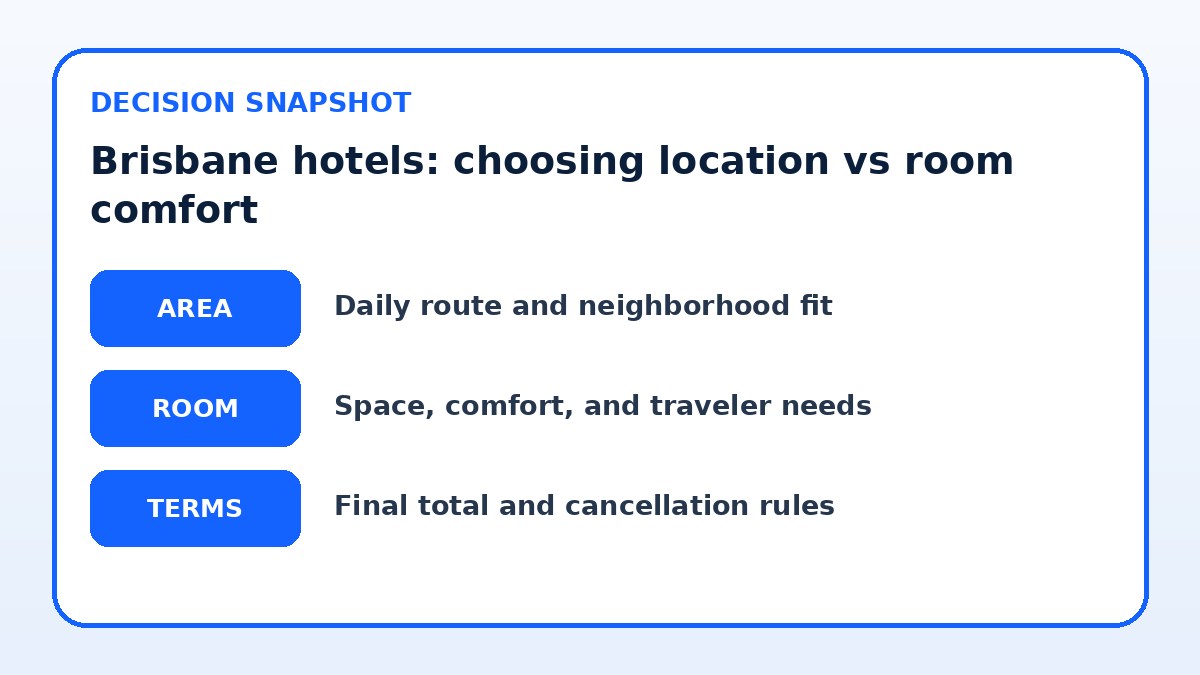
See current options before you compare the details
Availability and final conditions change. Open Trip.com now or keep reading for the practical comparison.
How to judge location value in Brisbane
Location value depends on your daily rhythm. If you plan to explore museums, galleries and riverside cafés, staying in or near the CBD and South Bank saves commuting time and gives immediate access to ferries, buses and trains. Fortitude Valley is better if nightlife and boutique dining matter most. Suburbs like New Farm or West End trade some central convenience for quieter residential streets and local cafés; they still offer frequent public transport but usually require a short tram or bus ride. For a solo traveler, slashing transit time can mean more flexibility in the evening and easier returns after late nights.
When comparing specific addresses, don’t rely only on how close they are on a map. Check real walking distances and the terrain—Brisbane has a few steeper streets and river crossings that add time. Look for proximity to transport nodes you’ll actually use: the nearest train station, a ferry stop (if you expect to use CityCat), or a frequent bus corridor. Also note practical extras that compound convenience: a 24-hour reception, luggage storage, or secure bicycle storage can change how valuable a location is. Verify these operational details on the hotel’s booking page before you commit.
What room comfort really means for solo travellers
Room comfort goes beyond mattress feel. For many solo travellers it includes a bed size that fits your sleep style, a desk and reliable power outlets for any work, effective air conditioning and blackout curtains for restful nights, and soundproofing to avoid street noise. If you plan to work, stream, or edit photos, check for a clear workspace and reliable Wi‑Fi descriptions. If you’re staying several nights, a small fridge, kettle, or kitchenette dramatically improves living quality. The room’s layout—storage, privacy, and a bathroom that’s easy to use—matters more than decorative flourishes.
Photos and written descriptions can be misleading, so read the bed-type information and room area where it’s provided. Search for guest comments about noise, housekeeping frequency, and room consistency between categories. If you need a specific feature—like a room on a high floor for quieter nights or a firm mattress—contact the property directly and confirm on the booking page. For longer stays, consider serviced apartments or aparthotels which often offer bigger rooms and laundry, but note those typically sit further from the busiest tourist pockets.
| Approach | Best for | Tradeoff to check |
|---|---|---|
| Central CBD/South Bank location | Maximising sightseeing time and easy transit access | Smaller rooms and higher street noise, potentially less sleep quality |
| Fortitude Valley or nightlife districts | Evening entertainment and dining without long taxi rides | Noisier late nights and fewer large-room options |
| Riverside suburbs (New Farm, West End) | Quieter streets, local cafés, and larger rooms | Slightly longer commutes to some attractions |
| Serviced apartments or aparthotels | Extended stays, self-catering and work-friendly layouts | Often further from main tourist hubs and evening options |
Ready to check the option that fits your plan?
Use your exact dates and traveler details so the provider page can show the current total and conditions.
Balancing tradeoffs: speed versus solitude
Choosing the fastest route to attractions sacrifices some quiet and space. Central hotels reduce travel time and can be safer in terms of late-night foot traffic and taxi access, but they often come with higher street noise, smaller rooms, and fewer in-room amenities for longer stays. Conversely, suburban or riverside options usually give more peaceful nights and larger rooms for the same price, but you’ll trade off minutes spent commuting. Estimate how many hours per day you’ll be in the room; if it’s under four hours, location often wins. If you expect mornings, evenings, or remote work to happen in the room frequently, tip the balance toward comfort.
An effective compromise is a hotel just off the busiest corridors: a quieter street a five- to ten-minute walk from the river or a major tram stop. That way you keep close access while avoiding the most active nightlife noise. Consider the quality of public transport at your chosen spot—frequent services can make a slightly out-of-center stay feel well connected. Also check for hotel features that reduce friction: luggage storage, late check-in, or an on-site laundry. Confirm these features and any fees on the provider’s booking page before finalising your booking.
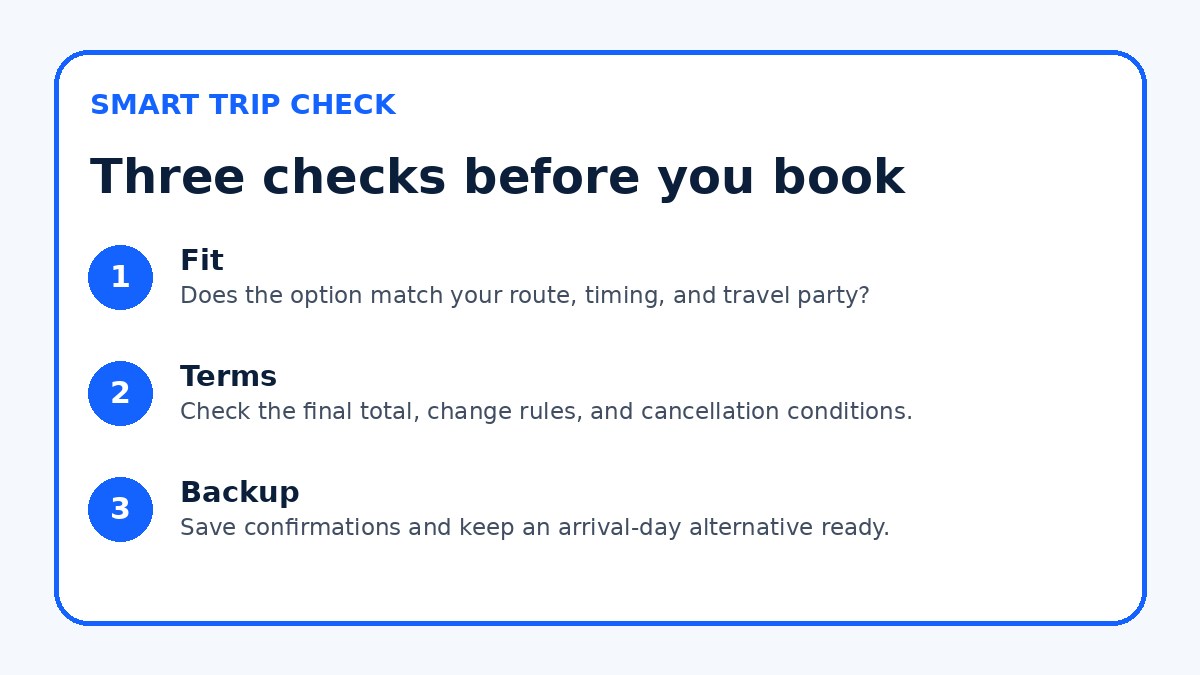
Before you book
- Map walking time from the hotel to your top three planned Brisbane destinations and transit stops.
- Confirm exact bed type and room size on the hotel’s booking page; request higher-floor or quiet-room options in writing.
- Verify Wi‑Fi expectations—speed or work-friendly language—on the property page and test upon arrival.
- Check reception hours, late check-in rules, and luggage storage availability before booking.
- Compare what’s included (breakfast, laundry, kitchen access) rather than only comparing base nightly rates.
- Read recent guest comments for noise and cleanliness consistency and save a screenshot of the room description you booked.
Booking checks and comparison criteria to use
When comparing Brisbane hotels, make a short checklist: location walk times to your primary points of interest; room size and bed type; exact Wi‑Fi terms and work-friendly spaces; and noise or floor-level options. Use the hotel’s official room descriptions and photos, then cross‑check recent guest comments for consistency—pay attention to mentions of noise, cleanliness, and reliability of amenities. If you plan to arrive late or store baggage, verify reception hours and storage policies. If you need a visa letter, invoice, or group booking options, request those from the property and confirm how they’ll be provided.
Price will matter, but don’t focus only on nightly rate. Compare what’s actually included—breakfast, laundry, Wi‑Fi speed, and cancellation flexibility—and how those inclusions affect overall convenience. Trip.com or other booking platforms can be useful to compare current availability and room types, but always verify specific room features, exact bed configurations, and cancellation policies on the hotel’s final booking page. For any special requests like a higher floor, early check‑in, or quiet room, confirm them in writing and recheck before arrival.
Frequently asked questions
Is it safer for a solo traveller to stay in central Brisbane at night?
Central Brisbane areas such as the CBD and South Bank tend to have higher foot traffic, taxis and public transport options late into the evening, which many solo travellers find convenient and reassuring. That said, safety also depends on local conditions and your personal habits—use well-lit routes, keep valuables secure, and check recent guest reviews for the specific hotel’s neighbourhood. If you plan late-night outings, a centrally located hotel reduces travel time back, but if you prefer quiet after dark, choose a quieter street or request a room away from the main road.
How can I tell if a hotel room will be quiet enough for work or sleep?
Look beyond staged photos: read recent guest comments that mention noise, check whether the hotel notes double-glazed windows or soundproofing, and choose a room on a higher floor away from street-facing façades. If you need guaranteed quiet, contact the property directly to request a specific room type and confirm whether the hotel can accommodate that preference; make sure this confirmation appears on the booking page or in written communication. On arrival, test noise levels at night and ask reception about moving rooms if needed.
Should I book a serviced apartment in Brisbane as a solo traveller?
Serviced apartments are a strong choice if you value extra space, a kitchen for self-catering, and in-room laundry—useful for longer stays or those who work from their room. They often provide better value for multi-night stays but may be located a little further from the main tourist hubs, which increases commute time. Before booking, confirm the exact apartment layout, included utilities, check-in process, and whether housekeeping frequency meets your expectations. Verify all specifics on the apartment’s booking page before finalising.
Final planning note
For solo travellers in Brisbane the best choice depends on personal rhythm: prioritise location if you want to minimise transit time and maximise evening options; prioritise room comfort if you’ll spend long hours in your room or need a productive work environment. Many solo travellers land in the middle with a quieter street near a major transport node or a serviced apartment close enough to the river. When comparing options, use concrete checks—walking time, bed type, Wi‑Fi terms, noise reports—and confirm any special requests on the hotel’s final booking page. If you want a single place to compare availability, platforms like Trip.com can help, but always verify the room details and policies with the hotel before you book.
Continue planning
Check current options and final conditions
Use the provider page to confirm live availability, the final total, cancellation terms, and every condition that matters to your trip.
This evergreen planning guide was created with AI-assisted drafting and a structured quality review. It does not display live prices, schedules, availability, visa guidance, or provider rankings. Verify current details before booking. Some links are affiliate links; we may earn a commission at no additional cost to you.