Practical answer first: when renting a car in Bali with kids, buy at minimum third-party liability and collision coverage (CDW/LDW) that clearly names the vehicle class and indicates the excess amount, and verify whether loss or damage to third-party property and passenger medical coverage are included. Read the policy wording for exclusions—driving off-road, driving under influence, unlicensed drivers, and third-party driver restrictions are the most common pitfalls—and confirm how the insurer treats excess payments: refundable deposit, debited hold, or non-refundable waived fee. Bring printed and digital copies of the rental contract, the insurance certificate, and the driver’s license translation if needed. Before you accept the car, note existing damage on the inventory form and photograph it; that simple step prevents denied claims that can derail a family trip.
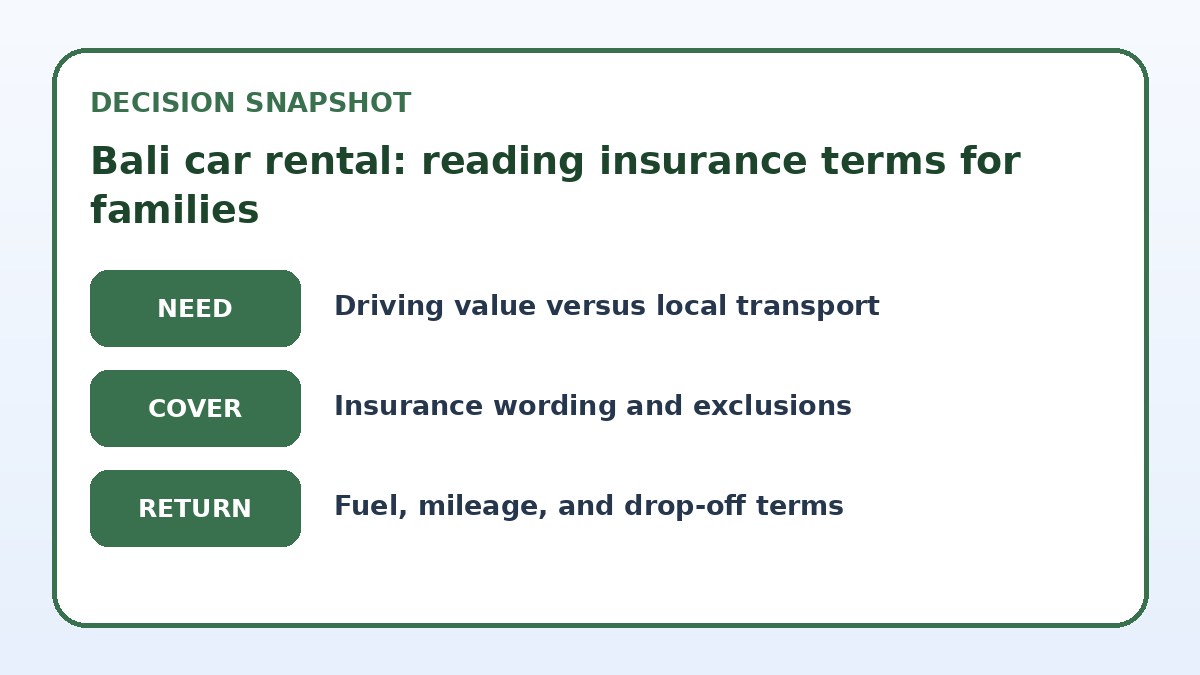
See current options before you compare the details
Availability and final conditions change. Open Trip.com now or keep reading for the practical comparison.
Understand the basic insurance types and what they cover
Rental contracts and policy summaries use shorthand that can be confusing: CDW or LDW usually limits your liability for damage to the rental vehicle; TP or third-party liability covers damage to other people’s property and injuries to others; Theft Protection covers theft of the vehicle, and Personal Accident Insurance covers medical bills for passengers and the driver. For families, pay attention to passenger medical coverage and whether it applies to children specifically. Some policies state per-person limits or require separate claims for child medical costs, which affects how quickly treatment is covered after an incident.
When you read the wording, look for clear definitions: what constitutes a claimable incident, which drivers are authorised, and how the insurer calculates damage costs. If the policy refers to local traffic law or replacements at market value, ask for examples or a claims scenario in writing. Don’t accept vague phrases like 'acts of negligence' without an explanation—request concrete examples from the rental desk so you understand how a routine family error, such as leaving a window open with belongings inside, might be treated.
Watch for exclusions that commonly surprise families
Exclusions are where most disputes happen. Common clauses exclude coverage for damage while driving on unpaved roads, driving outside specified regions, driving under the influence, or allowing an unauthorised driver to operate the car. Families who plan day trips to remote beaches or mountain roads need to verify whether gravel tracks or private access roads count as excluded terrain. If your itinerary includes excursions off the main roads, ask the rental company to mark permitted areas in the contract or provide a written clarification.
Other frequent exclusions affect personal items, roof racks, and baby seats—items families rely on. Many basic policies explicitly exclude loss or damage to child seats and personal belongings, leaving parents to claim via travel insurance or credit-card benefits. Also check how the insurer treats driver substitutions: if a second adult will take turns driving, they must be included on the rental agreement and meet licence requirements. Trip.com can be used to compare supplier terms, but always verify the final insurer wording on the provider’s booking page before you agree.
| Approach | Best for | Tradeoff to check |
|---|---|---|
| Buy basic CDW and rely on travel/credit-card coverage | families wanting lower rental desk costs and an existing secondary policy | Risk of gaps for passenger medical and personal items; verify card insurer’s Indonesian coverage and primary/secondary status |
| Pay for full excess waiver at the rental desk | families who prefer minimal out-of-pocket stress and quick returns of held funds | Higher upfront daily cost and possible limited coverage for seats or luggage unless specified |
| Buy a standalone third-party travel insurance policy including rental excess coverage | families seeking comprehensive protection that covers medical, personal items, and excess reimbursement | You may need to advance payments and file for reimbursement later; check processing times and required receipts |
| Self-insure (no extra policies) and take photos, limits spending | short, low-risk trips where you accept potential small repairs as out-of-pocket costs | Exposure to large claims, difficulty when travelling with children where medical or liability costs could be substantial |
Ready to check the option that fits your plan?
Use your exact dates and traveler details so the provider page can show the current total and conditions.
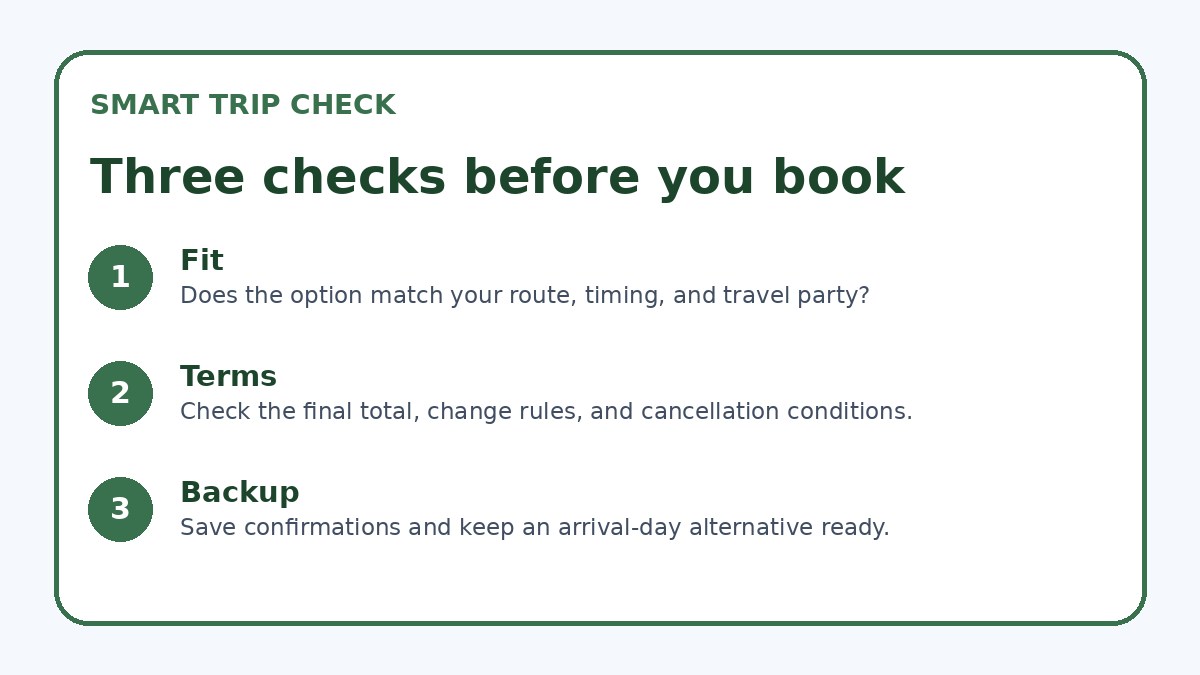
Decide how to handle excess, holds, and waivers
The excess (also called deductible) is the amount you’d pay out of pocket for a claim. Some companies offer an excess waiver for an additional fee that reduces your liability to zero or a much smaller amount; others require you to leave a refundable deposit on your card to cover the full excess. For families, an excess that ties up significant funds on a credit card hold can limit your ability to pay for hotels or emergencies, so confirm how long holds last and what payment methods are accepted.
When comparing approaches, ask how the excess is returned if you don’t claim: automatic release timeframes vary and might depend on local bank processing. Also compare whether a third-party waiving product covers theft of personal items or only vehicle damage. If you plan multiple drivers, check whether waivers remain valid when another authorised driver is behind the wheel. Finally, request step-by-step claim instructions and the local claims contact—during a family holiday, a clear local phone number and a simple claims checklist reduce stress.
Before you book
- Confirm the policy names and read the full wording for CDW/LDW, TP, theft protection, and personal accident coverage before signing.
- Make sure every potential driver is listed in the rental contract and has the required licence and ID documented in the policy.
- Photograph the car from multiple angles, both interior and exterior, and note existing damage on the inventory form.
- Ask the rental desk to explain the excess amount, how it’s held, and the exact process to recover any refundable deposit.
- Verify exclusions for roads, regions, baby seats, roof racks, and personal belongings and get any clarifications in writing.
- Save digital copies of the rental contract, insurance certificate, police report templates, and the local claims contact number.
Check documentation, claims process, and realistic proof requirements
Insurers will require evidence: a police report for collisions or theft, photos of damage, the signed rental inventory, and copies of driver licences. For families, keeping digital copies of passports, licences, the rental agreement, and the insurance certificate in a shared cloud folder simplifies the process if you must file a claim. Take time-stamped photos of the vehicle from multiple angles on pickup and return, and photograph dashboard readings if relevant; these are often decisive when an insurer or the rental company questions liability.
Understand the local claims workflow: some insurers want incidents reported within 24 hours, others allow longer, and some require you to lodge a claim directly with the rental company before contacting the insurer. Ask where repairs will be done and whether you must use an approved repairer or a specific garage network. If repairs are arranged locally, get an itemised repair estimate in English. Finally, verify whether any refunds or reimbursements will be processed in local currency and whether you’ll be responsible for bank conversion fees when a refund is returned to your card.
Frequently asked questions
Does my home insurance or credit card usually cover Bali car rentals for families?
Many home insurance or credit-card policies offer rental-car coverage but terms vary widely. Check whether the card’s coverage applies in Indonesia and if it’s primary (pays first) or secondary (pays after local insurance). Confirm whether the card excludes certain vehicle categories or requires that the rental was paid with the card. For families, also verify passenger medical limits and whether child seats or personal items are excluded. Always get the issuing bank’s documentation that names Indonesia and describes steps to file a claim and required evidence.
What should I do at the scene and immediately after an incident in Bali?
First, ensure everyone is safe and call emergency services if needed. Notify the rental company and insurer per the policy’s required timeline—many insist on immediate reporting. Obtain a police report for collisions or theft; without it, many insurers will deny claims. Take detailed photos of vehicle damage, surrounding scene, licence plates, and other involved vehicles. Gather contact details from witnesses and the other driver. Keep all receipts, repair estimates, and medical bills, and submit them as instructed by the insurer within the stated timeframe.
Are child seats and personal items covered by standard rental insurance in Bali?
Standard rental insurance often excludes child seats and personal effects; these are commonly listed under exclusions. Families should assume that baby seats, stroller damage, or stolen luggage will not be covered unless the insurer explicitly lists them. If these items are important to you, look for a policy or an add-on that mentions coverage for accessories and personal belongings, or rely on a separate travel insurance policy that includes baggage protection. Always confirm limits, claim processes, and whether you must show original purchase receipts.
Final planning note
For families renting a car in Bali, clear comprehension of insurance wording turns uncertainty into manageable choices. Start by verifying core coverages—collision, third-party liability, theft protection, and passenger medical—then read exclusions carefully for roads, baby-seat coverage, and authorised drivers. Decide whether an excess waiver, a standalone travel policy, or relying on credit-card benefits best matches your budget and peace of mind. Document everything: sign the inventory, photograph the car, and store the insurer’s claims contact details. When in doubt, ask the provider to point to the exact clause that creates a coverage gap; a written clarification at booking is the single best tool to avoid a claim dispute while you’re travelling with children.
Continue planning
Check current options and final conditions
Use the provider page to confirm live availability, the final total, cancellation terms, and every condition that matters to your trip.
This evergreen planning guide was created with AI-assisted drafting and a structured quality review. It does not display live prices, schedules, availability, visa guidance, or provider rankings. Verify current details before booking. Some links are affiliate links; we may earn a commission at no additional cost to you.