If you want a quick decision: families who value convenience, a single payment, and predictable logistics often prefer package deals; families who prioritize flexibility, tailored rooming and independent timing usually save or get better fits by booking flights, accommodation, and rail or activities separately. Which is right depends on how many moving parts you’re willing to manage, whether you need refundable options, and if your family needs specific room configurations or mobility support. This guide walks through the tradeoffs in plain terms, shows the decision criteria to compare on booking sites, and lists the exact items to verify on the provider’s final page before you pay. Use the checklist to decide at a glance and the comparison rows to match your family’s priorities to the booking approach.
See current options before you compare the details
Availability and final conditions change. Open Trip.com now or keep reading for the practical comparison.
How packages help families simplify planning
Package deals reduce the number of vendors you contact and consolidate confirmations into a single itinerary and customer-service channel. For families juggling multiple calendars and childcare details, that can cut stress: one phone number or email to change arrival times, request a crib, or rebook an outbound flight. Many packages also include airport transfers or timed arrivals which remove the need to research local transport for tired kids after a long flight. When you prefer lower friction and less online research, a package can be a practical choice.
But simplification comes with tradeoffs: the package operator sets the combinations of flights and rooms, which may not fit specific sleeping arrangements, airline preferences, or meal needs. If your children need adjoining rooms, early check-ins, or particular seat selections, a package’s standard inventory might not close-match your needs. Always check how changes are handled, who processes refunds, and whether the tour operator will pass requests to the hotel or airline; verify those policies on the provider’s final booking page before you commit.
Why separate bookings suit customized family trips
Booking flights, hotels, and local transport separately gives you granular control over the trip: choose the flight times that reduce jet lag for small children, select a family room or two interconnecting rooms, and pick neighborhood lodging near attractions you plan to visit. You can also mix budget and comfort—fly a lower-cost carrier and spend more on a larger apartment for easier meal prep. Separate bookings let you customize experiences like Japan rail passes, theme-park dates, or private transfers for special needs without being limited to an operator’s package timeline.
The downside is the administrative overhead and the need to coordinate multiple cancellation and change policies. If one flight is delayed, you may need to rearrange hotel check-in and prebooked activities yourself, and you might face separate provider fees. To manage risk, create a timeline of critical bookings (first flights, then accommodation, then activities) and document deadlines for free cancellations; always confirm baggage allowances and infant/child fare rules on the final supplier pages before onward bookings.
| Approach | Best for | Tradeoff to check |
|---|---|---|
| Package deal | Families wanting one invoice, consolidated support, and fewer logistical decisions | Less flexibility on rooming, flight choices, and detailed requests; must verify operator’s handling of changes |
| Separate bookings | Families needing tailored rooming, flight times, or mixing budget and comfort options | More time to research and coordinate; multiple cancellation rules and contact points |
| Hybrid approach (mix packages and DIY) | Families who want certain conveniences (transfer or park tickets) but still need custom lodging or flights | Requires careful timing and clear responsibility split between package supplier and independent bookings |
| Agent-assisted separate bookings | Families who want customization without doing all the coordination themselves | May have service fees and still requires you to verify supplier terms on final pages |
Ready to check the option that fits your plan?
Use your exact dates and traveler details so the provider page can show the current total and conditions.
Cost comparison: what to add beyond advertised prices
When comparing a package price to a DIY total, include all add-ons: checked baggage, seat assignments for parents traveling separately, airport transfers, breakfast or meal charges, and any resort or city taxes. Packages sometimes include transfers or breakfast that you’d otherwise pay for separately; weigh if those inclusions match your family’s actual use. Also account for time costs—if separate bookings mean hours of searching and coordinating, value that time against the apparent savings.
Don’t assume an advertised package rate is comparable to a sum of base fares and room rates you find online. Look at out-the-door totals after optional extras and consider cancellation penalties for each element. For comparison integrity, create a simple spreadsheet listing supplier names, fares with taxes, cancellation terms, and contact details. And always verify on the provider’s final booking page whether baggage, infant seats, and child meal requests are included or require extra confirmation.
Before you book
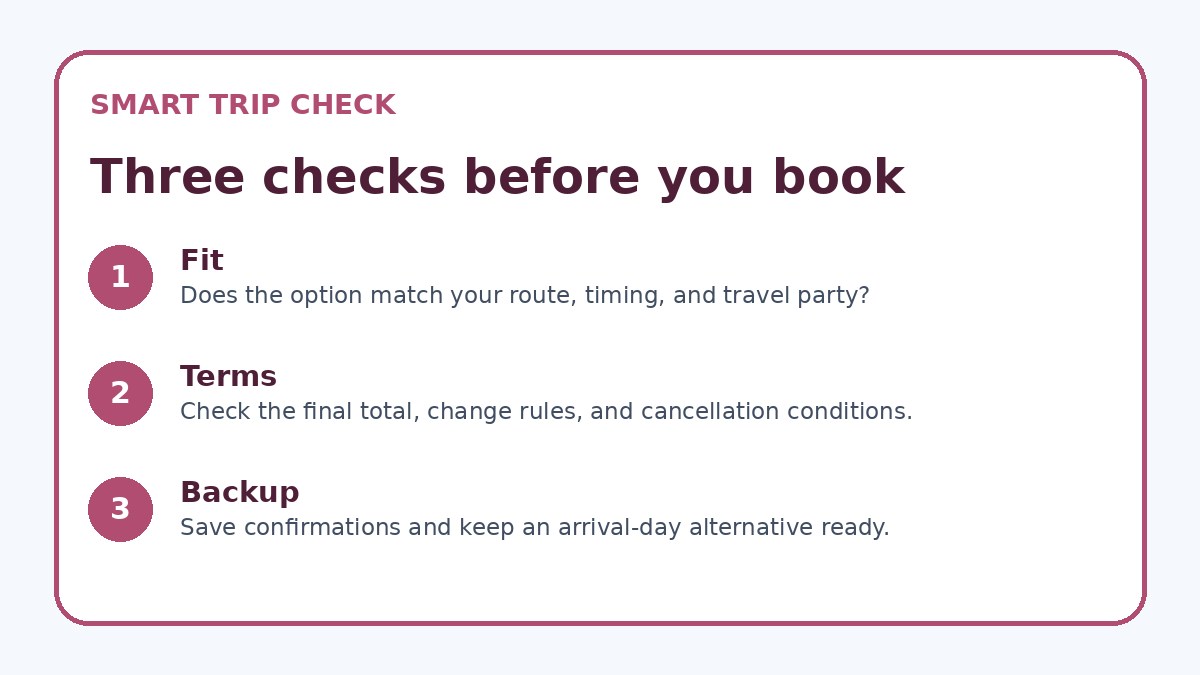
- List non-negotiables (room configuration, mobility needs, meal restrictions) before you start searching so you can compare options quickly.
- Get a single total landed cost for each approach including baggage, transfers, meals, taxes, and infant or child fees before comparing values.
- Confirm cancellation and change policies on the provider’s final booking page and save screenshots or confirmation emails for any written promises.
- Ask any package operator how they handle missed connections or last-minute hotel reassignments and request that policy in writing.
- When booking separately, reserve the first night and a flexible flight option early, then stagger lower-priority purchases to keep change windows open.
- If relying on a travel marketplace like Trip.com, still click through to each supplier’s final page to verify baggage rules, seat assignment costs, and refund terms before payment.
Practical tips to reduce risk whichever route you choose
For packages: read the operator’s change and refund policy carefully and check whether the operator will handle airline or hotel refunds on your behalf or require you to contact suppliers directly. Ask how they manage delays or missed connections—will they rebook overnight accommodation or arrange transfers for a fee? If anything is essential for your family—specific room layouts, dietary needs, or medical accommodations—get written confirmation and keep screenshots of the booking terms and any communications.
For separate bookings: prioritize reservations that offer flexible cancellation for primary components like flights and the first night’s lodging. Stagger nonrefundable commitments until you’re satisfied with key pieces of the itinerary. Consider travel insurance that covers missed connections or accommodation changes for families, and check coverage specifics on the insurer’s policy page. If you use a travel marketplace to compare options, verify the supplier’s rules and contact details on their final booking page before payment.
Frequently asked questions
Will a package always save money for a family traveling to Osaka?
Not necessarily. A package can offer convenience and sometimes include transfers or breakfast, which may feel like savings, but you must compare the full landed cost of separate flights, hotels, taxes, and extras. For families, costs that often change the math include baggage fees, child or infant fare rules, requested room types, and any mandatory resort or city taxes. Create a side-by-side total and factor in your time and flexibility needs; verify all fees and refund terms on the provider’s final page before booking to see which option truly suits your budget.
How do I handle rooming when a package won’t guarantee interconnecting rooms?
If interconnecting or adjoining rooms are essential, request this specifically before booking and get written confirmation from the operator or hotel. Packages sometimes reserve standard room types that don’t include connecting configurations; if the operator can’t confirm, consider booking the rooms directly with the hotel or through an agent who will secure that layout. Always verify the room type and any extra-bed policies on the confirmation or final booking page, and keep contact details handy so you can follow up before arrival if the room arrangement isn’t shown clearly.
What are the smartest protections for families if flights or trains are delayed?
Look for bookings that offer flexible change and refund terms for flights and the first night’s accommodation. For packages, ask how the operator handles missed connections—will they rebook segments or provide local assistance? For separate bookings, build buffer time between critical transfers and keep receipts for any additional expenses to claim from insurers if covered. Consider travel insurance that includes missed-connection and accommodation reimbursement and read the insurer’s policy wording on claim triggers; verify any provider-specific emergency assistance contacts on the final booking pages.
Final planning note
Choosing between Osaka package deals and separate bookings comes down to a family’s tolerance for coordination versus the need for specific accommodations. Packages reduce the number of decisions and offer a single support route, which is helpful when you want to simplify travel day logistics. Separate bookings give you control over flight times, room types, and local transport, but require careful comparison of totals and cancellation rules. Use the checklist and comparison rows: list your non-negotiables first, compare full landed costs, and always verify the fine print on the provider’s final booking page before you pay. That approach keeps the trip manageable and reduces surprises when you land in Osaka.
Continue planning
Check current options and final conditions
Use the provider page to confirm live availability, the final total, cancellation terms, and every condition that matters to your trip.
This evergreen planning guide was created with AI-assisted drafting and a structured quality review. It does not display live prices, schedules, availability, visa guidance, or provider rankings. Verify current details before booking. Some links are affiliate links; we may earn a commission at no additional cost to you.