
If you’re traveling to Da Nang with extra or bulky luggage, the single most practical booking decision is to prioritize a hotel’s proximity to reliable transport nodes (airport, central bus/rail connections, major taxi routes or main roads) and easy ground access for drop-off and pickup. A small increase in nightly rate can be worth avoiding multiple transfers, narrow alleyways, stairs without ramps, or hotels that require shuttle bookings. Think about how you’ll arrive (flight, train, private car or long-distance bus), whether you need a porter or accessible elevator, and how often you’ll move between the hotel and transport over your trip. This guide explains what to check on hotel listings, the tradeoffs between transport-adjacent neighborhoods, and the practical booking checks to confirm with the hotel or on your final booking page.
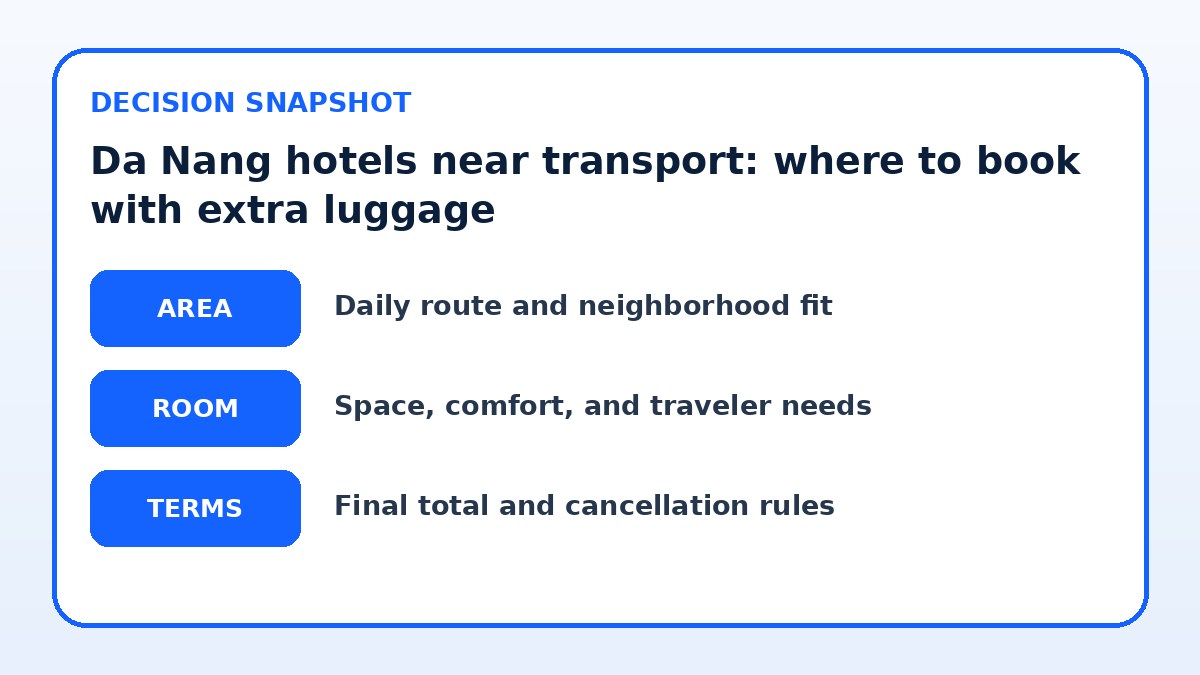
See current options before you compare the details
Availability and final conditions change. Open Trip.com now or keep reading for the practical comparison.
Which transport hubs to prioritize in Da Nang
Da Nang’s main transport touchpoints for most travelers are the airport, major bus routes that run along key arterial roads, and the city’s main road bridges that connect residential areas to the city centre and beaches. When luggage is a concern, the airport’s proximity matters most for arrivals and departures because it cuts taxi or ride time and reduces handling. For onward travel to Hoi An or Hue, look for hotels near main roads with frequent tourist shuttle stops or easy taxi access rather than tucked-away alleyway properties.
Also consider where you will spend most of your time: staying nearer the Han River bridges and central quayside keeps transfers short for city sightseeing and ferry links, while beachfront hotels reduce the need to move heavy bags to the sand every day. If you plan day trips that start early, a hotel close to the airport or principal bus junction will let you depart with minimal handling. Use maps to measure walking distance to the nearest taxi stand or shuttle stop—if the last few hundred metres involve steps or narrow sidewalks, budget extra help.
How to read hotel listings when you have extra luggage
Photos and room descriptions reveal much: look for pictures of the reception area, corridors, elevators and staircases. Listings that show wide lobbies, ramps, or elevators are better when you’re handling heavy suitcases. Don’t rely solely on star ratings—read the specific amenities and the property’s accessibility notes. If luggage storage or porter service is critical, search the listing text for those terms and confirm availability with the property before you finalize the booking.
When details are sparse, ask direct questions on the booking page or by email: Is there step-free access between the street and reception? Does the room floor require stairs? Are elevators large enough for a full-size suitcase? If you’ll arrive late, confirm whether the reception operates 24/7 and whether the hotel can assist with luggage upon arrival. For any transport transfers the hotel offers, ask exactly where the drop-off and pick-up happen so you know if porters will meet you curbside.
| Approach | Best for | Tradeoff to check |
|---|---|---|
| Stay nearest the airport or main station | Minimizing arrival/departure transfers with heavy luggage | May be noisier and offer smaller room sizes farther from tourist spots |
| Choose a central city hotel by bridges/river | Easy access to taxis, restaurants and short city sightseeing transfers | Can be busier streets and limited private parking for larger vehicles |
| Book a beachfront/residential apartment | More room to unpack and store bulky items during a longer stay | Longer transfers to airport or intercity buses; check shuttle options |
| Pick a hotel on a main road but a bit further out | Balance of quieter nights with straightforward taxi access | Requires a slightly longer taxi ride but fewer alleyway or stair hassles |
Ready to check the option that fits your plan?
Use your exact dates and traveler details so the provider page can show the current total and conditions.

Tradeoffs: central convenience vs quiet and space
Hotels closest to transport hubs usually save time and simplify transfers, but they can also sit on busier roads or near airport approach paths. That tradeoff matters if you want restful nights or if you’re traveling with sensitive equipment inside your luggage. If convenience is paramount—short transfers to the airport or bus station—accept busier streets and confirm room insulation or higher floors. If you prefer quieter stays, you’ll likely spend more time and incur more handling moving between your hotel and transport nodes.
A related choice is room size versus proximity. Larger rooms or serviced apartments give you space to unpack and store bulky items, but these properties are more often in residential or quieter beachside zones, increasing transfer time. Decide whether you value minimal transfer effort on arrival/departure or in-trip comfort with more space. If both matter, search for hotels near main roads that also advertise larger room types and elevators—this gives a compromise between short transfer distances and comfortable storage options.
Before you book
- Map the hotel’s exact address and measure walking distance to the nearest taxi stand, shuttle stop or main road.
- Ask the hotel in writing about step-free access, elevator dimensions and how many steps (if any) from street to reception.
- Confirm whether the hotel offers luggage storage, porter service or curbside assistance and any fees that apply.
- Verify 24-hour reception or late check-in procedures if your arrival is outside usual hours and request luggage help.
- Compare transfer options and estimated taxi or shuttle arrangements from the hotel versus independent ride services.
- Save photos of your booking confirmation and the hotel’s contact number; share arrival time so porters or drivers can be ready.
Practical checks and booking steps to reduce luggage stress
Before you book, map the hotel’s exact location and confirm pick-up/drop-off points with the property. Ask the hotel where its shuttle or taxi will stop and whether the driver will help with bags. Confirm elevator dimensions and the presence of step-free routes in writing if you have oversized luggage, as pictures and standard descriptions can omit these specifics. If the hotel charges for luggage handling or storage, request those terms in advance so you can factor them into your choice.
Compare transport transfer options offered by the hotel against independent taxis or ride apps—sometimes a slightly further hotel with easy main-road access costs less in time and hassle than a closer property tucked into narrow lanes. On your final booking page (and before you travel) verify check-in/out times, 24-hour reception, and any shuttle schedules. Trip.com can be used as one place to check current availability and conditions, but always verify final policies directly with the hotel at the time of booking.
Frequently asked questions
Is it worth paying more to stay closer to Da Nang Airport when I have heavy bags?
Staying closer to the airport can save time and the physical effort of multiple transfers, especially for short stays or early departures. However, the tradeoff is often busier roads and smaller hotel rooms. If you have a late arrival or early flight, proximity reduces taxi time and the need for extra handling. For longer stays, balance the cost against how often you’ll travel to/from the airport—if you’ll stay mostly in the city or beach areas, a slightly further hotel with easy main-road access may be a better overall value.
What should I ask hotels about elevator size and step-free access?
Request the elevator’s interior dimensions (width and depth) if you’re bringing oversized suitcases, sports equipment or large cases. Ask whether there are ramps or only stairs between the street and reception, and whether any corridors have narrow doorways. If pictures or descriptions don’t show a clear step-free route, ask for a photo of the path from the curb to the reception. Confirm whether staff can meet you at the curb and help load or unload luggage into taxis if needed.
How can I plan transfers in Da Nang to avoid carrying bags long distances?
Plan for door-to-door transport: book a taxi or airport transfer that will meet you curbside and assist with luggage, and coordinate a clear pickup point with the hotel. If the hotel provides shuttle service, ask where it stops and whether porters are available at that stop. For private transfers to Hoi An or Hue, choose vehicles with sufficient trunk capacity and confirm pickup logistics in advance. Always have the hotel’s address in Vietnamese written down for drivers and a phone number in case of delays.
Final planning note
Travelers with extra luggage will save the most hassle by prioritizing Da Nang hotels that offer clear, step-free access to reception, elevator access to guest floors, and a short, simple route to taxis or shuttles. Use listings to check photos of lobbies and corridors, ask the hotel specific questions about elevator dimensions and curbside assistance, and confirm pickup/drop-off points before you travel. Weigh the tradeoffs between proximity to transport hubs and quieter, roomier properties: sometimes a hotel a little further from the airport but on a main road gives the best balance of space and straightforward transfers. Always verify final policies and any additional handling fees on the hotel’s booking page or by contacting the property directly.
Continue planning
Check current options and final conditions
Use the provider page to confirm live availability, the final total, cancellation terms, and every condition that matters to your trip.
This evergreen planning guide was created with AI-assisted drafting and a structured quality review. It does not display live prices, schedules, availability, visa guidance, or provider rankings. Verify current details before booking. Some links are affiliate links; we may earn a commission at no additional cost to you.