
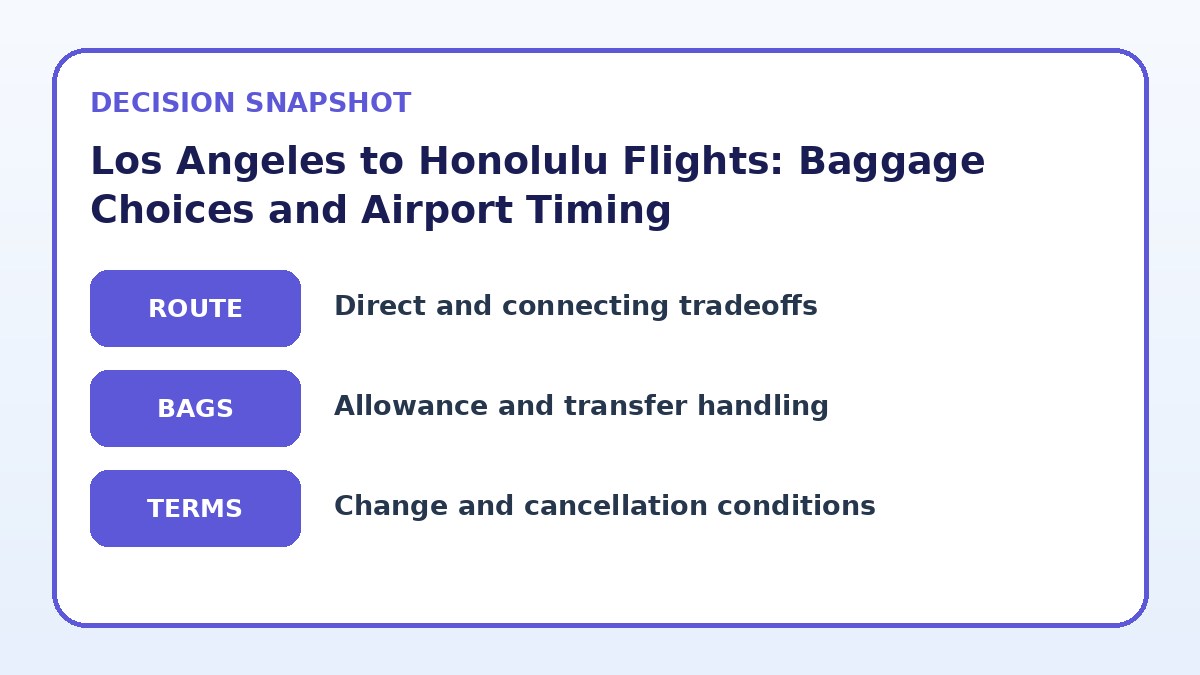
If you’re traveling from Los Angeles to Honolulu on business, the two decisions that most affect your day are what you bring and when you arrive at the airport. The practical answer: travel carry-on only if you can, check a bag only when necessary, and arrive with a clear buffer for check-in, security, and preflight needs. For many business travelers, that means packing a compact suit or wrinkle-resistant shirt, limiting electronics and chargers, and allocating extra time for checked-bag drop or last-minute work tasks. This article lays out the tradeoffs—speed versus luggage flexibility, carry-on hassles versus checked convenience—and gives step-by-step timing guidance for departures from Los Angeles-area airports, including tips for prioritizing tasks, avoiding common delays, and the checklist items that will make your door-to-boarding experience predictable.
See current options before you compare the details
Availability and final conditions change. Open Trip.com now or keep reading for the practical comparison.
Choosing carry-on versus checked luggage
Deciding between carry-on and checked luggage depends on your schedule flexibility, meeting needs at destination, and your tolerance for airport queues. Carry-on only often wins for daytrip business travel: you avoid the checked-bag drop and reclaim delay, and you reduce baggage claim uncertainty on arrival. But carry-on limits what you can pack. If your meetings require multiple outfit changes or you need bulky equipment, a checked bag becomes practical. Consider garment solutions—wrinkle-resistant fabrics, a foldable garment bag, or a compact steamer—to reduce the number of pieces you must check.
Also weigh airline baggage policies and how they affect your choice. Some fares include a checked bag; others charge separately and have stricter size and weight limits for carry-on. For tight schedules, a checked bag can still be efficient if you factor in the time to drop it at the airline counter or kiosk before security. Always verify the airline’s final baggage allowances and fees on its booking page before choosing your ticket, because policies change and affect whether carry-on or checked is the better time-saving option.
Planning airport arrival time from Los Angeles
For Los Angeles to Honolulu flights you need to build a reliable time buffer for surface travel, check-in, security, and any airline or TSA-specific screenings. Start with the time you need to get to the terminal from your departure point—allow more for morning or evening peak traffic, ride-share bottlenecks, or airport roadworks. Next, add the airline’s recommended check-in or bag-drop window, then typical TSA security wait times and a final 20–30 minutes for boarding and settling into your seat. If you travel carry-on only and have mobile boarding, your practical gate-ready time will be shorter, but don’t cut it too close if you must collect work materials or make last-minute calls.
If you have a tight schedule on arrival in Honolulu—meetings, transportation pick-ups, or connecting flights—factor in extra padding. Departures from Los Angeles can be affected by lane closures, long ride-share queues, or terminal transfers, so aim to arrive at the airport with enough extra time to handle those contingencies easily. For the most accurate planning, check your specific terminal map, verify TSA wait expectations on official airport resources, and check the airline’s latest recommended arrival window on their booking page before travel.
| Approach | Best for | Tradeoff to check |
|---|---|---|
| Carry-on only | Day trips or single-outfit business travel | Saves time at airport but limits wardrobe and gear options |
| Checked bag | Multi-day stays or bulky equipment | Adds check-in and claim time; possible delays at baggage carousel |
| Early arrival (extra buffer) | Unpredictable traffic or important morning meetings | Longer time waiting at gate but reduces stress and missed flights |
| Minimal buffer (tight timing) | Confident frequent flyers with only carry-on | Higher risk of missed flights due to traffic or security spikes |
Ready to check the option that fits your plan?
Use your exact dates and traveler details so the provider page can show the current total and conditions.
Streamlining the airport process
Small habits save time: check in online, secure a mobile boarding pass, and photograph important documents so you won’t be stalled at counters. Use trusted traveler programs or the airline’s fast-track lanes where available; they reduce security waits but require pre-enrollment. Consolidate electronics and liquids in an easily accessible pocket of your carry-on so you can remove them quickly at the security line. If you must check a bag, weigh it at home and attach durable tags to reduce the chance of counter delays and misrouting.
Plan to handle work tasks before you enter the security line—finish calls, send large files, and log out of office systems so you won’t be delayed by last-minute uploads. Keep a slim, well-organized work kit (tablet, small laptop, one charger, and noise-cancelling earphones) to maintain productivity in flight without overpacking. Also identify a quiet spot near your gate for a final prep check; many terminals have business lounges or quieter seating areas, sometimes accessible with a day pass or through corporate programs—check availability and entry rules on the provider’s page before planning to use them.
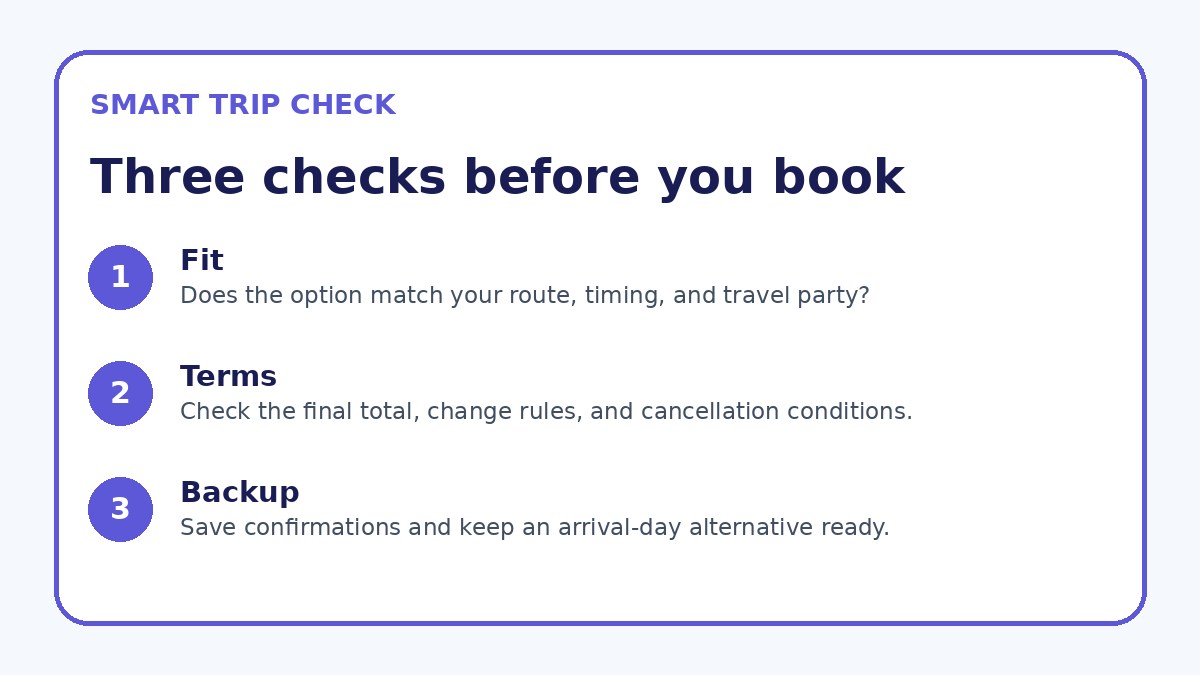
Before you book
- Weigh and measure your luggage at home to confirm it meets airline carry-on or checked limits before leaving for the airport.
- Check in online and download or screenshot your boarding pass; print a copy only if required by the airline.
- Pack critical electronics, chargers, medication, and one change of clothes in your carry-on for immediate access.
- Allow extra transit time to the Los Angeles terminal for peak traffic, ride-share waits, and potential terminal reassignments.
- Verify the airline’s baggage allowances and any special screening requirements on the airline’s booking page before you depart.
- Prepare documents (ID, boarding pass, hotel or meeting confirmations) in one easy-to-reach folder or phone folder for quick access.
Handling arrival logistics in Honolulu
On arrival in Honolulu, the immediate priorities for business travelers are to exit the airport quickly and reach meetings on time. If you carried only a carry-on, you’ll usually be among the first passengers to leave the gate area, which can save substantial time. For checked luggage, expect some wait at baggage claim; some flights may have quicker carousel turnover than others. If you’ve arranged ground transport, confirm pick-up points and allow the driver extra time to locate you if terminals are crowded—share a real-time status update when you land to coordinate efficiently.
Consider digital options to speed post-arrival tasks: mobile maps for directions, e-receipts for expense capture, and cloud-based meeting files rather than physical copies. If you need a quick change or freshen-up, identify an airport lounge or an airport restroom with space for a quick touch-up before heading out. Keep a compact emergency kit—stain remover, lint roller, and travel-size grooming items—in your carry-on so you can arrive at meetings looking prepared even after a long flight.
Frequently asked questions
How early should business travelers arrive at Los Angeles airports for flights to Honolulu?
Aim to arrive with enough time for surface travel, check-in or bag drop if needed, TSA screening, and boarding. If you travel carry-on only and have mobile check-in, you can usually plan a shorter arrival window, but still allow extra time for Los Angeles traffic and potential ride-share queues. For checked baggage or unfamiliar terminals, add additional buffer time for the airline’s counter process and any unexpected checks. Confirm the airline’s recommended arrival window on its booking page and verify TSA procedures at the airport you’re departing from.
What luggage should I prioritize when flying for a short business trip to Honolulu?
For short business trips, prioritize a well-organized carry-on: include a work-appropriate change of clothes, chargers, essential documents, and a compact toiletry kit. Choose wrinkle-resistant fabrics and pack using compression or garment folders to keep outfits neat. If you must bring bulkier items or extra shoes, check a bag but weigh it and confirm the airline’s allowed dimensions and weight on their booking page. Keep valuables and immediate work tools in your carry-on to avoid disruption in case of delayed checked luggage.
Are there specific security or screening steps for flights to Hawaii I should plan for?
Flights to Hawaii follow standard TSA screening rules but can include extra scrutiny depending on connecting airports or airline processes. To move through security efficiently, pack liquids and electronics accessibly, enroll in a trusted traveler program if eligible, and complete online check-in to reduce counter time. Since policies can change, check the TSA guidance and your airline’s instructions on the booking or airport page before traveling to confirm any additional documentation or screening steps required for flights to Honolulu.
Final planning note
Organizing baggage and airport timing for Los Angeles to Honolulu business travel is mainly about tradeoffs: speed versus packing flexibility, and conservative buffers versus maximizing work time. For many travelers, a structured approach—pack light but smart, check airline policies before booking, and build deliberate time buffers for traffic and airport processes—will reduce stress and keep you punctual. Use mobile check-in and keep essential work items in your carry-on to stay productive. Before you finalize plans, verify baggage rules and arrival recommendations on your airline’s booking page and, if you want a single place to compare options, consider checking current availability on Trip.com as a supplementary resource.
Continue planning
Check current options and final conditions
Use the provider page to confirm live availability, the final total, cancellation terms, and every condition that matters to your trip.
This evergreen planning guide was created with AI-assisted drafting and a structured quality review. It does not display live prices, schedules, availability, visa guidance, or provider rankings. Verify current details before booking. Some links are affiliate links; we may earn a commission at no additional cost to you.