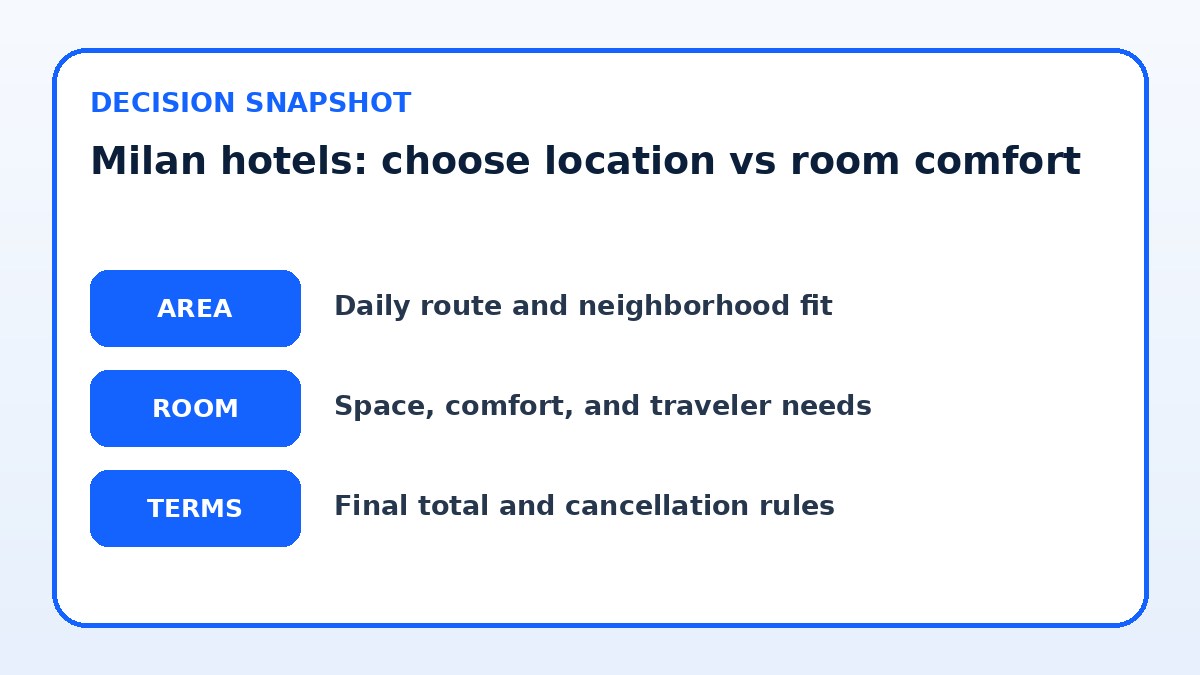
If you're traveling alone to Milan, prioritize what matters most to your days and nights: proximity to the Duomo, transport hubs and nightlife, or a quieter, larger room where you can relax and work. For many solo travelers a practical compromise is to pick a hotel near a single transit line or a main neighborhood—Brera, Centro Storico, Navigli or Porta Romana—then trade off room size or extras (like soundproofing and in-room work space) to fit your budget. Another common approach is to choose a slightly further-out neighborhood with better in-room comfort and accept a 10–25 minute transit ride to the central sights. Below you'll find clear decision criteria, the tradeoffs to expect, a comparison of approaches, a checklist for verifying details on booking pages, and answers to questions solo travelers often have when choosing Milan hotels.
See current options before you compare the details
Availability and final conditions change. Open Trip.com now or keep reading for the practical comparison.
Decide what you actually need from your room
Start by listing the activities you plan to do each day: meetings, museum visits, evening dining, walking tours, or long work sessions. If you expect long days out and just need a clean bed and shower, a central, compact room could be ideal because it reduces transit time and gets you back to safety quickly at night. If you will be doing remote work, need reliable in-room Wi-Fi, or want a comfy place to relax between outings, prioritize room size, a useful desk area and soundproofing even if it means being farther from the main squares.
Measure comfort in concrete terms: mattress type and firmness, room square meters, blackout curtains, noise insulation, and whether the bathroom is en suite. Look for photos showing usable desk space and read the room description for specifics—square footage, bed size, and whether the hotel offers laptop-friendly desks or quiet floors. These details are often omitted in basic summaries, so confirm them on the booking page and, when in doubt, contact the property directly before committing.
Compare neighborhoods by convenience and vibe
Central neighborhoods like Centro Storico and Brera put you close to the Duomo, Galleria and fashion streets; they're walkable and excellent for sightseeing on foot. Expect lively streets, high foot traffic, and limited room sizes in historic buildings. If late-night dining and being in the middle of the action matter, prioritize a central location; if you prefer quieter evenings, choose a hotel on a side street, a higher floor, or a property that advertises soundproofing.
Neighborhoods such as Navigli, Porta Romana and Isola offer different balances: Navigli is sociable and ideal for evenings by the canals, Porta Romana is residential and calmer with good tram links, while Isola blends nightlife with a more local feel and direct metro access. When comparing options, map the property to the nearest metro or tram stop and note how many changes are required to reach the places you’ll visit most—this makes transit-time tradeoffs tangible rather than abstract.
| Approach | Best for | Tradeoff to check |
|---|---|---|
| Central hotel (Duomo/Brera) | Maximizing sightseeing and reducing nightly transit. | Smaller rooms, more street noise and often higher foot traffic around the property. |
| Neighborhood hotel (Navigli/Porta Romana/Isola) | Larger rooms, calmer evenings and a more local atmosphere. | Requires more transit time to central tourist sites and evening attractions. |
| Transit-line compromise (near a single metro/tram) | Balanced transit convenience with better room comfort and lower cost. | Still requires planning connections; nights may be quieter but less walkable to main sights. |
| Boutique or business hotel slightly outwards | Higher-quality amenities, workspace and quieter nights for remote work. | Fewer immediate food or nightlife options; validate transport times and late service availability. |
Ready to check the option that fits your plan?
Use your exact dates and traveler details so the provider page can show the current total and conditions.
Safety, transport and solo-traveler conveniences
Safety for solo travelers is a practical mix of neighborhood reputation, lighting, and the hotel's immediate surroundings. Look for properties near well-lit streets and public transport stops; check whether night reception is available and how evacuation routes or emergency contacts are presented. Avoid assuming a neighborhood is safe solely because it’s central—read recent guest comments about evening noise and accessibility and verify specifics like 24-hour front desk availability on the booking page.
Transport matters for balancing comfort and convenience. A hotel that’s five to twenty minutes from a metro or tram stop can give you a larger, quieter room without making daily logistics painful. When comparing accommodations, note the walking distance to the nearest stop, how many line changes are typical for your main destinations, and whether the route involves stairs or elevators—important if you’ll be carrying luggage or traveling late.
Before you book
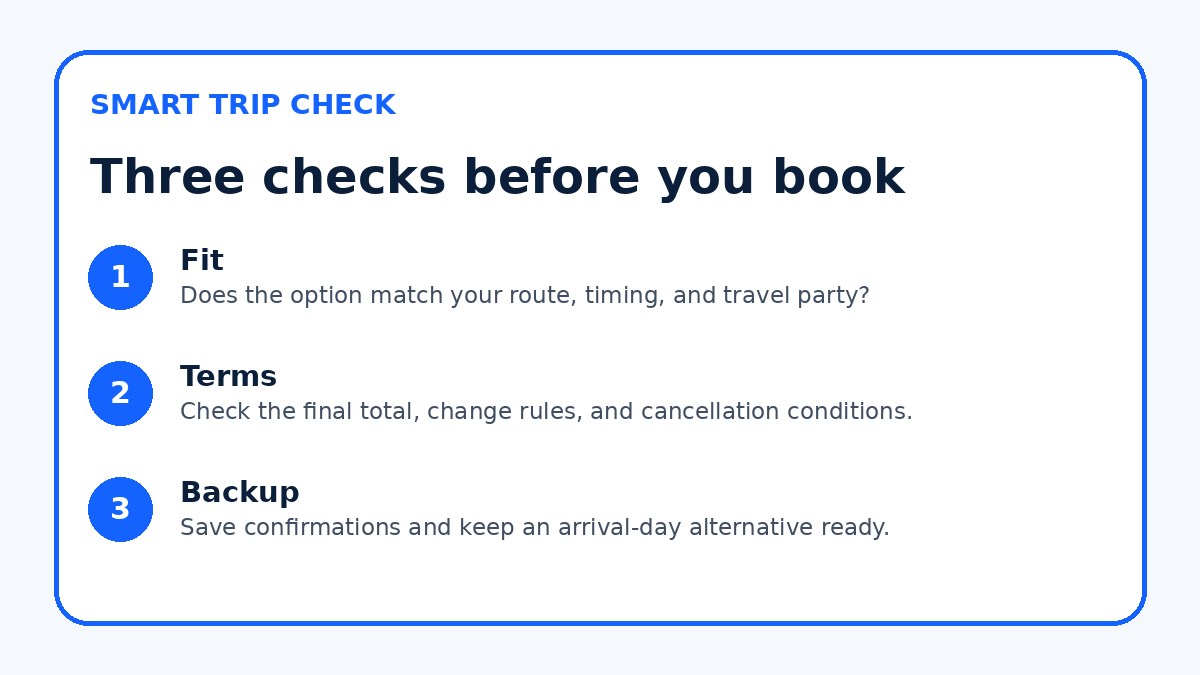
- Map the hotel location relative to the nearest metro/tram stop and your key sights; note walking times and the number of transfers.
- Confirm room size, bed type and whether the bathroom is en suite from the hotel’s detailed description or photos.
- Verify front desk hours, late arrival policy and luggage storage availability on the booking page or directly with the property.
- Check the hotel’s Wi-Fi policy or speed if you’ll work remotely, and request photos of the desk or workspace if unclear.
- Read recent guest comments about night noise and cleanliness, focusing on mentions of the exact room category you’re booking.
- Confirm cancellation terms, deposit requirements and accepted payment methods on the provider’s final booking page before paying.
Practical booking checks and what to verify
Before booking, confirm exact room details: square meters, bed type, whether the bathroom is private, and pictures that accurately show the space rather than a different room category. Check the hotel’s stated Wi-Fi speed or policy, breakfast options, laundry access, and whether there are quiet-room requests or higher-floor options. Because service details can change, verify cancellation rules, extra-fee amenities and any deposit policies on the provider’s final booking page; Trip.com can be used as one comparison tool but always confirm with the hotel’s page if you need absolute clarity.
Also verify arrival and departure logistics: airport transfer options, how late the front desk operates, luggage storage policies, and payment methods accepted. If you rely on late arrivals or early departures, confirm those times before relying on the property. Finally, if you have accessibility needs, dietary restrictions or require a workspace, ask the hotel directly for photos or documentation; booking pages sometimes lag behind real conditions and only the property can verify certain accommodations.
Frequently asked questions
Is it better for a solo traveler to stay near the Duomo or a quieter neighborhood?
Decide by how you spend your time: if you plan mostly daytime sightseeing and late dinners in central areas, staying near the Duomo minimizes travel time and gives easy access to the main sights. If you prioritize sleep, large rooms, or remote work, a quieter neighborhood often delivers more comfort for the same or lower price. Consider a hybrid: book a hotel near a single reliable metro/tram line that balances quick access to the center with calmer evenings and larger rooms.
How can I judge if a small hotel room will be acceptable before I arrive?
Look for precise indicators: stated square meters or room dimensions, clear photos of the exact room you’ll book, and explicit mentions of bed size and bathroom setup. Search reviews for mentions of the same room category and prioritize listings that provide floor plans or measurements. If essential details are missing, contact the hotel to request exact room dimensions, whether luggage fits comfortably, and any available quieter floors—confirm these on the hotel’s final booking page.
What transport details should solo travelers confirm when choosing a Milan hotel?
Verify the walking distance to the nearest metro or tram stop, number of line changes to your primary destinations, and whether the transit route is well-lit and easy at night. Check the frequency of service during your expected travel times and any late-night alternatives like night buses or taxis. If you arrive late or leave early, confirm airport transfer options or taxi availability; always validate these logistics on the booking or transport provider pages before booking.
Final planning note
Balancing location and room comfort in Milan is a personal calculation: reduce transit time and stay in the middle of the action, or trade a bit of convenience for larger rooms, quieter nights and more in-room amenities. For most solo travelers a practical middle ground—picking a hotel near one reliable metro or tram line—delivers comfortable rooms without making sightseeing a chore. Before you book, verify concrete room measurements, front desk hours, Wi-Fi quality, and cancellation details on the provider’s final booking page. That due diligence turns a good pick into the right pick for your solo Milan trip.
Continue planning
Check current options and final conditions
Use the provider page to confirm live availability, the final total, cancellation terms, and every condition that matters to your trip.
This evergreen planning guide was created with AI-assisted drafting and a structured quality review. It does not display live prices, schedules, availability, visa guidance, or provider rankings. Verify current details before booking. Some links are affiliate links; we may earn a commission at no additional cost to you.