For a business traveler leaving Seoul, the return trip to the airport should be a predictable, low-stress part of the schedule. The practical answer: pick the transfer method that balances door-to-door predictability, travel-time buffers for security and check-in, and cost control for your company. First, confirm which Seoul airport your flight departs (Incheon ICN or Gimpo GMP) and the firm check-in time required by your airline. Next, compare booked private transfer, ride-hail, airport bus, or rail in terms of how they fit into your meeting schedule, luggage needs, and tolerance for variable traffic. Finally, verify the provider’s latest pickup policy, any requirement for ID or reservation confirmation, and where precisely they meet you at the hotel or office. If you check those points in advance, you’ll reduce last-minute decisions and keep your departure day calm and efficient.
See current options before you compare the details
Availability and final conditions change. Open Trip.com now or keep reading for the practical comparison.
Deciding what matters: time, predictability, or cost
Start by ranking your priorities for the return trip. If your schedule is tight and fixed—say you have an immovable meeting end time—predictability matters most. That steers you toward options that minimize variables: pre-booked meet-and-greet services or airport express rail that has scheduled departures. If your main constraint is keeping costs within a corporate travel limit, shared buses or local express coaches reduce expense but may add walking or wait times. Business travelers often split the difference by combining a public rail to avoid traffic with a short taxi at each end for convenience.
Assess the risk you’re willing to accept. Traffic in Seoul can be unpredictable during peak hours, which affects taxis and road transfers. Trains and airport express services avoid road congestion but require getting to the station on time and handling luggage on platforms and cars. Also consider the complexity of your route — if you’ll transfer between lines or carry bulky equipment, that changes the balance toward door-to-door options. Map your meeting location to available rail stations and main roads to see which choices fit your real-world schedule.
How to evaluate transfer options quickly
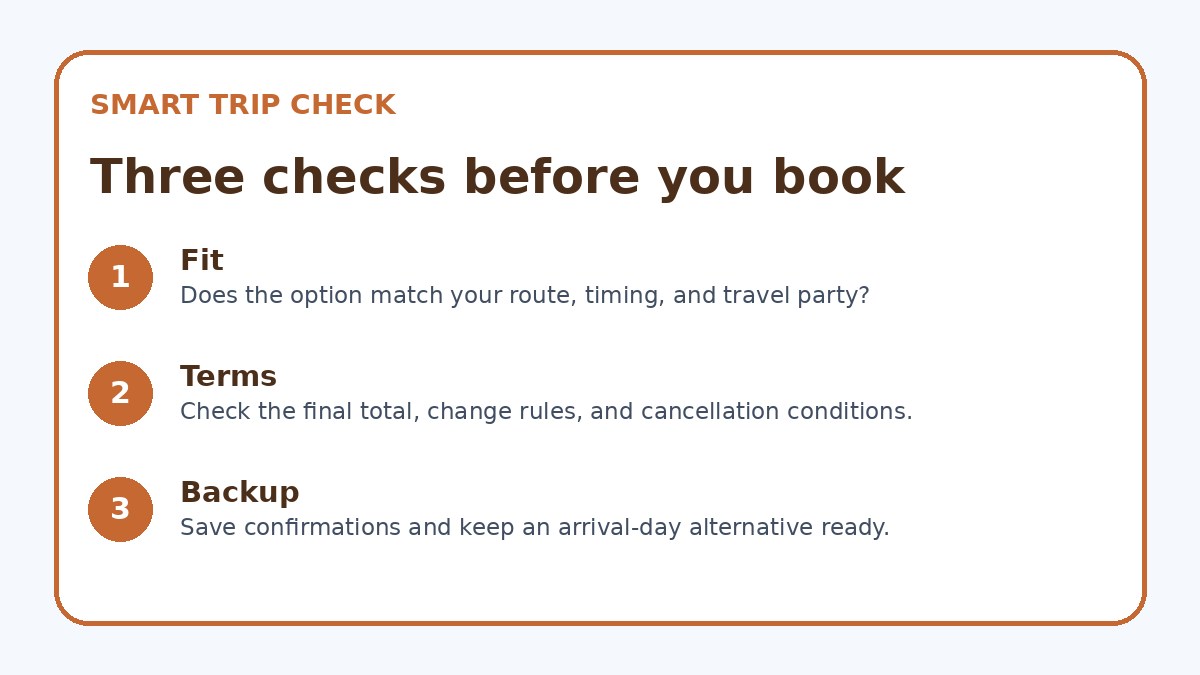
For each candidate option, run a quick checklist: pick-up precision, door-to-door time variability, luggage handling, and how payment or invoicing works for your company. Pre-booked private transfers often offer meet-and-greet and help with bags; ride-hail apps provide on-demand pickup but can vary in wait time and surge pricing. Airport buses and coaches list stops you can use to match hotel locations; trains follow a timetable but may require a short taxi to the station. Use real-world timing windows rather than ideal travel times—add safety margins for check-in and security.
Where provider specifics matter, verify them directly on the provider’s booking page: exact pickup point, baggage allowances, cancellation and delay policies, and whether the driver will wait beyond a set time. If your employer requires receipts or a particular invoicing method, confirm that before booking. You can compare current availability and conditions on sites like Trip.com as one option to gather information, but always use the operator’s own confirmation page for final verification of service details.
| Approach | Best for | Tradeoff to check |
|---|---|---|
| Pre-booked private transfer | Travelers needing door-to-door reliability and luggage assistance | Higher cost and potential waiting fees if schedule changes |
| Airport express rail plus short taxi | Avoiding road traffic and predictable rail schedules | Requires moving luggage through stations and a last-mile taxi |
| Airport coach or shuttle | Budget-conscious travelers with flexible timing | Fixed stops and schedules may add walking or waiting time |
| Ride-hail / taxi on demand | Flexible, on-the-minute departures from meetings or offices | Travel time affected by traffic and possible surge pricing |
Ready to check the option that fits your plan?
Use your exact dates and traveler details so the provider page can show the current total and conditions.
Timing your departure from the office or hotel
Work backwards from the airline’s recommended arrival time and add the time you need to reach the airport reliably. For many business travelers, that means clearing a minimum buffer for check-in, security, and any expected lines. Then add that to the typical travel time for your chosen route, plus extra margin for traffic or station crowds. If you’re combining rail and a taxi, include the time to walk, wait for the taxi, and any platform changes. Using calendar reminders with travel buffer reminders helps you avoid last-minute rush decisions.
If your schedule includes a final meeting or presentation, build a contingency plan: either an earlier transport reservation you can cancel or a fast backup like a ride-hail option ready on call. Share the pickup plan with your administrative contact or travel manager and confirm pick-up times with the hotel concierge if you’re relying on them to arrange transfers. Communication reduces misunderstandings and ensures a colleague can step in if changes arise. Keep critical documents—boarding pass, passport, and reservation confirmations—handy in a single folder or travel app.
Before you book
- Confirm which airport your flight departs from (ICN or GMP) and record the terminal on your calendar.
- Check the airline’s recommended check-in and security arrival time and add a comfortable buffer.
- Decide whether door-to-door pickup or fixed-schedule transit better matches your meeting end time.
- Verify the provider’s exact pickup location, luggage policy, and driver wait-time on their booking page.
- Share your final pickup time and reservation details with your assistant or the hotel concierge.
- Prepare digital and paper copies of your boarding pass, passport, and transfer confirmation for quick access.
Common pitfalls and how to avoid them
Avoid assuming the shortest estimated travel time is realistic—estimates by mapping apps and providers often represent ideal conditions. To lower risk, plan for the likely peak traffic or transit crowding times and choose services known for buffer allowances. Be cautious with same-day bookings for peak-hour departures; a pre-booked option that confirms waiting times is better for an immovable flight. Also, pay attention to pickup points; hotels sometimes designate specific taxi ranks or lobby locations where vehicle access is restricted.
Don’t forget operational details that can derail an otherwise smooth transfer: luggage limits on trains and shuttles, how the driver identifies you at pickup, and whether the service can invoice a company directly. When using ride-hail apps, confirm the vehicle type if you have oversized luggage. If your itinerary includes a domestic connection or an early-morning international flight, double-check the first public transit departure and have a plan B. Confirming a few key details ahead of time eliminates most last-minute surprises.
Frequently asked questions
How far in advance should I book a private transfer for a business departure from Seoul?
For important business flights, book as soon as your itinerary is fixed so you get a confirmed pickup and clear cancellation terms. Booking early also secures your preferred vehicle size if you travel with equipment. If your schedule is still tentative, check the provider’s flexible cancellation and change rules before confirming. On the day, reconfirm pickup details with the operator or hotel concierge. Always use the operator’s booking page to verify final pickup window, driver contact, and any waiting fees.
Is it safer to take rail services or a taxi when heading to Incheon late at night?
Safety concerns are different from reliability or availability. Rail services follow fixed schedules and avoid road traffic, but late-night departures may be less frequent and require timing your meeting to catch the last service. Taxis and ride-hail offer door-to-door service at any hour but can be affected by traffic or driver availability. For late-night flights, check the operator’s published last departures or confirm a 24-hour transfer option. Use the provider’s official information for exact operating times and service windows.
What should I tell my driver or hotel concierge to ensure a smooth pickup?
Provide a clear meeting point, your flight departure time and terminal, the number of passengers and pieces of luggage, and a contact phone number. If you’ll be in a meeting room, give precise instructions for where the driver should wait and for how long. Ask the concierge to meet the driver at the hotel entrance if building access is controlled. Confirm whether the transfer includes help with luggage and whether you’ll receive a paper or electronic receipt suitable for corporate expense reporting.
Final planning note
A calm, efficient return from Seoul’s city center to the airport starts with a short decision process: identify the departing airport, rank predictability versus cost, and confirm precise pickup details before you leave for your last meeting. Use scheduled rail or coach options to avoid traffic variability, or choose pre-booked private transfers when every minute counts and you need a guaranteed meet-and-greet. Always verify the provider’s pickup location, luggage rules, and cancellation or wait-time policies on their booking confirmation page. With those checks done, you can focus on final work tasks and leave travel logistics to a confirmed plan.
Continue planning
Check current options and final conditions
Use the provider page to confirm live availability, the final total, cancellation terms, and every condition that matters to your trip.
This evergreen planning guide was created with AI-assisted drafting and a structured quality review. It does not display live prices, schedules, availability, visa guidance, or provider rankings. Verify current details before booking. Some links are affiliate links; we may earn a commission at no additional cost to you.