Short answer: most families visiting central Tokyo don’t need a rental car; public transit is faster, more convenient, and avoids parking headaches. But a rental can make sense for families with small children, heavy luggage, mobility needs, or plans to explore beyond the metropolitan core—Mount Takao, Nikko, or the Izu coast, for example. Make the decision by comparing your itinerary, lodging locations, luggage and car seat needs, and the tradeoffs of driving in an unfamiliar, dense urban environment. This guide walks through those tradeoffs, gives clear decision criteria, compares common approaches (renting, using rail and buses, or mixing modes), and gives an actionable checklist so you can verify the details before booking. If you want to compare current availability, you can optionally check Trip.com, but always confirm vehicle rules, insurance options, and extras on the rental company’s final booking page.
See current options before you compare the details
Availability and final conditions change. Open Trip.com now or keep reading for the practical comparison.
When a Tokyo car rental makes sense for families
A rental becomes compelling when your itinerary includes destinations outside central Tokyo or when you have specific mobility or luggage needs. If you plan multiple day trips to mountainous or coastal areas where train service is infrequent, the flexibility of a car can save hours and simplify transfers, especially with children who need predictable schedules. Similarly, families traveling with strollers, grandparents with limited mobility, or large amounts of luggage may find door-to-door driving easier than shuttling between stations, elevators, and crowded platforms.
Also consider trip rhythm: if your visit is spread across several suburbs or rural stays rather than concentrated in one neighborhood, driving reduces the cumulative time spent changing trains and hauling bags. Another practical scenario is when your group is three or more adults plus children—splitting the per-person transport cost can make a rental cost-competitive. Finally, evaluate the emotional cost: if driving reduces stress and keeps your schedule flexible with kids, that benefit often outweighs logistical downsides.
When public transit is the smarter family choice
Tokyo’s rail and subway network is among the world’s most efficient for urban travel: it is frequent, fast, and covers nearly every central sightseeing cluster. For families staying in central wards—Shinjuku, Shibuya, Ginza, Asakusa, or Tokyo Station area—stations are usually within walking distance, and many attractions have limited or expensive parking. Avoiding driving also means you won’t have to navigate complex one-way streets, congestion, or unfamiliar signage, which can be particularly challenging during rush hours or in dense neighborhoods packed with pedestrians.
Beyond convenience, transit reduces hidden frictions like finding a car seat adapter, the need to pay for highway tolls, or locating parking that accommodates strollers and larger family vehicles. Public transit often places you right at museum entrances, parks, and shopping streets where a car would be more of a liability. If your daily schedule centers on short hops within the city and you prefer not to worry about parking, penalties, and route planning, rely on trains, subways, and buses paired with taxis for late-night or low-mobility legs.
| Approach | Best for | Tradeoff to check |
|---|---|---|
| No car — transit and taxis | Families staying centrally who plan short urban days | Fast and simple in the city but limits flexibility for distant day trips and door-to-door convenience |
| Rent only for day trips | Families who primarily use transit but need occasional excursions | Keeps city logistics simple while offering flexibility, but requires extra planning and pickups |
| Full rental for the whole stay | Trips with multiple suburban or rural stops and heavy luggage | Maximum flexibility but higher costs, parking hassles, and driving stress in the city |
| Mixed approach: transit + occasional taxi or ride-share | Families wanting simplicity inside Tokyo with low-frequency point-to-point needs | Avoids parking and driving, yet can be costly for frequent or long cross-city legs |
Ready to check the option that fits your plan?
Use your exact dates and traveler details so the provider page can show the current total and conditions.
How to compare costs, time, and convenience
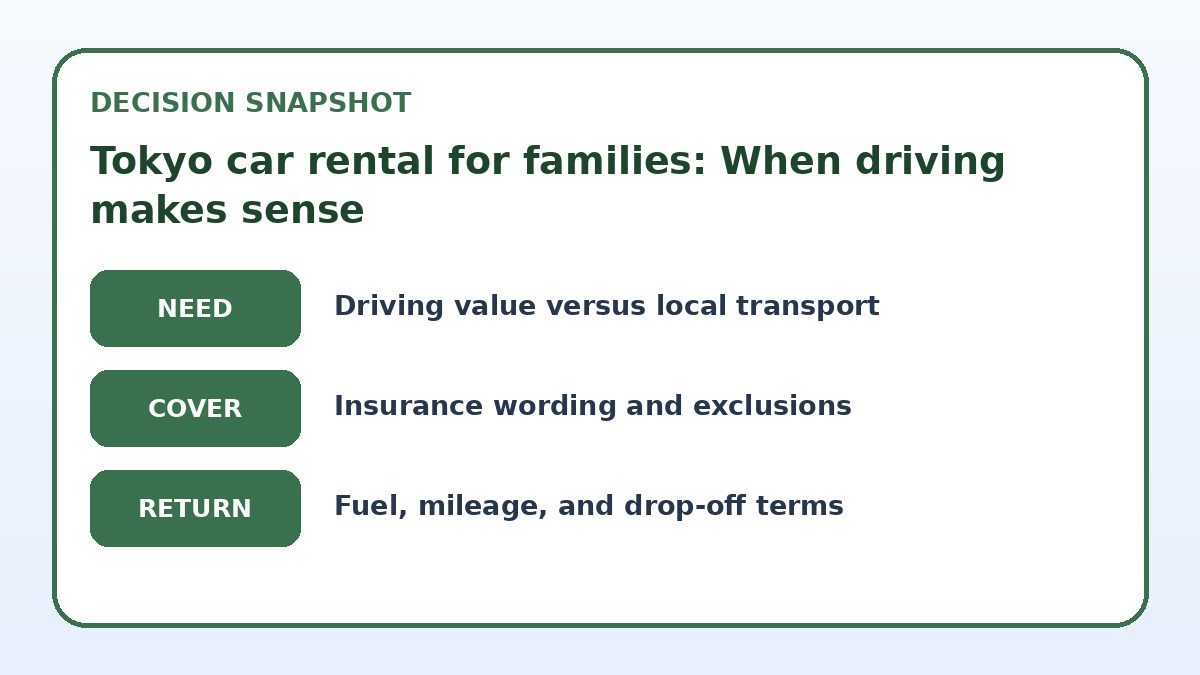
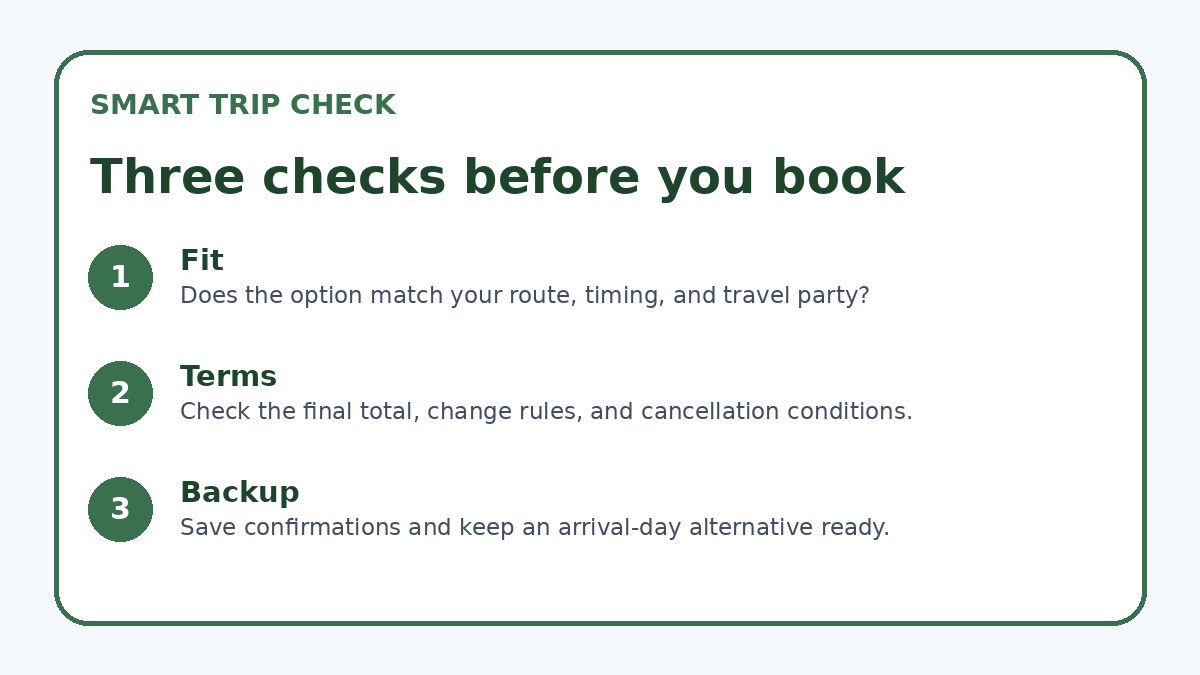
Don’t compare only the base rental rate. Build a practical total that includes child seats or booster costs, insurance options, fuel or EV charging needs, tolls on expressways, parking fees at hotels and attractions, and the time cost of traffic and finding spaces. Estimate door-to-door travel time for each day’s plan: driving might be faster for cross-prefecture legs but slower during rush hour within central Tokyo. Consider the number of days you truly need a car—renting for only the days you take rural excursions and using transit otherwise often delivers the best balance.
Also factor the mental load of driving in unfamiliar conditions. For non-Japanese drivers, confirm license requirements (an international driving permit or certified translation may be required) and whether navigation systems support your language. If you’re comparing rental companies, verify fuel policy, mileage limits, and drop-off options—especially if you’re returning the car at a different location. For current availability and quick comparisons you can check Trip.com, but always verify vehicle details and extras on the provider’s final booking page.
Before you book
- List every planned stop and mark which are inside central Tokyo and which are outside the 23 wards to see if a car improves door-to-door travel time.
- Check whether your driver’s license meets Japanese requirements and arrange an international permit or translation if needed before booking.
- Select and reserve the correct child seats or boosters with the rental company and confirm seat compatibility on the final booking page.
- Estimate parking availability and fees at each hotel and major attraction you'll visit; contact hotels directly to confirm on-site parking policies.
- Compare total cost by adding estimated tolls, parking, fuel/charging, insurance, and child-seat fees to the daily rental rate.
- Decide pick-up and drop-off locations to minimize urban driving—consider airport or suburban branches that are easier to access with luggage.
Practical tips for families who rent in Tokyo
Reserve required child seats when you book; Tokyo rental desks may have limited inventory and sizes vary. Bring appropriate car-seat attachments or request ISOFIX-equipped vehicles if your child seat needs them and confirm compatibility on the booking page. Choose a larger vehicle than you think you’ll need—strollers, suitcases, and travel gear add up—so you avoid a cramped cabin on longer drives. If anyone in the family has mobility concerns, request vehicles with higher seats or easy rear-door access.
Plan pickup and drop-off locations to minimize urban driving: airport or suburban branches often have easier access than central offices near congested districts. Map your intended routes and identify likely parking areas in advance, noting nighttime options since some parking structures close or restrict vehicle sizes. Finally, download offline maps and a translation app, keep printed reservation confirmations, and check toll collection options—many rentals provide ETC (electronic toll collection), but you should confirm whether a device is included and how charges will be billed.
Frequently asked questions
Can I use my home country driver’s license to rent and drive in Tokyo?
That depends on your country of issue: many travelers need an International Driving Permit (IDP) based on the 1949 Geneva Convention, while a few national licenses require an official Japanese translation. Because requirements vary by nationality and can change, confirm what documents the rental company and local authorities require before you travel. Check both the rental provider’s final booking page and your country’s motoring authority for current guidance, and carry passport-sized ID with your license while driving.
Is parking easy to find around major Tokyo attractions when traveling with children?
Parking is available at many attractions and commercial areas, but spaces can be limited near popular sites and can be expensive. Some museums and parks have family parking or accessible spots, but others expect visitors to arrive by public transit. When traveling with children, identify parking garages with easy pedestrian access, elevator service, and stroller-friendly walkways. Call or check official attraction pages to confirm parking size limits and operational details, since these change and affect whether a car will save overall time and stress.
How do I balance a rental car with Tokyo’s efficient rail system for a mixed itinerary?
Start by splitting your itinerary into urban days and excursion days. Use transit for concentrated city sightseeing to avoid driving hassles, and plan rental days for trips beyond the metro area. When booking, choose flexible rental terms (one-way returns if needed) and schedule pickups outside the densest districts. Factor in the time it takes to pick up and drop off a car, and consider pre-booking parking at your excursion destinations. Always confirm rental pick-up, insurance, and drop-off policies on the provider’s final page to avoid surprises.
Final planning note
For most family visits focused on Tokyo’s central neighborhoods, a rental car adds more friction than value. Public transit will get you quickly and directly to the city’s main sights, avoiding parking searches, tolls, and the stress of navigating dense streets. A rental becomes worthwhile when your plans include multiple suburban or rural day trips, have heavy luggage or mobility needs, or when driving significantly reduces transit transfers. Use the checklist and comparison rows to weigh time, convenience, and total cost. If you opt to rent, reserve child seats and confirm all vehicle and insurance details on the rental company’s final booking page before you commit.
Continue planning
Check current options and final conditions
Use the provider page to confirm live availability, the final total, cancellation terms, and every condition that matters to your trip.
This evergreen planning guide was created with AI-assisted drafting and a structured quality review. It does not display live prices, schedules, availability, visa guidance, or provider rankings. Verify current details before booking. Some links are affiliate links; we may earn a commission at no additional cost to you.