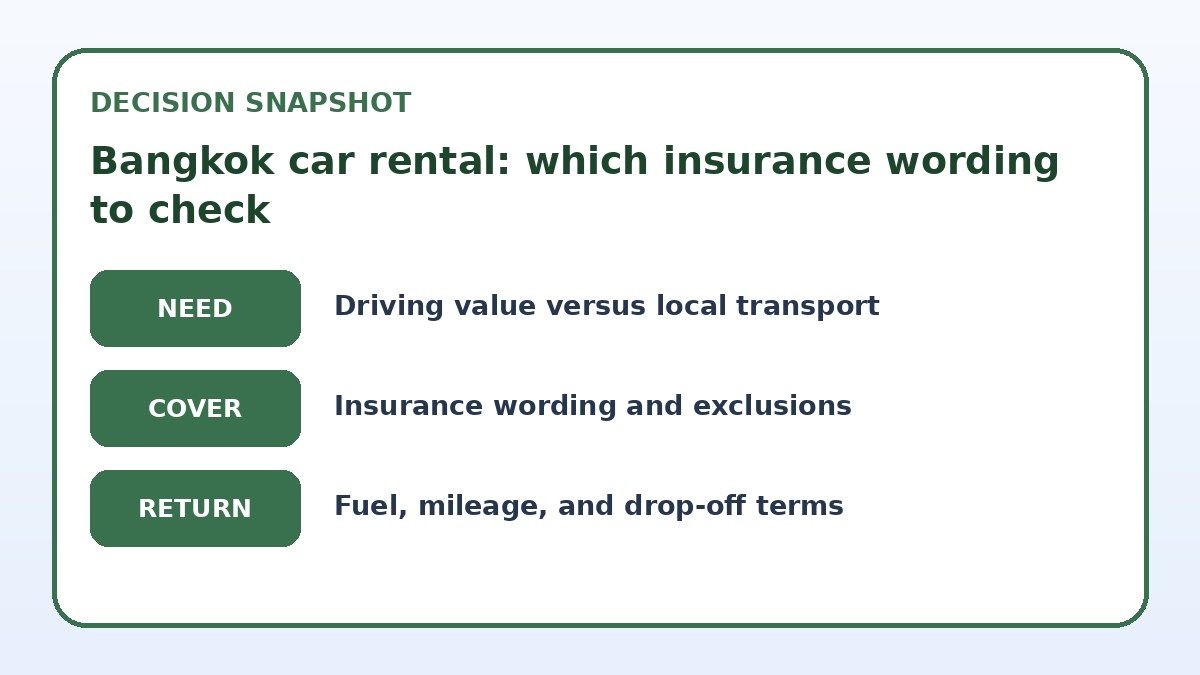
Practical answer first: when renting a car in Bangkok as a family, read four key insurance items on the rental contract and insurer paperwork — liability limits, collision damage waiver (CDW) wording, excess (deductible) amount and whether third-party medical and passenger liability are included. Ask the company to show those clauses in plain language, confirm which drivers are named, and get written confirmation of any promised cover. Keep photos of the signed pages and the vehicle on pickup.
Why this matters: Bangkok’s traffic, heavy urban congestion and occasional aggressive driving increase the chance you’ll need to rely on coverage. Insurance wording controls who pays, how much you owe up front, and whether children or additional drivers are protected. Below I explain the tradeoffs between the common options, what to check on provider booking pages, and how families can make a clear, evidence-backed choice before they drive.
See current options before you compare the details
Availability and final conditions change. Open Trip.com now or keep reading for the practical comparison.
Find the essential words on the policy page
When you see a rental price it rarely tells the whole story. Look specifically for phrases such as “third-party liability,” “collision damage waiver (CDW),” “theft protection,” “excess/deductible,” and “loss of use.” These terms determine who pays for what after an incident. Third-party liability covers damage or injury you cause to others; CDW covers damage to the rental car itself but often carries an excess. Theft protection covers loss if the vehicle is stolen, but it may exclude items left inside or require police paperwork.
Don’t assume short summaries are sufficient—open the full policy wording or insurance certificate and search for exclusions and definitions. Exclusions are crucial: they may void cover for driving on unpaved roads, using a different driver, driving under the influence, or using the vehicle for certain activities. If the file is not available online, request a copy by email and allow time to review before pickup. For families, focus on whether children and car seats are mentioned in passenger liability or personal accident sections.
Collision Damage Waiver, excess and how they affect families
The CDW reduces your financial responsibility for damage to the rental car but is not always a full insurance policy. Wording to spot: whether CDW is “included,” “optional,” or “subject to excess.” If included, find the exact excess amount—how much you would pay immediately after an incident. Families often prefer a low excess because a fender-bender with kids inside can be disruptive; a high deductible means you might be stuck arranging alternative transport and paying a large sum before reimbursement processes start.
Deciding to buy additional excess-reduction or super-CDW depends on your tolerance for upfront risk and the scale of your trip. If you plan long daily drives from Bangkok into nearby provinces, a lower or removed excess reduces stress. However, note that some excess-reduction products have their own exclusions and claims steps. Confirm whether the provider requires you to use their approved repairers and what documentation you’ll need to claim compensation—especially important if you have children with medical needs or expensive equipment in the car.
| Approach | Best for | Tradeoff to check |
|---|---|---|
| Keep standard CDW and accept a moderate excess | Families who want to reduce booking cost but tolerate some upfront risk | Lower daily rate but potential large out-of-pocket payment after a claim |
| Buy excess-reduction (super CDW) from the rental company | Families wanting minimal financial exposure and simpler claims with the rental firm | Higher rental cost and possible gaps if the reduction excludes certain damages |
| Use a third-party excess-insurance policy | Families seeking cheaper excess protection independent of the rental company | May require reimbursements and paperwork; watch for exclusion differences and waiting periods |
| Rely on personal insurance or credit card cover | Families whose existing policies already offer comprehensive car rental protection | Coverage details vary widely; you must verify provider terms and how claims are handled in Thailand |
Ready to check the option that fits your plan?
Use your exact dates and traveler details so the provider page can show the current total and conditions.
Named drivers, age limits and passenger coverage
Insurance wording often ties cover to named drivers and age limits. Look for phrases like “named drivers only,” “additional driver fee,” “minimum and maximum driver age,” and “young driver surcharge.” If multiple family members plan to share driving duties, ensure they appear on the contract; otherwise the insurer may refuse a claim if the actual driver differs from those listed. Age limits can particularly affect families with younger parents or older teen drivers — check for any sensible exceptions or required additional cover.
Passenger coverage — sometimes called personal accident insurance (PAI) or passenger liability — is not always included. The wording should state per-person limits and whether children are covered at the same level as adults. If a policy excludes ‘non-registered passengers,’ it may deny claims for family members who weren’t explicitly named. For safety and peace of mind, families should confirm passenger medical limits and the process for claiming medical expenses, including whether direct payment to hospitals is possible or advance guarantees are needed.
Before you book
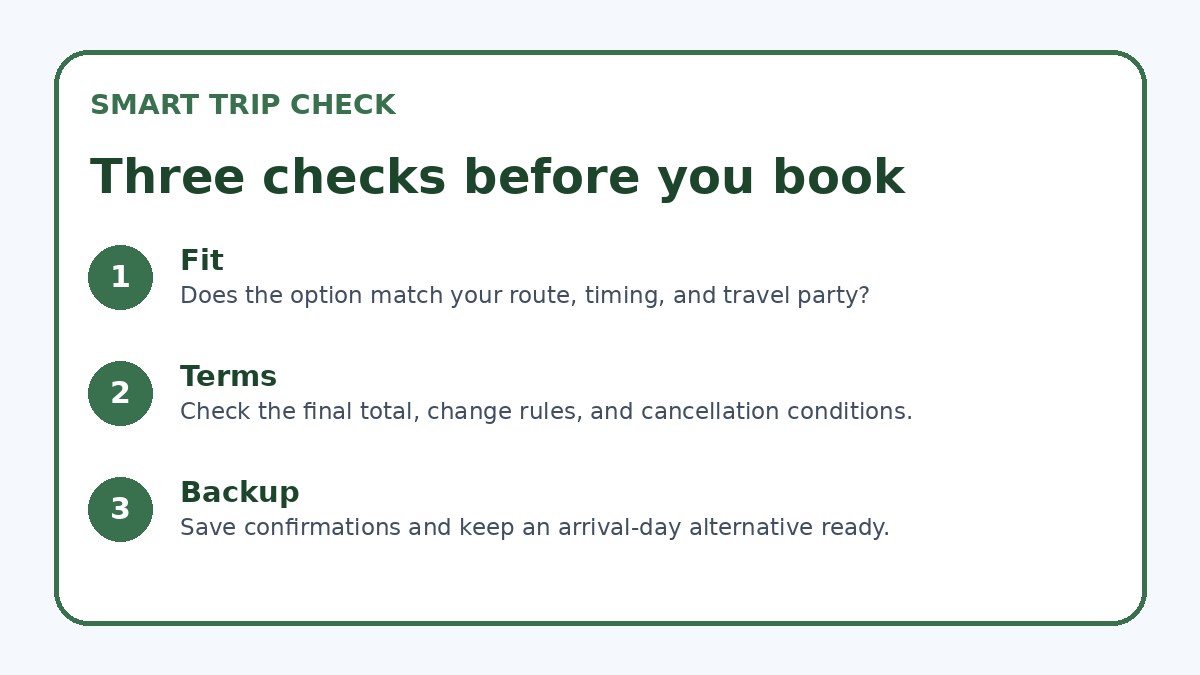
- Screenshot and save the full insurance wording shown on the rental provider’s final booking page before completing payment.
- Confirm and write down the exact excess/deductible amount and whether any optional reduction removes or lowers that excess.
- Ensure every potential family driver’s name and licence details are listed on the rental contract when you pick up the car.
- Check the policy for passenger liability or personal accident wording and note per-person limits including children.
- Photograph the vehicle’s condition at pickup and the signed contract pages showing insurance clauses and signatures.
- Ask how claims are handled locally (police report, approved repairer, payment method) and save the agent’s local contact.
Practical steps at booking and pickup to lock in protection
When you book, take screenshots of the insurance summary and download any policy documents. On the provider’s booking page verify the exact words used for cover types and the excess amount, and note any optional add-ons. If you’re comparing offers on aggregators or on Trip.com, treat them as starting points—always follow links to the provider’s final booking page and check the full wording there. If anything is unclear, email the rental company asking them to confirm coverage in writing and name the local office and contact who will handle claims.
At the rental counter, ask the agent to point to the clauses that show the cover limits and any exclusions. Get the names of all listed drivers on the contract and ensure they match passports or driving licences. Photograph the contract, the insurance pages, and the vehicle condition at pickup from multiple angles with timestamps if possible. If the insurer requires police or hospital reports after an accident, ask the agent how local procedures work and keep emergency contact numbers handy so you can act quickly if an incident involves children.
Frequently asked questions
Does my home car insurance or credit card usually cover rentals in Bangkok?
Some home car insurance policies and premium credit cards offer rental car coverage internationally, but the wording matters. Look for explicit mention of Thailand, whether the cover applies to third-party liability or only to damage/theft of the rental vehicle, and any geographic or age restrictions. Credit card cover often requires you to pay for the rental with that card and to decline the rental company’s CDW; read the card’s benefit guide and know whether they reimburse or handle claims directly. Always get confirmation in writing and carry proof at pickup.
What should I do if there’s an accident with children in the car?
First, ensure everyone is safe and seek medical help if needed. Follow local emergency procedures and contact police to obtain an official report — insurers in Thailand commonly require a police report for liability or theft claims. Photograph the scene, vehicles and injuries, and collect other parties’ contact details. Notify the rental company immediately and follow their claim instructions; they can advise on local medical providers and towing. Keep receipts for medical treatment and any transport, as insurers will typically request these during claim processing.
Are vehicle damage claims handled differently for family-oriented vehicles like child-seat-equipped cars?
The presence of child seats or family equipment does not usually change the insurance wording, but there are important considerations. Check if the policy excludes damage caused by improperly installed accessories or items left unsecured inside the vehicle. If you bring your own child seats, document their condition and how they were installed; if the company supplies them, note whether their use is required to retain full cover. Always check whether contents left in the car are covered under theft protection and how the insurer defines responsibility for installed equipment.
Final planning note
For families renting a car in Bangkok the right decision revolves around reading the precise insurance wording and choosing the protection level that matches your comfort with upfront risk. Verify liability limits, CDW and excess amounts, named drivers, and passenger medical cover before you book. Use written confirmations and photos to lock in what the provider promised, and if you rely on third-party or credit-card cover, get clear evidence those products apply in Thailand. With those steps you’ll make a pragmatic choice that balances budget, peace of mind and the practicalities of traveling with children in Bangkok.
Continue planning
Check current options and final conditions
Use the provider page to confirm live availability, the final total, cancellation terms, and every condition that matters to your trip.
This evergreen planning guide was created with AI-assisted drafting and a structured quality review. It does not display live prices, schedules, availability, visa guidance, or provider rankings. Verify current details before booking. Some links are affiliate links; we may earn a commission at no additional cost to you.