
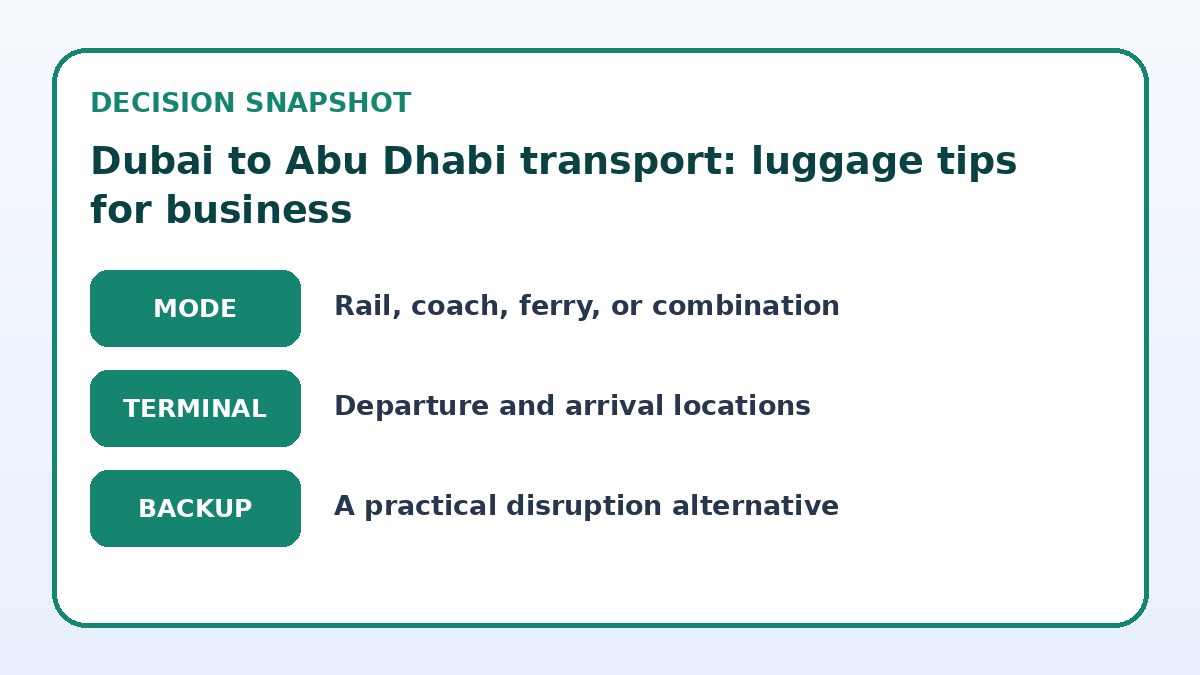
If you’re traveling from Dubai to Abu Dhabi with business luggage, the practical answer is to pick the transport mode that matches the size and number of bags, your meeting schedule, and where you need to arrive in Abu Dhabi. For a single carry-on and a laptop bag, shuttle buses or shared car services can be efficient. For two checked suitcases or equipment, a private transfer or trunk-forward car service minimizes handling and lost-time. Factor in where you’ll unload at your arrival point — a hotel drop-off differs from an office building with restricted access. Read on to compare tradeoffs: speed versus cost, door-to-door convenience versus terminal procedures, and how to verify luggage allowances, vehicle space, and loading assistance before you book.
See current options before you compare the details
Availability and final conditions change. Open Trip.com now or keep reading for the practical comparison.
Decide by luggage profile and meeting needs
Start by listing exactly what you’re carrying: number and size of suitcases, roll-on bags, sample cases, tech equipment, and any fragile items. Business travelers often underestimate the real space taken by a garment bag plus a laptop case and an accessory bag; these can fill trunk space intended for a single suitcase. Also consider arrival requirements: a hotel concierge will usually handle bags, while a corporate office or non-public venue may obligate you to carry luggage from the curb. Knowing whether you need hands-free mobility on arrival—walking between meetings, using local taxis, or checking in at a business lounge—will steer you toward different transport choices.
Next, map your schedule. Tight connections or early-morning meetings increase the value of a guaranteed private transfer that drops you at the door and waits if flights or trains are delayed. If timing is flexible, shared shuttles or express buses can be economical and plentiful, but they require more buffer time for pickups, intermediate stops, and potential traffic. Don’t forget time for security checks or building access at your destination; many corporate offices in Abu Dhabi require visitor registration that can add minutes or longer if documentation is needed.
Compare transport modes for luggage handling
Airport buses and intercity coaches are predictable and often have dedicated luggage bays, but they can involve stairs, limited assistance, and fixed schedules; these factors may be inconvenient with heavy or fragile cargo. Shared shuttle vans offer curb-to-curb convenience and often help with loading, though space is constrained when multiple passengers have large bags. Ride-hail services provide door-to-door flexibility and varied vehicle sizes; when booking, select an option that explicitly lists trunk space or vehicle category suitable for your luggage, and message the driver about bulky items to confirm fit.
Private transfers and hired chauffeurs are the highest-control option for business travelers with multiple pieces or expensive equipment; you can specify a vehicle type (sedan, MPV, or minivan), request porter help, and ask for protective blankets or straps. They also remove the need to navigate luggage through terminals or bus stops, but you should verify what the provider includes: waiting time, meeting-point flexibility, and any fees for oversized items. For some, combining a short taxi ride from a convenient park-and-ride or train station into Abu Dhabi reduces central congestion while keeping handling simpler.
| Approach | Best for | Tradeoff to check |
|---|---|---|
| Shared airport/express coach | Light travelers with one carry-on and a flexible schedule | Possible intermediate stops, limited loading assistance, and fixed luggage bays |
| Ride-hail or taxi | Solo travelers with moderate luggage needing door-to-door service | Variable trunk space; must confirm vehicle size and driver willingness to assist |
| Private transfer or chauffeur | Groups, multiple suitcases, or valuable/fragile equipment | Higher cost but predictable space, loading help, and direct routing |
| Mixed-mode (park-and-ride or rail + taxi) | Avoiding city-center traffic while balancing cost and speed | Requires extra handling and schedule coordination between legs |
Ready to check the option that fits your plan?
Use your exact dates and traveler details so the provider page can show the current total and conditions.
Practical packing and loading strategies
Pack with transits in mind: use luggage with wheels that handle Dubai’s and Abu Dhabi’s curbs and sidewalks, add clear external tags with your contact details, and place essentials for the first meeting in an easily accessible bag. If you have presentation materials or tech, carry them onboard as a dedicated cabin bag to avoid delays caused by checked-bag retrieval. Use compression packing cubes and protective cases for fragile gear so items can withstand being stacked in trunks. For last-minute changes, keep a small kit of clothing and toiletries in hand luggage to be ready if a bag is delayed or handled separately.
When loading into a vehicle, load heavy items first and keep fragile equipment on top or in the cabin if space allows. If you’re handing luggage to a driver or porter, clearly label items and confirm where the bags will be kept during the journey; ask to place valuable or sensitive items in the vehicle cabin instead of the trunk if that fits safety or climate concerns. Photograph your bags before handing them off and note distinguishing marks—this simple step speeds recovery if a bag is misplaced during multi-leg transfers.
Before you book
- List every item and its dimensions before booking to match against vehicle trunk and cabin space.
- Message the provider or driver with exact bag counts and confirm vehicle size at least 24 hours before pickup.
- Photograph and label bags clearly; keep a photo of contents and receipts for valuable items.
- Pack a meeting-ready outfit and essentials in hand luggage in case checked bags are delayed.
- Confirm pickup/drop-off points and any building access requirements with the receiving party.
- Verify waiting-time, extra-luggage fees, and porter availability on the provider’s booking page before finalizing.
What to verify before you book or depart
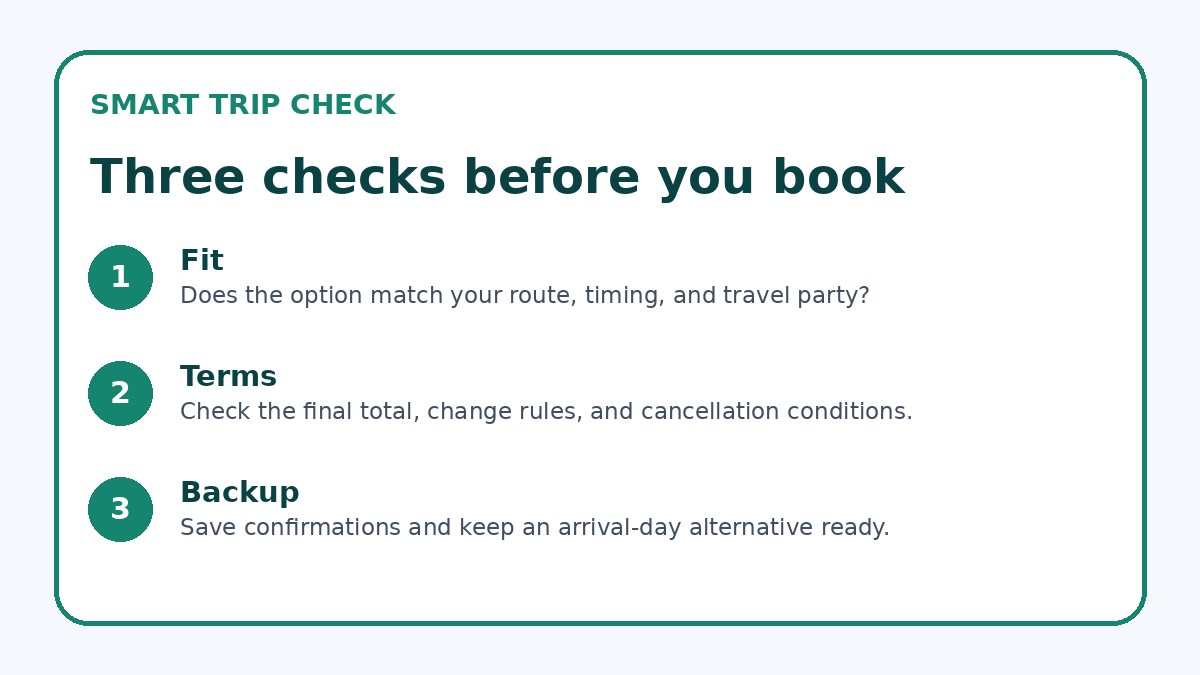
Always check the provider’s luggage policy and what they include in a booking: allowable number of bags, maximum dimensions for trunks and interior space, whether porters or loading help is offered, and rules about equipment or unusual items. If booking a shared shuttle or coach, confirm whether the operator accepts bulky items and whether bags will be tagged or loaded separately. For ride-hail and private transfers, message the driver or company with exact bag dimensions and count, and request confirmation that the chosen vehicle will be adequate.
Also verify pickup and drop-off logistics: exact addresses, building access rules, and where the driver will wait. If your Abu Dhabi arrival is an office building, find out whether the driver can enter or if you’ll meet curbside; this changes how long you’ll need to tow luggage across a lobby or through security. Finally, check cancellation and waiting-time terms so you’re not penalized if flights or meetings shift; Trip.com can be used to compare current availability and provider terms, but always confirm final luggage allowances on the provider’s booking page.
Frequently asked questions
Is it better to take a bus or a private car when I have two checked suitcases?
With two checked suitcases, a private car or minivan is usually the more practical choice for business travel. Private vehicles let you confirm trunk space, request porter help, and plan direct door-to-door routing that reduces walking and transfers. Coaches may have luggage bays but involve fixed stops and less personal control; large or fragile items might be awkward to load or unload. Before booking, message the provider to confirm they accept your exact bag sizes and to ask about any handling assistance they include.
How much extra time should I allow for luggage handling between Dubai and Abu Dhabi?
Allow additional buffer time for loading and unloading when you have multiple or heavy pieces. This includes the time for a driver or porter to load luggage, any potential waiting for a vehicle with adequate space, and walking time to an office lobby or hotel reception. If your itinerary includes a flight or train leg, build in further time for baggage reclaim and re-check where applicable. If timing is tight, opt for a private transfer and agree on a pickup window so you can reduce the risk of missing meetings.
Can ride-hail apps guarantee space for bulky items or equipment?
Ride-hail apps provide various vehicle categories and sometimes a larger-vehicle option, but they don’t universally guarantee trunk dimensions or loading assistance. For bulky items or delicate equipment, select a vehicle category that specifies size (such as an SUV or van) and message the driver with measurements prior to pickup. If that certainty is critical, book a private transfer where you can choose an appropriate vehicle type and confirm porter or handling services on the booking page.
Final planning note
Selecting the right Dubai to Abu Dhabi transport when you’re traveling with business luggage comes down to matching luggage profile, timing, and arrival needs. Light, hand-luggage-only travelers can save cost and hassle with shuttles or ride-hail options, while those with multiple suitcases or gear will benefit from private transfers that guarantee space and assistance. Always verify vehicle capacity, porter policies, waiting-time rules, and pickup/drop-off details on the provider’s booking page before you finalize. A small investment of planning — measuring bags, messaging providers, and allowing transfer buffers — keeps your focus on meetings, not missing or awkwardly handled luggage.
Continue planning
Check current options and final conditions
Use the provider page to confirm live availability, the final total, cancellation terms, and every condition that matters to your trip.
This evergreen planning guide was created with AI-assisted drafting and a structured quality review. It does not display live prices, schedules, availability, visa guidance, or provider rankings. Verify current details before booking. Some links are affiliate links; we may earn a commission at no additional cost to you.