If you're flying into Seoul late at night and travelling solo, your top priorities are safety, reliable transport, and a sleeping plan that lets you rest without rebooking your whole trip. Start by deciding whether to transfer straight to your accommodation, wait near the airport until morning, or book a short overnight near the city edge. Each choice affects cost, sleep quality, and how fresh you’ll be the next day. This guide gives a clear starting recommendation, then explains the tradeoffs — help you choose by travel style, budget, and energy level. At the end there’s a short checklist to use before you reserve transfers or a room. If you want live availability or to compare providers, check a booking site like Trip.com, but always verify final details on the provider’s booking page before paying.
See current options before you compare the details
Availability and final conditions change. Open Trip.com now or keep reading for the practical comparison.
Decide what you need at arrival
Start by evaluating how tired you will be and what you need immediately: a bed, a secure place for your luggage, or fast onward connections. If you’ve had little sleep, a hotel within an easy transfer of the airport minimizes the risk of mistakes while tired and reduces stress. If you expect to be alert and want to save on costs, arriving early in the morning into Seoul can let you use daytime public transport and check in when hotels open.
Also consider safety and solo-traveler comfort: late-night public transit options may be limited and require additional walking or transfers. That makes pre-arranged transfers, airport taxi services, or official shuttle buses more appealing for peace of mind. If you plan to switch to a different mode of transport after arrival, map the route and identify official pickup points and well-lit areas before you land, and have printed or offline directions in case mobile service is spotty.
Compare transfer approaches and practical checks
There are three main ways to move from Seoul’s airports after a late-night arrival: pre-booked private transfer or taxi, official airport buses or shuttles, and public rail or subway if still running. For each option, list what you must verify before booking: accepted pick-up locations at the terminal, driver contact methods, cancellation terms, and whether the service accepts cards or only cash. When provider-specific facts could change, check those exact items on the final booking page so you’re not surprised.
If you choose rail or subway for a late arrival, double-check schedules for overnight maintenance or reduced service and whether you need to make a transfer that requires a short walk. For buses or shuttles, confirm the final drop-off location and how baggage is handled. For private transfers, ensure the booking confirms the number of passengers, luggage allowances, and a reachable point of contact for last-minute flight delays — keep screenshots or a confirmation email handy in case you need to show proof.
| Approach | Best for | Tradeoff to check |
|---|---|---|
| Pre-booked private transfer or official taxi | Travelers who prioritise convenience, door-to-door service and minimal navigation after a late flight | Usually more expensive and requires confirming pickup details and driver contact |
| Airport hotel or nearby overnight stay | Those who want immediate rest and a short, low-stress transfer from the terminal | May add daytime travel to central Seoul the next day and could limit evening options |
| Wait at airport lounges or transit hotels until morning | Travelers who want to save money and travel fresh with daytime public transport | Comfort varies and overnight airport facilities may be limited for prolonged rest |
| Public rail or bus into the city | Budget-conscious travelers arriving before final night services end | Service may be reduced late at night and requires verifying schedules and transfers |
Ready to check the option that fits your plan?
Use your exact dates and traveler details so the provider page can show the current total and conditions.
Where to stay: neighbourhoods and late check-in
Selecting a neighbourhood for your first night should balance proximity to your first-day plans and safe, straightforward logistics from the airport. Central areas reduce later daytime travel but may involve longer transfer times late at night; suburban or airport-adjacent hotels are quicker to reach but can require more daytime transit to explore Seoul. Solo travellers often prefer well-connected areas with 24-hour services or visible night staff so you can arrive confidently and get oriented before heading out the next day.
Before booking any hotel, confirm its late-check-in procedure directly with the property — some places require a code or reception notice for arrivals after certain hours. Ask where the designated late check-in entrance is, whether they will hold a room for you if you’re delayed, and how to collect keys if reception is closed. If the hotel allows self check-in via app or key box, verify how that process works and whether you’ll need an ID or deposit on arrival.
Before you book
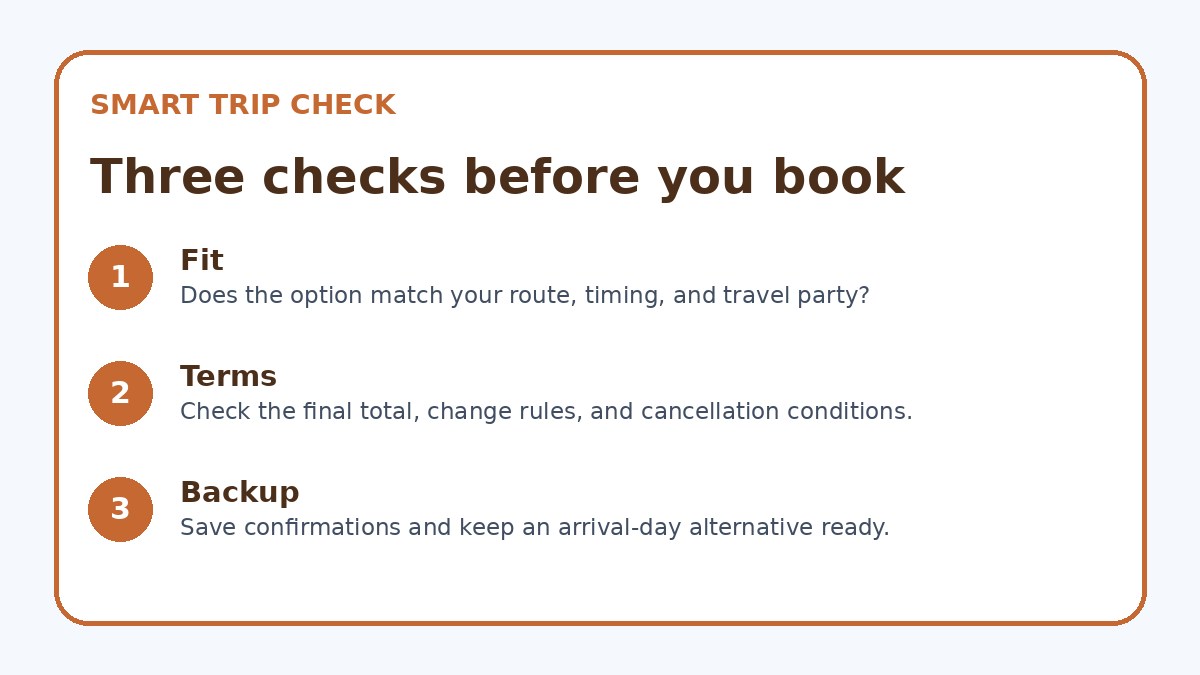
- Confirm your arrival terminal and the official pickup point for any pre-booked transfer; save the provider’s contact details on your phone.
- Check the hotel’s late-check-in policy and inform them of your expected arrival time in a direct message or email.
- Screenshot or print transfer and hotel confirmations so you can show proof without relying on mobile data.
- Plan at least one backup option (official taxi rank number, second ride app, or nearby airport hotel) and store it where you can access it quickly.
- Charge a portable battery and carry a small amount of local currency for last-mile transport or unexpected fees.
- Share your arrival time and transfer plan with a trusted contact and set a check-in time after you reach your accommodation.
Safety, money, and backup plans
For solo travellers, safety steps are simple but essential: share your arrival and transfer plan with someone at home, keep your phone charged with a local SIM or roaming ready, and carry photocopies or screenshots of your booking confirmations. Use official taxi ranks or verified ride apps rather than accepting offers from informal drivers in the terminal. Keep some local cash for a last-minute taxi or incidentals, and note where embassy or consular services are located if you might need assistance.
Always set up a backup transport option in case your primary plan is disrupted — a list of local taxi numbers, a secondary ride app, or an alternative hotel. If flights are delayed, contact your transfer provider as soon as you have a revised arrival time and check the provider’s policy for late arrivals on the booking page. Having a small emergency kit (portable charger, water bottle, basic medicines) and a clear plan for arriving at night reduces stress and keeps your options open.
Frequently asked questions
Can I rely on public transport if I arrive in Seoul late at night?
Public transport can be a feasible option if your arrival aligns with operating hours, but schedules and frequency change overnight. For a safe decision, check the specific train, subway, or bus timetables for your arrival day and terminal, and plan for any required transfers. If services are reduced, you may need to walk between stops or wait for a connection — which is less ideal when you’re tired or carrying luggage. Verify final schedules on operator or official pages before you book your transfer.
Should I book a transfer before I leave home or wait until I arrive?
Booking ahead guarantees a confirmed pickup and reduces stress, especially when arriving late at night alone. However, if you expect unpredictable arrival times and the transfer allows flexible changes or free cancellation, that flexibility can be helpful. If you opt to wait until arrival, know the official taxi ranks and airport information desks so you can arrange a legitimate ride quickly. For any pre-booked option, review pickup instructions, driver contact, and late-arrival terms on the provider’s final booking page.
How do I choose where to stay after a late arrival in Seoul?
Choose based on how much transit you can tolerate after landing and what you want to do the next day. If you need immediate rest, pick somewhere close to your terminal or with a straightforward transfer; if you want to start exploring quickly, choose a central neighbourhood with good public transport links. Always confirm late-check-in procedures, safety features (24-hour reception, concierge), and how to access the property at night. When comparing options, weigh transfer time, cost, and convenience for your first morning.
Final planning note
Arriving in Seoul late at night as a solo traveler calls for clear priorities: safe, contactable transport; a place that accepts late arrivals; and a fallback plan. Decide whether you want immediate rest near the airport, a quick private transfer into the city, or to wait until morning and use daytime transport — each choice trades cost for convenience and sleep quality. Before you book, verify pickup points, driver contact details, and hotel late-check-in rules on the provider’s final booking page. A short pre-trip checklist, a charged phone, and confirmed backups will let you land, transfer, and sleep with confidence so your trip in Seoul starts smoothly.
Continue planning
Check current options and final conditions
Use the provider page to confirm live availability, the final total, cancellation terms, and every condition that matters to your trip.
This evergreen planning guide was created with AI-assisted drafting and a structured quality review. It does not display live prices, schedules, availability, visa guidance, or provider rankings. Verify current details before booking. Some links are affiliate links; we may earn a commission at no additional cost to you.