If you’re a solo traveler in Chiang Mai, start the booking decision by choosing which matters most: walkable access to the Old City, Night Market and cafés, or a quieter, more spacious room that supports work and rest. For many solo visitors the ideal compromise is a centrally located small hotel or guesthouse with well-designed rooms, good soundproofing, and secure storage. This guide gives a clear practical answer up front — decide whether you want to prioritize daily convenience (saves transit time and makes improvisation easy) or in-room comfort (better sleep, workspace, and privacy). After the quick recommendation, you’ll find concrete tradeoffs, neighborhood comparisons, and a checklist of what to verify on booking pages so you can pick a Chiang Mai hotel that matches how you plan to spend your days.
See current options before you compare the details
Availability and final conditions change. Open Trip.com now or keep reading for the practical comparison.
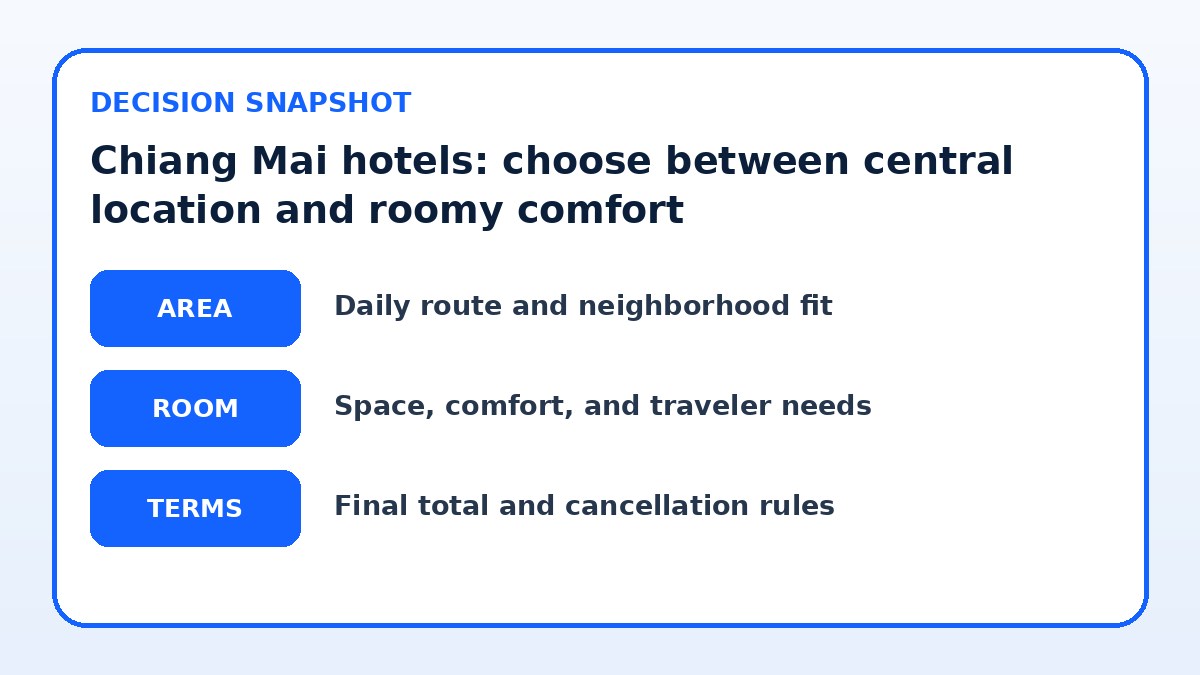
Decide your daily priorities first
Begin by mapping what you expect to do most days. If your plan is café hopping, walking temple circuits, and spontaneous street-food evenings, prioritize location—being inside or just outside the Old City, the Night Bazaar area, or Nimman means you’ll spend less time and money on transport. Staying central also shortens late-evening returns and makes popping back to the room for breaks practical. Conversely, if your days will include long work sessions, online meetings, or you value long, uninterrupted sleep, pick a hotel whose listing highlights larger square footage, a quiet location, and amenities that support work, such as a comfortable chair and reliable power outlets.
Think about how you use downtime: do you leave your belongings in the room all day or do you prefer to return frequently? If frequent returns are likely, proximity matters more; a centrally placed Chiang Mai hotel reduces transit friction and lets you freshen up between activities. If you plan multiple long-day excursions outside the city, a quieter neighborhood hotel that’s farther from the tourist core can offer better value and comfort without worsening your daily routine. Make a simple priority list—walkability, quiet, workspace, budget—and use it as the filter when you compare properties.
Neighborhoods and the practical tradeoffs
Old City: Staying inside or adjacent to the Old City puts you nearest historic temples, local markets, and evening activities. The tradeoff is that rooms in the very center tend to be smaller and directly face lively streets; noise and light can affect sleep. If you prefer Old City convenience but want more room, look for hotels on quieter backstreets or small lanes; these often maintain the central advantage while offering slightly larger spaces. Verify on booking pages whether the property advertises soundproofing, courtyard rooms, or upper-floor units—these reduce street noise without sacrificing location.
Nimman and Night Bazaar corridors: Nimman is livelier by day and offers trendy cafés, co-working spaces, and nightlife geared to digital nomads; hotels here can balance modern room features with walkable amenities. The Night Bazaar area gives immediate access to evening markets and riverside dining. Both areas provide a variety of hotels, from compact boutique rooms to more spacious mid-range properties. Your decision should weigh how much nightlife you’ll use; being near nightlife is convenient, but if you want uninterrupted sleep after late nights, look for hotels with good windows, AC units, and a reputation for quiet rooms.
| Approach | Best for | Tradeoff to check |
|---|---|---|
| Central Old City small room | Walkers who prioritize sightseeing and evening spontaneity | Smaller, noisier rooms and less workspace; may affect sleep and remote work. |
| Nimman mid-range room | Cafés, co‑working access, and a trendier daytime scene | More nightlife noise potential; slightly farther from some temples and markets. |
| Quieter residential neighborhood | Solo travelers prioritizing long sleep, relaxation, or focused work | Requires more transport time for sightseeing and evening activities. |
| Centrally located larger room (upgraded category) | Those wanting both location convenience and in-room comfort | Higher nightly rate than standard central options; verify real room size before booking. |
Ready to check the option that fits your plan?
Use your exact dates and traveler details so the provider page can show the current total and conditions.
Room features that matter for solo travelers
When comfort is your priority, scrutinize specific room features: square footage or bed size, a dedicated desk or table, chair ergonomics, power outlet placement, and the presence of blackout curtains and reliable air conditioning. These items affect both comfort and your ability to work. Also check for secure luggage storage or a safe in-room if you’ll be out exploring. Photos on booking pages can be staged—always read recent guest comments about room size, noise, and Wi‑Fi quality, and message the hotel directly if a floor plan or exact bed configuration matters to you.
If central location is your priority but you still want comfort, choose a property that explicitly lists soundproofing, separate living areas, or upgraded room categories (superior, deluxe) rather than the smallest 'standard' rooms. Pay attention to communal spaces—a quiet lobby, garden, or rooftop can extend living space beyond the room. For safety and convenience, solo travelers should confirm 24-hour reception, key-card access, and how housekeeping is scheduled, so you avoid being locked out or having noisy cleaning during important hours.
Before you book
- Use the map feature on the booking site to measure walking distance from the hotel to your three top destinations.
- Open recent guest photos and reviews to confirm actual room size, bed type, and evidence of noise or nearby construction.
- Message the hotel to verify Wi‑Fi speed, desk availability, and whether rooms have blackout curtains and multiple power outlets.
- Confirm reception hours, late check-in policy, and whether the property uses key cards or lockboxes for solo-traveler safety.
- Ask about luggage storage options and secure storage when you have early arrival or late departure plans.
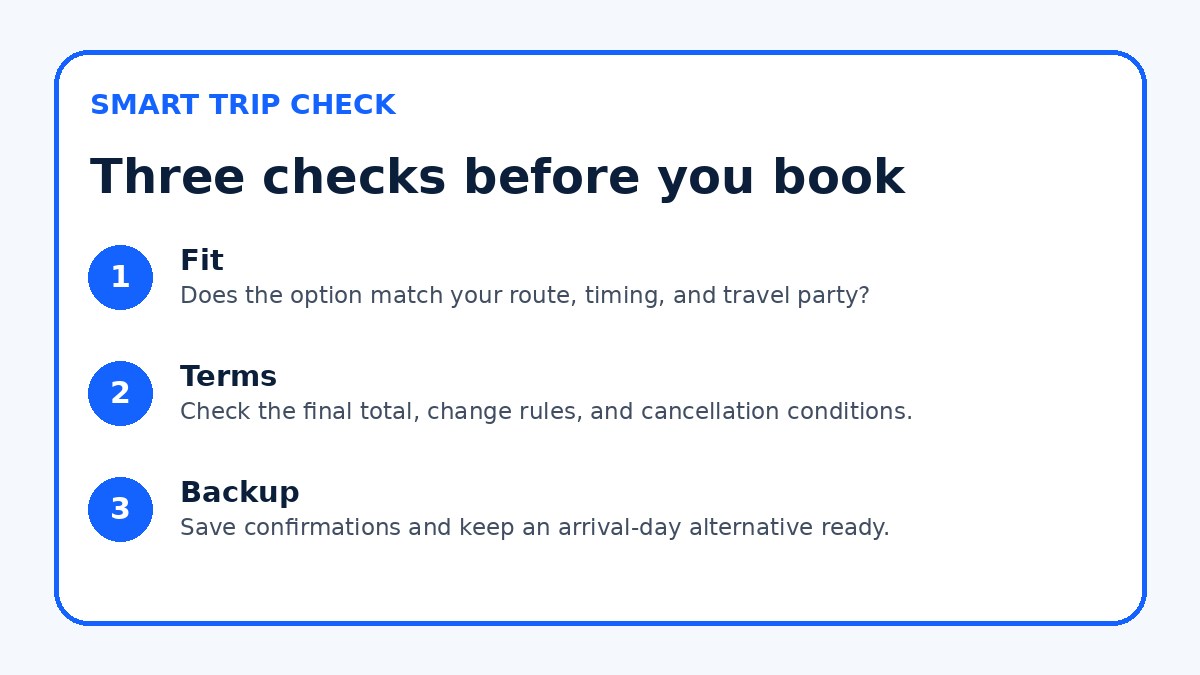
- Check the hotel’s cancellation and payment terms on the final booking page and compare them with at least one other booking platform.
How to compare offerings and verify details
When comparing specific Chiang Mai hotels, create a simple matrix: location score (walking distance to your top attractions), room comfort score (bed size, workspace, noise control), and service score (reception hours, luggage storage, airport transfers). Use map views on booking platforms to measure walking times, check recent guest photos for true room size, and read the latest reviews for Wi‑Fi and noise mentions. If a provider lists breakfast, airport pickup, or co-working access, verify those features on the final booking page or by messaging the property—policies and availability can change and should be confirmed before payment.
Trip.com can be used as one place to compare current availability and conditions, but always cross-check with the hotel’s own booking options and recent guest comments. For solo safety and convenience, confirm cancellation terms, the check-in process, and whether keys or access codes are used. Finally, factor the cost of local transport: sometimes saving a little on a central but tiny room increases daily transport spending and reduces flexibility, while a slightly pricier quiet room can pay back in rest and productivity.
Frequently asked questions
Which Chiang Mai neighborhood gives the best balance of walkability and quiet for a solo traveler?
Neighborhoods just outside the busiest Old City streets often give the best balance. Look for hotels on quieter lanes within a five- to fifteen-minute walk of the central temples and markets—this keeps walkability high while reducing street noise. Nimman offers good daytime amenities but can be busier at night; riverside and residential pockets near the Old City provide calmer nights while not isolating you from key attractions. Use the map view to confirm walking times and choose rooms on upper floors or facing courtyards for added quiet.
How can I reliably judge room size and noise before I arrive?
Rely on a mix of recent guest photos, detailed descriptions, and direct communication with the property. Ask the hotel for square footage or bed dimensions, and whether the room faces the street or an internal courtyard. Search recent reviews for keywords like 'noise', 'traffic', 'thin walls', or 'quiet' to spot patterns. If you need a workspace, ask which room types include a desk and request a room on a higher floor away from nightlife; the hotel can often confirm specifics when messaged before booking.
Is it worth paying more for upgraded room categories in central Chiang Mai hotels?
Paying more for an upgraded room can be worthwhile if better sleep and a functional workspace matter to you. Upgraded categories often offer larger square footage, better views, and improved soundproofing—advantages that can improve comfort for multi-day stays or remote work. However, assess the price difference against the inconvenience cost of commuting from a quieter neighborhood. Always confirm what the upgrade includes (size, desk, bathroom features) on the hotel’s booking page before committing.
Final planning note
Choosing a Chiang Mai hotel as a solo traveler comes down to honest priorities: immediate walkability and nightlife access versus in-room tranquility and workspace. For most travelers the best strategy is a compromise—select a centrally located property on a quieter lane, or pay a modest premium for an upgraded room category that delivers more space and soundproofing. Use map tools, recent guest photos, and direct hotel messages to verify room layout, noise control, and practical services like luggage storage and reception hours. Compare listings on multiple platforms (including Trip.com if you wish) and confirm critical details on the final booking page so your Chiang Mai stay supports both the activities you want and the rest you need.
Continue planning
Check current options and final conditions
Use the provider page to confirm live availability, the final total, cancellation terms, and every condition that matters to your trip.
This evergreen planning guide was created with AI-assisted drafting and a structured quality review. It does not display live prices, schedules, availability, visa guidance, or provider rankings. Verify current details before booking. Some links are affiliate links; we may earn a commission at no additional cost to you.