If you travel to Kyoto for work, price alerts are a powerful tool — but they can also prompt impulsive bookings that clash with corporate policies or reasonable trip planning. The practical answer: set targeted alerts, limit the number you act on, attach a decision rule (time window, itinerary fit, or loyalty alignment), and always verify cancellation, change, and corporate-reimbursement rules on the provider’s final booking page before committing. Use alerts to gather data rather than pressure you to buy immediately: treat each alert like a market signal that informs a pre-defined booking trigger. This approach keeps options open, respects company travel policy, and helps you balance cost with schedule reliability, so you get to Kyoto prepared, not pressured.
See current options before you compare the details
Availability and final conditions change. Open Trip.com now or keep reading for the practical comparison.
Set alerts that reflect real business needs
Start by creating alerts that match your workplace constraints: travel dates tied to meetings, arrival/departure times that respect ground connections in Kyoto, and refundable or changeable fare classes if your schedule shifts. Avoid broad searches that include weekends, multi-city options, or long layovers unless those are potential choices for your trip. Narrow alerts reduce temptation because each notification is already pre-qualified against what you actually need, so you’re not sifting through irrelevant options or pressured to click through impulsively.
Decide which elements matter most — seat class, loyalty accrual, preferred alliance, or partner hotel chains — and build alerts around those variables. Label alerts so each message immediately tells you why it matters for your trip (for example, “Kyoto: meeting Tue–Thu, refundable economy”). This enforced specificity speeds decisions and helps you communicate options to assistants or travel managers while maintaining adherence to corporate guidelines.
Use decision triggers to stop impulse buys
A trigger is a simple rule that turns an alert into an action: buy by a date, buy when the fare drops X% from the alert baseline, or buy if a fare matches your company’s approved band. Keep these triggers few and measurable. For example, pair an alert with a 48-hour review window for comparison against corporate-approved channels, or decide to buy only if a refundable fare appears within your defined threshold. The goal is to replace an emotional ‘snap buy’ with a predictable, repeatable decision.
Include contingencies for last-minute changes: if an alert appears inside a threshold where tickets are usually nonrefundable, check for flexible or changeable options with the same carrier or compare the total cost of a refundable alternative plus likely change fees. Also, consider whether loyalty upgrades or elite status reduce risk. Having triggers documented in a note you can access while traveling makes it easier to stick to the rule when notifications arrive at busy times.
| Approach | Best for | Tradeoff to check |
|---|---|---|
| Immediate purchase on alert | Travelers with rigid meeting dates and zero tolerance for change | May lock in higher flexibility costs and miss better-aligned corporate rates |
| Wait-and-monitor with predefined trigger | Those who can tolerate some risk for potential savings | Requires discipline and can fail if fares rise suddenly or inventory sells out |
| Book refundable/flexible now, pursue cheaper reprice later | Business travelers needing schedule flexibility but seeking savings | Potentially higher initial cost and administrative steps to rebook or cancel |
| Use corporate travel desk or agency first | Employees requiring policy compliance and invoice handling | May take longer to confirm and could miss retail site flash deals |
Ready to check the option that fits your plan?
Use your exact dates and traveler details so the provider page can show the current total and conditions.
Compare options, not just lowest numbers
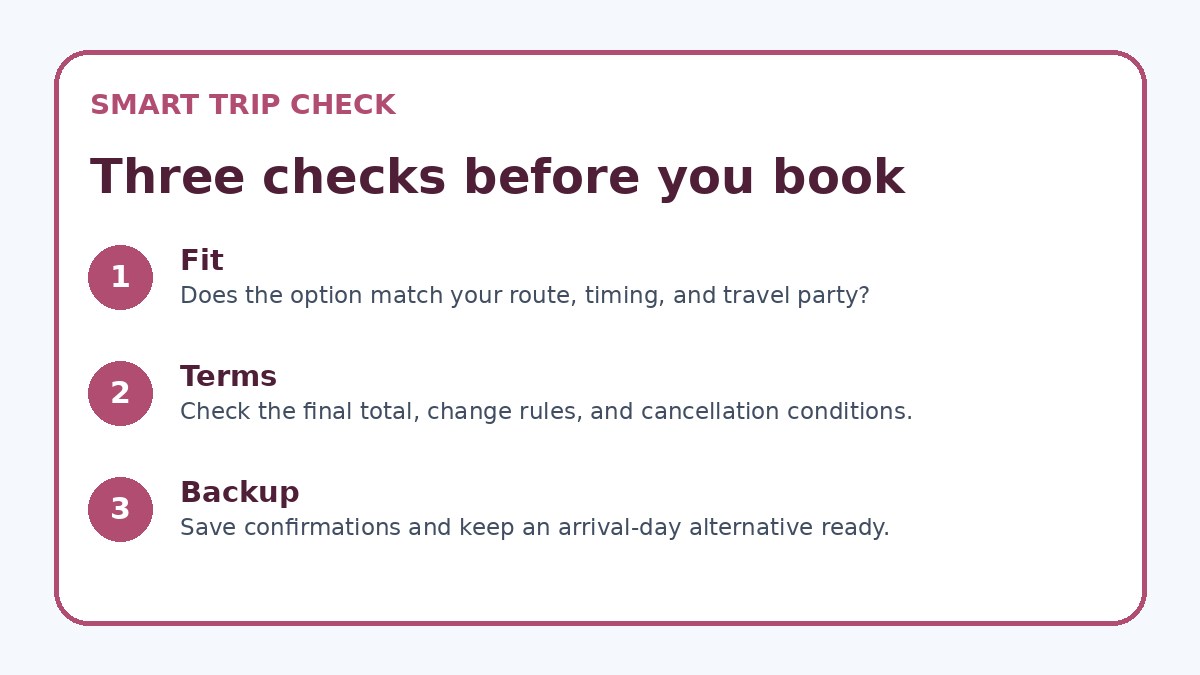
When an alert flags a lower fare for Kyoto, don’t focus only on the headline price. Compare the total value: cancellation and change penalties, baggage allowances, departure times relative to meetings, and the time and cost of ground transfers from Kyoto’s nearest airports. For hotels, weigh corporate preferred rates, breakfast policies, and meeting-space access against the raw nightly rate. Often a slightly higher fare with better flexibility or simpler logistics is the right choice for a business traveler who may need to adjust plans.
Use a short checklist in your comparison: meet-time compatibility, refundability, loyalty benefits, transit convenience, and expense-account coding. Run alerts from multiple sources and verify all fare or rate restrictions on the seller’s final checkout page before purchasing. If you use an agency or corporate booking tool, confirm their cancel/change rules and whether they will reprice or support rebooking if a better deal appears after purchase.
Before you book
- Set alerts limited to the exact meeting dates, preferred arrival window, and fare classes allowed by your company policy.
- Create a written booking trigger (date, percent drop, or fare class) you will follow when an alert arrives.
- Compare total trip costs including likely taxi or train transfers from the airport to Kyoto and any required hotel taxes or business fees.
- Before purchase, open the seller’s checkout page and confirm change, cancellation, and refund rules match your needs and company reimbursement rules.
- If you plan to rebook after buying a refundable rate, note the steps and deadlines to claim a refund or reissue the ticket.
- Record the alert source, fare baseline, and decision rationale in your trip notes for post-trip reconciliation or manager approvals.
Protect yourself with verification and timing practices
Before hitting buy, always verify final terms on the provider’s checkout page: exact change and cancellation fees, whether the fare is refundable and how refunds are processed, and any corporate invoice options you need for reimbursement. Do not rely on the alert’s summary text for these specifics. If you use Trip.com or another site to compare availability, treat it as one source and reconfirm the same rule set directly with the airline or hotel where possible, especially for refundable or corporate-rate reservations.
Timing matters: set alerts to respect internal booking lead times and corporate preapproval requirements. If policy requires manager sign-off for certain spend levels, let the alert trigger a short approval workflow rather than immediate purchase. Also consider booking refundable or flexible options early and monitoring for lower nonrefundable fares to re-evaluate later; document your rebooking plan and how fees compare in that scenario so you don’t make a reactive choice under time pressure.
Frequently asked questions
How many price alerts should a business traveler set for a Kyoto trip?
Quality beats quantity: set only the alerts that map directly to plausible itineraries you would accept for work — usually two to four. Include a primary itinerary that matches meeting dates and times, a backup with slightly shifted arrival or departure windows, and an alert for preferred hotel options. Too many alerts create noise and increase the risk of an impulsive booking. Label each alert with a clear purpose and attach the decision trigger so you don’t weigh irrelevant offers under pressure.
Should I use refundable fares to avoid impulse booking risks?
Refundable fares are a sensible tool when your schedule might change, but they come at a higher upfront cost. Use refundable fares if your meetings are tentative or if company policy prioritizes flexibility. Alternatively, buy a flexible hotel or refundable flight early and monitor alerts for cheaper nonrefundable fares; only switch if the total cost to rebook is justified. Always verify the refund process and timeline on the seller’s checkout page so you understand how long refunds take and whether rebooking fees apply.
How do I reconcile corporate travel policy with attractive retail deals?
Check policy early: know approved booking channels, class of service rules, and preapproval requirements. If a retail deal appears outside corporate-approved channels, run it past your travel manager before purchase or document it for post-approval if allowed. Sometimes the economics of a lower rate still work when you include rebooking risk and company invoice needs; other times the extra administrative load or lack of invoice makes the deal not worthwhile. Keep proof of the alert and decision rationale for expense reconciliation.
Final planning note
Price alerts can make Kyoto travel deals useful rather than distracting when you design them around business priorities and a clear decision framework. Narrow alerts, labelled purposes, and documented booking triggers turn notifications into data you can act on deliberately. Balance the lure of a low headline fare with the practicalities of schedule reliability, loyalty benefits, and corporate rules. Always verify fare and rate restrictions on the provider’s final booking page before paying, and use a corporate travel desk or documented approval workflow when policy requires it. With these habits, you’ll get to Kyoto with fewer surprises and more control over cost and flexibility.
Continue planning
Check current options and final conditions
Use the provider page to confirm live availability, the final total, cancellation terms, and every condition that matters to your trip.
This evergreen planning guide was created with AI-assisted drafting and a structured quality review. It does not display live prices, schedules, availability, visa guidance, or provider rankings. Verify current details before booking. Some links are affiliate links; we may earn a commission at no additional cost to you.