
Practical answer up front: for most couples who want an easy, low-stress trip between New York City and Boston, the train often hits the best balance of comfort, reliability, and convenience — especially for daytime travel where you want to relax, chat, and avoid airport hassles. If you prioritize absolute speed or lower fares, a flight or bus respectively can be better, and driving gives you flexibility for detours and private time. This article breaks down the tradeoffs you’ll face as a couple — how each mode affects privacy, cost split, luggage, timing, and the overall mood of the trip — so you can decide which option fits your personality and plans before you click Book.
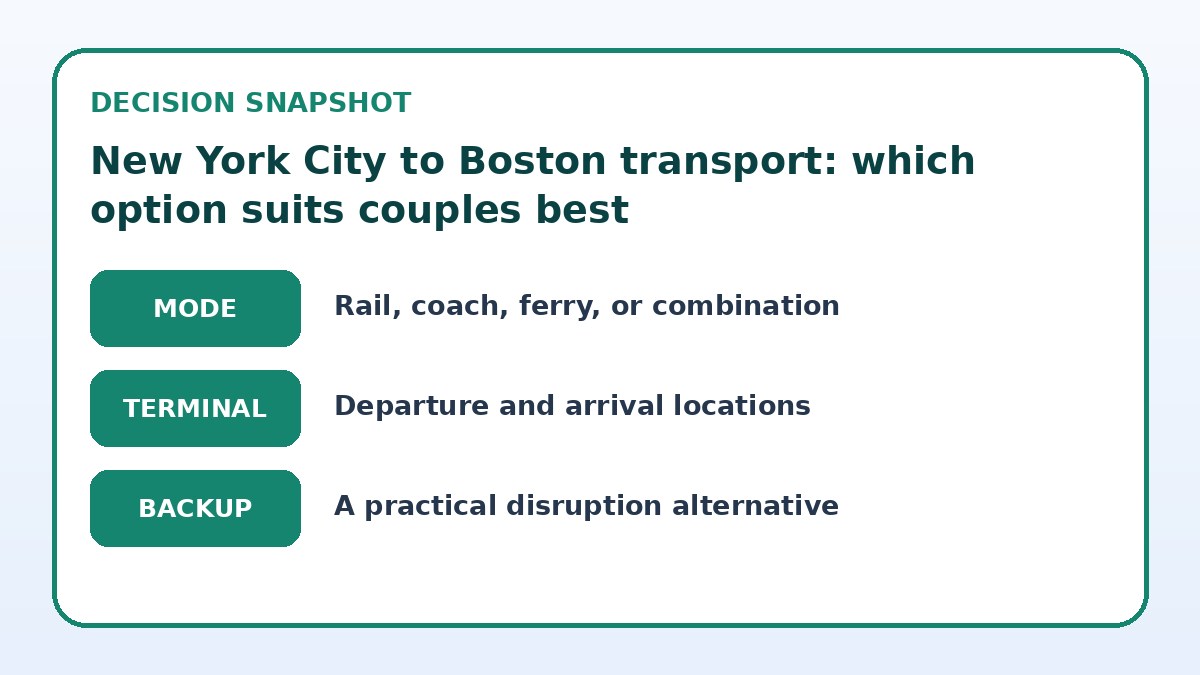
See current options before you compare the details
Availability and final conditions change. Open Trip.com now or keep reading for the practical comparison.
Why the train often works best for couples
Trains put seats, scenery, and space at the center of the experience. For couples who want to spend travel time talking, reading together, or simply enjoying uninterrupted views, a conventional intercity train usually provides more legroom and fewer interruptions than buses or airplanes. Trains typically arrive and depart from central stations in both cities, which can reduce taxi or rideshare time and allow you to step off and be in the heart of your destination quickly. That urban-to-urban rhythm suits short trips where maximizing time at your destination matters more than shaving an hour from the journey.
On the practical side, trains are straightforward to compare when you book: look at seat classes, baggage allowances, and exact station locations. If privacy matters, choose seats in a quiet car or reserve a window and aisle for two so you’re not separated. For evening trips, a less-frenetic arrival and departure process makes trains attractive: you’ll avoid long security lines and generally have more predictable boarding routines. Always verify on the provider’s final booking page for seat maps, refundable options, and any on-board services you care about before purchasing.
When flying becomes the right choice
A flight can be the correct pick if speed matters and air connections line up smoothly for both travelers. Couples traveling from New York City to Boston may save travel time if they live near an airport and have efficient ground transport to and from terminals. Flying can also be preferable when one partner needs to reach a meeting or event quickly, or when the couple prefers to minimize time in transit. Keep in mind that the clock on a flight-worthy trip includes time for check-in, security, and airport transfers at both ends, which can erode apparent time savings.
If you consider flying, compare total door-to-door time rather than just airborne time and verify luggage rules and transfer options on the airline’s booking page. Discuss with your partner whether you want to sit together, and check seat-assignment policies so you aren’t separated at boarding. For a calmer experience, plan arrivals and departures during off-peak ground-transport hours, and budget extra time for traffic to and from airports — especially when traveling together with luggage or on a tight schedule.
| Approach | Best for | Tradeoff to check |
|---|---|---|
| Train (city-center stations) | Couples prioritizing comfort, conversation, and straightforward downtown access | Usually higher fares than some buses; check seat reservations and onboard amenities |
| Flight (airports) | Couples who need the fastest air travel and have quick airport transfers | Adds security and transfer time; verify total door-to-door transit time before booking |
| Bus/coach | Budget-conscious couples or flexible planners accepting longer travel time | Less personal space and longer journeys; confirm drop-off locations and seat options |
| Driving (private car) | Couples wanting freedom, scenic stops, and full privacy | You share driving responsibility, and parking or traffic can add time and cost |
Ready to check the option that fits your plan?
Use your exact dates and traveler details so the provider page can show the current total and conditions.
Bus and coach: budget-friendly with tradeoffs
Buses and coaches often win on price and frequency, making them attractive for couples trying to minimize travel costs or looking for last-minute departures. Modern intercity coaches can be comfortable, with amenities such as Wi-Fi, power outlets, and reclining seats, which makes them suitable for couples who don’t mind longer travel time in exchange for lower fares. If you’re on a tight budget or want evening departures so you arrive in the morning, coaches can be practical — just be honest about whether you both can relax in a coach seat for several hours.
However, comfort and privacy are the main tradeoffs. Buses usually provide less personal space than trains, and stops can extend journey time. When comparing coach options, check the exact boarding and drop-off points in each city and confirm whether seat reservations are available so you can sit together. If one partner needs to nap or work, pick a service with reliable Wi-Fi and power sockets; if long journeys strain either traveler, consider upgrading to a different mode or a higher tier coach where available.
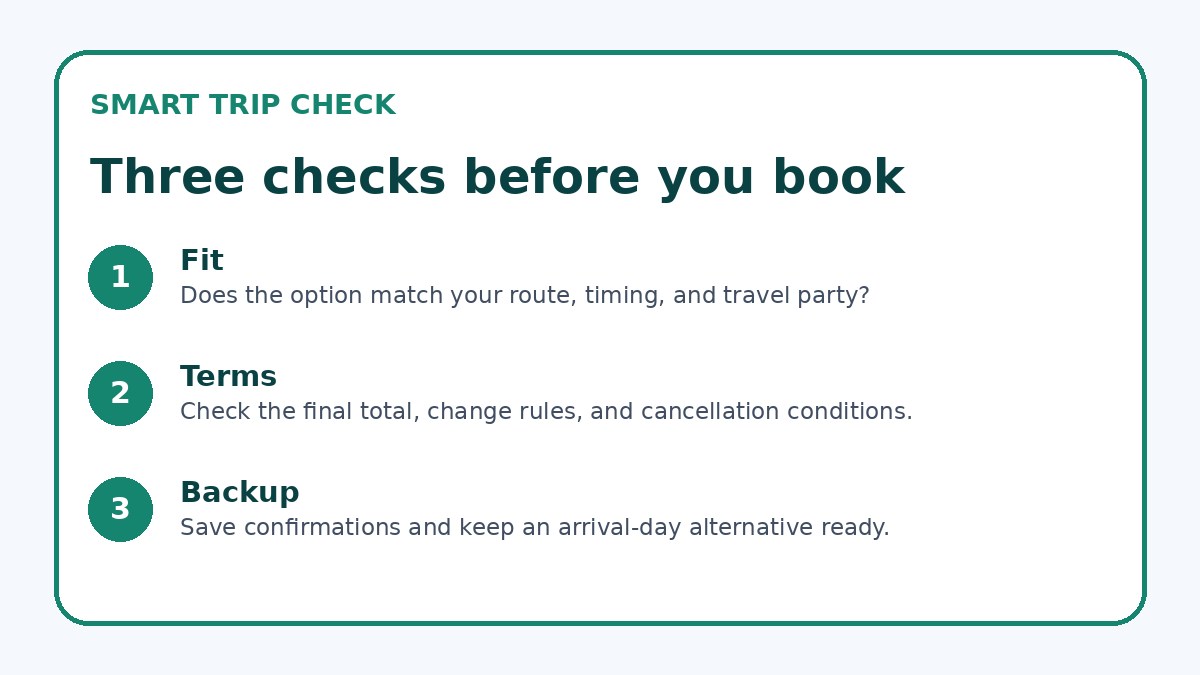
Before you book
- Compare door-to-door travel time for each mode (include transfers, parking, and security) and write down realistic departure windows you both prefer.
- Decide your comfort priorities together (legroom, ability to move, privacy, scenic route) and match them to the transport mode before checking prices.
- If booking together, reserve seats or adjacent assignments at checkout and confirm seat numbers on the provider’s final booking page.
- Confirm luggage allowances and add-ons (carry-on, checked bags, or car rental extras) on the transport provider’s payment page before finalizing.
- Estimate total out-of-pocket costs including tolls, parking, rideshares, and transit to/from stations or airports and split them fairly beforehand.
- Check cancellation and change policies on the vendor’s confirmation page so both travelers agree on flexibility and possible fees.
Driving: control, detours and shared responsibility
Driving gives couples the most control: you set departure times, choose rest stops, and can detour to attractions along the way. For pairs who enjoy road trips, driving turns the transfer into part of the vacation, letting you curate music, conversation, and privacy. It’s particularly useful if you plan to carry bulky items, want to explore small towns en route, or are traveling outside of public transport hours. Couples should discuss who will do the driving, planned stops, and how to split fuel and toll costs ahead of time to avoid surprises.
On the flip side, driving requires both partners to accept shared responsibility for navigation, fatigue management, and parking once you arrive. Consider whether one of you prefers to avoid long driving shifts, and factor in possible congestion leaving New York City and entering Boston. Before committing, estimate realistic door-to-door time with expected traffic, and verify parking availability at your destination. If you rent a car, read the rental company’s final booking page for mileage policies, insurance options, and cross-state rules.
Frequently asked questions
How should couples compare total travel time between options?
Look beyond advertised travel durations and calculate door-to-door time: add transit time to stations or airports, security or check-in buffers, expected traffic for driving, and any transfer waits. For trains and buses, factor in time to get from your accommodation to the terminal and from the arrival terminal to your final destination. For flights, include recommended arrival times and ground transfer times at both ends. Discuss acceptable arrival windows with your partner so you pick the option that leaves you both relaxed rather than rushed.
What should couples check about seating and privacy before booking?
Verify seating arrangements and seat selection policies on the provider’s booking page to ensure you sit together. Look for car types or classes (quiet cars, business class, or premium coach) that better match your privacy needs, and confirm whether seats are assigned or first-come. If privacy matters, select tickets that let you reserve adjacent window and aisle seats or book a private cabin where available. Always double-check the final confirmation for seat numbers and any upgrade options you might need to secure together.
How do we decide whether to drive or use public transport as a couple?
Start by listing what you value: control and scenic stops (drive) versus relaxed travel and central arrival points (public transport). Estimate realistic driving time with typical congestion, parking availability, and costs; compare that to train or bus door-to-door time including taxi or transit. Consider who will drive and how long each will be behind the wheel — long shifts can reduce enjoyment. If carrying lots of luggage or planning detours, driving may win; for minimal fuss and more time together without driving duties, trains often make more sense.
Final planning note
Choosing between train, bus, flight, or driving from New York City to Boston comes down to the balance you and your partner value: comfort and central stations (train), lowest outlay (bus), fastest air travel when ground transfers are short (flight), or complete control and privacy (driving). Talk through priorities such as time, cost, luggage, and how you want the journey to feel — relaxed and scenic, efficient, or spontaneous — then run the checklist items before you book. When you’re ready to compare current schedules and availability, you can check providers directly or use Trip.com to view live options, but always finalize details on the chosen provider’s booking page to confirm seats, luggage rules, and cancellation terms.
Continue planning
Check current options and final conditions
Use the provider page to confirm live availability, the final total, cancellation terms, and every condition that matters to your trip.
This evergreen planning guide was created with AI-assisted drafting and a structured quality review. It does not display live prices, schedules, availability, visa guidance, or provider rankings. Verify current details before booking. Some links are affiliate links; we may earn a commission at no additional cost to you.