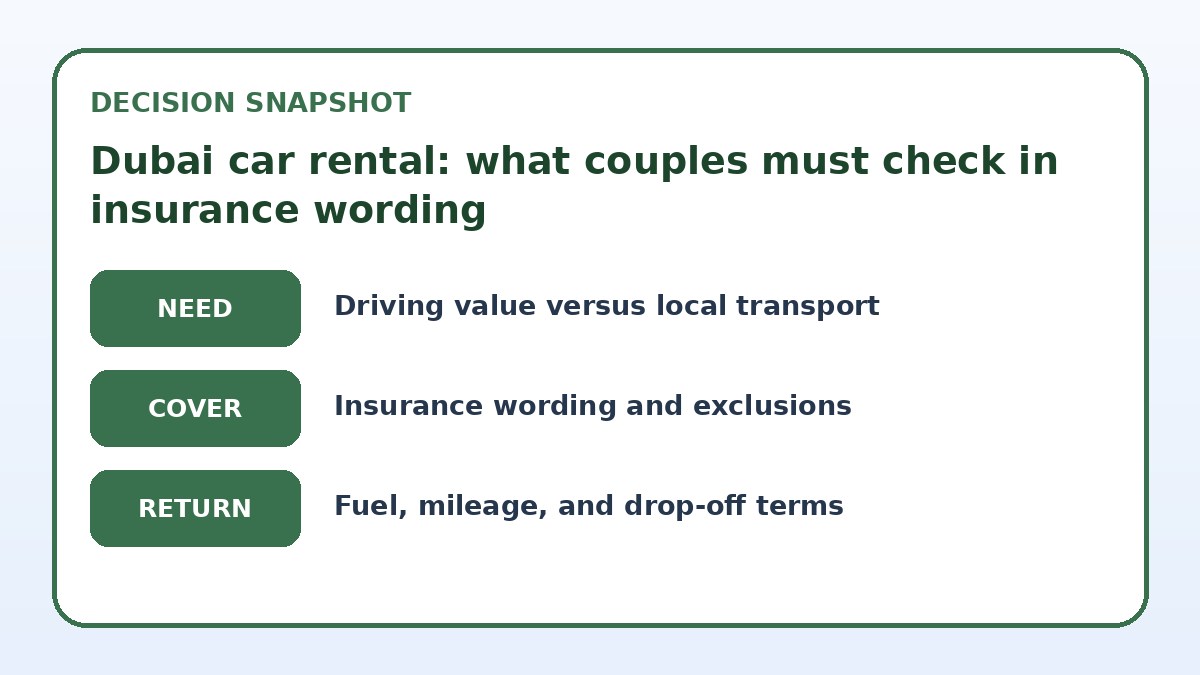
If you and your partner are renting a car in Dubai, focus first on two practical checks: who is an authorised driver under the contract and what exactly the insurer calls a ‘collision’ or ‘damage’ event. That tells you whether the damage waiver or insurance you’re offered will actually protect both of you, and whether incidents like windscreen chips or tyre punctures are covered. Read the rental agreement’s defined terms where they list ‘driver’, ‘additional driver’, ‘CDW/LDW’, ‘theft protection’, and ‘exclusions’. Ask the rental counter to point to the clause that describes the excess (the renter’s financial responsibility per claim) and whether signing optional cover reduces or removes that excess for both named drivers. Make these checks before you pay: they determine whether a partner who drives briefly is covered and which damages remain the renter’s responsibility.
See current options before you compare the details
Availability and final conditions change. Open Trip.com now or keep reading for the practical comparison.
Who is an authorised driver and why that wording matters
Many disputes at the rental counter happen because the term ‘driver’ is used casually but the contract has a precise definition. The rental agreement will usually require every person who will drive the car to be named and authorised on the contract. For couples that means if one partner plans to swap drivers during the trip you should have both names added; otherwise the insurance can be voided for incidents while an unauthorised person was driving. Some suppliers allow free additional drivers for spouses or domestic partners, while others charge per additional name or restrict drivers to certain age brackets.
Read the clause that explains when a driver is authorised and whether temporary swaps are permitted. If the contract states a named driver must be present at the time of rental to be covered, an arriving partner who wasn’t there at pick-up may not be insured. Also watch for language that limits cover to ‘occasional driving’ or to specific drivers older than a minimum age — these internal definitions change practical protection. If you want peace of mind, confirm and get written confirmation from the supplier that both partners are authorised drivers and that authorisation will apply for the whole rental period.
Collision damage waiver, excess, and what the words actually mean
Collision damage waiver (CDW) or loss damage waiver (LDW) often sounds like full protection but the contract’s wording is decisive. CDW typically reduces or removes your financial responsibility for damage to the rental vehicle but does not mean the vehicle is insured by a third-party insurer. The agreement will define the excess (also called deductible) — the maximum amount you must pay per incident if the supplier’s cover applies. Some optional products reduce the excess; others may remove it entirely for certain types of damage. Couples should note whether the excess reduction applies to both named drivers or only the primary renter.
Also inspect the definitions for covered damage and for exceptions. Wording may exclude wheels, tyres, windscreen, roof, undercarriage, or damage from off-road driving. Another common exclusion is damage caused while driving under the influence or on unauthorised roads. If the CDW excludes items you care about, consider adding specific cover or checking whether your credit card or travel insurance will top up the supplier’s cover. Always ask the counter agent to show you the passages describing excess reduction so there is no later disagreement.
| Approach | Best for | Tradeoff to check |
|---|---|---|
| Use only supplier basic CDW with named driver | Couples who want simplest coverage on-site with the rental company. | May leave a high excess and exclude tyres, windscreen, or undercarriage damage. |
| Add supplier excess reduction or super CDW | Couples who prefer to minimise or remove the excess for peace of mind. | Higher daily cost and must confirm it applies to both named drivers. |
| Rely on credit card insurance (if eligible) | Couples who already paid with a card that offers rental protection and want to avoid supplier upsells. | Card terms may require full payment by card, exclude certain vehicles, and be secondary to supplier cover. |
| Use independent travel insurance with rental car coverage | Couples wanting broad trip-level protection that can include liability and medical cover. | Policy wording can be complex; proof requirements and claim timing can be stricter than supplier processes. |
Ready to check the option that fits your plan?
Use your exact dates and traveler details so the provider page can show the current total and conditions.
Supplier insurance versus personal policies and credit card wording
Many couples find they already have some cover through travel insurance or a credit card, but the exact wording decides whether that cover is usable as primary protection. Credit card protections often apply only when the card was used to pay the full rental or to pre-authorise the deposit, and they may exclude certain vehicle categories or drivers under a specific age. Travel insurance policies often list vehicle type limits and may require you to buy at least basic supplier cover to make a claim. Read both your credit card and travel policy definitions for ‘rental car damage’ and ‘authorised driver’ before deciding to decline supplier options.
If you plan to rely on a personal policy, verify two things on the provider’s booking page or policy document: whether your policy is primary (pays first) or secondary (pays after supplier cover), and what evidence you will need to submit in a claim — itemised invoices, the rental agreement, the supplier’s damage report, and police reports are commonly requested. Ask the rental company what documentation they will provide at the scene and when returning the vehicle, and keep copies. If your personal policy excludes certain damage types the supplier covers, you may prefer to pay the supplier for that cover at pickup.
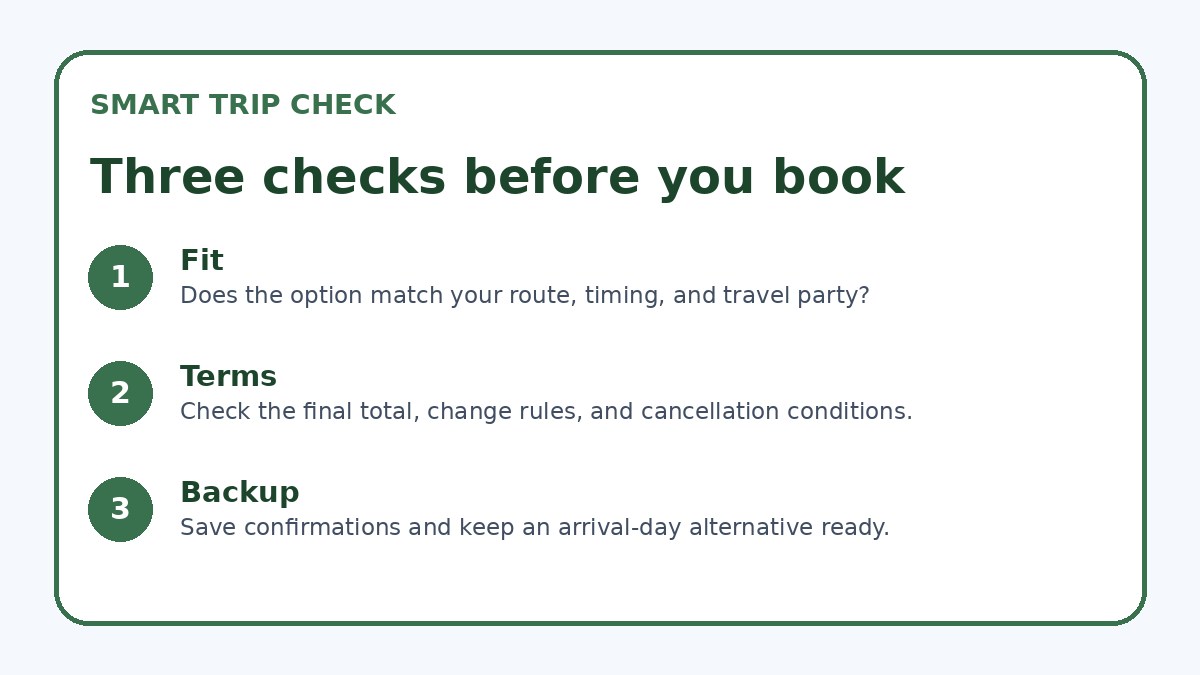
Before you book
- Have both partners’ names added and shown as authorised drivers on the rental agreement before leaving the counter.
- Get the excess amount written on the contract and confirm whether optional cover reduces that excess for all named drivers.
- Photograph the vehicle from multiple angles and agree any pre-existing damage with the agent on a signed inventory.
- Request a printed or emailed summary of the insurance terms you purchased and highlight any exclusions.
- Confirm the supplier’s contact number and the exact steps required to report an incident in Dubai.
- Check your credit card and travel insurance wording for rental car cover and note required proof for potential claims.
Common exclusions, claims process, and what to verify at pickup
Contracts in Dubai often list the usual exclusions: driving outside authorised areas, off-road damage, racing, negligent driver behaviour, and use by unauthorised drivers. Specific exclusions that catch couples by surprise include roof racks, personal items inside the car, rented equipment, and damage not reported at handover. The claims process will hinge on what the contract requires you to do immediately after an incident — calling the supplier, filing a police report, or returning the vehicle to a specified location. A couple who plans to split driving duties should note any clause requiring immediate notification, as delayed reports can be refused.
At pickup, verify five practical things: that the damage record on the car is accurate and signed by both parties; whether the car has pre-existing dents or scratches recorded; the size of the excess and whether you’ve bought a reduction; which phone number to call in an incident; and what proof the supplier will hand you when damage is inspected. Ask the agent to point to the exclusions and request a printed or emailed summary of the insurance terms you buy. If anything is unclear, get the agent to write clarifying notes on the contract before you sign.
Frequently asked questions
Can I add my partner as an additional driver after booking, and will insurance still apply?
Adding a partner after booking is often possible but depends on the supplier’s process and the wording in the rental contract. Some companies allow you to add drivers at pickup for a fee and will extend the insurance to the new named driver immediately; others require all drivers to be listed at reservation. Always have the agent annotate the contract to show the addition and confirm whether the excess or any optional cover applies to that person. If you rely on external insurance, check that the policy recognises late additions as authorised drivers.
If my credit card offers rental protection, should we still buy the supplier’s excess reduction?
Whether to buy supplier reduction depends on the card’s exact wording and whether it is primary or secondary cover. If the card’s protection is secondary, the supplier will usually pursue you for the excess first and you must claim reimbursement later — a time-consuming process couples may want to avoid. Also check exclusions: many cards exclude certain vehicle types, drivers under a specific age, or damage types like wheels and windscreen. If your card’s wording is uncertain, ask the rental agent for a temporary reduction to avoid potential hold on your funds.
What evidence will the rental company require to process a damage claim in Dubai?
The contract and local practices commonly require the vehicle inspection report, a signed damage report from the supplier, itemised repair invoices, and sometimes a police report for collisions or theft. The rental company may also ask for the driver’s licence, passport, and the original rental agreement during the claim. If you are using personal insurance or a credit card for a claim, they will typically demand the supplier’s documentation alongside your claim form. Photographing the scene and retaining receipts and emails speeds claims and reduces disputes.
Final planning note
For couples renting in Dubai the single most important step is reading the defined terms in the rental contract and confirming in writing how they apply to both partners. Decide before you leave the counter whether you prefer the supplier’s certainty — by naming both drivers and buying excess reduction — or the potential savings of relying on credit card or travel insurance. If choosing external cover, verify it is valid for your vehicle category, driver ages, and the incident types listed in the supplier’s exclusions. At pickup, document the car’s condition, get signatures or emailed confirmations, and keep copies of every page that mentions cover. Those few minutes of careful checking prevent larger disagreements and costs later on.
Continue planning
Check current options and final conditions
Use the provider page to confirm live availability, the final total, cancellation terms, and every condition that matters to your trip.
This evergreen planning guide was created with AI-assisted drafting and a structured quality review. It does not display live prices, schedules, availability, visa guidance, or provider rankings. Verify current details before booking. Some links are affiliate links; we may earn a commission at no additional cost to you.