
If you’re booking New York City to Los Angeles flights as a solo traveler, the most practical first step is to compare the ticket change and cancellation options before you commit. That means checking whether the fare allows free changes, whether a credit or refund is offered, what the deadline for changes is, and what fees apply for both voluntary and involuntary schedule changes. Also confirm baggage and seat-change rules, because some low-fare tickets treat these as separate fees. For a clear decision: favor fares that let you change without a heavy penalty if your plans might shift, and expect to pay more for full refunds. Read the airline’s final booking page and the fare rules carefully — that’s the legal source for what you can actually do after purchase.
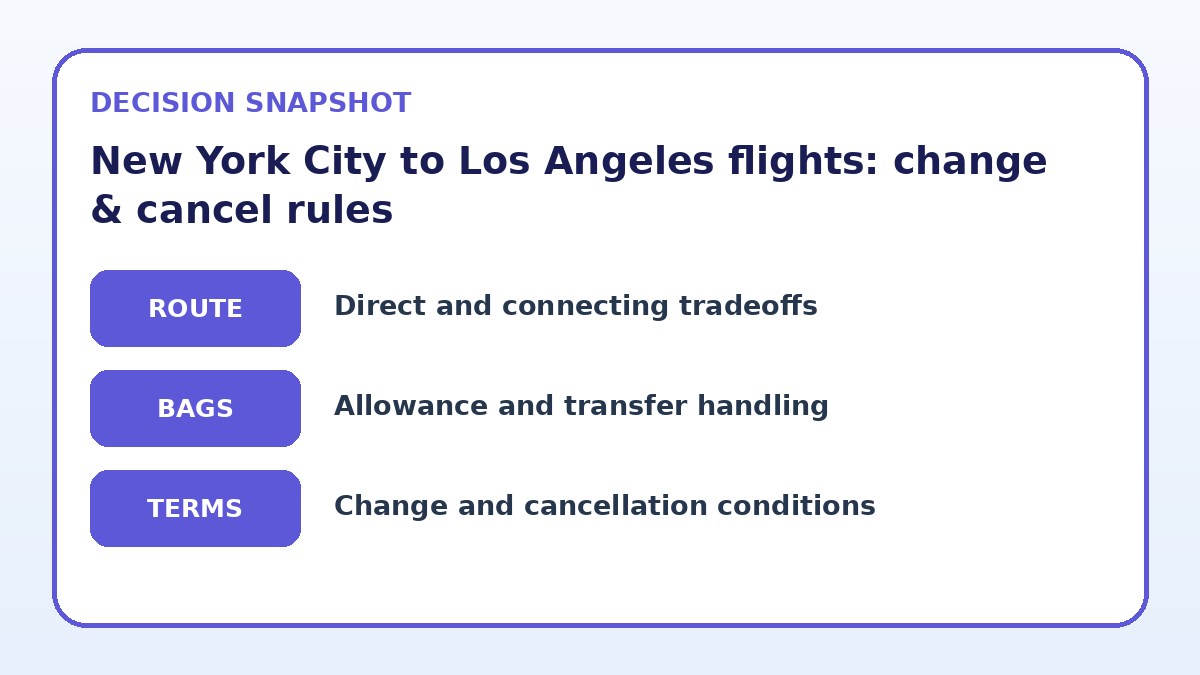
See current options before you compare the details
Availability and final conditions change. Open Trip.com now or keep reading for the practical comparison.
How fare types affect change and cancellation options
Airlines typically sell multiple fare buckets for the New York City to Los Angeles route: basic/restricted, standard/economy, and flexible/premium. Basic or restricted fares tend to be the cheapest but carry the strictest rules: change fees, no refunds, and limited seat and baggage allowances. Standard economy often lets you change with a fee or receive travel credit, while flexible or premium fares allow more liberal change and cancellation privileges, sometimes including same-day changes or nearly full refunds. Compare the fare rule codes listed on the airline’s booking page to see whether your ticket is eligible for a refund, credit, or only date changes.
When you’re deciding between saving money now and retaining rebooking freedom, think about your tolerance for uncertainty. If your itinerary is fixed — for example, attending a time-specific event — a restricted fare may be fine. But as a solo traveler, you might prefer the peace of mind that comes with a flexible fare if your plans could evolve. Also check whether change fees are fixed dollar amounts or percentage-based; a fixed fee can be easier to evaluate against the cost of upgrading to a more flexible fare.
What to look for on the airline’s final booking page
The final booking page is where the airline spells out the binding terms you’ll accept at purchase. Before you click purchase, expand the fare rules and refund policy links. Look for precise language on whether changes are permitted, the last moment you can change without fee, how refunds are processed (cash refund, card reversal, or travel credit), and any exceptions for schedule changes initiated by the carrier. Also inspect the payment and receipt details to confirm the ticket codes and fare class — these determine the exact rules applied to your reservation.
Don’t forget operational details that intersect with fare rules: whether the carrier allows same-day confirmed changes, the process for involuntary rebooking if a flight is canceled, and how baggage or seat-change fees are applied to reissued itineraries. If you plan to book through an online travel agency, verify that the agent’s cancellation process and any additional service fees are clear on that final page. Trip.com can be used as one place to compare availability and conditions, but always read the carrier’s own fare rules before you finalize.
| Approach | Best for | Tradeoff to check |
|---|---|---|
| Buy a flexible/refundable fare | Travelers who want minimal change risk | Higher upfront cost but easier rebooking and often refunds |
| Buy a basic/restricted fare and add insurance | Budget-conscious travelers with some backup plans | Cheaper ticket but relies on insurance coverage limits and claims process |
| Choose a standard fare with airline credit for changes | Those expecting minor date shifts | Lower fee on changes but usually no cash refunds |
| Book separate legs to mix carriers | Travelers optimizing schedule or fares | Risk of no protection for missed connections and extra rebooking cost |
Ready to check the option that fits your plan?
Use your exact dates and traveler details so the provider page can show the current total and conditions.
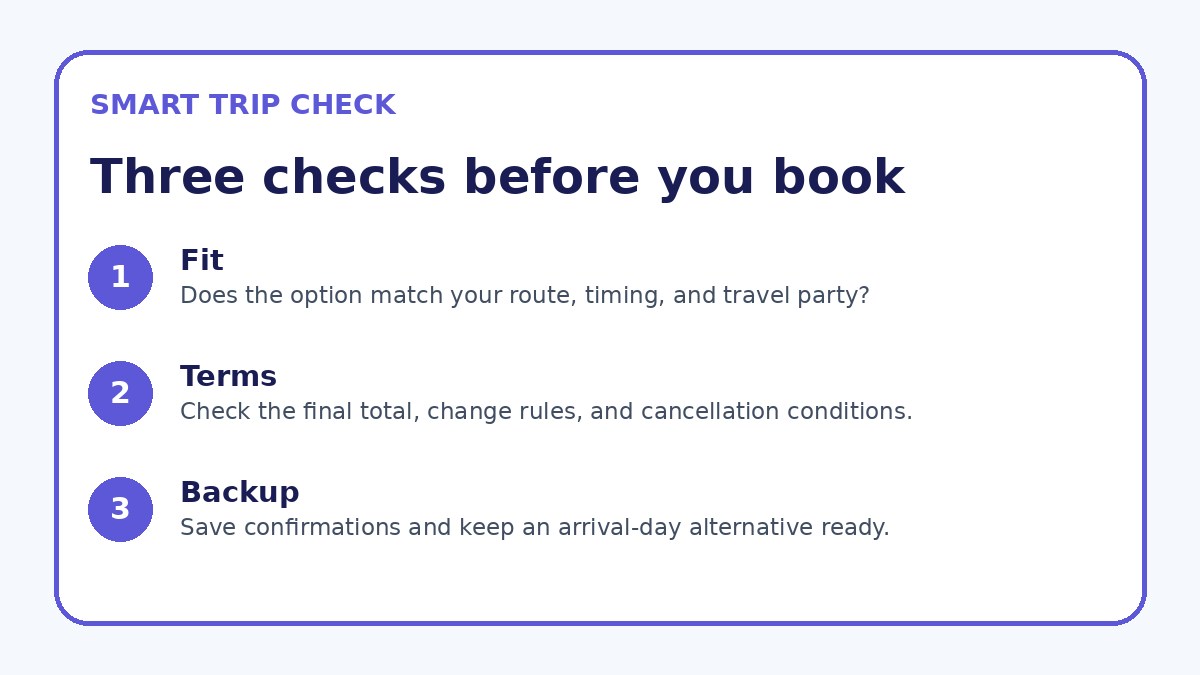
Comparing direct flights and itineraries with connections
Never assume flights between New York City and Los Angeles will be identical: direct nonstop flights differ from itineraries with one or more connections in how change and cancellation protections apply. On a single-ticket itinerary with a connection, the airline typically assumes responsibility for rebooking you onto an alternate routing if the carrier causes a missed connection. However, if you buy separate one-way tickets for legs, you may not receive protection for missed connections, leaving you fully responsible for additional bookings and fees.
When evaluating options, compare the re-protection policies: does the carrier offer hotel or meal vouchers for overnight delays, will they rebook you on a partner airline, and how long before departure do you need to request a change to avoid extra fees? For solo travelers, nonstops reduce complexity and the chance of missed connections, but connecting itineraries sometimes offer lower fares or better timing. Put the value of a potential saving against the inconvenience and cost risk of changes or cancellations.
Before you book
- Before booking, open and save the full fare rules and the airline’s cancellation policy from the final booking page.
- Compare change fees, refundability, and whether cancellations yield cash refunds or travel credits.
- Decide if a flexible fare or travel insurance is worth the premium for your personal risk tolerance.
- Verify how the carrier treats schedule changes and what compensation or re-protection is provided for cancellations.
- If booking connections, ensure the itinerary is on a single ticket to preserve through-protection for missed connections.
- Document booking confirmation, fare class, and any agent reference numbers; save screenshots of important policy text.
Practical steps for minimizing cost and stress if plans change
Start by choosing a fare that matches your flexibility needs and then add protective options if necessary. Consider refundable or flexible fares if your trip date might shift; if you buy a lower fare, add travel insurance that covers trip interruption or cancellation for covered reasons. Also register for the carrier’s loyalty program and notifications: same-day change options and seat upgrades sometimes open to members first, and alerts give you time to rebook or claim compensation. Keep close track of the ticket’s timeline: check-in windows and change deadlines are often tied to local departure times.
Document everything: save confirmation emails, screenshots of the fare rules, and any chat or call reference numbers if you discuss special accommodations with an agent. If a schedule change occurs, escalate quickly — filing rebooking requests at the airport counter, calling the airline, and using the mobile app can have different response times. For involuntary cancellations, verify on the airline’s final booking page whether you qualify for a cash refund, a travel credit, or re-routing without penalty, and ask the agent to record the reason code for the change.
Frequently asked questions
Can I get a cash refund if my New York City to Los Angeles flight is canceled by the airline?
If the carrier cancels your flight, many airlines offer rebooking options, refunds, or travel credits — but the exact remedy depends on the airline’s policy and the fare purchased. On the airline’s final booking page you’ll find the binding policy: some carriers commit to full cash refunds for cancellations they initiate, while others first offer re-routing or credits with cash refund only on request or under specific conditions. Always confirm the refund mechanism and any deadlines to request cash rather than a credit when a cancellation is announced.
How do change fees and fare differences work when I reschedule a New York City to Los Angeles ticket?
When you change a ticket, airlines generally charge a change fee plus the fare difference if the new flight is more expensive; if it’s cheaper, you may receive a travel credit instead of a cash refund. The precise amounts — whether a flat fee, percentage, or waived under certain fare classes — appear in the fare rules on the airline’s final booking page. Some flexible fares incorporate free changes and only require you to pay the fare difference. Check timing rules: earlier changes often cost less or qualify for free rebooking windows.
Should I buy travel insurance or upgrade to a flexible fare for route protection?
The choice depends on what risks you want covered. A flexible refundable fare simplifies airline interactions and typically eases rebooking or refunds directly with the carrier, whereas travel insurance can cover non-airline reasons for cancellation (illness, family emergency) that the carrier won’t honor. Read both the airline fare rules and the insurance policy carefully: insurance has exclusions, claim windows, and documentation requirements. For many solo travelers, a middle approach — a moderately flexible fare plus a limited insurance policy — balances cost with coverage.
Final planning note
Planning New York City to Los Angeles flights as a solo traveler means prioritizing clarity over lowest cost. Start by reading the airline’s final booking page and fare rules so you know exactly what changes and cancellations will cost you. Weigh the cost of a flexible fare against the hassle and possible loss from a restricted ticket, and consider travel insurance for non-airline risks. For itineraries with connections, prefer single-ticket bookings to preserve through-protection. Keep records of all communications and confirmation details, and act quickly if the carrier announces a schedule change to secure the best rebooking outcome.
Continue planning
Check current options and final conditions
Use the provider page to confirm live availability, the final total, cancellation terms, and every condition that matters to your trip.
This evergreen planning guide was created with AI-assisted drafting and a structured quality review. It does not display live prices, schedules, availability, visa guidance, or provider rankings. Verify current details before booking. Some links are affiliate links; we may earn a commission at no additional cost to you.