
If you’re traveling solo from Vienna to Budapest with luggage, the simplest approach is to pick the transport mode that matches your bag size, mobility needs, and tolerance for transfers. Trains normally offer the easiest door-to-door flow for people with medium-to-large suitcases because you can roll luggage across platforms and find space in carriages; buses and shared rides work well for one or two medium bags but require tighter packing and lifting. This article gives a practical decision path: what to expect at main stations, how to measure door-to-door effort, and the specific checks to make on booking pages. Read the tradeoffs so you can balance comfort, cost, and convenience before you buy a ticket or reserve a seat.
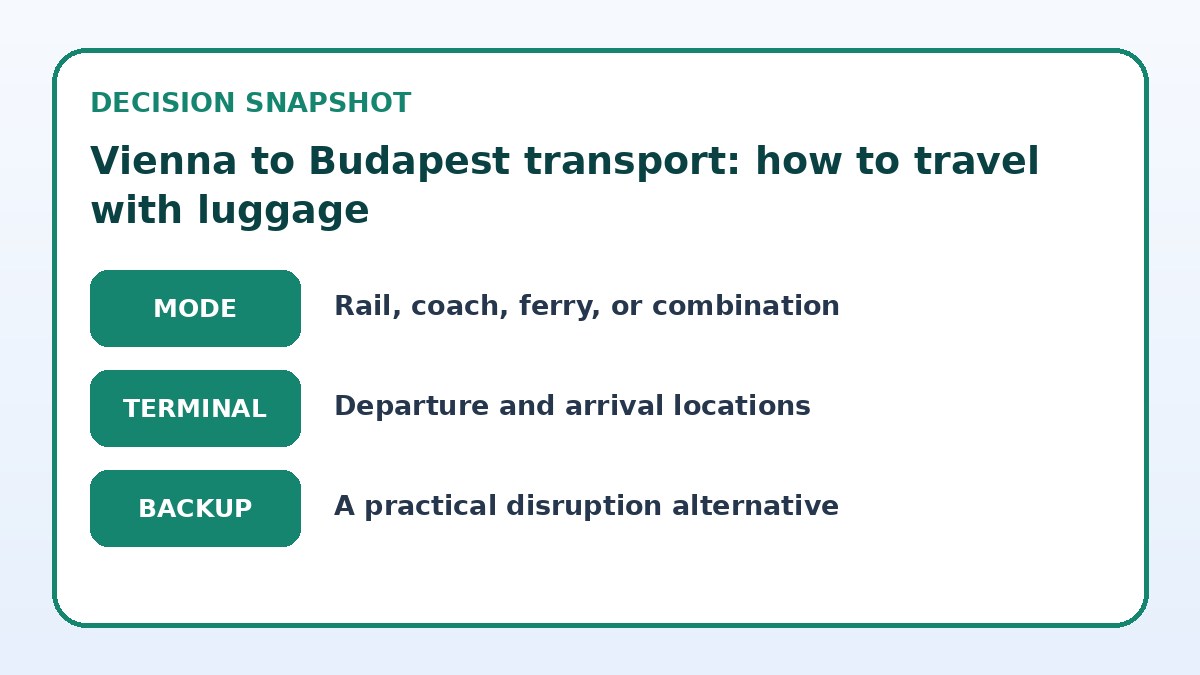
See current options before you compare the details
Availability and final conditions change. Open Trip.com now or keep reading for the practical comparison.
Choosing the right transport mode for your luggage
Think first about how many bags you have, their sizes, and whether you’ll manage stairs or long walks. If you travel solo with two medium suitcases and a daypack, trains usually give the most straightforward experience: you move from central station to central station with minimal curbside handling and can often keep a small bag at your seat. Coaches and buses frequently require you to place checked luggage under the coach on arrival; that’s fine for durable suitcases but means you won’t access contents en route. Shared rides or private transfers cut the walking and the platform lifts, but availability and vehicle type can vary—always confirm vehicle space and door-to-door pickup/drop-off details when you book.
Also weigh how much time and hassle you’ll accept. A direct train with one or two transfers is worth the extra comfort if you prefer not to lift heavy bags repeatedly. If you’re on a tight budget and traveling light, a coach might be acceptable if you’re willing to load and unload yourself. For travelers with mobility constraints or very heavy items, a booked private transfer or ride service that specifies trunk capacity is often the least physically demanding option. Whatever mode you choose, plan for contingencies like station stairs, elevator outages, and busy peak times that make moving a lot more difficult.
Practical station and platform considerations
When planning departures from Vienna or arrivals in Budapest, check which stations your tickets use and how they connect to local transport. Major stations often have elevators, escalators, and staffed help desks, but smaller stops or peripheral coach terminals may require carrying luggage up steps. Look at station maps and departure/arrival platform ergonomics on the provider’s site or official station pages. If you need elevator access or step-free transfers, verify that information explicitly rather than assuming it; elevator availability can change and providers’ booking pages should reflect current accessibility options.
Also plan how you’ll transfer once you arrive: from the station to your accommodation or onward transport. If your hotel is near the station, walking with luggage is manageable; if not, consider a short taxi or tram ride, but confirm tram policies for large bags. Remember that peak travel periods mean crowded platforms, limited space for storing luggage near your seat, and longer times to board or disembark. Packing to keep essentials in a carry-on that stays with you saves time and reduces stress during transfers and when searching for elevators or ramps.
| Approach | Best for | Tradeoff to check |
|---|---|---|
| Direct intercity train | Solo travelers with one to two medium suitcases seeking the easiest door-to-door flow | Might require platform transfers and carrying bags across busy stations; check seat luggage space if traveling with very large items |
| Long-distance coach | Budget-conscious solo travelers with durable, stowable luggage who can lift bags into a hold | Requires loading/unloading at terminals and no access to luggage during the journey |
| Shared ride or shuttle | Travelers prioritizing minimal walking and transfers, carrying limited numbers of bags | Vehicle space varies; you must confirm trunk capacity when booking and may face detours for other passengers |
| Private transfer or taxi | Those with heavy or fragile luggage, mobility limits, or door-to-door convenience needs | Higher cost and variable vehicle sizes; confirm trunk space and pickup/drop-off logistics on the provider’s page |
Ready to check the option that fits your plan?
Use your exact dates and traveler details so the provider page can show the current total and conditions.
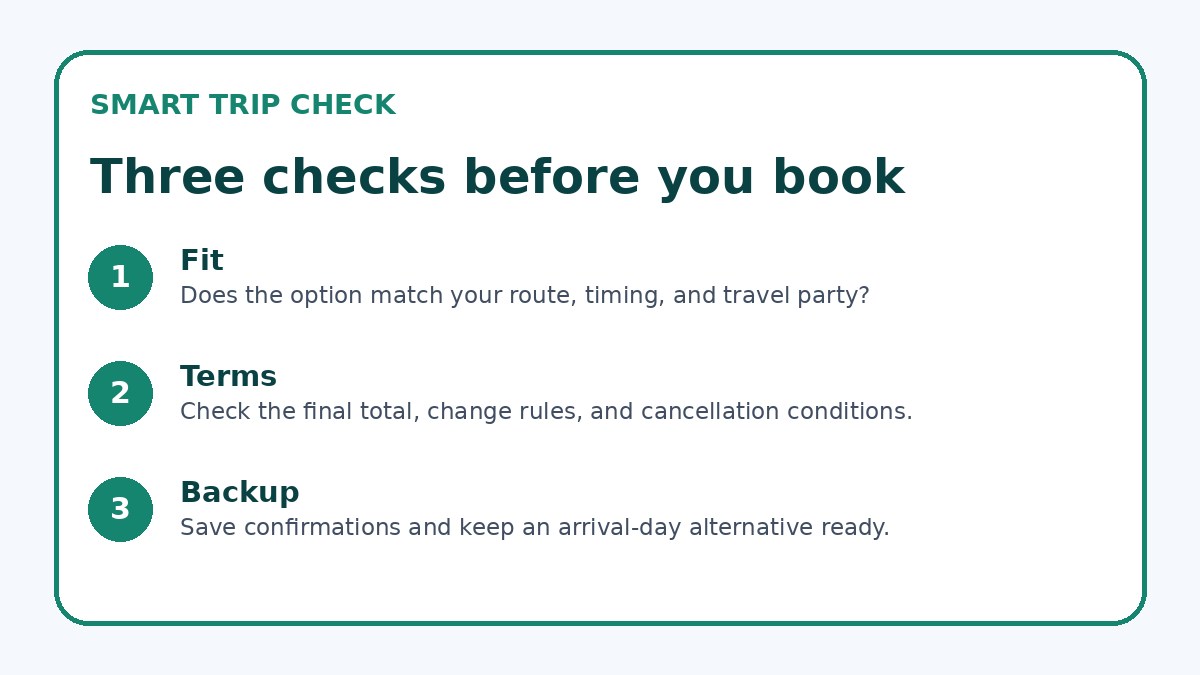
Booking details and what to verify before purchase
Before you finalize any reservation, read the provider’s luggage policy and the wording on the final booking page. Key specifics to confirm include permitted number and size of free bags, whether you need to reserve a luggage space, and rules for oversized or sports equipment. If you’re considering a coach or shared ride, look for statements about trunk access and whether drivers assist with loading. For private transfers, check the vehicle class and stated trunk volume or passenger-plus-bag limits. If this information isn’t clear, contact the provider directly or use a comparison site such as Trip.com to see current availability and provider notes—but verify details on the provider’s official booking page.
Also check baggage handling windows and boarding rules. Some low-cost or discount services require you at the terminal at an early check-in time; trains often allow arrival just before departure but still benefit from buffer time to move luggage and find your platform. If you intend to use station lockers or left-luggage services as a staging option, verify their locations and hours on official station pages. Finally, keep digital copies of reservation confirmations and clear photos of your luggage to speed up identification if service staff need to assist you with transfers or claim checks.
Before you book
- Measure and weigh all bags to compare against provider luggage limits before booking.
- Confirm station names, platform access, and elevator availability on the provider or station’s official page.
- Verify baggage allowances and oversized item rules on the final booking page or by contacting the operator.
- Reserve a private transfer or taxi in advance if you have heavy, fragile, or oversized luggage.
- Pack essentials in a carry-on and photograph each checked bag in case of loss or mishandling.
- Allow extra time at departure and arrival for loading, unloading, and any station navigation with bags.
Packing, equipment, and day-of strategies
Choose luggage that makes the actual moving easier: wheeled suitcases with sturdy wheels, a comfortable backpack for carry-on essentials, and a secure crossbody bag for documents and valuables. If you plan frequent short hops or expect cobblestone streets, choose durable spinner or two-wheel suitcases and consider a backpack with a trolley sleeve so you can stack items. Pack heavier items low and close to the wheels to keep balance while rolling. Use compression packing cubes or straps to keep items compact; smaller, well-organized bags make platform transfers and bus hold loading quicker and less stressful.
On the travel day, give yourself a time buffer for elevator lines, security checks, and luggage loading. Label bags clearly with contact info and take a photo of each bag before you leave—this speeds up recovery if anything is misplaced. If you expect to arrive late or across town, reserve a taxi or ride-share in advance that allows large suitcases, or confirm the nearest hotel with luggage storage. Finally, carry a small basic tool like a lightweight lock or strap; airline-style cable locks and a packing strap can prevent bursts and make handling easier during tight transfers.
Frequently asked questions
Is it easier to take a train or a bus from Vienna to Budapest with a suitcase?
Trains generally make handling suitcases easier because you board at platforms directly, can keep a small bag with you, and often have overhead racks or luggage areas. Buses require loading suitcases into underfloor holds, which is fine for sturdy bags but means you don’t have access to those items during the trip. If you have mobility concerns or very heavy luggage, consider a private transfer or taxi instead; confirm trunk space and pickup/drop-off details before booking.
What should I check about luggage rules before booking a ticket between Vienna and Budapest?
On the provider’s final booking page, confirm the permitted number, dimensions, and weight of free bags, any fees for extra or oversized items, and whether reserved luggage spaces are required. For coaches and shared rides, check trunk access and driver assistance policies. If you plan to use station lockers or left-luggage services, verify their locations and operating hours on official station sites. When in doubt, contact the operator to get a written confirmation about luggage allowances.
How can I minimize hassle moving from station to hotel on arrival in Budapest?
Book accommodation close to the arriving station if possible or pre-arrange a taxi or shuttle that confirms trunk capacity for your bags. Pack a manageable daypack with essentials to avoid opening checked luggage on arrival. Use wheeled luggage suited for cobblestones if your route includes older streets, and factor extra time for elevators, tram transfers, or pedestrian zones. If you expect late arrival, tell your hotel in advance so they can advise on the fastest luggage-friendly route or provide temporary storage.
Final planning note
Traveling solo from Vienna to Budapest with luggage is a routine trip if you plan deliberately. Match the transport mode to your bag count and physical tolerance: trains for easiest rolling and mid-size luggage, coaches for tighter budgets and stowable bags, and private transfers for minimal handling. Always verify luggage allowances, station access, and vehicle details on the provider’s final booking page before you buy. Pack smart, allow extra time on travel days, and confirm pickup or elevator logistics for smooth transfers—these steps make the difference between a stressful move and a calm arrival.
Continue planning
Check current options and final conditions
Use the provider page to confirm live availability, the final total, cancellation terms, and every condition that matters to your trip.
This evergreen planning guide was created with AI-assisted drafting and a structured quality review. It does not display live prices, schedules, availability, visa guidance, or provider rankings. Verify current details before booking. Some links are affiliate links; we may earn a commission at no additional cost to you.