Quick answer: set targeted price alerts for flights and hotels but pair them with a decision checklist and booking rules so you avoid impulse purchases. Business travel has different priorities—schedule reliability, refundable or changeable tickets, and proximity to meetings matter more than a cut-rate fare. Use alerts to inform timing, not to force a transaction. Track the same itinerary across suppliers and ensure the alerted offer matches your firm’s policies (refunds, corporate rates, loyalty earnings, and baggage rules). Before you click “book,” confirm cancellation penalties, the exact fare class or room rate code, and whether the deal includes any ancillary services you need. If a tempting alert appears, pause: check alternatives for the same dates, travelers, and conditions, and run it through your firm’s approval process before buying.
Test package value fairly
| Booking approach | Best for | Tradeoff to check |
|---|---|---|
| Book bundled flight+hotel through a single platform | Travelers who prefer one invoice and simplified logistics | Bundles may lock in nonrefundable components or block loyalty accrual without clear savings |
| Book flights and hotels separately through airline and hotel channels | Travelers prioritizing flexibility, loyalty earnings, and control over each element | Requires more time to compare and manage separate itineraries and receipts |
| Use a corporate travel agency or managed-travel program | Frequent business travelers needing policy compliance and consolidated reporting | May limit exposure to retail-only flash deals and requires agency processing time |
| Set standalone alerts for flights and hotels and only buy when terms match your checklist | Planner travelers who want price signals without impulsive purchases | Alerts need careful monitoring and can create decision fatigue without firm booking rules |
Check current package and separate options
Use identical dates, travelers, room needs, baggage, and flexibility so the comparison stays meaningful.
What to compare first before considering a bundled package
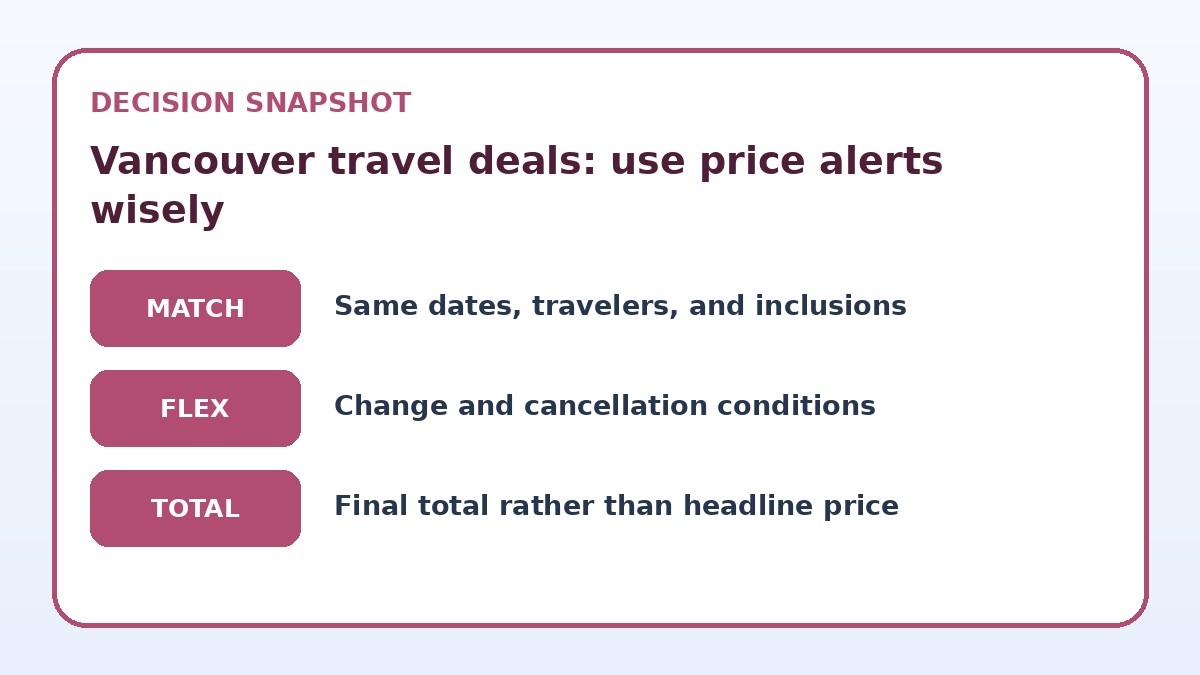
Before you judge whether a bundle (flight + hotel or flight + car) is useful, line up the essentials you must compare. Match the same travel dates, number of travelers, and preferred flight times. For hotels, compare room type, cancellation policy, proximity to your meetings, and whether breakfast, Wi‑Fi, and business center access are included. For car rentals, confirm insurer requirements, mileage rules, and pickup/drop-off windows. These baseline matches make sure you are comparing like for like and avoid being misled by a bundle that looks cheaper only because it omits something you need.
Next, add corporate policy and loyalty considerations. A bundled price that blocks accrual of airline or hotel loyalty points or that prevents your company’s negotiated rates or rebates can be a net loss. Confirm whether the bundle honors corporate rate codes or business‑travel benefits and whether the provider’s invoice meets your expense reporting needs. If the bundle includes nonrefundable elements, weigh that against your organization’s allowable change penalties; sometimes separate bookings with modest change fees are more flexible and safer for business travel.
Inclusions and fine print: the hidden differences that matter
An alerted price often hides important inclusions or exclusions. For flights, identify the fare family or class and verify baggage allowance, seat selection policy, and change or cancellation fees. For hotels, look for room type codes and taxes, resort fees, or mandatory service charges that might not appear in the alert summary. When a bundle appears to include extras — like airport transfers or breakfast — check the booking page to confirm whether those extras are prepaid, subject to availability, or conditional on a particular room type.
Always verify provider-level terms on the final booking page before purchasing. Confirm the refundable window, the precise cancellation penalty formula, and whether a separate confirmation number or voucher is issued for each element of a bundle. If the booking platform shows a bundled itinerary, click through to the supplier’s contract or terms link and screenshots any key terms your approver will need. If you use a travel management tool, verify how it displays invoices and whether it will separate charges for expense reporting.
Look past the headline total
Compare inclusions and change conditions before deciding whether a package is genuinely useful for this trip.
Deal comparison checklist
- Set alerts only for precise dates, traveler count, and preferred time windows to ensure like-for-like comparisons.
- Add non-price filters to alerts: refundable or changeable fares, baggage allowance, breakfast inclusion, and loyalty eligibility.
- Before booking, confirm on the supplier’s final page: fare class or room code, cancellation policy, and whether taxes and fees are included.
- Document the alert details (screenshot or note) and attach them to any corporate approval request or expense submission.
- If a bundle looks cheaper, reprice the same elements separately for the exact dates and conditions to detect false savings.
- Establish a two-step rule: pause for 24 hours after receiving a strong alert and run your checklist; only then proceed if it still meets business needs.
Flexibility vs value: how to weigh traveler-specific needs
For business travelers, the cheapest option is rarely the best. Prioritize schedule reliability and flexibility: refundable or reissue-friendly fare families often cost more but can save time and stress if meetings shift. Assess whether you need a hotel with a late checkout, flexible cancellation, or a business-class workspace. If you frequently travel to Vancouver for short stays, the value of a consistent hotel chain with loyalty benefits might outweigh one-time savings from a bundle. Factor in travel time to meetings and the cost in lost productivity when choosing between a bargain far from your destination and a slightly higher-priced conveniently located option.
Also consider who is traveling and the trip purpose. If you’re traveling with a colleague, a bundled hotel room with two beds or an upgrade path may matter. If the trip requires precise arrival times, prefer fares with minimal connection risk even when the price alert favors a long connection. Weigh the marginal savings from a bundle against potential extra costs: missed meetings, late check-in fees, or nonrefundable components you cannot change. Build a simple scoring metric (flexibility, time, cost, loyalty) to see whether the bundle improves your overall business-travel value.
Final terms to verify before you hit purchase
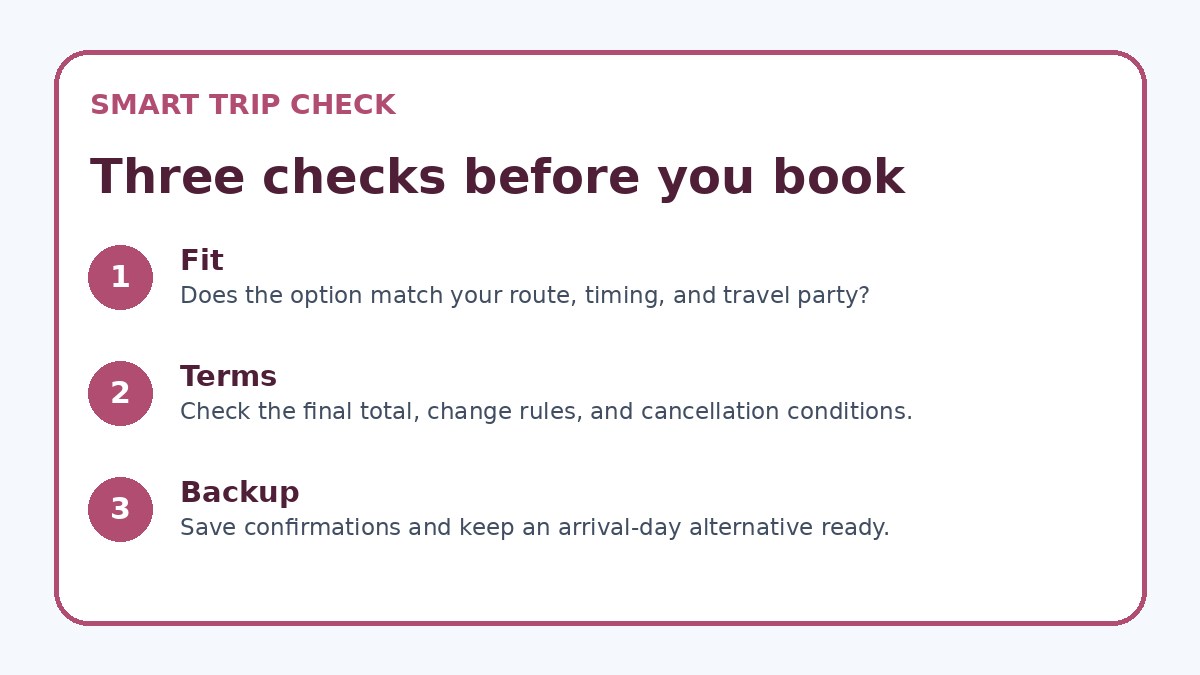
Before booking any alert-driven deal, verify three final items: the cancellation/change penalties and how they are calculated; whether taxes, fees, and surcharges are included; and whether the fare or rate actually entitles you to loyalty credit or corporate discounts. For flights, confirm the ticketing deadline and whether the fare class allows upgrades or free seat assignment. For hotels, verify whether the quoted rate is for the specific room type and whether mandatory local taxes or service charges are added at checkout.
Make it a habit to capture proof of the exact terms shown at purchase: take screenshots of the final confirmation page and download the provider’s contract or terms. If your company requires pre‑approval, include those screenshots with your request and note the alert that triggered the booking. When in doubt, call the provider or the booking platform to read back the key terms and ask for an email confirmation of any verbal guarantees. Trip.com can be one of the places you compare live availability and terms, but always verify provider details on the supplier’s own booking page.
Travel Deals & Booking Strategy questions travelers ask
How should I set price alerts for short business trips to Vancouver?
For short business trips, set tight date ranges and narrow time-of-day filters so alerts only trigger for flights that fit your meeting schedule. Include search parameters for nonstop or single-connection itineraries if minimizing travel time is essential. For hotels, specify neighborhood or distance to key meeting locations and require free cancellation if your schedule might change. Finally, add a note in the alert record about whether you need loyalty credit or corporate rate eligibility so you don’t book a superficially cheaper option that fails expense or reimbursement rules.
If a price alert shows a lower bundled rate, how can I verify it isn’t a false saving?
First, duplicate the itinerary by pricing flights and hotel rooms separately for the identical dates, traveler count, and room/fare types. Compare the final page totals including taxes, service fees, and any mandatory charges. Confirm whether the bundle blocks loyalty points or corporate codes. Check cancellation and change terms for each element; nonrefundable savings are different from flexible savings. If uncertainty remains, contact the supplier or platform and request written confirmation of the bundle’s inclusions and penalties before committing.
What quick booking rules prevent impulse purchases triggered by alerts?
Create simple, enforceable rules you will follow: require that any airfare be refundable or reissuable within your company policy; require hotel rates to offer free cancellation up to 24–48 hours before arrival; insist on matching loyalty or corporate-rate eligibility when applicable. Add an administrative rule like a mandatory 24-hour review for any alert-driven booking or a pre-approval step from travel management. Automating parts of this, such as saving alert details into a shared company document, helps enforce discipline and reduces emotional, last-minute decisions.
Final decision note
Price alerts are powerful tools for business travel to Vancouver when used as decision inputs rather than prompts to buy immediately. The real value comes from disciplined comparisons: always match dates, traveler counts, and inclusions, and verify fare classes, cancellation rules, and loyalty treatment on the supplier’s final booking page. Use alerts to spot timing opportunities but pair them with short booking rules—like a 24-hour pause and an itemized checklist—so you keep flexibility and compliance. Whether you pick a bundle or separate components, document the terms and run them through your company’s approval process before purchase. That discipline preserves productivity and ensures that a cheap-looking deal doesn’t cost you time, benefits, or peace of mind.
Continue planning
Check current options and final conditions
Use the provider page to confirm live availability, the final total, cancellation terms, and every condition that matters to your trip.
This evergreen planning guide was created with AI-assisted drafting and a structured quality review. It does not display live prices, schedules, availability, visa guidance, or provider rankings. Verify current details before booking. Some links are affiliate links; we may earn a commission at no additional cost to you.