If you’re planning your first trip to Vancouver, the quickest decision is this: pick a package if you want convenience and fewer booking steps; choose separate bookings if you want more control, potential savings, or a tailored itinerary. Both approaches work for a safe, enjoyable visit. Packages bundle flights, hotels and sometimes activities, reducing the time you spend comparing options and centralizing customer support. Separate bookings give you the freedom to mix airlines, select neighborhoods, extend stays, and shop for deals on individual services. Before you commit, list your priorities—budget, schedule flexibility, preferred neighborhood, and how comfortable you are managing multiple confirmations. Later sections explain tradeoffs, how to compare like-for-like offers, and the exact provider details to verify on checkout pages, including baggage rules, change/cancellation terms, and whether transfers or activities are included.
See current options before you compare the details
Availability and final conditions change. Open Trip.com now or keep reading for the practical comparison.
What a Vancouver package typically covers and why it matters
Packages sold by tour operators or online travel agencies usually bundle flights and hotel stays, and sometimes add transfers or excursions. For a first-time visitor this can be helpful because it centralizes logistics: one confirmation number, one customer service channel, and a clear start-to-finish itinerary. That convenience is particularly useful if you prefer not to juggle separate confirmations or if you want an on-arrival transfer arranged. Remember that the exact inclusions vary—some packages list seat selection, baggage, or airport transfers as optional add-ons. Don’t assume anything is included until you read the provider’s final checkout and policy pages.
Because inclusions differ, a package can feel like a single purchase but is legally multiple services under one contract. That affects refunds, changes, and how disruptions are handled. If a problem involves the flight, the airline’s policies often determine options; if it involves the hotel, the supplier’s rules apply. When evaluating a package, identify which component has the strictest change or cancellation rule, since that will likely govern your ability to alter the trip. On the provider page you should verify the supplier names for each component and the contact path for each kind of issue.
How separate bookings give control—and what that control costs
Booking flights, hotels, transfers, and activities separately gives you maximum control over each choice: pick your preferred airline, choose a specific neighborhood in Vancouver, and schedule activities where they best fit your days. This is great for travelers who want to stay in a particular area like downtown, Kitsilano, or near Stanley Park, or for those who travel with special requirements. Separate bookings also let you rebook only the part you need to change without touching unrelated reservations, which can save money if your plans shift.
However, that control comes with more legwork and risk: you manage multiple confirmations, coordinate arrival times with transfers, and handle different supplier policies if something goes wrong. If a flight delay causes you to miss a prepaid tour, the tour operator may not refund or reschedule without a fee. Mitigate this by leaving buffer time between connections and by checking each supplier’s change and cancellation terms before booking. Also verify baggage allowances and whether connecting itineraries are protected by the carrier—never assume protections that apply to single-ticket itineraries will cover separate tickets.
| Approach | Best for | Tradeoff to check |
|---|---|---|
| All-in-one package | Travelers who want minimal planning and single-point customer support | Less control over individual components and variable inclusion details you must verify |
| Separate bookings | Travelers who want flexibility, neighborhood choice, and loyalty benefits | More time to coordinate and higher risk of unprotected connections |
| Hybrid (mix of package + separate) | Travelers who want convenience for parts of the trip and control for others | Requires careful coordination to avoid schedule conflicts between providers |
| Agent-assisted custom booking | Travelers who want bespoke planning without managing every detail themselves | Often higher fees and still requires verifying supplier-level terms on contracts |
Ready to check the option that fits your plan?
Use your exact dates and traveler details so the provider page can show the current total and conditions.
How to compare like-for-like offers when shopping Vancouver travel deals
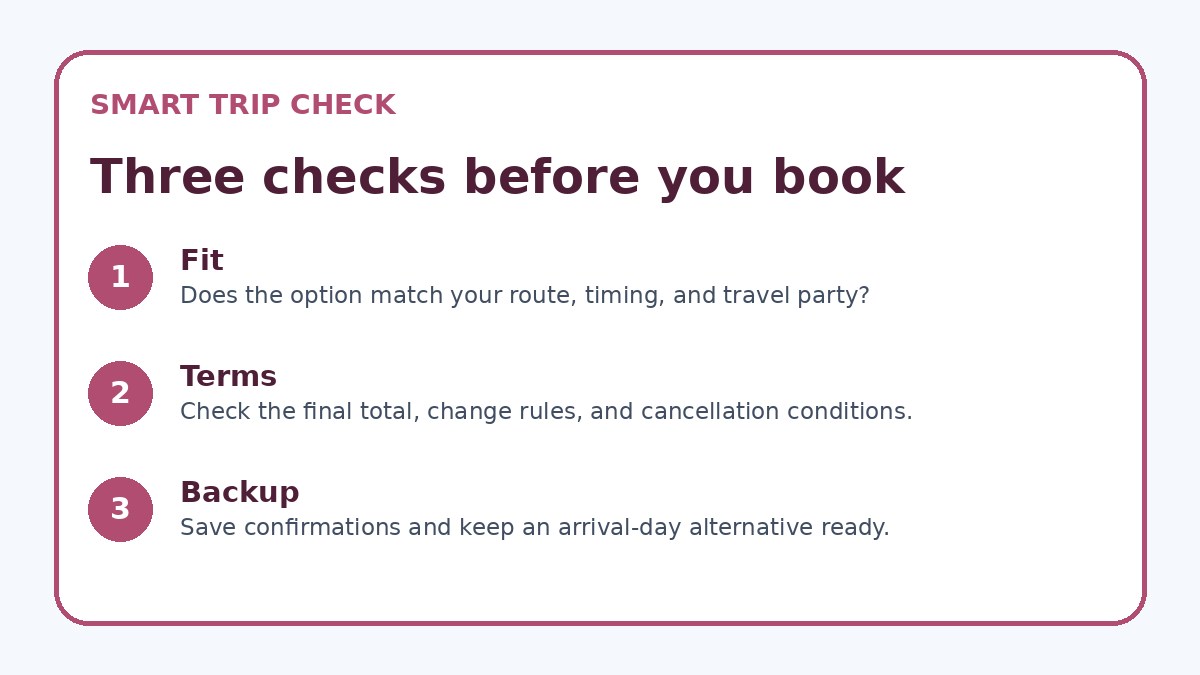
To compare a package with separate bookings, break the trip into the same components: flight (including baggage), hotel (room type and taxes), transfers, and key activities. Convert all totals to a single figure including compulsory fees and taxes; exclude optional add-ons you won’t use. Check the fine print for change and cancellation penalties, and estimate the cost of likely changes. For flights, compare whether the package’s fare allows seat selection or checked bags or whether those are extra. For hotels, check whether the room is refundable and whether taxes or resort fees are included.
Also compare timelines for refunds and who handles customer service. A package usually funnels problems through the seller, but the seller may still rely on airlines or hotels to implement refunds and changes. Separate bookings mean you call the airline for flight issues and the hotel for lodging problems. If the seller of a package is a consolidator, verify whether they will rebook you on another carrier or only facilitate a refund. For real-time availability and cross-checking options you can use Trip.com as one of the places to compare current offers, but always verify the supplier terms on the final booking page before paying.
Before you book
- List your top three priorities (budget, flexibility, neighborhood choice) before you search for Vancouver travel deals.
- When comparing offers, add mandatory taxes, baggage fees, and transfer costs to each quote so totals are comparable.
- Read the cancellation and change policy on the final checkout page for every supplier before you pay.
- If booking separate tickets, leave at least one buffer day or several hours between arrivals and prebooked activities.
- Confirm the supplier names behind any package items and save their contact info for quick resolution if needed.
- Keep a single itinerary file with confirmation numbers, check-in instructions, and emergency contacts for your trip.
Decision checklist: which approach suits different traveler types
If you prioritize simplicity—minimal planning time, a single support number, and a predictable itinerary—a package often fits. Travelers who value an easy purchase and want an all-in-one confirmation, or who are booking a short city break without many special requests, typically prefer packages. Conversely, travelers with specific neighborhood preferences, loyalty status with airlines or hotels, equipment to transport, or complex multi-city plans will usually benefit from separate bookings. Also consider how comfortable you are resolving issues with multiple providers if something goes wrong.
For a balanced middle path, some travelers mix approaches: buy flights and a hotel separately to control lodging and loyalty benefits, then add a packaged transfer or curated activity. This hybrid model captures convenience for certain parts of the trip while preserving control where it matters most. When using a hybrid approach, create a simple itinerary document with confirmation numbers and supplier contacts to keep everything organized, and double-check that arrival times align with any transfers or tours you’ve prebooked.
Frequently asked questions
Will a package usually be cheaper than booking everything separately for Vancouver?
Sometimes, yes—and sometimes not. Packages can offer savings through supplier deals or negotiated rates, but that depends on the travel season, timing, and what is included. To know which is cheaper for your trip, price each component separately (flight with baggage, the exact hotel room including taxes, transfers, and must-do activities) and compare that total to the package price. Also factor in the value of convenience and the cost of possible change fees; a slightly higher package price may be worth it if you want fewer administrative headaches.
If I book a package and my flight is delayed, who handles rebooking tours or transfers in Vancouver?
Start with the package seller—most will try to assist with rebooking included tours or transfers, but their options depend on the underlying suppliers’ rules. Airlines control flight change mechanics, and tour operators control tour availability and refund policies. For critical arrival-dependent services like scheduled tours, check whether the package includes guaranteed transfers or whether transfer services have flexible rebooking. On the confirmation pages, verify how changes are handled and whether contact numbers are given for both the package seller and the local supplier.
How do I protect myself when mixing separate bookings for flights and hotels?
Protect yourself by allowing comfortable time buffers between arrival and any commitments, avoiding tight same-day connections when tickets are on different carriers, and considering travel insurance that covers missed connections and cancellations. Confirm baggage transfer rules—if you have separate tickets, your checked luggage may not be automatically transferred between airlines. Keep all confirmations accessible, and when possible, choose refundable or flexible hotel rates for at least the first night to reduce stress if plans shift.
Final planning note
For first-time visitors to Vancouver, the right path depends on how much planning time you want and how much control you need. Choose a package if you want a simpler, single-point booking experience and are comfortable with the seller’s stated inclusions and policies. Choose separate bookings if you prioritize neighborhood choice, airline or hotel loyalty perks, and the ability to edit parts of your trip independently. A hybrid approach often provides the best of both worlds: secure the elements that matter most and bundle the rest. Whatever you pick, compare like-for-like totals, verify supplier-level terms on the final booking pages, and keep a clear itinerary with confirmation numbers for quick problem-solving during your trip.
Continue planning
Check current options and final conditions
Use the provider page to confirm live availability, the final total, cancellation terms, and every condition that matters to your trip.
This evergreen planning guide was created with AI-assisted drafting and a structured quality review. It does not display live prices, schedules, availability, visa guidance, or provider rankings. Verify current details before booking. Some links are affiliate links; we may earn a commission at no additional cost to you.