If you’re arriving in Osaka with a small group (2–6 people) and want a smooth start, pick one transport type before you arrive: rail/bus, shared shuttle, private transfer, or taxis. The practical choice depends on how much luggage you have, whether everyone wants door-to-door service, and how comfortable you are navigating Japanese stations. For many groups, a straightforward rail or airport limousine bus works well if you have light bags and a central hotel. If you value privacy and door-to-door drop-offs — or you’re traveling with young children or a lot of luggage — a private transfer or pre-booked van reduces stress. This article explains the tradeoffs and gives decision criteria so your group can agree on one plan and make reliable bookings. Where provider details matter, I’ll tell you exactly what to verify on the booking page before you pay.
See current options before you compare the details
Availability and final conditions change. Open Trip.com now or keep reading for the practical comparison.
Start by agreeing your group's priorities
Before comparing services, get everyone on the same page about priorities: cost, comfort, luggage handling, door-to-door service and total transit time. Ask the group to rank these factors — a family with children will usually pick comfort and direct drop-off, while budget-conscious friends might prefer the fastest cheap rail route. Also confirm mobility needs and any infant seats or special assistance requirements because those change which providers you should consider.
Once you have priorities, shortlist options that match them. For example, prioritize private transfers for door-to-door service and minimal walking; shortlist trains and airport buses if handling luggage and platform navigation is acceptable. If arrival times scatter or you have late-night flights, focus on options that operate when you arrive and on providers whose final booking page shows explicit cancellation and flight-delay policies; verify those policies before paying.
Rail and airport bus: efficient for city-center stays
Trains and airport buses are often the simplest choice when your group’s hotel is near a central station. They typically require no advance vehicle booking and keep costs predictable because one vehicle serves many passengers. Trains can be faster when traffic is heavy, and buses are easier with lots of luggage because they load at curbside. Plan how to handle luggage between train platforms and hotel entrances — factor in stairs, walk times, and whether you’re comfortable splitting luggage between people.
When comparing specific routes, look on provider pages for exact station-to-station transfers and luggage allowances. Confirm whether your combined group and bags will fit on the same departure — crowded peak periods can mean standing or splitting into multiple services. If you prefer a single continuous journey, check whether a bus route offers direct hotel-area stops; if not, plan for a short taxi or hotel shuttle at the end of the trip and estimate the extra coordination that requires.
| Approach | Best for | Tradeoff to check |
|---|---|---|
| Rail or airport bus | Groups with light luggage staying near major stations | Lowest per-person cost and reliable schedules, but involves walking, stairs, and carrying bags. |
| Shared shuttle/meet-and-greet | Groups wanting curbside pickup without the higher private transfer cost | Moderate price and convenience, but possible waits and multiple stops en route. |
| Private transfer (van or car) | Groups prioritizing door-to-door service and minimal hassle | Higher group cost but direct service and luggage handling; verify vehicle size and waiting policies. |
| Taxis or rideshare | Flexible arrivals or late-night arrivals without pre-booking | Immediate service and flexibility, but may require more than one vehicle for groups with lots of luggage. |
Ready to check the option that fits your plan?
Use your exact dates and traveler details so the provider page can show the current total and conditions.
Shared shuttles, taxis and private transfers: tradeoffs explained
Shared shuttles and meet-and-greet services reduce walking and station navigation but can add waiting time if the operator combines pickups. They’re a balance between cost and convenience: cheaper than a private van but more convenient than public transport for bulky luggage. Taxis provide door-to-door flexibility without advance booking in many cases, but a small group with lots of bags may need two or more vehicles. Confirm how many seats and how much luggage space a taxi company allows if you need multiple cars.
Private transfers (vans or cars booked for your group) remove many uncertainties: a driver meets you at arrivals and handles all luggage. The main tradeoff is cost per group versus per-person cost on public transport. Before booking, check the final confirmation page for exact pickup location instructions, waiting-time allowances, and any charges for flight delays or additional stops; these are the items that most often change between providers and matter for groups arriving together or on different flights.
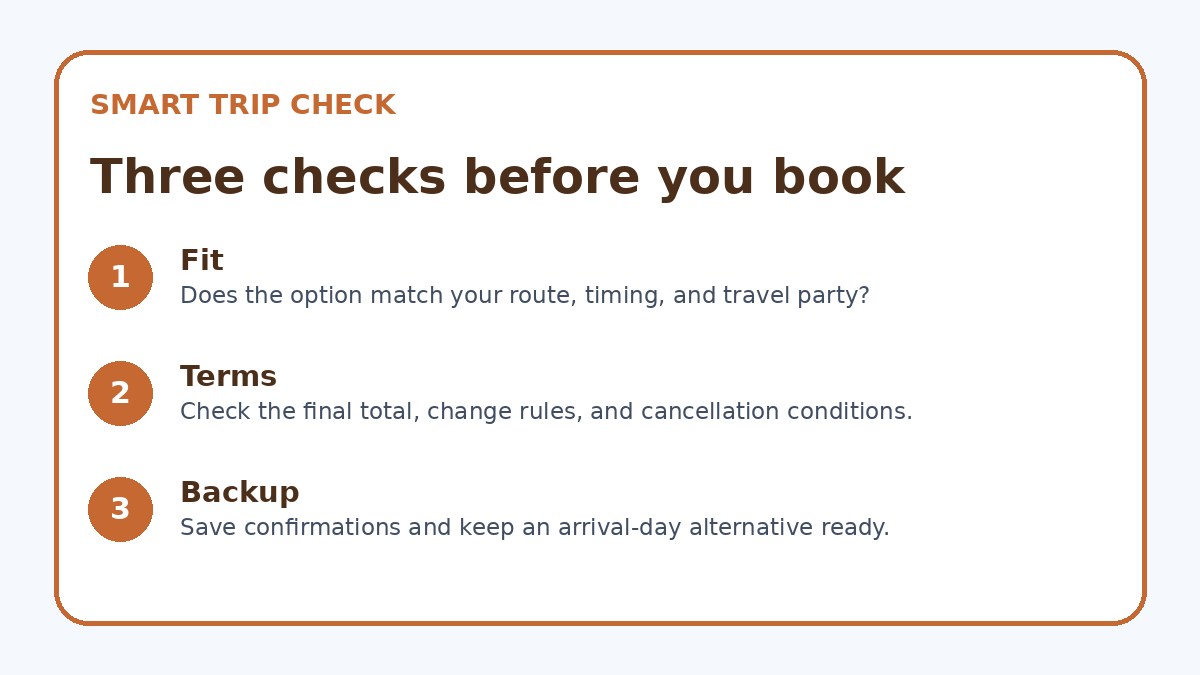
Before you book
- Confirm final pickup point and meeting instructions on the provider’s booking confirmation before you travel.
- Count people and large luggage pieces to choose a vehicle size that fits everyone in one booking if possible.
- Verify the provider’s policy on flight delays and included waiting time on the final booking page.
- Request and confirm any child seats or mobility assistance on the booking confirmation.
- If using trains or buses, check if seat reservations are required for groups and reserve if necessary.
- Share the driver or meeting-point contact details with every group member and set a common rendezvous plan.
How to book and what to verify on the provider page
When you’re ready to book, compare a few providers side by side and treat the booking page as your primary source: verify vehicle size, maximum passenger count, luggage limits, cancellation policy specifics, and how they handle delayed flights. If the operator uses a meeting point at the terminal, confirm the exact landmark or gate area and whether the driver offers phone or messaging contact. If you need child seats, request them at booking and verify any extra charges.
If price comparison sites are useful, consider checking options including Trip.com to see current availability, but always confirm details on the operator’s final booking confirmation. For trains and buses, confirm final departure points and whether seat reservations are required for groups. For private transfers and shuttles, check pickup procedures and how much waiting time is included before extra charges apply; those are common sources of surprises for arriving groups.
Frequently asked questions
Should a small group pre-book private transfer or rely on taxis on arrival?
Pre-booking gives peace of mind: the driver meets you and handles luggage, which reduces coordination and walking at busy terminals. If your arrival time is uncertain or you’re on multiple flights, check the provider’s flight-delay policy and included waiting time on the final booking page. Taxis are fine for flexible arrivals and when you can split into multiple cars, but if you need everyone and all luggage to travel together without extra stops, a private transfer is often more straightforward.
How do I decide between rail and airport bus for a downtown hotel?
Choose rail if your hotel is within easy walking distance of the connecting station and you want to avoid traffic; trains usually run frequently and offer predictable travel through urban areas. Pick an airport bus if your hotel has a nearby bus stop or if you prefer curbside luggage loading and fewer transfers. Before you leave, verify departure points, luggage rules and whether seat reservations are required for groups on the operator’s official page.
What if group members arrive on different flights or at different times?
If arrivals are staggered, either plan for a flexible option like taxis or shuttles that can handle separate pickups, or pre-book a private transfer that includes a waiting-time allowance and clear delay policy. On provider pages, look for explicit statements about how long the driver will wait after a scheduled pickup and whether extra waiting incurs fees. Alternatively, meet at a central station or hotel lobby and use local transport for later arrivals, but coordinate meeting points and allow buffer time for delays.
Final planning note
Organizing Osaka airport transfer for a small group starts with a simple group decision: prioritize cost, convenience, or door-to-door service. If you’re staying near a main station and travel light, trains or airport buses are practical and cost-effective. If you value minimal walking, handle children or lots of luggage, or want a single pickup, a private transfer or pre-booked shuttle reduces friction. Whatever you choose, verify vehicle size, luggage policy, pickup details and delay/waiting rules on the provider’s final booking page before you pay. Checking those items in advance saves time at arrivals and lets your group focus on enjoying Osaka from the moment you land.
Continue planning
Check current options and final conditions
Use the provider page to confirm live availability, the final total, cancellation terms, and every condition that matters to your trip.
This evergreen planning guide was created with AI-assisted drafting and a structured quality review. It does not display live prices, schedules, availability, visa guidance, or provider rankings. Verify current details before booking. Some links are affiliate links; we may earn a commission at no additional cost to you.