
Practical answer up front: for most couples prioritizing simplicity and time together, a comfortable daytime bus or train (where available) that avoids complex transfers at borders is the most practical option; driving is best when you want flexibility and private time, while flying suits couples who need the fastest door-to-door travel despite extra airport steps. Use the rest of this article to weigh privacy, border processing, luggage needs, and cost-versus-time tradeoffs. I’ll explain how to compare direct and connecting services, what to confirm before booking, and how to pick the option that keeps your trip smooth—whether you’re on a weekend escape or a longer trip through the Pacific Northwest. If you want to check current schedules and availability, compare provider pages and aggregator sites like Trip.com but verify details on the operator’s final booking page.
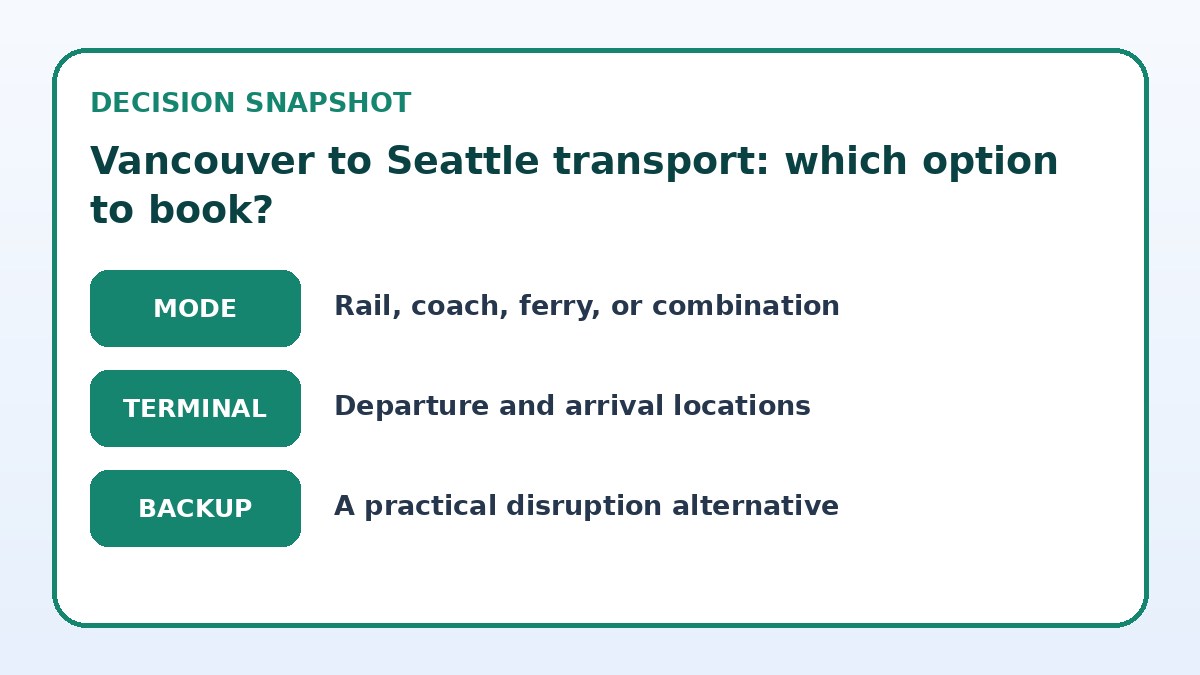
See current options before you compare the details
Availability and final conditions change. Open Trip.com now or keep reading for the practical comparison.
How to decide: priorities that matter for couples
Start by listing what affects your experience as a couple: privacy, time together, scenic enjoyment, luggage, and how much you want to manage logistics. If you value uninterrupted time to talk, read, or work together, a daytime rail or bus ride often beats a flight with separate boarding and security processes. If private space and the freedom to stop for views or a picnic are important, driving wins. Make sure both partners agree on the tolerance for travel-day stress, such as long border waits or early-morning alarms.
Next, quantify non-emotional priorities: how many bags you’ll carry, whether you need car seats or mobility assistance, and your tolerance for transfers. Luggage allowances and how strictly they’re enforced vary by mode and operator; check the carrier’s final booking page for specifics. Also consider arriving neighborhood: pick an option that gets you closest to where you’ll stay in Seattle to reduce local transfers and maximize couples’ time on arrival.
Practical strengths and tradeoffs of each mode
Buses and trains keep couples together with minimal folding of travel tasks, often offering more legroom and easier boarding than airports. They can be simpler because you usually go to a central station and walk or take a short taxi/ride-share to your hotel. Tradeoffs include less flexibility in departure times and potential variability in border processing. If a direct intercity service runs, it simplifies the day; if not, compare total door-to-door time including transfers.
Driving offers privacy, flexible departure times, and the chance to create a scenic itinerary between cities, but it adds responsibility for navigation, border paperwork, and parking. Flights can cut clock time but add airport transfers, security, and potential stress from missed connections. For couples who prioritize speed over the journey itself, a flight may be right, but factor in the time and cost of getting to and from airports at both ends.
| Approach | Best for | Tradeoff to check |
|---|---|---|
| Daytime train or bus | Couples who want comfortable shared time and simpler boarding | Less schedule flexibility and possible border processing variability |
| Driving together | Couples who value privacy, scenic stops, and luggage flexibility | You must handle navigation, parking, and border paperwork |
| Flying | Couples needing the fastest door-to-door travel time | Extra airport transfers, security steps, and potential connection stress |
| Mixed-mode (drive + train/flight) | Couples balancing convenience with flexibility for part of the route | More complex logistics and need to coordinate multiple reservations |
Ready to check the option that fits your plan?
Use your exact dates and traveler details so the provider page can show the current total and conditions.
Border crossing and documentation: what couples must verify
Regardless of transport mode, you must verify that every traveler has the correct travel documents and meets entry requirements; different nationalities face different rules. Before booking, check the operator’s final booking page and official government sites for the latest entry and passport guidance. Couples travelling with dual citizenship, children, or non-standard documentation should carry proof of status and any necessary letters or permits. If one partner needs extra processing time, choose an option with more flexible boarding windows.
Consider how border checks affect your chosen mode. Overland options may stop for inspection at checkpoints or require passengers to present documents on board or in station facilities. Air travel requires document checks at check-in and boarding gates; arriving at the airport earlier is a common mitigation but costs productive couple time. When comparing options, estimate worst-case border times and prefer services that let you stay together during processing.
Before you book
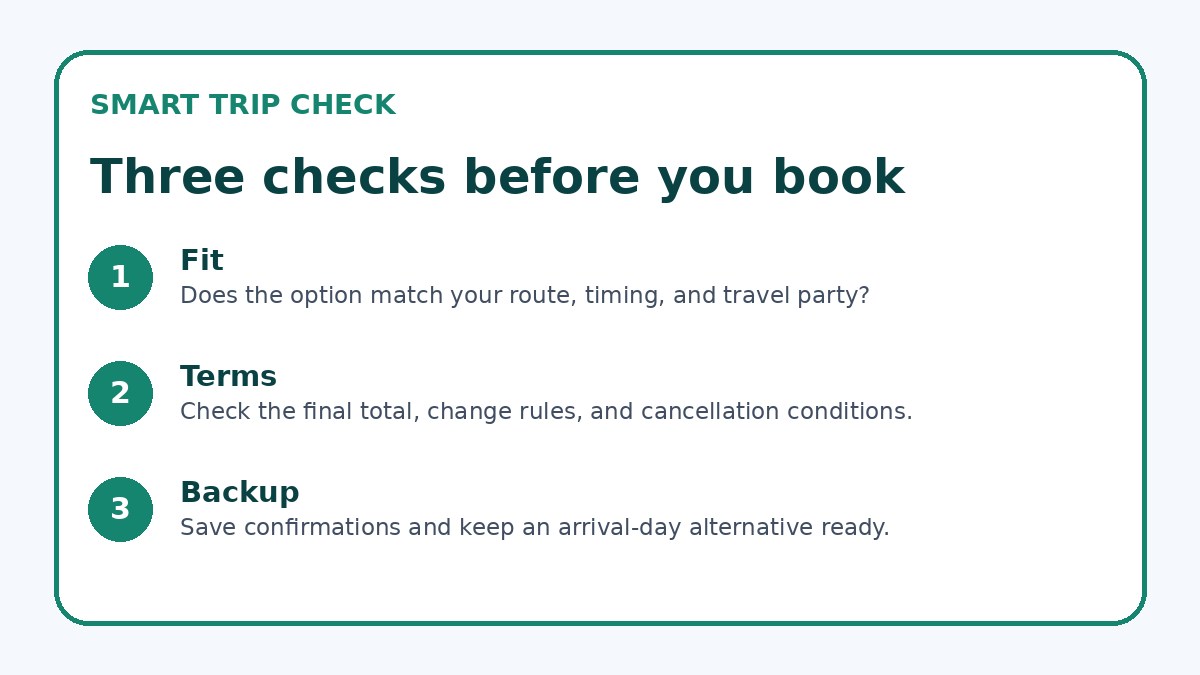
- Confirm passport validity and any entry documents for both partners on official government pages before booking.
- Compare total door-to-door travel time, not just in-vehicle time, for each option you’re considering.
- Read the operator’s final booking page for luggage allowances, boarding windows, and change/cancellation policies.
- Choose arrival locations that minimize local transfers to your hotel or chosen neighborhood in Seattle.
- Pack a joint carry-on with chargers, snacks, medications, and printed or screenshot copies of documents and bookings.
- Allow buffer time for border checks and unexpected delays when planning departure and any connections.
Booking and day-of tips for a low-stress trip
When booking, compare door-to-door durations rather than just scheduled travel time. Look at where each service arrives in Seattle and how you'll get to your accommodation. Read the operator’s luggage policy, change and cancellation conditions, and boarding window details on their final booking page. If you use an aggregator like Trip.com for a quick comparison, still confirm times and rules with the operator directly before purchasing to avoid surprises.
On travel day, pack a shared carry-on with essentials—chargers, medication, snacks, and a compact travel blanket—so both partners are comfortable. Have physical copies or screenshots of your travel documents and bookings in case of spotty cell service. Plan one partner to handle navigation and another to manage documents and luggage for smoother coordination. Finally, build a little buffer into your schedule for border processing, traffic, or minor delays so the mood stays relaxed.
Frequently asked questions
Is it easier for couples to cross the border together by train or by car?
Both modes can be straightforward, but they present different steps. By car, you control the timing and can present documents together at vehicle inspection points; you also manage parking on arrival. By train, border checks are often handled in a station or on board and can be less cumbersome from a coordination standpoint since you stay together without managing a vehicle. Verify the carrier’s border process and boarding windows on the operator’s booking page to choose the approach that best matches your comfort with vehicle handling and time control.
How should couples evaluate the total travel time for each option?
Calculate door-to-door time: add the time to get to departure point, recommended arrival lead time (airport check-in or station arrival), scheduled travel time, border or immigration processing, and onward transfer to your accommodation. For flying, include airport transfers and security; for driving, include expected border crossing waits and parking. If operators offer direct services, prioritize those to cut transfer time. Always confirm the specific boarding and check-in instructions on the provider’s final booking page before committing.
What packing and day-of strategies keep travel stress low for couples?
Pack a shared carry-on with essentials—chargers, medications, a light layer, snacks, and copies of travel documents—to avoid rummaging through multiple bags. Assign roles: one partner watches navigation and tickets while the other handles luggage and documents. Check-in online when possible to reduce queues, and leave deliberate buffer time to account for border checks or traffic. Having a simple plan for unexpected delays helps preserve the mood and lets you enjoy the journey together.
Final planning note
For most couples planning Vancouver to Seattle transport, choose the option that aligns with how you want to spend travel time together: take a daytime bus or train to maximize joint time and low logistics, drive for privacy and flexibility, or fly if minimizing overall elapsed time is the priority. Whatever you pick, verify documentation, luggage rules, and boarding or check-in procedures on the operator’s final booking page. Compare door-to-door times and arrival neighborhoods to reduce local transfers. With a short packing checklist and clear role-sharing on travel day, you can keep logistics smooth and focus on enjoying the trip.
Continue planning
Check current options and final conditions
Use the provider page to confirm live availability, the final total, cancellation terms, and every condition that matters to your trip.
This evergreen planning guide was created with AI-assisted drafting and a structured quality review. It does not display live prices, schedules, availability, visa guidance, or provider rankings. Verify current details before booking. Some links are affiliate links; we may earn a commission at no additional cost to you.