For families traveling between Vancouver and Seattle, the practical question is simple: which arrival and departure points minimize stress, transfers, and surprises? Begin by mapping where you’ll start and end—home, hotel, or an airport—and choose the station or terminal that keeps transfers short and predictable. Aim for one handoff if possible (for example, a single shuttle from your Vancouver accommodation to the departure terminal that drops you off within easy walking distance of the carrier’s check-in). Consider stroller, mobility, and luggage needs, plus how border-crossing procedures affect access and timing. This article walks through the choices you’ll face, how to compare them, and what to verify on booking pages so you can keep kids comfortable and avoid last-minute scrambling at stations and terminals.
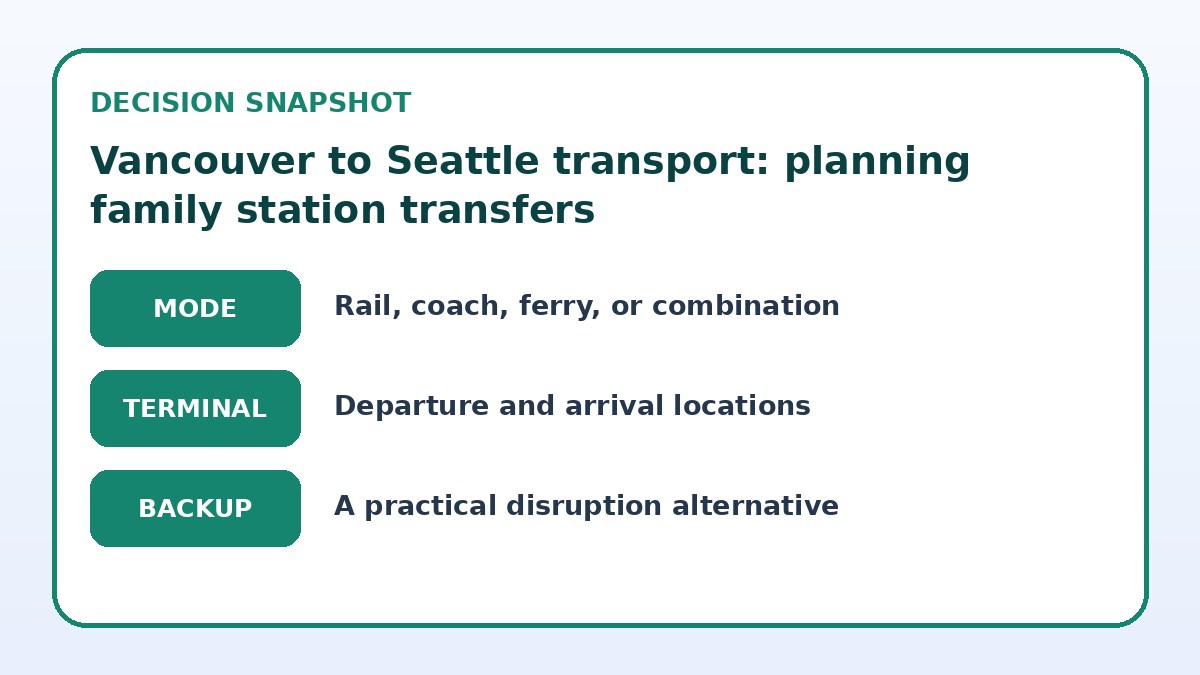
See current options before you compare the details
Availability and final conditions change. Open Trip.com now or keep reading for the practical comparison.
Decide which Vancouver departure suits your family
Start by comparing the practical connections from where you are staying to each possible Vancouver departure point. For families this means thinking beyond the headline location: look at door-to-platform walking distance, whether elevators are available, how many curbside steps you must manage with a stroller or luggage, and whether a short taxi or hotel shuttle replaces a multi-stop public transit journey. If you have a baby or small children, prioritize departures that let you arrive 15–30 minutes before boarding without rushing—nearby commuter rail stations, ferry terminals, or coach depots often vary in convenience.
Also consider facilities at each departure point. A waiting area with seating, toilets, and a sheltered drop-off is more valuable to families than a slightly shorter travel time. If you need to buy snacks, diapers, or last-minute supplies, verify whether shops are within easy walking distance or if you should pack these items in carry-on bags. Finally, read the carrier’s final booking page to confirm where check-in and baggage drops are located, whether there are family boarding lanes, and any restrictions that would change which departure is best.
Choose arrival points in Seattle that simplify the final leg
When planning the Seattle end of the trip, prioritize how you will reach your final destination from each possible arrival terminal or station. Families should weigh whether the station drops you curbside close to a hotel shuttle, taxi stand, or rideshare pick-up, or whether you’ll need to navigate stairs and long underground passages. If your plan includes public transit connections, check if transfers involve separate fares, stair access, or crowded platforms during peak times; choosing a terminal with a direct shuttle or short taxi ride can save time and keep children calmer.
Think about the needs that matter on arrival: bathrooms, luggage carts, stroller storage space, and quick access to a grocery or pharmacy if you need essentials. Also account for nap and mealtime schedules—arriving at a central station with nearby cafés or family-friendly restaurants can ease the transition. On any provider’s booking page, confirm the exact drop-off address, platform location relative to exits, and how tickets are validated at arrival so you know whether you must re-check bags or pass through any internal checkpoints.
| Approach | Best for | Tradeoff to check |
|---|---|---|
| Depart from the closest station to your lodging | Families wanting minimal morning travel and fewer transfers | May offer fewer service times or amenities than larger terminals |
| Use a central major terminal with more services | Families needing stores, restrooms, and covered waiting areas | Often requires extra transfers or longer approach times from some neighborhoods |
| Choose a direct point-to-point shuttle | Those carrying bulky gear or with very young children | Could be less flexible on schedule and require pre-booking |
| Split the trip (e.g., short train + rideshare) | Families looking to reduce cost or fit specific timing | Adds more handoffs and increases the risk of missed connections |
Ready to check the option that fits your plan?
Use your exact dates and traveler details so the provider page can show the current total and conditions.
Minimize and plan transfers between stations and terminals
Every transfer — taxi to train, shuttle to terminal, or walking between platforms — multiplies stress for families. Aim to limit these to one well-planned handoff. If you must transfer, schedule longer buffer windows than you would when traveling alone: 30–45 minutes for short, local transfers and more if crossing an international border or switching transportation modes. Choose transfer services that allow online reservation or pre-booked seats so you aren’t waiting with tired children and luggage at an unknown curbside.
Consider luggage logistics: a single bag-per-person system is easier, but if you need extra gear (car seat, stroller, cooler) check whether the carrier provides storage or accepts bulky items without extra handling steps. If the trip crosses the border, pinpoint whether immigration or customs checks are completed before boarding, during the journey, or at arrival. Verify the provider’s guidance on where you need to be and when on its booking page, and confirm whether staff assistance is available at each transfer point should you need help with strollers or heavy bags.
Before you book
- Confirm the exact station or terminal name and curbside address on the carrier’s official booking page.
- Check elevator and stroller access maps for both departure and arrival stations before travel day.
- Pre-book any required seats, shuttles, or assistance services for children, strollers, or mobility needs.
- Note where passport, visa, or ID checks occur and ensure each family member carries required documents.
- Pack a day bag with snacks, medications, a change of clothes, and entertainment within easy reach.
- Save local taxi, rideshare, and hotel shuttle numbers in case your planned transfer is delayed or canceled.
Practical checks to make before you book
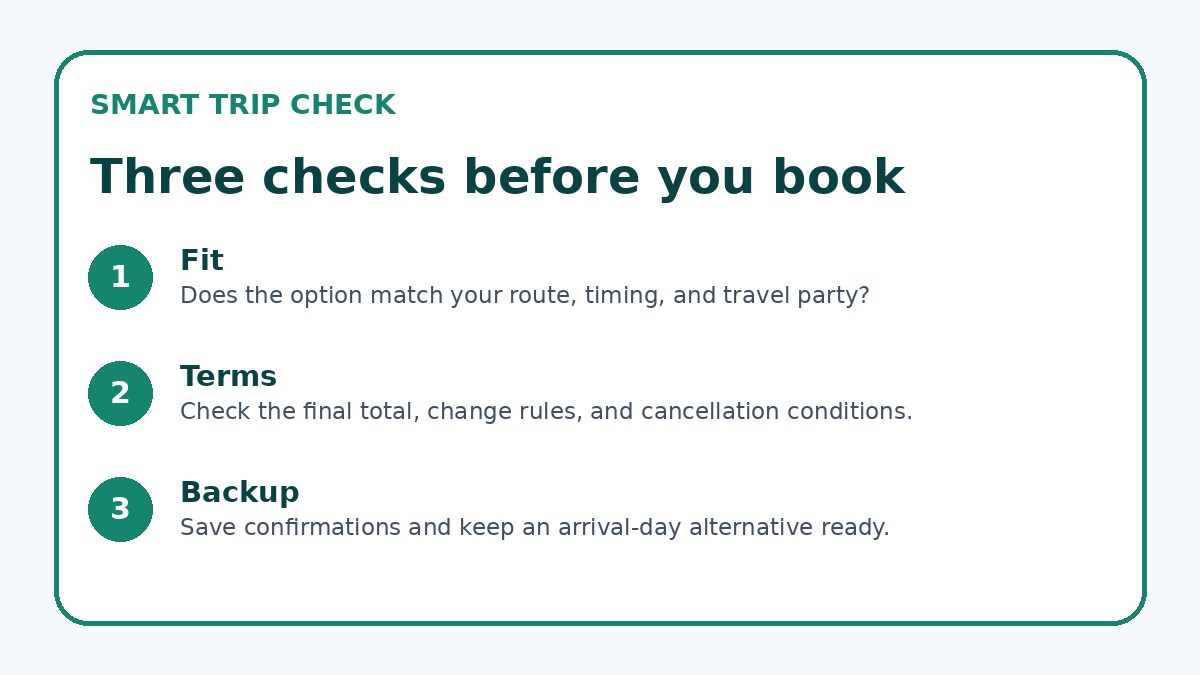
Before finalizing reservations, compile a short checklist and verify key facts on the provider’s official booking page. Look for exact platform or terminal names, curbside pickup and drop-off locations, assistance services, and any requirements for boarding (IDs, documentation for minors, or seat reservations). Don’t rely on third-party summaries for these details—confirm baggage allowances, stroller policies, and where family seating may be allocated. Trip.com is a useful place to compare availability, but always confirm operational specifics directly with the carrier or station.
Also check how cancellations, delays, or missed connections are handled by both the carrier and any ground transfer provider you plan to use. For international travel, verify which border procedures occur at which point on the itinerary and what each traveler must carry. Finally, plan a low-stress backup: a list of nearby taxis, a hotel shuttle number, or an alternate station so you can adapt quickly if plans change on travel day.
Frequently asked questions
How much time should a family allow for transfers between Vancouver and Seattle stations?
Allow more buffer than usual: plan at least 30–45 minutes for simple, same-city transfers and 60–90 minutes when crossing the border or changing modes (train to bus or taxi). With small children, factor in bathroom stops, stroller folding, and luggage handling. If the itinerary includes immigration or customs procedures, add extra time as instructed on the carrier’s booking page. Always choose connections that leave you comfortable if a minor delay occurs rather than arriving tightly timed and stressed.
What’s the best way to handle a car seat or stroller during the journey?
Decide before booking whether you’ll travel with a car seat or a compact stroller and confirm the carrier’s policy on bulky items on its booking page. A travel stroller that folds quickly is usually easier for multi-stage trips; many families gate-check strollers and carry a lightweight seat or use a rental service at destination if available. If you need a car seat for a taxi or rideshare after arrival, check local regulations and whether the transfer provider can supply or install one.
Should families prioritize direct stations even if they cost more?
Consider the non-monetary cost of time and stress: paying more for a departure or arrival point that reduces transfers, waiting, or complicated access can be worth it when traveling with children. Balance price against convenience—extra expense may be saved in avoided taxis, missed connections, or the ability to keep children calm and rested. Confirm refund and rebooking policies on the booking page so you understand flexibility in case your plans change.
Final planning note
Planning station and terminal transfers is the most practical step families can take to make a Vancouver-to-Seattle trip smoother. Choose departure and arrival points that reduce the number of handoffs, prioritize elevator and curbside access, and build in generous buffer time for bathroom breaks, stroller handling, and border procedures. Verify specific platform locations, assistance services, baggage rules, and where checks occur on the carrier’s official booking page before you finalize reservations. With those checks complete and a simple backup plan for alternate pickups or taxis, you’ll keep the journey predictable and family-friendly.
Continue planning
Check current options and final conditions
Use the provider page to confirm live availability, the final total, cancellation terms, and every condition that matters to your trip.
This evergreen planning guide was created with AI-assisted drafting and a structured quality review. It does not display live prices, schedules, availability, visa guidance, or provider rankings. Verify current details before booking. Some links are affiliate links; we may earn a commission at no additional cost to you.