If you want a simple answer: prioritize location when your trip relies on fast access to temples, trains, or nightlife; prioritize room comfort when you expect long in-room hours, need a calm workspace, or value private bathing. Solo travelers in Kyoto most often juggle narrow rooms, quiet neighborhoods, and easy access to subway and JR lines. Before you book, decide how long you'll spend in your room versus exploring, whether you need private bathing or a desk, and what kind of evenings you want—early temple visits, late meals in Pontocho, or trains back to the suburbs. This article lays out the practical tradeoffs, step-by-step decision criteria, and checklists to compare properties so you pick the right balance of location and room comfort for your solo Kyoto trip.
See current options before you compare the details
Availability and final conditions change. Open Trip.com now or keep reading for the practical comparison.
Decide how you’ll spend your day: activity-led vs room-led trip
Start by mapping each day’s main activities. If your plan includes sunrise at Fushimi Inari, full-day temple circuits, or evening meals in Kawaramachi and Pontocho, a central hotel saves transit time and lets you return between stops. Central locations reduce the friction of early departures and late returns, meaning you’ll see more in a short trip. But central does not always mean noisy: some pockets near major hubs are surprisingly quiet after midnight; still, expect smaller rooms and less on-site relaxation space compared with suburban or boutique stays.
Conversely, if you expect downtime—hours working on a laptop, reading, or stretching between day trips—prioritize room comfort. Look for hotels advertising larger single or twin rooms, desks with outlets, and private baths or larger wash areas. Local ryokans and boutique hotels often provide a more peaceful, restorative environment but can be farther from major stations. The key is honest self-assessment: plan assuming your ideal day will happen and pick the hotel that supports that rhythm.
Location factors that matter to solo travelers
Transport access: For most solo travelers, proximity to a major hub like Kyoto Station or a well-connected subway (Karasuma, Gojo) simplifies movement. That reduces the mental load of transfers and late-night navigation. If you plan day trips to Nara, Osaka, or Uji, factor in connections: hotels near JR or Hankyu lines will make those excursions easier. Don’t assume a single train is direct; compare itineraries on the booking or route planner and allow time for transfers when you schedule morning departures.
Safety and walkability: Kyoto is generally safe, but solo travelers should prefer well-lit streets and convenient late-night routes between the hotel, major train stops, and dining areas. Gion and Pontocho are lively at night; staying within walking distance is convenient but check whether the hotel sits on a narrow lane versus a main street. Also consider proximity to convenience stores and 24-hour facilities. Verify exact hotel address and nearby station exits on the provider’s booking page before finalizing to confirm walking routes and estimated distances.
| Approach | Best for | Tradeoff to check |
|---|---|---|
| Central tiny room near Kyoto Station | Maximizing sightseeing time and easy train access | Less in-room space and limited relaxation area after long days |
| Boutique hotel in Gion with modest rooms | Immersive neighborhood experience and evening strolls | Smaller rooms and possible higher rates compared with business hotels |
| Suburban larger room near a subway stop | Longer stays needing workspace, rest, and quieter nights | Longer transit times to some central temples and nightlife |
| Ryokan or guesthouse with private bath | Cultural experience and restorative private bathing | Often fewer transit options and smaller sleeping spaces |
Ready to check the option that fits your plan?
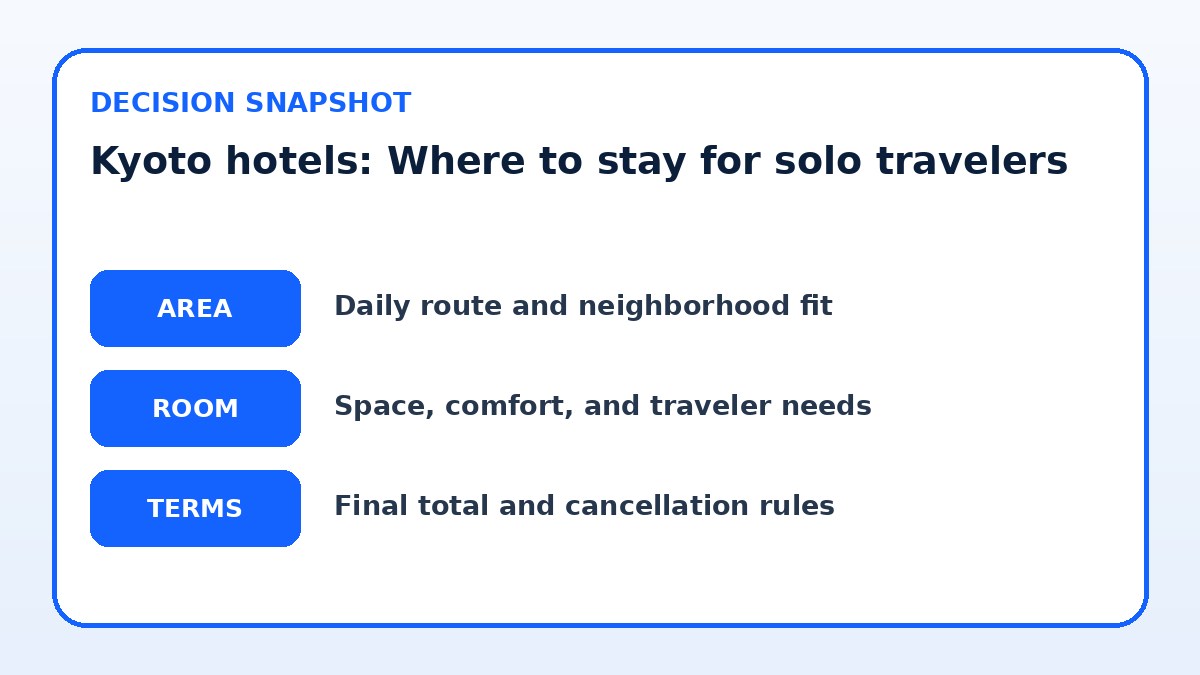
Use your exact dates and traveler details so the provider page can show the current total and conditions.

Room comfort: what to confirm and what matters most
Space and bed type: Room size in Kyoto varies dramatically. Single and business hotels commonly offer compact rooms optimized for short stays; boutique and western-style hotels tend to offer more space. If you need workspace, confirm a desk with accessible outlets and natural light. If you’re taller or need more room to stretch, check bed dimensions and whether rooms come with twin or double beds rather than compact singles. These are provider-specific details—always confirm on the booking page before committing.
Bathrooms and privacy: A private bath or larger bathroom can be a major comfort factor after a day of walking. Some budget hotels use shared facilities; many ryokans provide private onsen-style bathing or en-suite showers. If bathing is important, look for listings that explicitly state private baths or en-suite bathrooms. Also verify whether the property charges extra for in-room amenities, how they handle late check-in, and whether housekeeping schedules match your expectations—these operational details can change over time and should be checked on the final booking page.
Before you book
- Confirm exact hotel address, nearest station exit, and typical walking route on the provider’s booking page before booking.
- Verify bed dimensions, room square footage, and whether the room has a desk or workspace if you plan to work.
- Check bathroom type—en-suite, private bath, or shared—and whether towels and toiletries are included.
- Read recent guest comments about noise, late-night street activity, and sleep quality to match your tolerance level.
- Compare transit connections for your planned day trips (JR, subway, Hankyu) and choose a location minimizing transfers.
- Confirm check-in/out times, late arrival policies, and cancellation terms on the final booking page to avoid surprises.
Balancing budget, amenities, and personal preferences
Budget influences both location and room size. Central locations often trade space for proximity; suburban or less touristy neighborhoods may offer larger rooms for the same price. Decide which amenities you value—free breakfast, laundry, a communal lounge, or a kitchenette—and check whether those features are available. For solo travelers on longer trips, on-site laundry or kitchenette space can reduce costs and increase comfort. If you plan day trips, spending a bit more on location can save taxis and lost time but might mean simplifying in-room comforts.
Noise and sleep quality: If you’re sensitive to street noise, choose properties rated for quietness or request higher floors away from busy streets. Conversely, if you enjoy local nightlife, staying within walking distance of evening dining and bars reduces late-night travel. Confirm noise policies, window type (double-glazed vs single), and proximity to nightlife on the booking page. Remember, photos and descriptions can be curated—read recent guest comments where available and verify any critical facts with the provider before finalizing your booking.
Frequently asked questions
Is it better to stay near Kyoto Station or in Gion as a solo traveler?
There’s no single answer: Kyoto Station offers the widest rail connections, which helps if you plan day trips or arrive late. Gion puts you within walking distance of historic streets, evening dining, and temples, which is great for a culturally focused itinerary and easy nighttime returns. Choose Kyoto Station for transit convenience and Gion for atmosphere and evening walkability. Before booking, verify walking times and access to the lines you’ll use on the provider’s booking page so the choice matches your daily plan.
How much room size should I expect and need in Kyoto?
Room sizes vary: business hotels often provide compact rooms designed for short stays, while boutique hotels and suburban properties may offer noticeably more space. If you plan to spend hours working or need space to unpack and relax, prioritize listings that state room square meters, bed type, or show clear photos of usable desk space. Always confirm those specifics and any additional fees on the booking page—descriptions and images can be indicative but operational details belong to the provider.
Can a solo traveler safely choose quieter neighborhoods farther from the center?
Yes, quieter neighborhoods can be an excellent choice—many are safe, peaceful, and offer larger rooms and local flavor. The tradeoff is longer transit times to central attractions, particularly at night. If you select a quieter area, verify proximity to the nearest subway or JR station and check late-night transit frequency and walking routes on the provider’s booking page. Carrying a downloaded route map or a timetable app helps you plan returns after evening activities.
Final planning note
Balancing location and room comfort in Kyoto comes down to how you plan to spend your days and nights. If your itinerary demands fast, frequent transit or late-night dining, favor a central location even at the cost of smaller rooms. If you need rest, private bathing, or a workspace, prioritize room comfort and accept slightly longer travel between sights. Use the checklist to confirm transport links, room specifications, and operational policies on the booking page before you commit. For current availability and to compare options, you can check places like Trip.com, but always verify provider details directly to ensure your chosen hotel supports your solo-travel rhythm.
Continue planning
Check current options and final conditions
Use the provider page to confirm live availability, the final total, cancellation terms, and every condition that matters to your trip.
This evergreen planning guide was created with AI-assisted drafting and a structured quality review. It does not display live prices, schedules, availability, visa guidance, or provider rankings. Verify current details before booking. Some links are affiliate links; we may earn a commission at no additional cost to you.