If you need to book Toronto to Vancouver flights for work, start by deciding the arrival window and non-negotiable constraints (meeting times, client dinner, or same-day return), then compare direct versus connecting itineraries for those windows. Practical priorities: a reliable flight time that gets you to meetings rested, a seating option that supports productivity or rest on board, and a ticket type that permits the flexibility your employer requires. Use a short, systematic checklist—schedule fit, total door-to-door time, change and cancellation terms, luggage allowance, seat choice, and loyalty/fare-earning implications—to eliminate options fast. After that quick sweep, check airport transfer times, preferred airlines’ corporate policies, and on-the-day disruption protections. The sections below unpack tradeoffs and decision criteria so you can pick the right booking with clarity and fewer follow-up changes.
See current options before you compare the details
Availability and final conditions change. Open Trip.com now or keep reading for the practical comparison.
Schedule fit: map your commitments to flight windows
Begin by listing fixed times: meetings, hotel check-ins, or end-of-day calls. Translate those into acceptable arrival and departure windows at Vancouver (YVR) and Toronto (YYZ or YTZ), and add realistic ground transit times. For morning meetings, an overnight flight that arrives early may be tempting, but factor in sleep disruption and the need to be alert. For same-day returns, focus on minimum connection and buffer times—allow extra margin for weather or airport congestion. Mark preferred windows and discard flights that create unrealistic rush scenarios.
Next, compare total door-to-door time rather than just airborne duration. A late-night direct flight that lands close to the airport’s public transit schedule might still take longer door-to-door than a daytime connecting option with shorter ground transfers. If you have a strict start time, give priority to flights that arrive earlier in the day rather than cheapest options that arrive late. Keep a short list of two or three itineraries that fit your schedule so you can decide based on flexibility and fare rules.
Direct vs connecting: when to accept a stop
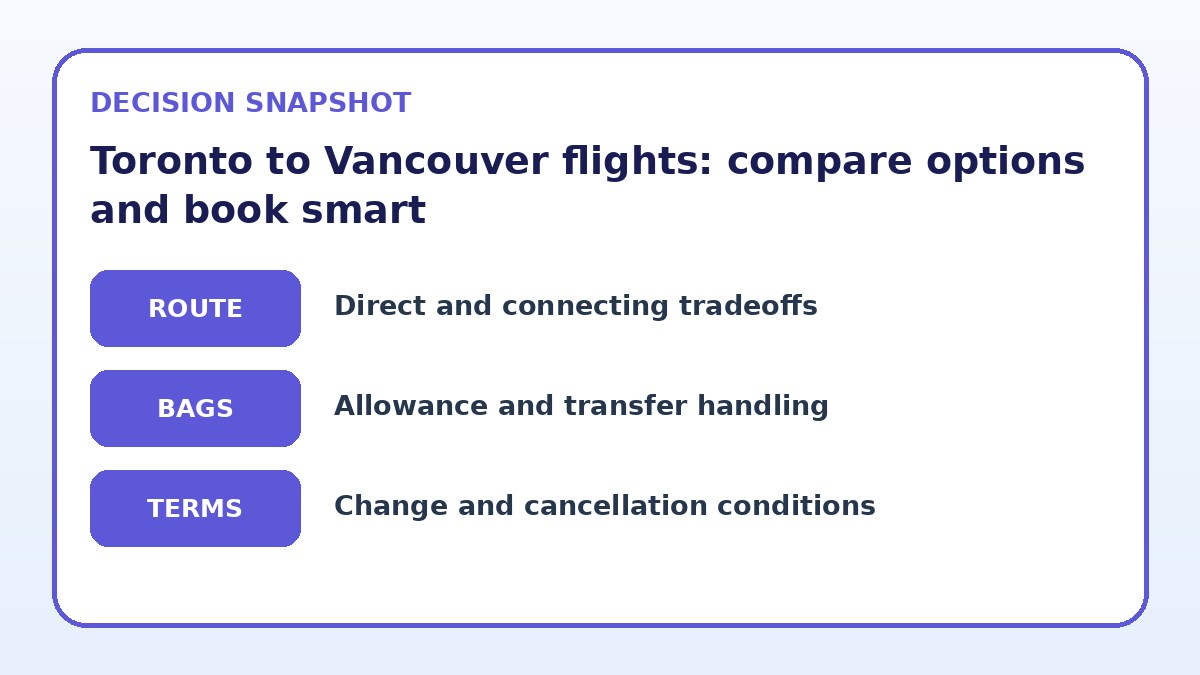
Direct flights reduce complexity—fewer points of failure, no change of aircraft, and usually faster total travel time. They are often the best choice if your schedule is tight or you value minimizing stress. However, direct options sometimes have limited departure windows or higher fares. A well-timed one-stop flight can offer broader schedule choices or lower cost, but requires careful assessment of minimum connection time, airline and airport reliability, and the risk of missed connections.
When considering a connection, verify the airport and terminal layout for both legs and whether the connection is protected by the same ticket. If connections involve changing airlines or terminals, build extra buffer and confirm whether through-checked bags are supported. For business travelers, weigh the risk of a missed connection against the potential savings or schedule advantage. If your company reimburses only flexible fares, the price differential may be less important than rebooking ease and a protected connection.
| Approach | Best for | Tradeoff to check |
|---|---|---|
| Direct flight | Tight schedules and fewer connection risks | Often limited departure times and higher base fares |
| One-stop flight with protected connection | Wider schedule choices and potential cost savings | Longer total travel time and reliance on timely connections |
| Flexible/refundable fare | Corporate travelers needing last-minute changes | Higher upfront cost but lower change-related stress |
| Basic nonrefundable fare with add-ons | Cost-conscious bookings where schedule is firm | Add-on fees for seat, baggage, and changes can increase total cost |
Ready to check the option that fits your plan?
Use your exact dates and traveler details so the provider page can show the current total and conditions.
Fare rules, corporate policy, and flexibility
Before clicking buy, read the fare rules for cancellations, changes, and same-day rebooking carefully. Corporate travel policies often dictate which fare families are allowed and whether you must book refundable or premium-flex fares. If your employer requires a specific class or advanced approval for certain cost tiers, secure that approval first. Keep an eye on baggage allowances and upgrade eligibility—an ostensibly lower fare can become more expensive after baggage and seat selection fees are added.
Also verify how fare changes are handled: are change fees waived in certain circumstances, do you pay only the fare difference, and can you rebook without losing elite benefits? For international travelers connecting through the U.S., check whether additional requirements apply on the booking page. When provider-specific facts matter—like whether a fare includes carry-on, free seat selection, or lounge access—verify those items on the airline’s final booking page or your corporate travel portal before confirming.
Before you book
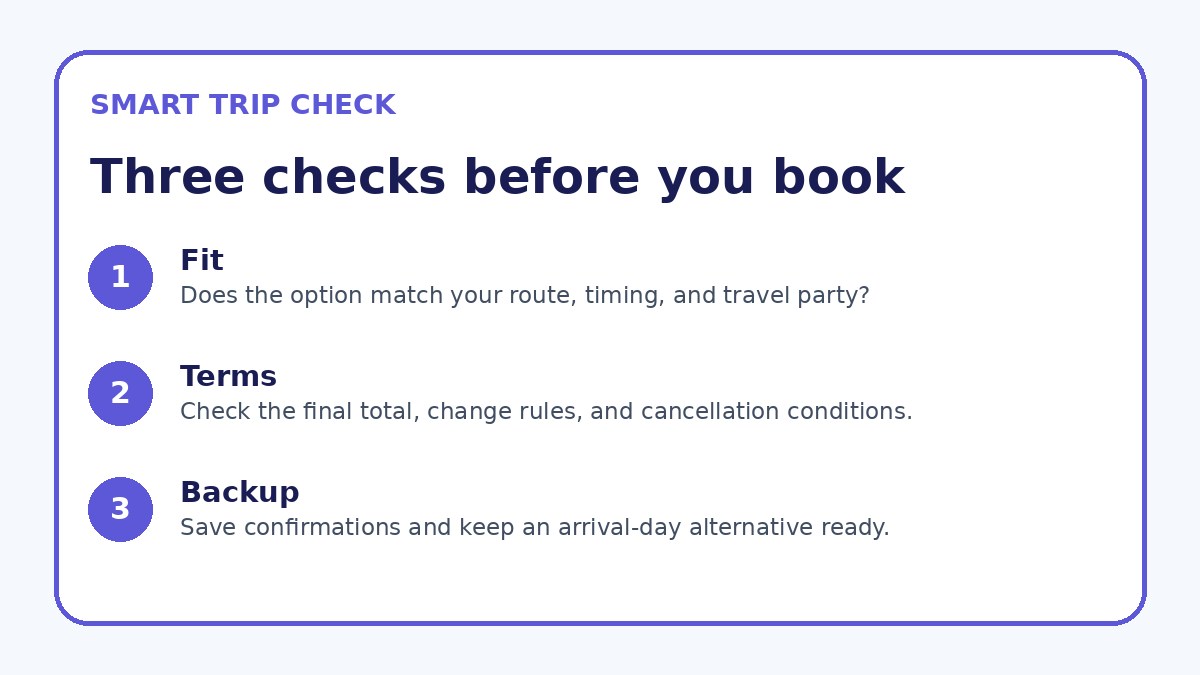
- Confirm fixed appointment times and map acceptable arrival and departure windows, adding at least 60–90 minutes buffer for ground transit in Vancouver.
- Compare direct and connecting itineraries by total door-to-door time, not just airtime; drop any option that leaves insufficient buffer for meetings.
- Verify fare rules on the airline’s final booking page: change/cancellation fees, same-day standby options, and refund conditions relevant to your corporate policy.
- Check baggage allowance and seat selection rules; add necessary carry-on or checked-bag options before finalizing to avoid surprise fees.
- Confirm whether your company requires pre-approval for certain fare classes or if a travel agency must book to secure corporate rates.
- Save alternate same-day flights and airline rebooking contacts, and download boarding passes and a digital itinerary for offline access.
Comfort, productivity, and disruption planning
Think about how you need to perform on arrival. If you must be fresh for client-facing meetings, prioritize seats with more recline, extra legroom, or the option to upgrade. Choose boarding groups and seats with power outlets if you plan to work in the air. If sleep is critical, a window seat and noise-canceling headphones may be worth the small extra cost. For same-day returns, consider flights that let you freshen up at the airport—some airports and lounges offer showers and quiet spaces that can be booked ahead.
Plan for service interruptions: identify alternative flights within the same day and know the airline’s rebooking policy for irregular operations. Save customer service numbers and the corporate travel desk contact on your phone. If you rely on frequent flyer status for priority rebooking or standby, confirm those benefits apply to the fare you’re booking. Optionally compare availability on Trip.com to see alternate itineraries quickly, but always finalize details and fare rules on the airline or corporate booking platform.
Frequently asked questions
How should I choose between earliest arrival and least total travel time for a business trip?
Decide based on your first commitment and personal performance needs. If the meeting demands peak mental sharpness, prioritize arrival time that allows rest or a short buffer; that may mean an overnight flight arriving early. If you can acclimate quickly and want to minimize time away from the office, choose the itinerary with the shortest door-to-door travel time. Also weigh the risk tolerance for delays: earlier arrivals give more recovery time, while shortest-travel options can be more stressful if delays occur.
What seat and luggage choices help me stay productive on a Toronto–Vancouver flight?
Pick a seat that matches your work style: an aisle for quick movement and easy access to power outlets, or a window for fewer interruptions when concentrating. Premium economy or exit-row seats can provide more space for laptops and comfort. For luggage, a compact carry-on with an organized laptop compartment keeps essentials accessible and reduces wait time on arrival. If you need checked items for meetings, confirm the checked-bag allowance on the booking page before purchase to avoid last-minute fees.
When is it worth booking a flexible or refundable fare for a work trip?
Book flexible or refundable fares when your schedule might change, when your employer requires it, or when the cost of being stuck (missed meetings, rebooking fees) outweighs the fare premium. If you have elite status that eases rebooking, a less flexible fare may suffice. Check corporate reimbursement rules—some companies will only reimburse certain fare types. Always read the airline’s fare conditions on the booking page so you understand change penalties, eligibility for standby, and refund procedures before committing.
Final planning note
Booking Toronto to Vancouver flights for business is about clarifying priorities and reducing uncertainty: lock in the schedule window that meets your commitments, then use a short checklist to compare direct versus connecting options, fare flexibility, seat and baggage choices, and corporate rules. Don’t let a small fare saving derail your meeting readiness—factor in total door-to-door time and the cost of potential disruption. Confirm provider-specific items like baggage allowance, change rules, and seat availability on the airline’s booking page or your corporate portal before finalizing. With the checklist above, you’ll be able to book confidently and keep the focus on the trip’s business purpose.
Continue planning
Check current options and final conditions
Use the provider page to confirm live availability, the final total, cancellation terms, and every condition that matters to your trip.
This evergreen planning guide was created with AI-assisted drafting and a structured quality review. It does not display live prices, schedules, availability, visa guidance, or provider rankings. Verify current details before booking. Some links are affiliate links; we may earn a commission at no additional cost to you.