If you’re traveling from Toronto to Montreal for the first time, the single most useful approach is to pick your preferred mode—train, bus, or flight—then focus on the travel day details that affect comfort and timing. On the morning of travel, prioritize verified departure points, luggage rules, check-in or boarding windows, and realistic transfer times between downtown and airports or stations. That keeps surprises small and decision-making simple. This article lays out the tradeoffs between speed, cost, and convenience, then gives a step-by-step checklist to prepare. It highlights what to confirm on official provider pages (schedules, baggage policies, seat availability, and change/cancellation terms) and how to compare direct versus connecting options where relevant so you make a confident booking.
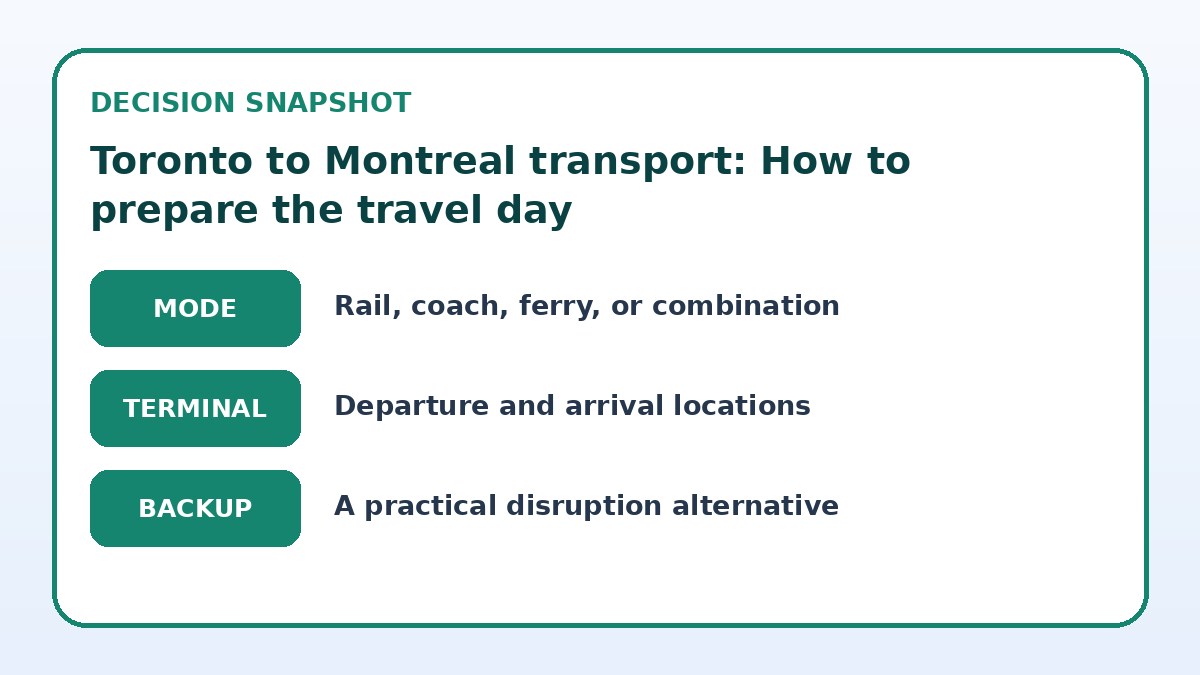
See current options before you compare the details
Availability and final conditions change. Open Trip.com now or keep reading for the practical comparison.
Choosing between train, bus, and flight
On the Toronto to Montreal route you’ll find distinct tradeoffs: trains usually offer more space and the comfort of city-center stations, buses tend to be the most budget-friendly and flexible with more frequent departures, and flights can be fastest door-to-door if both ends require distant travel. For first-timers, comfort, luggage handling, and how many transfers you’re willing to tolerate are the main decision levers. Think about whether you want a single downtown-to-downtown journey or don’t mind transfers to and from airports.
When comparing options, line up door-to-door travel time (home to final destination) rather than just in-vehicle duration. Consider how long it takes to reach the departure point in Toronto, the time between arrival and check-in for trains or flights, and onward transport in Montreal. If you’re traveling with lots of luggage or with young children, prioritize fewer transfers and more generous baggage allowances even if the fare is higher.
Preparing logistics for the travel day
The travel day runs smoothly when you have three confirmed things: how you’ll get to the departure point, where you’ll arrive in Montreal, and how you’ll handle luggage. Map the route to the station or airport and identify alternate routes in case of traffic or public transit delays. Allow extra time for morning congestion, security lines if flying, and the provider’s stated boarding or check-in windows. If you’re unfamiliar with the station layout, check station maps or terminal guides ahead of time so you know where to wait and where to buy refreshments if needed.
Bring printed or downloaded copies of booking confirmations and any ID required for the chosen transport mode. Note the carrier’s baggage dimensions and weight rules and pack accordingly. Keep essentials—wallet, phone, portable charger, itinerary, medication—in a day bag. If you may change plans, verify change and refund policies on the provider’s booking page before purchase; this will avoid surprises if you need to switch times or modes on the day.
| Approach | Best for | Tradeoff to check |
|---|---|---|
| Direct trip (single train or nonstop flight) | Travelers prioritizing simplicity and minimal transfers | May have fewer departure times and potentially higher fares |
| Connecting journey (multiple legs) | Flexible travelers seeking lower fares or specific schedules | Increased risk of missed connections and longer total travel time |
| Bus-based travel | Budget-conscious travelers or those who need frequent departure options | Less spacious seating and potentially slower door-to-door travel |
| Flight-focused travel | Travelers needing the fastest in-air time or connecting to distant destinations | Extra time and cost for airport transfers and security procedures |
Ready to check the option that fits your plan?
Use your exact dates and traveler details so the provider page can show the current total and conditions.
Comparing direct and connecting options
Direct journeys reduce the number of points where delays can cascade, but they might be less frequent or more expensive than connections. When a direct train or nonstop flight is available, the convenience of no transfers can be especially valuable for first-time travelers who prefer a simple, predictable experience. On the other hand, a connecting route can open up more departure times or a lower fare—useful if your schedule is tight or you’re on a strict budget. Compare the total expected door-to-door time and the minimum connection time between segments.
If considering connections, build a healthy buffer for each transfer and prefer longer layovers when the connection is through a different terminal or when you must change between modes (for example, from bus to train). Check that all legs are on the same ticket or, if booked separately, that you can make the connection without losing checked luggage or rechecking through security. Verify at booking whether carriers offer protected connections or whether you are responsible for missed connections.
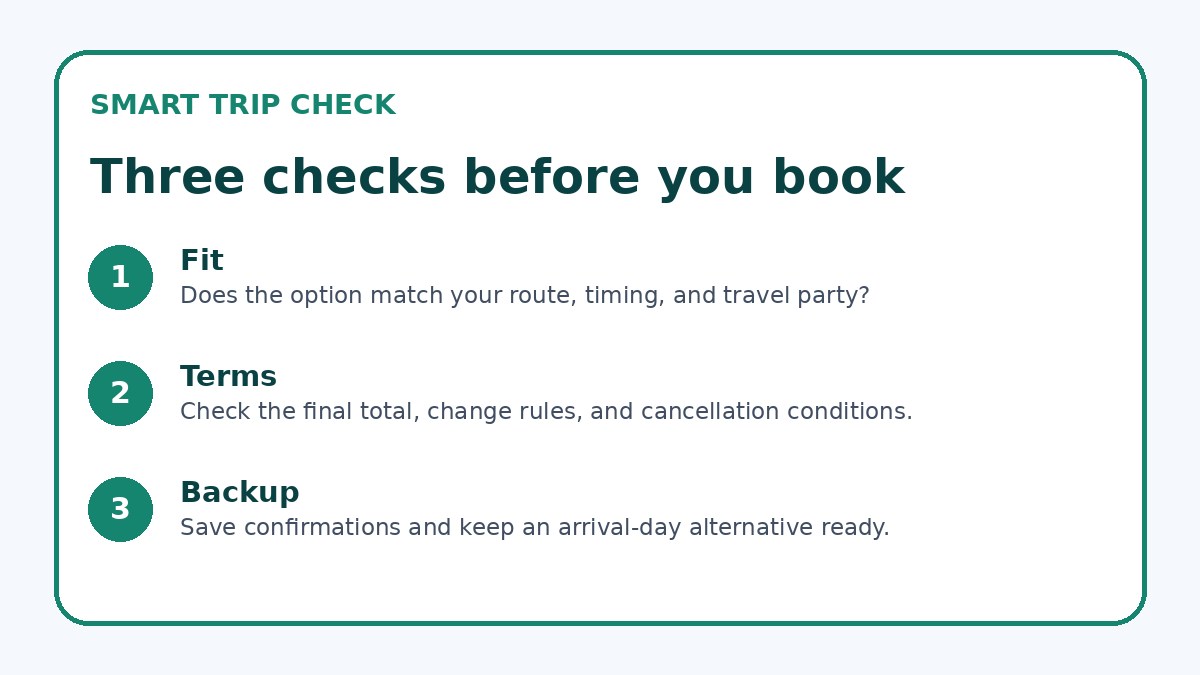
Before you book
- Confirm the exact departure terminal or station address and the recommended arrival time on the carrier’s booking page.
- Verify baggage allowances and size/weight rules, then pack accordingly and reserve checked baggage if needed.
- Plan and book transport to the departure point, allowing extra time for traffic or transit disruptions.
- Download or print booking confirmations, ID, and any required travel documents the night before departure.
- Pack a carry-on with essentials: chargers, medication, snacks, refillable water bottle, and a light layer.
- Save customer service numbers and the carrier’s official change/refund policy; verify these details on the provider’s site.
On-the-day tips for comfort and troubleshooting
Plan for comfort by wearing layered clothing (stations and vehicles can vary in temperature), bringing ear protection for noise, and packing small comforts like a refillable water bottle and light snacks. Keep electronic devices charged and download offline maps or entertainment in case of limited onboard Wi-Fi. If you need special assistance—mobility aid, extra time boarding, or a specific seat—contact the carrier in advance and reconfirm arrangements before travel.
For troubleshooting, note where to find provider help desks at departure points and how to reach customer support by phone or app. If a delay happens, communicate any changes to people expecting you in Montreal and check official provider channels for rebooking or compensation options. Have backup plans for last-mile transport in Montreal: a list of taxi services, rideshare options, and transit routes will reduce stress if arrival delayed or terminals change.
Frequently asked questions
Should I choose a train, bus, or flight from Toronto to Montreal for a first trip?
Choose based on what matters most: comfort and a downtown-to-downtown experience often point to trains; lowest net cost and frequent departures favor buses; the shortest in-vehicle time can come from flights. For first-time visitors, weigh how many transfers you’re comfortable handling and whether you prefer a single departure point. Also factor in last-mile travel in both cities—travelling to or from airports adds time and logistics compared with central stations. Compare total door-to-door time rather than only vehicle duration when making a decision.
How much time should I allow to get to my departure point in Toronto?
Allow more time than you think you need to account for rush-hour traffic, transit delays, or queueing at terminals. For city-center stations, arriving 30–60 minutes before departure is usually sufficient for ticketing and boarding, while flights often require arriving earlier to clear security and check luggage. If you have a tight connection or are unfamiliar with the terminal, build additional buffer. Always check the carrier’s recommended arrival window on their official booking page because procedures and boarding times can differ between providers.
What should I verify on the carrier’s website before I book?
Before finalizing a booking, verify exact departure and arrival locations, boarding or check-in windows, baggage rules and fees, seating options, and the provider’s change and cancellation policies. If your route involves connections, check whether they are protected by the carrier (one ticket) or if you must rebook separately. Look for any special assistance options you may need and the official customer service contact methods. You can use Trip.com to compare current availability, but always confirm the final details on the carrier’s own booking page.
Final planning note
Preparing the travel day for a Toronto to Montreal trip is mostly about minimizing unknowns: pick the transport mode that fits your comfort with transfers, confirm exact departure and arrival locations, and verify baggage and boarding rules on the carrier’s site. Pack a sensible carry-on and plan transport to and from the terminals with time buffers for delays. Use comparison tools to explore schedules and options, but rely on the provider’s booking page for final policies and contact information. With those steps completed, your first trip between these two cities will be far more predictable and far less stressful.
Continue planning
Check current options and final conditions
Use the provider page to confirm live availability, the final total, cancellation terms, and every condition that matters to your trip.
This evergreen planning guide was created with AI-assisted drafting and a structured quality review. It does not display live prices, schedules, availability, visa guidance, or provider rankings. Verify current details before booking. Some links are affiliate links; we may earn a commission at no additional cost to you.