
If you’re traveling to Toronto with extra luggage, the fastest practical answer is to choose the pickup location that best matches your arrival logistics and luggage handling needs: airport pickup for immediate, door-to-car convenience, city pickup for potentially larger vehicles and more flexible hours. Before booking, weigh where you land, whether you’ll cross the city by transit or taxi, how many bags and their size, and whether you want to avoid downtown traffic. This article helps you compare airport and city pickup across the concrete realities that matter to travelers: time from arrival to wheels, vehicle size and trunk space, cost components you must verify, and the physical effort of moving bags between modes of transport. Use the tradeoffs and checklist below to make a confident choice and know exactly what to confirm on a final booking page.
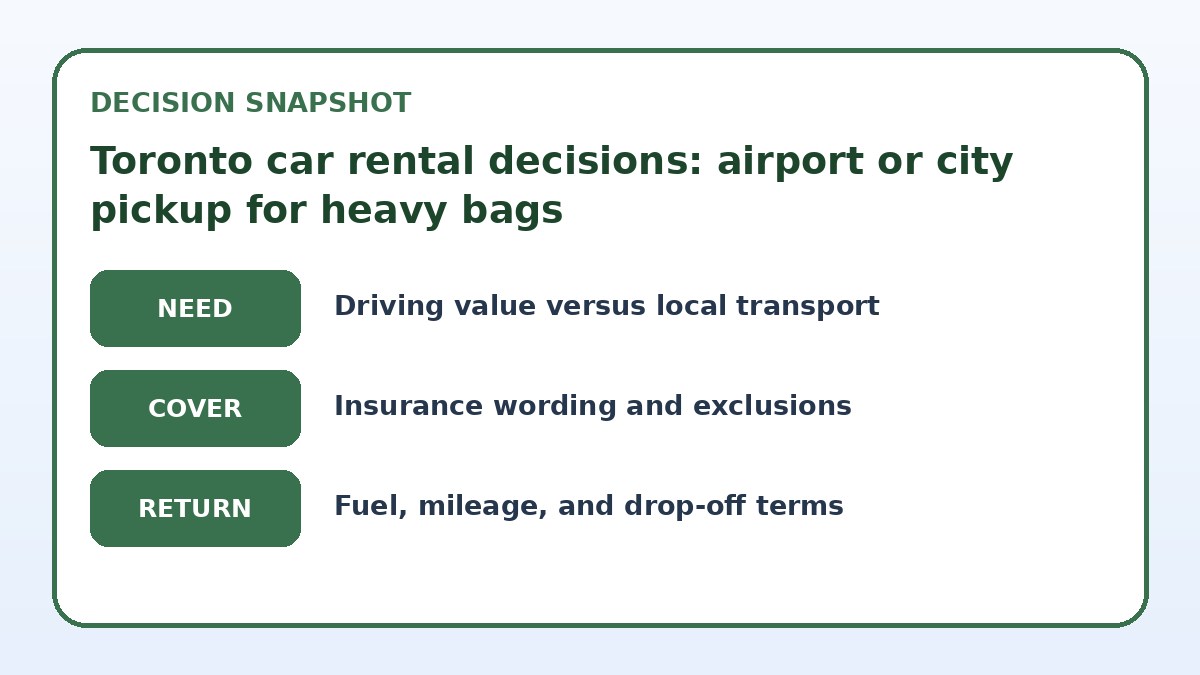
See current options before you compare the details
Availability and final conditions change. Open Trip.com now or keep reading for the practical comparison.
Time and effort from arrival to car
Airport pickup usually gets you behind the wheel fastest when arriving by air: you clear arrival formalities, collect bags, and follow signs or an app to the rental center. For Toronto Pearson International, some companies operate on-site counters while others use off-airport lots that require a short shuttle; that shuttle can add steps if it runs on a schedule. If your priority is minimizing transfers with heavy luggage, an on-airport desk or curbside transfer option is the most convenient. Always check the pickup procedure on the booking page so you aren’t surprised by a required shuttle ride or an off-site shuttle stop.
City pickup can make sense when your flight arrives late, you’re staying downtown, or you land at a different airport or train station. Walking from transit or using a taxi or rideshare to a downtown rental desk means one extra handoff with luggage but may be worth it for guaranteed vehicle sizes or longer office hours. Consider the time of day: rush-hour traffic and long taxi waits will increase the time and physical effort of moving bags. Confirm office hours, exact street address, and whether staff can help load luggage into the vehicle before you book.
Vehicle selection, space, and suitcases
When you have extra luggage, the clearest decision factor is trunk and cabin space. City rental desks sometimes carry a wider selection of larger vehicles—SUVs, minivans, or higher-capacity models—because they serve long-term or leisure renters. Airport fleets may skew toward compact and midsize cars to match high turnover, though many chains still stock larger classes. Do not assume a vehicle label guarantees space; instead, check trunk dimensions or compare typical luggage capacity descriptions on the booking page, and consider booking a class up if trunk capacity is mission-critical.
Also think about how many pieces you can reasonably lift and load; large suitcases may not stack neatly, and a full-length golf bag or bike box may require a dedicated SUV or minivan. If you travel with fragile or awkward gear, ask about roof rails, tow bars, or availability of a cargo carrier before booking. Note whether the rental desk will help load heavy items—this varies by location and provider—so verify assistance policies on the provider’s final booking page.
| Approach | Best for | Tradeoff to check |
|---|---|---|
| Airport pickup | Travelers arriving by air who want minimal transfers with heavy luggage | May involve airport surcharges, busy counters, or off-site shuttles depending on the provider |
| City pickup | Those staying downtown who need larger vehicles or more flexible office hours | Requires extra transport from arrival point and can add time and effort with heavy bags |
| Hybrid: book airport pickup but change to city after arrival | Travelers who want a guaranteed immediate car but may prefer a different location later | May incur change or one-way fees; check modification policies and vehicle availability |
| Reserve a higher class regardless of location | Groups or luggage-heavy travelers prioritizing space over location convenience | Higher rental costs and possible fuel or size-related fees; verify trunk dimensions on booking page |
Ready to check the option that fits your plan?
Use your exact dates and traveler details so the provider page can show the current total and conditions.
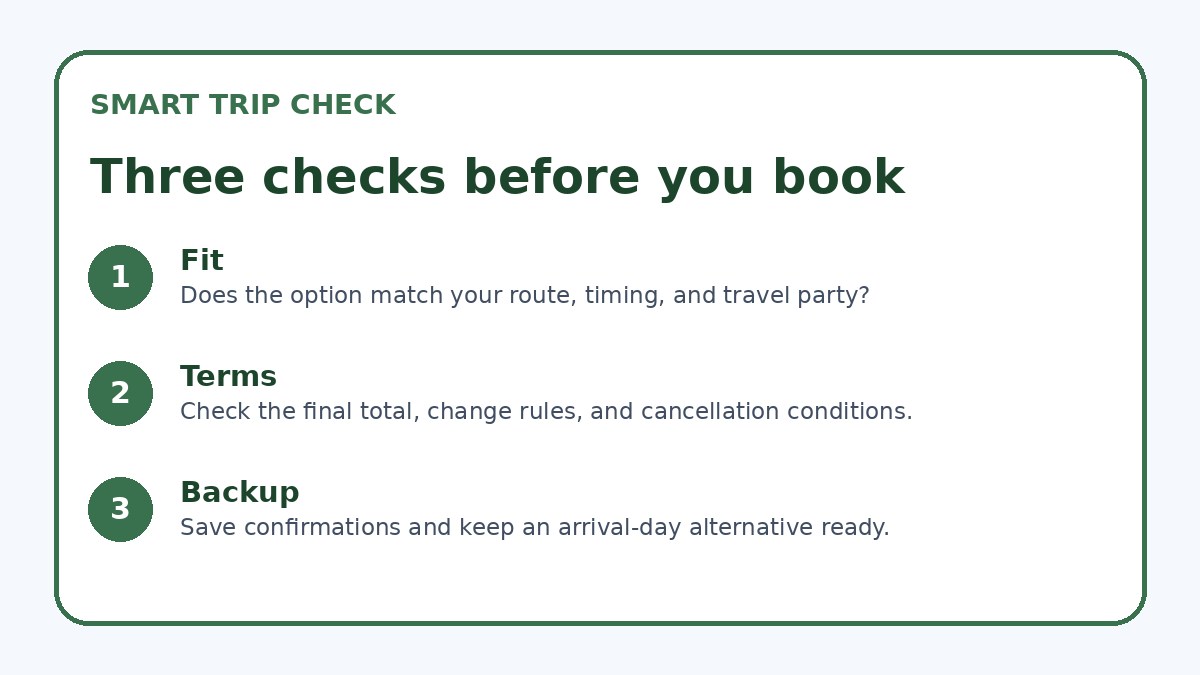
Costs, hidden charges, and practical savings
Pickup location can affect the bottom line in several ways: airport pickups sometimes include extra surcharges or airport concession fees, while city offices may charge lower location fees but add higher local taxes. Neither approach is uniformly cheaper; the only reliable way to know is to review the full quote on the booking page, including insurance options, mileage rules, and any fees for additional drivers or out-of-hours pickups. Avoid relying on just the headline rate; suppliers often display the base rate first and reveal mandatory fees or upsells later in the checkout flow.
You can save practical time and money by matching the pickup location to your itinerary. If you’ll spend the first nights downtown, a city pickup might remove the need to pay airport drop-off or to backtrack across town. Conversely, if you plan to drive out of town immediately, an airport pickup avoids city traffic and usually saves a taxi or shuttle into town. Where possible, compare one-way fees if you intend to return the car at a different location, and confirm fuel and mileage rules before finalizing any booking.
Before you book
- Confirm exact pickup procedure and location address (on-airport counter, off-site lot, or downtown office) on the final booking page.
- Verify trunk capacity or luggage-friendly vehicle options and, if critical, reserve a larger class with written confirmation.
- Check shuttle requirements and schedules for off-airport pickups so you can plan transfers with heavy bags.
- Compare the full quote including location surcharges, taxes, and mandatory fees before completing your reservation.
- Confirm office hours and after-hours return policies for your planned pickup and drop-off times.
- Read the provider’s change, cancellation, and modification policies in case arrival times or plans shift.
Return logistics, flexibility, and contingency planning
Think ahead about your return plan when choosing pickup. Returning to an airport location simplifies catching a flight—drop the keys, drop the car, and head to the terminal—though some airports require a specific return procedure such as an off-site lot or a final inspection area. If you plan to drop the car downtown, check office hours for the return day and whether after-hours returns are accepted. Confirm any required paperwork or inspection steps on the booking page so you aren’t delayed when you must catch a train or plane.
Also build contingency: what if your arrival is delayed, a connecting flight is canceled, or you need to change vehicle class on short notice? Verify the provider’s change and cancellation policies, and look for flexible booking options if your schedule is uncertain. If you need a guaranteed vehicle size or are transporting unusually shaped items, book early and get written confirmation of the reserved class and pickup protocol. For last-minute comparisons, Trip.com can be used to view current availability, but always confirm policy details with the rental company’s own site.
Frequently asked questions
If I have several large suitcases, should I always pick up at the airport?
Not always. Airport pickup reduces the number of transfers after you land, which is helpful with heavy luggage, but it won’t guarantee a vehicle with sufficient trunk space. City offices sometimes stock larger vehicles or minivans better suited to bulky gear. The practical approach is to prioritize vehicle capacity: check trunk dimensions or book a higher class and then choose the pickup location that minimizes extra transfers. Always confirm both the pickup logistics and the reserved vehicle’s luggage capacity on the rental company’s final booking page.
How can I avoid surprises like shuttles or off-site returns at Toronto airports?
To avoid surprises, read the pickup and return instructions on the booking page before you finalize your reservation. Rental locations will specify whether counters are inside the terminal, at an on-site rental center, or in an off-airport lot requiring a shuttle—and they should list shuttle frequency or pickup points. If the booking page is unclear, contact the provider directly to confirm the exact meeting point and any shuttle details. That prevents unexpected transfers with your luggage after arrival.
Is it better to reserve a specific vehicle type or just a class label when traveling with extra bags?
Reserve the space you need rather than relying only on class labels. Classes like 'SUV' or 'standard' don’t guarantee trunk dimensions because models vary within a class. When luggage is the priority, request trunk specs, confirm the typical luggage capacity in pieces, or book the next larger class to be safe. Get written confirmation of the reserved class and check the provider’s policy on model substitutions so you’re prepared if the company assigns a different vehicle at pickup.
Final planning note
Choosing between airport and city pickup in Toronto comes down to matching arrival logistics, luggage volume, and itinerary priorities. Airport pickup minimizes transfers and often gets you on the road faster after a flight, but may involve shuttles or location surcharges. City pickup can give access to larger vehicles and flexible hours if you’re staying downtown, at the cost of an extra transfer with heavy bags. The right choice is the one that reduces physical handling of luggage while meeting your space needs—so verify pickup procedures, vehicle trunk specs, and full rental terms on the provider’s final booking page before you book.
Continue planning
Check current options and final conditions
Use the provider page to confirm live availability, the final total, cancellation terms, and every condition that matters to your trip.
This evergreen planning guide was created with AI-assisted drafting and a structured quality review. It does not display live prices, schedules, availability, visa guidance, or provider rankings. Verify current details before booking. Some links are affiliate links; we may earn a commission at no additional cost to you.