If you’re traveling solo between Tokyo and Sapporo, the core decision is balancing route convenience against fare flexibility. A cheaper, more restrictive fare can work if your dates and connections are fixed, while a more flexible fare or refund option reduces stress when plans change. For this route you’ll want to compare direct versus connecting itineraries, carry-on and checked bag rules tied to fare classes, connection risk if routing through other airports, and exactly what each fare permits for changes or cancellations. Before you shop live, gather the exact travel dates, arrival/departure airports (Tokyo Haneda or Narita; Sapporo New Chitose is common), passenger full name as on ID, and whether you’ll need checked baggage. When reviewing options on airline sites or aggregators like Trip.com, verify the provider’s final change fee, any fare difference policy, refund processing time, and what taxes or service fees are non-refundable on the booking page.
See live routes for your exact travel day
Compare direct and connecting choices with the same baggage and traveler details.
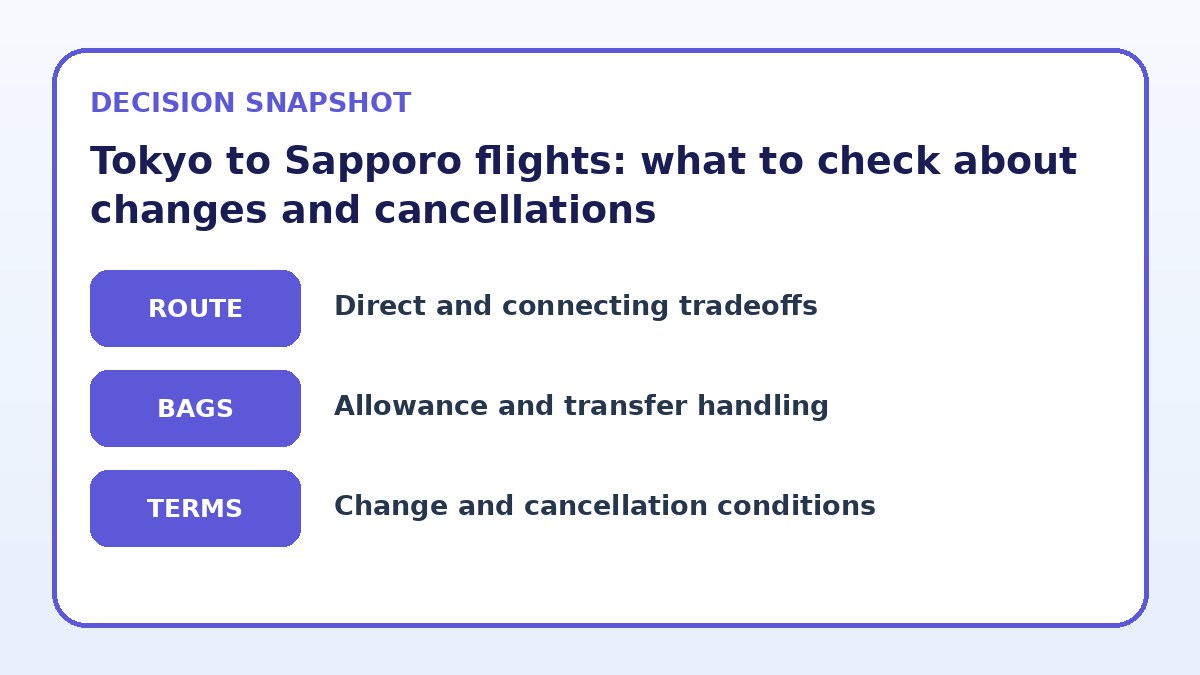
Routing: direct versus connecting options and the impact on changes
On the Tokyo–Sapporo corridor you will typically see direct flights and itineraries that connect through other Japanese airports or regional hubs. When evaluating change and cancellation conditions, note that a single-ticket itinerary booked with one carrier usually has unified rules for the whole trip. That means changing a flight may require handling fare differences or rules that apply to all segments. If you mix carriers on separate tickets, each segment’s change policy applies separately—this can increase risk if a delay on the first leg causes you to miss the second, and the second carrier may treat you as a no-show.
For solo travelers who prefer simplicity, a single-ticket direct flight often reduces administrative hassle when requesting rebooking after delays or cancellations. However, connecting itineraries sometimes offer lower base fares or better times; in that case, pay special attention to minimum connection times, the airline’s missed-connection protection, and whether the carrier automatically rebooks you onto the next available flight without extra fees. Always confirm whether the fare rules allow changes only through the original booking channel or if they permit agent or airport modifications.
Baggage and connection risk: how fare class ties to change outcomes
Fare classes commonly bundle seat assignment, baggage allowance, and change/cancellation flexibility together. A low-cost or deeply restricted fare may exclude checked baggage and limit changes to paid options or vouchers only. For solo travelers carrying a single small bag who can travel light, a basic fare might be fine—but verify the full change fee policy before purchasing. If your plan could change, paying slightly more for a fare that includes free changes or a partial refund option can be cheaper and less stressful in practice.
Connections increase the exposure to delays that trigger change or disruption policies. If your itinerary has a tight connection, check if the airline offers protected connections or automatic rebookings when it sells the connecting pair. For separate tickets, consider allowing ample buffer or buying travel protection that covers missed connections. Also check whether the airline charges for reissuing tickets after a schedule change and whether changes initiated by the airline (such as route cancellations) are treated differently from customer-initiated changes on that carrier’s rules page.
Compare flight-selection strategies
| Flight strategy | Best for | Risk to check |
|---|---|---|
| Lowest nonrefundable fare | Travelers certain of dates who prioritize the lowest upfront cost. | High change fees or no refunds; may charge for baggage and same-day changes. |
| Flexible fare with paid change allowance | Solo travelers who want lower risk without full refundability. | Higher base fare but lower or waived change fees; still may require fare difference payment. |
| Fully refundable or flexible ticket | Those who expect schedule volatility or need maximum flexibility. | Highest upfront cost but easier cancellations and refunds through the carrier. |
| Separate tickets or mixed-carrier routing | Shoppers seeking lower cost or unusual connections. | Higher connection risk and distinct change rules per segment; missed connections can be costly. |
Recheck the complete itinerary
Confirm airports, connection handling, baggage, and change conditions before deciding.
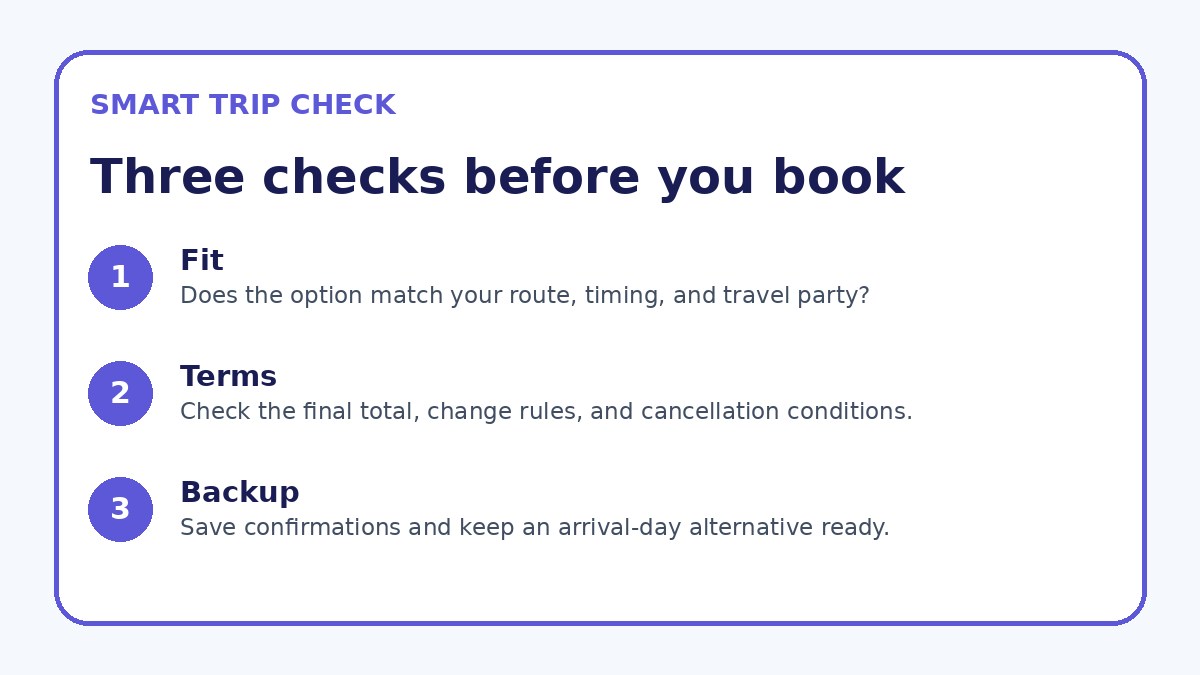
Schedule fit: pick times that reduce change costs and missed-connection risk
When choosing between multiple flights, prioritize schedule reliability for your needs: morning departures are often less likely to be delayed than late-night options, and longer connection windows reduce stress. For solo travelers on tight itineraries or with onward commitments, selecting a flight that minimizes the chance of needing a change—rather than the cheapest option—can be worth the premium. Look at how the fare handles involuntary changes: many airlines will rebook you at no charge when they cancel or significantly change a schedule, but the rebooking options can vary and sometimes force you into inconvenient times.
Also verify whether the fare allows same-day flight changes, airport standby, or paid upgrades if you need to move earlier. Some fare classes permit free or low-fee same-day changes within the carrier’s network, which is helpful if you want flexibility without paying for a fully refundable ticket. Before booking, check the exact definition of ‘schedule change’ used by the airline (for example, how many minutes of delay qualifies) and what rebooking remedies they offer on their official booking or conditions page.
Flight details to verify
- Write down exact travel dates, preferred departure airport (Haneda or Narita), and preferred arrival airport (New Chitose) before searching live fares.
- Open the fare rules link for each option and copy the change fee, refundability statement, and any 24-hour refund window to a note app.
- Confirm baggage allowances tied to the chosen fare class and add the cost of checked bags if needed before comparing total outlay.
- If the itinerary has connections, verify whether the booking is on a single ticket and ask the carrier about missed-connection protection.
- Take screenshots of the final booking page showing change/cancellation terms and retain booking confirmation numbers after purchase.
- If you plan to use travel insurance, check policy conditions for coverage of change fees or non-refundable tickets and collect required proofs.
Fare conditions: reading the fine print and what to verify on booking pages
Fare rules are the decisive factor for changes and cancellations: they specify whether the ticket is refundable, which fees apply, and how fare differences are collected. When comparing options, open the fare rules link from the booking summary and confirm who charges the change fee (airline or ticketing agent), how refunds are processed (credit vs cash back), and whether taxes or third-party fees are refundable. If you rely on travel insurance, check whether the insurer requires proof of non-refundable fees from the airline as a condition for reimbursement.
On the airline or OTA booking page, verify the exact text describing change and cancellation windows (for example, free changes within 24 hours vs paid changes anytime). Note any exceptions for schedule changes initiated by the carrier, and whether changes can be made online, by phone, or only at airport counters. If you see ambiguous language, contact the carrier’s customer service for clarification and save that communication. Trip.com can be used as one place to compare current availability and terms, but always confirm the definitive policy on the airline’s final booking page before committing.
Flight Guide questions travelers ask
What should I do if I need to change my Tokyo to Sapporo flight the day before departure?
First, review the fare rules for your ticket to see the stated change fee and whether same-day changes are permitted. Check online in your booking manager—many carriers allow changes online at lower cost than phone or airport counter. If your fare includes no free changes, calculate the total cost (change fee plus any fare difference) before proceeding. If the airline initiated a schedule change, look for automatic rebooking or a waiver; otherwise, contact the carrier or your booking agent and keep records of any offers or receipts.
Can I avoid losing money if the airline cancels my Tokyo to Sapporo flight?
When an airline cancels, carriers typically offer rebooking or refunds according to their policies; these remedies are different from customer-initiated cancellations. To avoid ambiguity, request the airline’s written confirmation of the cancellation and the rebooking or refund option offered. If you accept a voucher or rebooking, note any expiry and transfer conditions. Avoid assuming third-party booking sites have the same remedy—verify whether the airline or the agent is responsible for refunds, and keep confirmation emails for any remedy promised.
Is travel insurance useful for change and cancellation costs on this route?
Travel insurance can reimburse non-refundable expenses if you have a covered reason defined in the policy, such as illness or unforeseen events listed in the terms. Before relying on insurance, read exclusions and required documentation—insurers often require proof of non-refundable fees and prompt notification of the incident. Compare policy coverage for trip interruption, cancellations for covered reasons, and missed connections, and confirm whether insurance pays change fees or only unrecoverable ticket costs. Keep all receipts and airline communications to support any claim.
Final decision note
For solo travelers between Tokyo and Sapporo, the practical decision comes down to how much flexibility you value versus how much you want to save on the fare. Choose a direct single-ticket flight if you prefer simpler changes and clearer protection from airline-initiated disruptions. If you opt for a cheaper or multi-carrier routing, build in buffer time and verify each ticket’s separate change rules. Before you finalize any booking, gather exact travel details, read the fare rules on the carrier’s final booking page, take screenshots, and decide whether paying more for flexibility or buying travel insurance better protects your plans. These preparatory steps make last-minute changes less stressful and help you avoid unexpected costs.
Continue planning
Check current options and final conditions
Use the provider page to confirm live availability, the final total, cancellation terms, and every condition that matters to your trip.
This evergreen planning guide was created with AI-assisted drafting and a structured quality review. It does not display live prices, schedules, availability, visa guidance, or provider rankings. Verify current details before booking. Some links are affiliate links; we may earn a commission at no additional cost to you.