Practical answer first: for most solo travelers, prioritize the option that minimizes transfers and door-to-door friction—choose a single-operator coach or a through-ticket rail+coach combination that lands you at a convenient city terminal without long border hassles. If you value comfort and fewer roadside transfers, pick the route that reduces luggage shuttling and has a clear backup if a leg is delayed. If flexibility matters more than speed, look for providers with easy cancellation or same-day exchange policies and convenient terminal locations. Below I’ll explain how to weigh terminal fit, luggage and transfer friction, timing flexibility, and disruption backups so you can pick the most practical intercity option for your style and plans.
Terminal fit: where you start and finish matters most
Terminal fit is about matching departure and arrival points to your real itinerary. A service that arrives close to your hotel or a major transit hub can save hours and reduce stress, while a cheaper option that drops you at an inconvenient roadside terminal or an airport can add significant last-mile time and extra transport cost. For solo travelers, especially those arriving or departing late at night, prioritize routes that end at well-lit, staffed terminals with easy onward connections. Make a simple map showing both endpoints and your planned accommodation or next stop to see which options truly save time.
When comparing services, check exactly where each provider stops—station names, bus terminal names, or airport terminals—and then check walking or public-transport times to your final door. If a service lists a city stop without specifying the terminal, verify on the operator’s booking page or contact them. Avoid assuming that 'downtown' equals 'close to your hotel'; tuk-tuk, taxi, or transit fares and waiting times change the door-to-door calculation. If you will be arriving late or are unfamiliar with local transit, prioritize a solution with a single, short onward transfer.
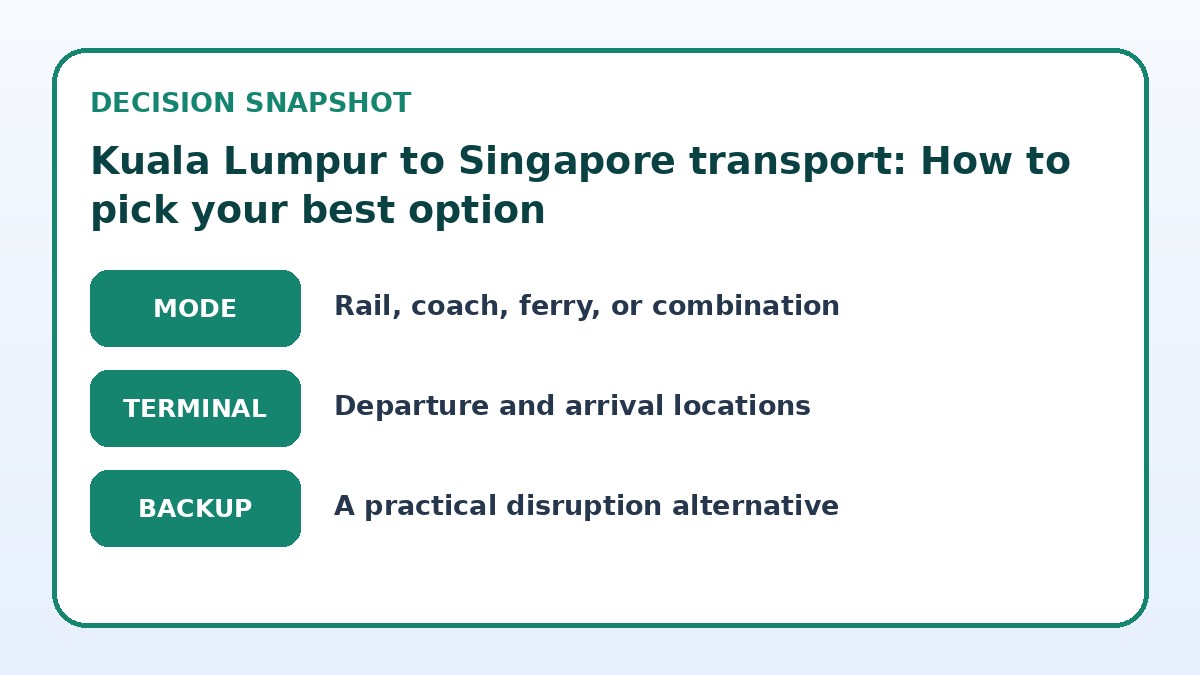
Choose the end-to-end journey plan
| Journey approach | Best for | Friction to check |
|---|---|---|
| Single-operator direct coach | Solo travelers seeking the simplest door-to-door experience with minimal transfers | May be slower than mixed-mode options and depends on road traffic and border queues |
| Rail-first route with a short bus or coach link | Those who prefer on-vehicle comfort and predictable schedules for main legs | Adds a transfer that can complicate luggage handling and immigration movement |
| Mixed-operator multi-leg booking (self-planned) | Flexible travelers who want to optimize cost, comfort, or timing by combining services | Higher risk of missed connections and more hands-on coordination for solo travelers |
| Fly one-way combined with local transport | Travelers prioritizing speed between cities or needing to avoid long land border waits | Often requires more time for airport transfers and additional luggage/terminal steps |
Check live intercity options
Look beyond the ride itself and compare terminals, transfers, luggage, and arrival fit.
Luggage and transfer friction: minimize handling and stress
Luggage is one of the quiet efficiency costs solo travelers underestimate. Each transfer—boardings, alighting, security checks, and walking between platforms—adds time and the risk of misplaced items or fatigue. If you travel light, a hop-on coach that drops you near your destination may be ideal; if you have large suitcases, prefer services that allow checked luggage or guaranteed vehicle-side assistance. Also check whether transfers require crossing borders on foot: some cross-border options need you to pass through immigration and walk between terminals, which can be particularly awkward with heavy bags.
When assessing a route, list every handling step from your current door to the final one: taxi to terminal, check-in or baggage drop, immigration, boardings, any intermodal transfers, and the final run to your accommodation. Count steps and aim to eliminate at least one handling event if possible. If a provider’s booking page doesn’t make baggage rules and transfer details clear, ask them directly before booking. Pack a compact, lockable daypack for documents and valuables so you can keep essentials with you during any transfers.
Timing flexibility: how rigid is your schedule?
Decide how fixed your arrival or departure time must be. If you have onward connections, meetings, or checked-in accommodation with narrow windows, prioritize services with frequent departures or flexible rebooking policies. If your schedule can bend, choosing a slower but more comfortable or cheaper route can be a good tradeoff. For solo travelers who value a low-stress day, a mid-day departure with several vehicle options gives a safety margin if one run is full or delayed.
Look beyond advertised departure times: check service frequency and whether the operator sells tickets allowing same-day changes. Also check typical congestion periods—traveling midday or outside peak border crossing hours can mean shorter immigration waits and more reliable travel times. Remember that public holidays and weekends change traffic and queue patterns; if you must travel then, pick the option that lets you shift to another departure without excessive fees.
Compare the practical alternatives
Use the final page to confirm what is actually offered on your dates and save a workable fallback.
Intercity travel checklist
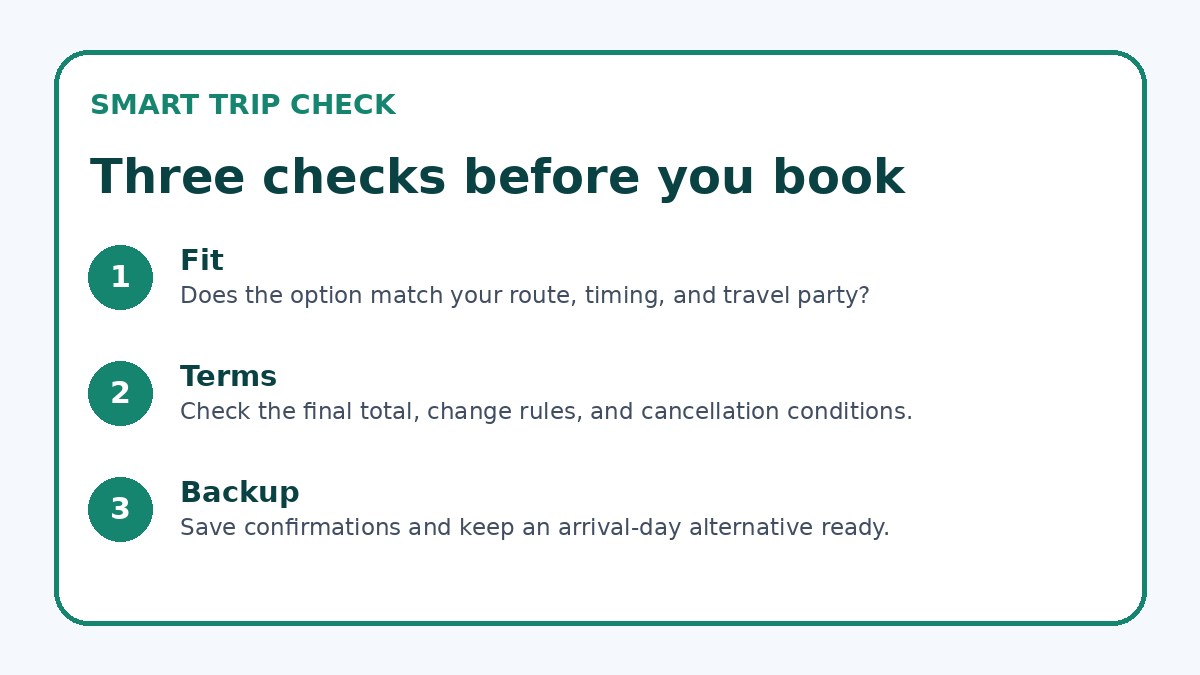
- Map your door-to-door route and estimate total travel time including transfers, immigration, and luggage handling.
- Confirm exact departure and arrival terminals on the provider’s final booking page before purchasing a ticket.
- Verify luggage allowances, transfer procedures, and whether assistance is available for single travelers.
- Check rebooking and cancellation terms so you can change to a later departure without excessive penalties.
- Set up a local payment method or taxi app and save the address of your arrival point in the local language.
- Pack a compact daypack with travel documents, chargers, and essentials to carry through any transfers.
Disruption backups: build a realistic Plan B
No matter which option you choose, plan a backup that gets you to your destination the same day if possible. Identify at least one alternative route—an express coach, a different train service, or a short domestic flight—that you could reasonably book at short notice. For solo travelers, prioritize backups that avoid complicated multi-step transfers; a direct coach or a single-seat replacement will usually beat a complex multi-leg workaround in stress and execution.
Also prepare small practical backups: a local taxi app account with payment set up, a printed note of your destination address in the local language for drivers, and a portable charger so you can stay connected while resolving a delay. Confirm cancellation and rebooking rules on the primary operator’s booking page before you buy, and note how to contact them quickly if you need to change plans. Trip.com can be used to compare availability and conditions in real time, but always verify final terms on the provider’s own booking page.
Rail & Intercity Transport questions travelers ask
How do I compare door-to-door travel time instead of just the advertised ride duration?
Start by listing every step from your current location to your final accommodation: time to reach the terminal, check-in or baggage drop, immigration, the advertised journey time, disembarkation, and onward transfer time to your door. Use mapping tools to estimate walking and transit times between terminals and your hotel. Add buffer time for immigration and potential traffic at the start or end of the trip. The sum of these elements is your realistic door-to-door time—the metric to use when choosing the most practical option.
Is it safer for a solo traveler to pick a single operator or to combine services?
Generally, choosing a single-operator service reduces points of failure and is simpler to manage alone. Single-operator tickets usually handle the main leg without requiring you to coordinate separate bookings, which reduces the risk of missed connections or luggage complications. Combining services can offer benefits—better prices or timing—but increases coordination. If you do combine, build in generous connection time, confirm baggage transfer details, and ensure you can contact each provider quickly if plans shift.
What practical steps should I take if my planned leg is disrupted en route?
First, stay informed and keep tickets and booking references accessible. Contact the operator immediately to learn rebooking options; know their stated rebooking or refund policies from the booking page. If you need to pivot, choose the backup with the fewest additional transfers—a direct replacement coach or train is typically fastest to arrange. Use local taxi apps as a last-mile fallback and keep enough local currency or a functioning payment method for urgent transfers. Finally, notify anyone waiting for your arrival about expected delays and revised arrival time.
Final decision note
Choosing the most practical Kuala Lumpur to Singapore transport option as a solo traveler comes down to minimizing transfers, reducing luggage handling, and having a clear backup plan. Match the terminal locations to your real itinerary, count every handling step, and choose the service that fits your tolerance for timing risk versus convenience. If you prefer simplicity, a single-operator coach that drops you near your final door often beats a slightly faster but more fragmented route. If you value comfort and predictability, a rail main leg with a short shuttle can be attractive—but only if the transfer is straightforward. Verify all terminal details, baggage rules, and rebooking terms on providers’ booking pages before you commit, and keep a practical backup ready so a delay doesn’t derail your plans.
Continue planning
Check current options and final conditions
Use the provider page to confirm live availability, the final total, cancellation terms, and every condition that matters to your trip.
This evergreen planning guide was created with AI-assisted drafting and a structured quality review. It does not display live prices, schedules, availability, visa guidance, or provider rankings. Verify current details before booking. Some links are affiliate links; we may earn a commission at no additional cost to you.