Practical answer up front: choose a flight strategy that matches your meeting schedule and baggage needs, then verify fare baggage allowances and minimum connection times on the airline’s booking page before you buy. For most business travelers on the Tokyo–Sapporo corridor the key tradeoffs are direct versus connecting service, how much checked luggage you must carry for a multi-day client visit, and whether an earlier arrival or later departure saves time even if the fare is less flexible. Before searching, pin down exact travel dates, meeting times, how many bags you’ll check, and whether you need corporate or refundable fare conditions. With those details you can compare direct flights, connections, different fare classes, and nearby airports (in Tokyo) to choose the fastest or cheapest workable option for your business schedule.
See live routes for your exact travel day
Compare direct and connecting choices with the same baggage and traveler details.
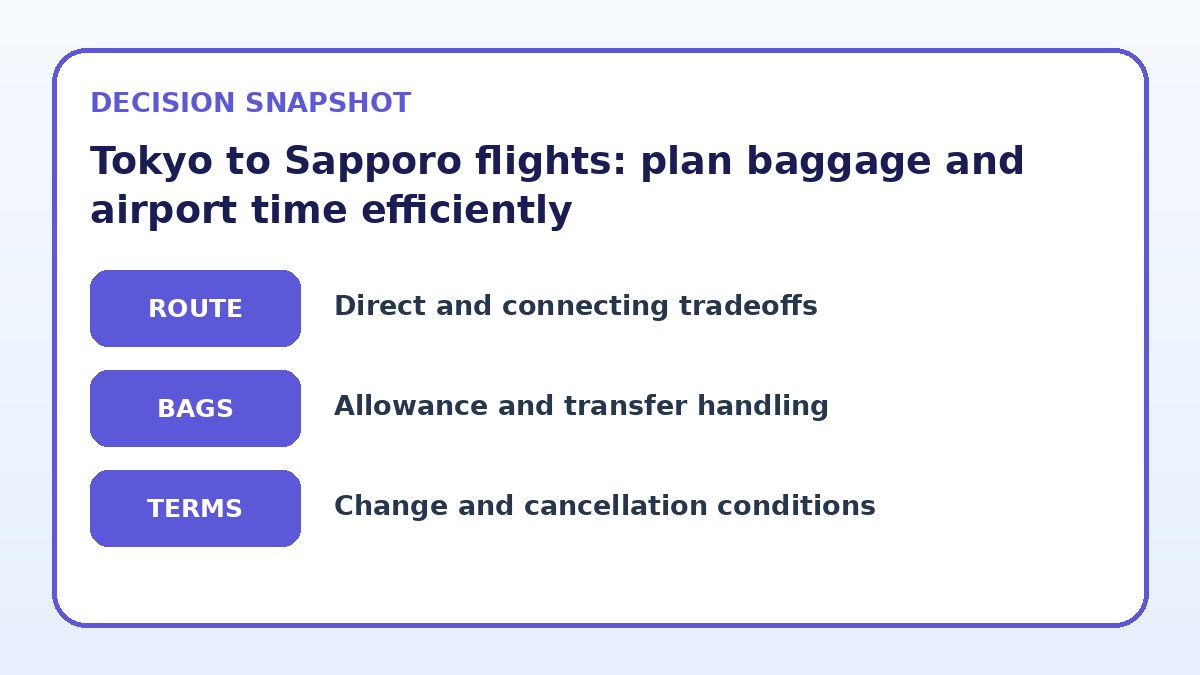
Routing: choose the airport and direct versus connecting options
Tokyo has multiple airports that serve flights to Sapporo; pick the one that minimizes transit time from your office or hotel. For a tight business itinerary, direct flights from the closest Tokyo airport to Sapporo’s airport usually reduce total door-to-door time. If a direct option is unavailable or poorly timed, compare connecting flights carefully: a connection can work if total transfer time is realistic and both segments are on the same ticket or alliance, which simplifies baggage transfer and reduces recheck risk. When considering nearby airports, also factor in how domestic transfers in Japan could affect your morning or evening schedule and taxi or rail journey times to the terminal.
When you evaluate routing choices, check whether the connection requires a terminal change and whether security re-screening is mandatory. For example, a single-ticket itinerary should allow your checked bags to move through, but if you book separate tickets you may need to collect and recheck luggage. Always verify the carrier’s stated minimum connection time for domestic flights on their final booking page and allow extra cushion for peak hours. Business travelers should prioritize reliable arrival windows over tiny fare savings when meetings are time-sensitive.
Baggage and connection risk: match allowance to trip needs
Before booking, list the items you need for the trip—suit(s), shoes, device chargers, presentation materials—and estimate checked versus carry-on volume. Compare fare baggage allowances and note which cheaper fares exclude checked bags or restrict carry-on size and weight. If you’ll connect, especially on different tickets, plan for the risk that checked baggage may not transfer automatically. In those cases, factor in the time and hassle of reclaiming and rechecking; that cost can outweigh any fare savings. If your company reimburses excess baggage, confirm policy details before committing to a higher-allowance fare.
For carry-on-only travel, organize clothing and tech into a tidy set of compressible packing cubes and a protective laptop sleeve. For checked bags, choose a durable bag with an external luggage tag and a clear plan to present necessary documents quickly at the counter. If your flight charges for bags, calculate the total journey cost including those fees and the value of your time. Verify bag size/weight rules and connection transfer practices on the airline’s live booking page and with your corporate travel desk to avoid surprises at check-in.
Compare flight-selection strategies
| Flight strategy | Best for | Risk to check |
|---|---|---|
| Direct non-stop flight | Tight schedules and minimal transfer risk | Often higher fares or fewer departure times |
| Single-ticket connecting flight | Lower fares with protected baggage transfers | Longer travel time and dependency on connection reliability |
| Separate-ticket multi-leg booking | Potentially cheapest routing or flexible carriers | You must recheck baggage and allow large transfer buffers |
| Carry-on-only light-fare strategy | Short trips with quick turnaround and no checked luggage | Limited wardrobe and risk of higher fees for any additional item |
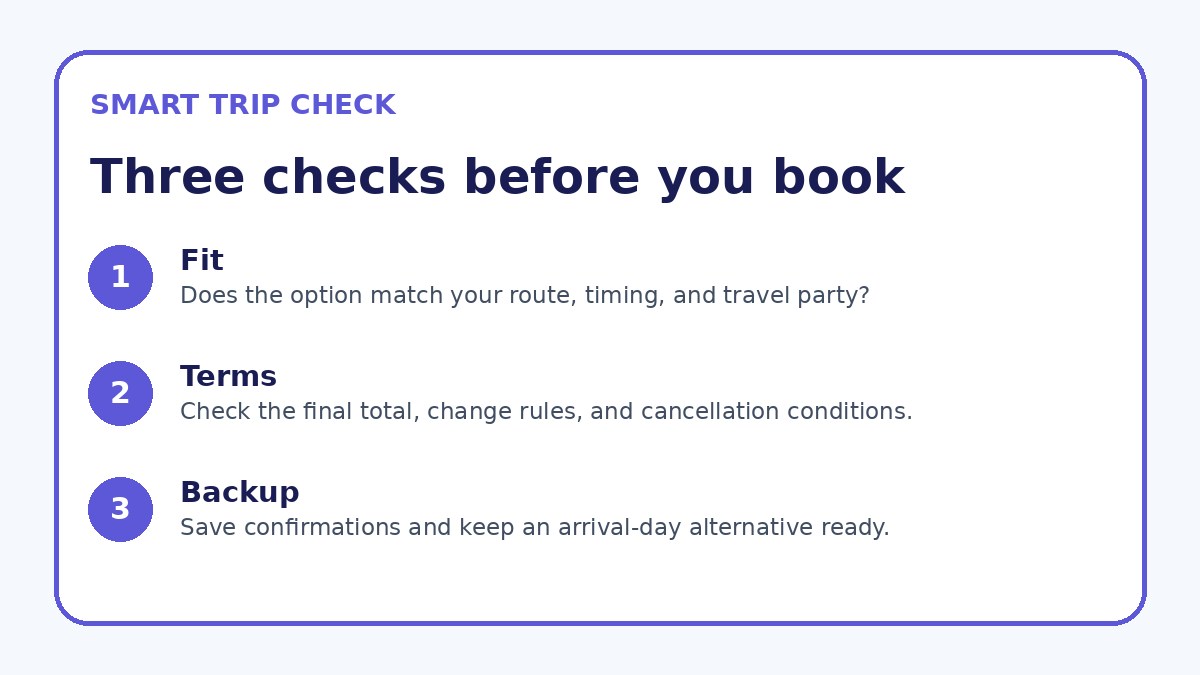
Recheck the complete itinerary
Confirm airports, connection handling, baggage, and change conditions before deciding.
Schedule fit: build realistic airport time buffers
Business travelers should work backward from the first meeting and factor in transit to and from airports, security screening, boarding windows, and baggage handling. Morning and evening peak periods can add significant time through terminals. For domestic travel on this route, many business travelers aim to arrive at the Tokyo airport at least 60–90 minutes before departure for check-in and security when checking bags; carry-on-only passengers can often use a shorter buffer, but still allow time for commuter delays en route to the airport. Keep a margin for unexpected taxi or rail disruptions so that a delayed start doesn’t cost you a missed meeting.
When scheduling return legs, avoid tight connections at your arrival airport if your itinerary includes checked baggage or a tight deadline after landing. If you must arrive quickly for a late-evening meeting, prefer a flight that lands earlier even if it requires an earlier departure from Tokyo. Use live airline pages to confirm minimum check-in and boarding cutoffs, then add a personal cushion—typically 30–45 minutes—to handle luggage queries or last-minute changes. If your employer requires approval windows or expense pre-clearance, include those administrative steps in your timeline before booking.
Flight details to verify
- Confirm exact travel dates, meeting and arrival/departure times before searching fares.
- Measure and weigh carry-on and checked bags to match the airline’s published size and weight limits.
- Book a single-ticket itinerary for connecting flights when possible to ensure automatic baggage transfer.
- Allow an airport buffer: add at least 30–45 minutes to official minimum connection and check-in times.
- Verify change, cancellation, and baggage rules on the airline’s final booking page and your company’s travel policy.
- Pack a compact business outfit and essential chargers in your carry-on to manage delays or lost checked luggage.
Fare conditions: flexibility, corporate fares, and what to verify
Fare rules determine cancellation, change fees, and whether a fare includes checked baggage—critical for business trips where plans change. Corporate or refundable fares may cost more but reduce risk if meetings are rescheduled. When comparing fares, read the fine print on the airline’s booking page: confirm change and cancellation fees, how refunds are processed, baggage inclusions, and whether seat selection is included. If you plan to book with separate carriers for potential savings, check whether each leg is penalized for changes separately and whether you’ll be responsible for missed connections.
Also verify how frequent flyer or corporate loyalty benefits apply—priority boarding, extra baggage allowance, or lounge access can save time and reduce stress. If the airline’s website is unclear, call their reservations line or your corporate travel manager to confirm baggage allowances, checked-bag transfer policy on multi-ticket itineraries, and the exact cutoff times for online check-in. As a helpful comparison source when checking availability and conditions, you may optionally view current options on Trip.com, but always confirm final rules and costs on the carrier’s official booking page before finalizing.
Flight Guide questions travelers ask
How much time should I allow at Tokyo airports for a domestic flight to Sapporo?
Allow at least 60–90 minutes before domestic departures if you will check bags, factoring in transit to the airport, security lines, and check-in queues. Carry-on-only travelers can often arrive 45–60 minutes before departure, but always check the airline’s stated check-in and boarding cutoffs on their booking page. Add extra buffer for rush-hour trains or taxis and any company approval steps required before travel.
Can I expect checked baggage to transfer automatically if I book connecting flights?
If both flight legs are on the same ticket with the same carrier or partner airlines, checked baggage is usually transferred automatically. If you book separate tickets with different carriers, you will likely need to collect and recheck your baggage at the transfer airport. Confirm the baggage transfer policy and minimum connection times on the airline booking pages and with your corporate travel manager to avoid unexpected recheck requirements.
What are the smart packing choices for a short Tokyo–Sapporo business trip?
Choose a mix of compressible clothing, one smart outfit for meetings, and a small grooming kit to keep everything to carry-on size when possible. Use packing cubes to separate tech gear from clothes and keep chargers and presentation materials in an easy-access carry-on pocket. If you must check a bag, put essential items and a change of clothes in your carry-on, and label checked luggage externally with both contact information and a copy of your itinerary.
Final decision note
For business travel between Tokyo and Sapporo, the most practical approach is to match flight selection to your meeting schedule and baggage needs: prioritize direct or single-ticket itineraries when time is tight, and favor carry-on-only fares for quick overnight trips. Before booking, record exact dates, meeting times, number and size of bags, and your company’s fare rules. Verify baggage allowances, change and cancellation policies, and minimum connection times on the airline’s booking page. Small investments of time—measuring bags, calling to confirm transfer practices, and adding conservative buffers—reduce stress and costly last-minute changes, letting you focus on work rather than logistics.
Continue planning
Check current options and final conditions
Use the provider page to confirm live availability, the final total, cancellation terms, and every condition that matters to your trip.
This evergreen planning guide was created with AI-assisted drafting and a structured quality review. It does not display live prices, schedules, availability, visa guidance, or provider rankings. Verify current details before booking. Some links are affiliate links; we may earn a commission at no additional cost to you.