If you’re traveling from Tokyo to Kyoto with bulky suitcases, bikes, or oversized bags, decide first how you’ll move between terminals and stations before you book any tickets. The simplest practical approach is to choose a route that minimizes the number of transfers and the distance you must carry or wheel luggage. Consider starting and ending stations that offer step-free access, luggage storage, or through-luggage services; compare door-to-platform distances and whether your trip requires a terminal change (for example between an airport terminal and a city rail hub). This guide gives a short practical plan up front, then explains tradeoffs—station layout, transfer options (walking, shuttle, taxi), and booking checks—so you can make the informed choice that fits your mobility, budget, and luggage size.
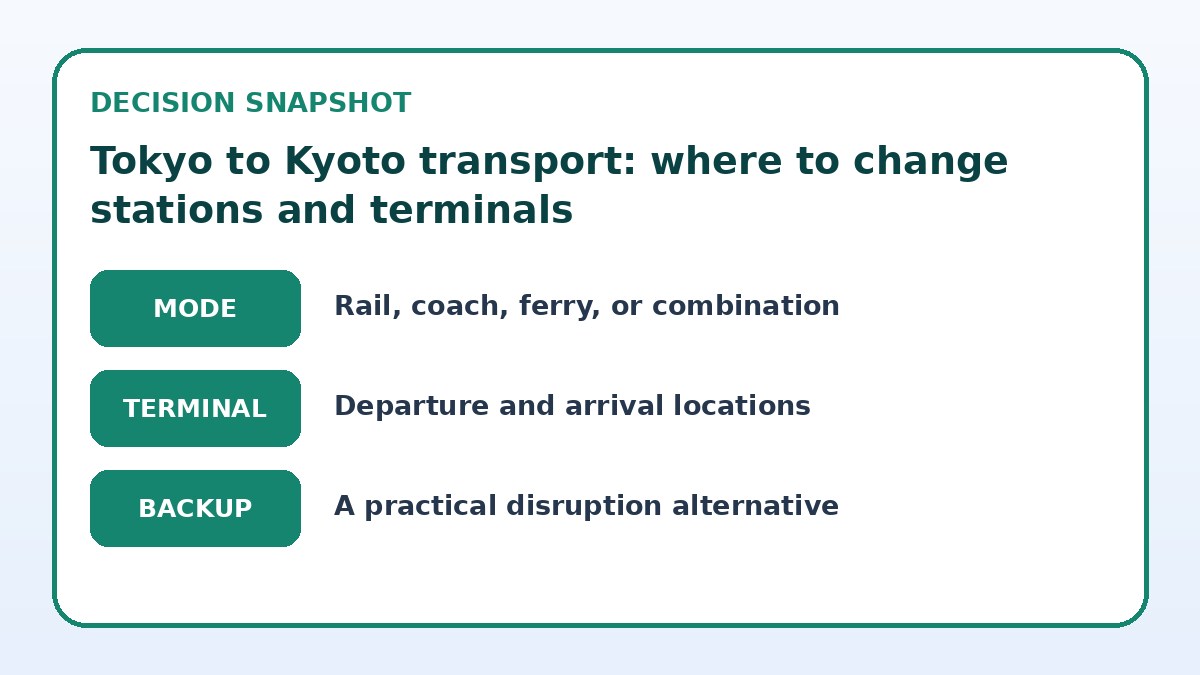
See current options before you compare the details
Availability and final conditions change. Open Trip.com now or keep reading for the practical comparison.
Decide origin and arrival points with luggage in mind
Tokyo and Kyoto each have multiple rail hubs and terminals; your exact origin and arrival choice shapes how many times you’ll move luggage between platforms, taxis, or shuttles. When planning, prioritize stations with direct long-distance train services to Kyoto or ones with easy connections that keep transfers short. If you start at an airport terminal, note whether the airport connects directly to a mainline station or if you will need to move between terminals to catch a city train. Choose the combination that reduces corridor walking and staircase use for the heaviest items.
Don’t assume the geographically closest station is the easiest. A station that’s slightly farther but offers level access, fewer platform changes, or a direct train will often be less work. For many travelers with extra luggage, spending a little more on a taxi for the short trip to a better-connected station is worth the convenience. Make a prioritized list of three viable origin/destination pairs, then evaluate each by transfer count, accessibility, and luggage facilities before booking.
Transfer options: walk, shuttle, taxi, or luggage services
When planners talk about station transfers they mean the method you use to move from one terminal or platform to the next. Walking with luggage is free but becomes difficult when corridors are long or elevators are scarce; shuttles and internal people-movers can eliminate long walks but may run infrequently or require separate tickets. Taxis or private transfers cost more but typically deliver luggage door-to-door without stairs, which is valuable if you’re traveling in a group or with heavy items. Consider the tradeoff between money and physical effort when choosing a transfer mode.
Another option is luggage-forwarding or courier services that move bags ahead to your Kyoto address or to station storage points, letting you travel lighter. These services require timing and trust: you’ll need to confirm cutoff times and collection locations. If you plan to use statutory luggage lockers or station counters, check whether the item dimensions are accepted and the hours of operation. Always plan redundancy—if your preferred transfer is delayed or unavailable, know the next easiest alternative.
| Approach | Best for | Tradeoff to check |
|---|---|---|
| Direct long-distance train from major terminal | travelers wanting to minimize platform-to-platform moves | may require a longer initial walk to a specific platform or limited departure times |
| Connect via a nearby city station with a short taxi | those preferring short, door-to-door transfers over walking | adds taxi cost and depends on road traffic and pickup logistics |
| Use luggage-forwarding and travel light | travelers who can’t manage heavy bags in stations | requires coordination, lead time, and trust in delivery timing |
| Split trip with station locker or left-luggage service | people with a long layover who want hands-free sightseeing | lockers have size limits and may be unavailable during peak times |
Ready to check the option that fits your plan?
Use your exact dates and traveler details so the provider page can show the current total and conditions.
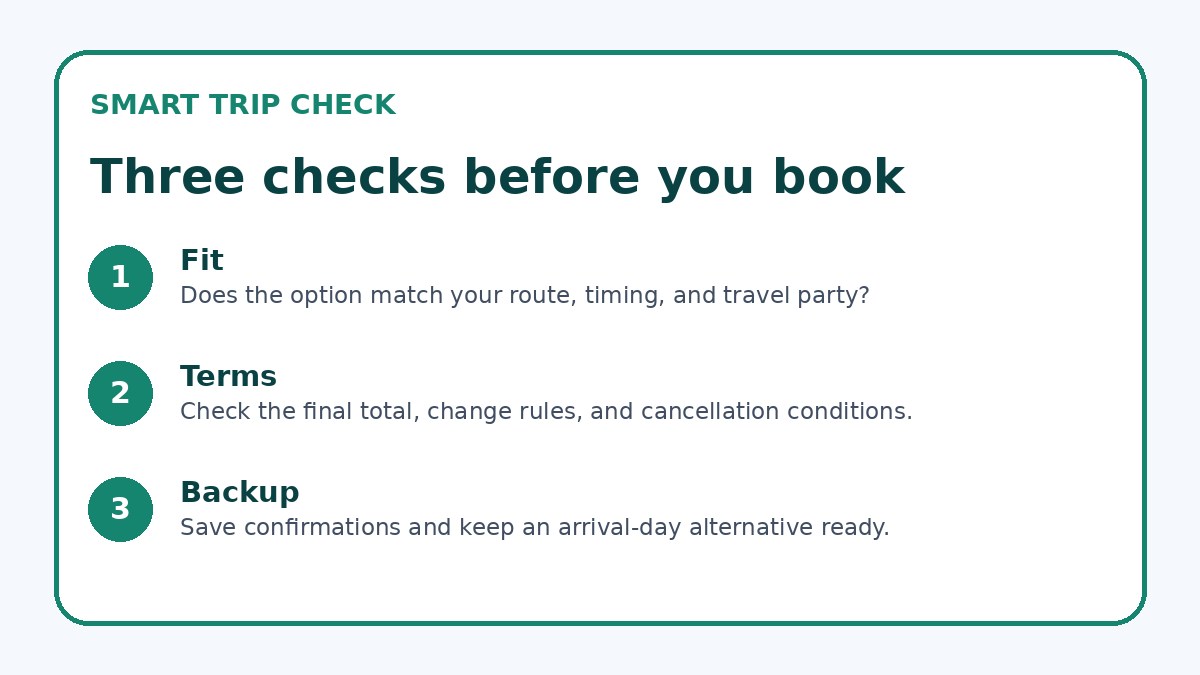
Compare connecting vs direct options for fewer station moves
Routes with fewer connections reduce the number of times you must move luggage between platforms or terminals, but a direct option might mean longer travel time on a single vehicle or limited departure times. A direct train that departs from a major city terminal can be ideal because you board once and disembark at your final station, minimizing corridor transfers. However, direct services sometimes depart from specific platforms within large stations that require long walks; verify the station map and elevator locations to ensure the platform is accessible.
If direct services are infrequent or don’t fit your schedule, compare connecting itineraries by counting transfers, measuring transfer distances, and factoring in transfer type (e.g., platform change versus terminal shuttle). When multiple connections are unavoidable, space your itinerary to allow cushion time for slow movement with luggage and potential elevator queues. On booking pages, look for terms like 'through service' or 'change once' and confirm exact transfer points before committing.
Before you book
- Confirm the exact origin and arrival station/terminal names on the booking page and note which exit or concourse the train uses.
- Locate elevators, ramps, and step-free routes on the official station map and save a screenshot for offline use.
- Compare transfer distances and required modes (walk, shuttle, taxi) and add 30–60 extra minutes for moving heavy luggage.
- Check station luggage services and locker dimensions, and reserve a locker or baggage counter slot if that option exists.
- If using taxi or shuttle, identify official pickup points and have local currency or app payment options ready.
- Verify luggage-delivery service cutoff times and exact collection address in Kyoto before sending bags ahead.
Practical checks to run before you book
On the provider’s final booking page, verify three essentials: exact station names and terminals, platform or concourse transfer requirements, and accessibility features (elevators, ramps). Don’t rely on summary maps alone—open the detailed station map that shows exits, elevator locations, luggage storage counters, and shuttle stops. If the booking page links to station facility information, read it; if not, search the station’s official site or contact customer support to confirm that your luggage size is accepted in lockers or baggage services.
Also confirm transfer times allowed for connections and whether tickets are valid for certain terminals or require separate fares. When you need a taxi or paid shuttle, check typical pickup points and whether they operate 24/7. If you plan to use luggage delivery, verify cutoff times and the exact delivery location in Kyoto. Finally, note when refunds or changes are allowed if you later decide a different transfer mode is preferable.
Frequently asked questions
Can I bring oversized luggage onto long-distance trains between Tokyo and Kyoto?
Policies for oversized items vary by operator and can change, so check the train company’s official baggage rules on the booking page before you travel. Some services allow large suitcases in overhead racks or designated areas but restrict very large or bulky items without prior notice. If the operator permits oversized luggage only with advance registration or additional arrangements, you’ll need to make those plans before departure. When in doubt, consider a luggage-forwarding service or a taxi transfer that eliminates platform constraints.
How much extra time should I allow for station transfers with heavy bags?
Plan more time than you think you need: elevators, crowds, and corridor distances can slow you considerably. A safe approach is to add a buffer of at least 30–60 minutes on top of standard transfer recommendations whenever a terminal change or long platform walk is required. If you must change between an airport terminal and a rail station, or between different city stations, err toward the longer buffer. Having extra time reduces stress and allows for unexpected delays like elevator queues or congestion during busy periods.
Is it better to use a taxi for transfers or rely on station shuttles and walking?
Both have merits. Taxis give door-to-door convenience and avoid stairs or long corridors, which is ideal with very heavy or multiple pieces. However, taxis cost more and may be affected by traffic or limited pickup points inside congested terminals. Shuttles and walking are cheaper but can be impractical with oversized items or when elevators are scarce. Compare cost, time, and physical effort for your party: if the money saves you time and strain, a taxi can be the better choice; otherwise plan shuttle or walking routes with elevator locations.
Final planning note
For travelers with extra luggage, the key choices on the Tokyo to Kyoto route are which stations or terminals to use and how you’ll move your bags between them. Start by choosing origin and destination points that minimize transfers and favor step-free access. Compare direct and connecting itineraries by counting transfers and checking station maps for elevators and luggage services. Decide whether to use taxis, shuttles, or luggage-forwarding based on how much you want to carry versus how much you want to spend. Before you book, verify station names, transfer requirements, and baggage rules on the provider’s official booking page, and keep alternative transfer plans ready in case your first option is unavailable.
Continue planning
Check current options and final conditions
Use the provider page to confirm live availability, the final total, cancellation terms, and every condition that matters to your trip.
This evergreen planning guide was created with AI-assisted drafting and a structured quality review. It does not display live prices, schedules, availability, visa guidance, or provider rankings. Verify current details before booking. Some links are affiliate links; we may earn a commission at no additional cost to you.