Practical choice first: for most couples traveling between Tokyo and Kyoto, pick a rail-first plan that you can combine with local trains or buses for door-to-door ease; use coach legs only where savings outweigh transfer friction. This article focuses on building a multi-city ground-transport plan that treats the journey as a chain of transfers — from your Tokyo accommodations to your Kyoto lodging — rather than a single ride. We cover how to weigh terminal fit, luggage handling, timing flexibility, and a realistic disruption backup so you both arrive rested and ready to explore. Read this to map a route, compare approaches, and assemble a backup plan you can actually execute together if a connection changes.
Choosing modes: rail, coach, or a combination
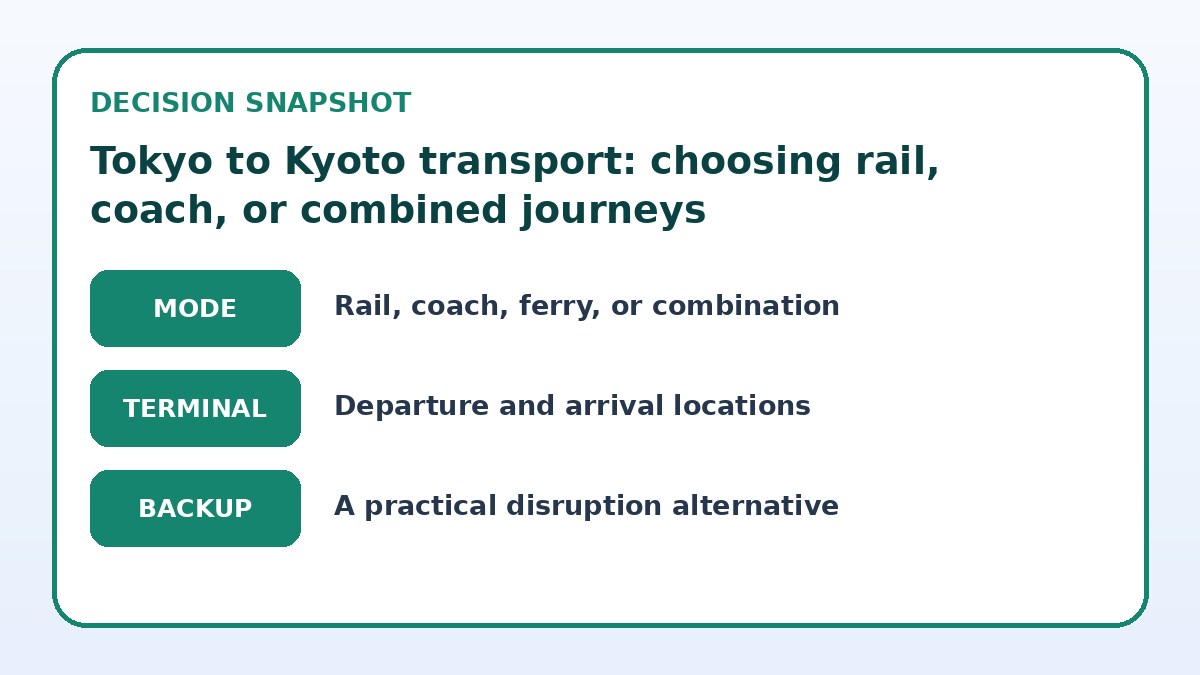
Start by comparing how each mode fits your couple priorities: comfort, travel time, cost, and how much you want to shoulder luggage. Trains commonly offer more frequent departures between major cities and a smoother ride, which helps when one partner prefers to relax on the way. Coaches may run fewer routes but sometimes deliver a simpler single-step transfer if their pickup and drop-off points are closer to your accommodations. Consider a combined plan—rail for the busiest corridor and local bus or taxi for first/last miles—when neither pure rail nor coach meets both partners’ needs.
When evaluating combinations, make a mock door-to-door timeline: from your Tokyo doorstep to the station or coach stop, time to board, the intercity leg, and the transfer to your Kyoto lodging. Factor in luggage handling at each changeover and whether you are comfortable lifting or storing bags. If either partner prefers minimal movement once underway, lean toward fewer handovers even if that means paying slightly more or selecting seats with extra space. Confirm which legs allow seat reservations and whether you must physically collect luggage between connections.
Choose the end-to-end journey plan
| Journey approach | Best for | Friction to check |
|---|---|---|
| Rail-first (major stations, local last-mile) | Couples who prioritize comfort, frequency of departures, and predictable transfers. | May require extra local transfers or taxis if stations are farther from lodging. |
| Coach-only (direct coach between city terminals) | Couples on a tighter budget or looking for a single-ticket, lower-effort boarding experience. | Fewer departure times and potentially more distant terminals increase risk and transfer time. |
| Mixed mode (high-speed rail plus local coach/taxi) | Couples balancing speed and cost who want to reduce total door-to-door time. | Adds at least one transfer point and more luggage handling, so clear coordination is needed. |
| Flexible-window plan (long buffers, multiple same-day options) | Couples who value low stress and can tolerate a longer total travel day for resilience. | Less efficient use of daytime and potentially higher accommodation or meal costs during longer transfer windows. |
Check live intercity options
Look beyond the ride itself and compare terminals, transfers, luggage, and arrival fit.
Terminal fit and luggage/transfer friction
Terminal fit means matching arrival and departure points to your accommodations so you minimize taxi rides and extra transfers. Major stations have transit links, but some express coach terminals or secondary stations sit farther from central hotels. For couples, a slightly longer, predictable taxi from a major rail station can be kinder than a shorter walk from an unfamiliar coach terminal, especially late at night. Plan around how many times you’ll lift or wheel your luggage, and whether either of you has mobility needs that change the practicality of stairs and long transfers.
Luggage friction goes beyond weight: consider bag size limits for coaches, whether trains permit easy onboard storage, and the effort of dragging wheels through crowds. If you intend to do multi-city travel with frequent stops, look into luggage forwarding services or hotels that accept early drop-offs—both reduce the physical burden between connections. Also decide who carries which items and whether to pack a day bag with essentials so you can handle an unexpected delay without unpacking the main suitcases.
Timing flexibility and on-trip coordination
Timing flexibility is crucial for couples who value peace of mind over shaving minutes off the schedule. Choose legs with several daily departures to reduce anxiety about missed services; where options are limited, add a larger buffer between connections. Agree on decision rules before departure: who chooses the alternative if a connection is missed, whether you wait for the next scheduled departure together, or whether one partner proceeds while the other handles logistics. This prevents small delays from escalating into arguments and helps you maintain momentum in your itinerary.
Coordinate communication tools and checkpoints: set meeting points at stations, share live location links, and keep at least one battery pack and a printed backup of critical details. If one of you handles phone bookings and the other prefers in-person decisions, establish which tasks each will do to reduce friction. For multi-city plans that combine modes, build realistic transfer times and practice a dry run mentally so both partners know how to move between platforms, exits, or bus bays without hesitation.
Compare the practical alternatives
Use the final page to confirm what is actually offered on your dates and save a workable fallback.
Intercity travel checklist
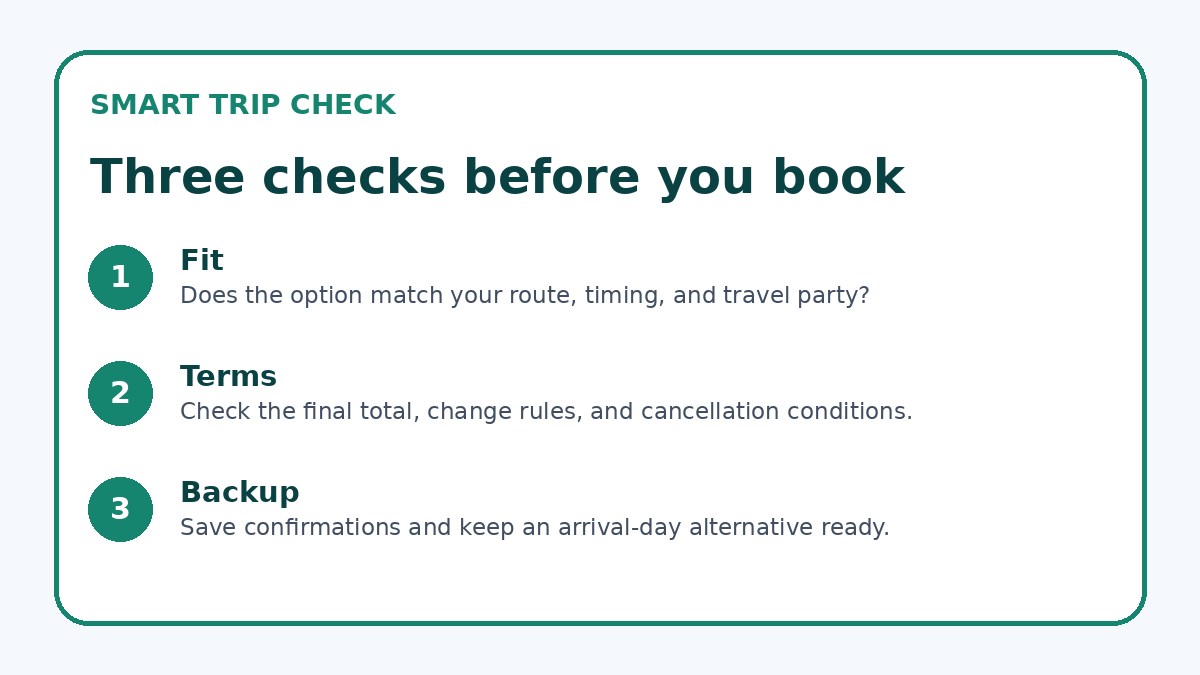
- Map door-to-door timelines from each hotel to primary departure points and to your Kyoto lodging before you book any tickets.
- Check luggage allowances and onboard storage rules for each leg and decide whether to use luggage forwarding or travel light.
- Identify at least two same-day alternative departures for the main intercity leg and note where to buy or change tickets.
- Agree on one meeting point at each terminal and exchange screenshots or printed directions to that spot.
- Confirm station and terminal addresses plus local taxi contact numbers and store them offline on your phones.
- Decide who handles rebooking if a disruption happens and set a trigger time after which the backup plan is executed.
Disruption backup: realistic, executable options
A good backup plan lists one or two alternative routes, a fallback meeting spot, and a practical rule for when to use them. For example, if your preferred train is canceled, can you catch the next service the same day or does that force an overnight stay? If coach alternatives exist, can you reach their terminal quickly, or would a taxi bridge to the next rail hub be faster? Pick backups that you can actually buy or board on short notice and verify ticket change and refund policies where possible—check the provider’s final booking page for the current options and conditions.
Make contingency actions simple and shared: carry a printed or screenshot list of alternative departures, the phone numbers for your hotel(s), and the exact address where you want to reunite if separated. Know whether you’ll prefer to rebook immediately or wait for the next scheduled departure, and set a trigger time—such as 30 minutes after a missed connection—when you both commit to executing the chosen fallback. This shared script keeps decisions fast and emotional tension low.
Rail & Intercity Transport questions travelers ask
Should couples always pick a direct train between Tokyo and Kyoto if one is available?
Direct trains remove one decision point and reduce luggage handling, which can be very appealing for couples seeking simplicity. However, direct services may depart from terminals that are less convenient relative to your lodging, or may not align with your preferred departure time. Compare the total door-to-door timeline: a slightly longer route with more frequent departures could be less stressful than a direct train that forces an early taxi or a late-night arrival. Always map actual transfers, and verify seat reservation options on the provider’s booking page before deciding.
How much buffer time should we leave between connections on a mixed-mode itinerary?
Buffer size depends on how predictable each transfer is: for urban subway-to-station changes, 30–45 minutes may be sufficient; for switching between a rail station and a coach terminal or changing stations across a city, allow 60–90 minutes. If one partner prefers extra margin or you’re traveling during peak periods, add more time. The aim is to reduce rushed movements and to have room to buy tickets or handle luggage without missing the next leg. Verify station layouts ahead to refine your buffer.
If our primary intercity leg is disrupted, should we wait for the next scheduled service or rebook immediately?
Decide this before you travel: if the next scheduled service is within a comfortable waiting window and you’re both rested, waiting can be less costly and simpler. If the alternative requires an extra overnight or conflicts with hotel plans, rebooking to a different route or provider may be wiser. Consider how complex the rebooking is—if changing requires long queues or a language barrier, seek help at ticket counters or contact your hotel for assistance. Always check the provider’s ticket-change rules on their booking page so you know the cost and options.
Final decision note
For couples planning Tokyo to Kyoto travel, think in chains: each leg must connect sensibly to the next and to your hotels. Prioritize a rail-first approach if you want frequency and comfort, but remain open to coaches or mixed modes if they reduce transfers or fit your schedule. Build realistic buffers, assign roles for rebooking and navigation, and prepare straightforward backups you can execute under stress. Before you finalize tickets, map every door-to-door transfer, confirm luggage rules, and verify change/cancellation policies on the provider’s booking page. If you want a quick place to compare current options, Trip.com is one tool to consult, but always verify details directly with operators before booking.
Continue planning
Check current options and final conditions
Use the provider page to confirm live availability, the final total, cancellation terms, and every condition that matters to your trip.
This evergreen planning guide was created with AI-assisted drafting and a structured quality review. It does not display live prices, schedules, availability, visa guidance, or provider rankings. Verify current details before booking. Some links are affiliate links; we may earn a commission at no additional cost to you.