If you’re planning a family trip from Tokyo to Fukuoka, the practical question most parents face is simple: book a direct flight for convenience or accept a connection to save time, money, or get better departure options? For many families the answer hinges on priorities—minimizing time in transit, keeping connections simple, or flying at particular times that suit children’s routines. This guide gives the quick, usable recommendation up front, then walks through the tradeoffs: seat space and stress, airport transfers and layover comfort, baggage and missed-connection risk, and how to evaluate itineraries when both direct and connecting options exist. You’ll find checklists and comparison rows that make it easier to pick the option that fits your family’s ages, stamina, luggage needs, and tolerance for logistics.
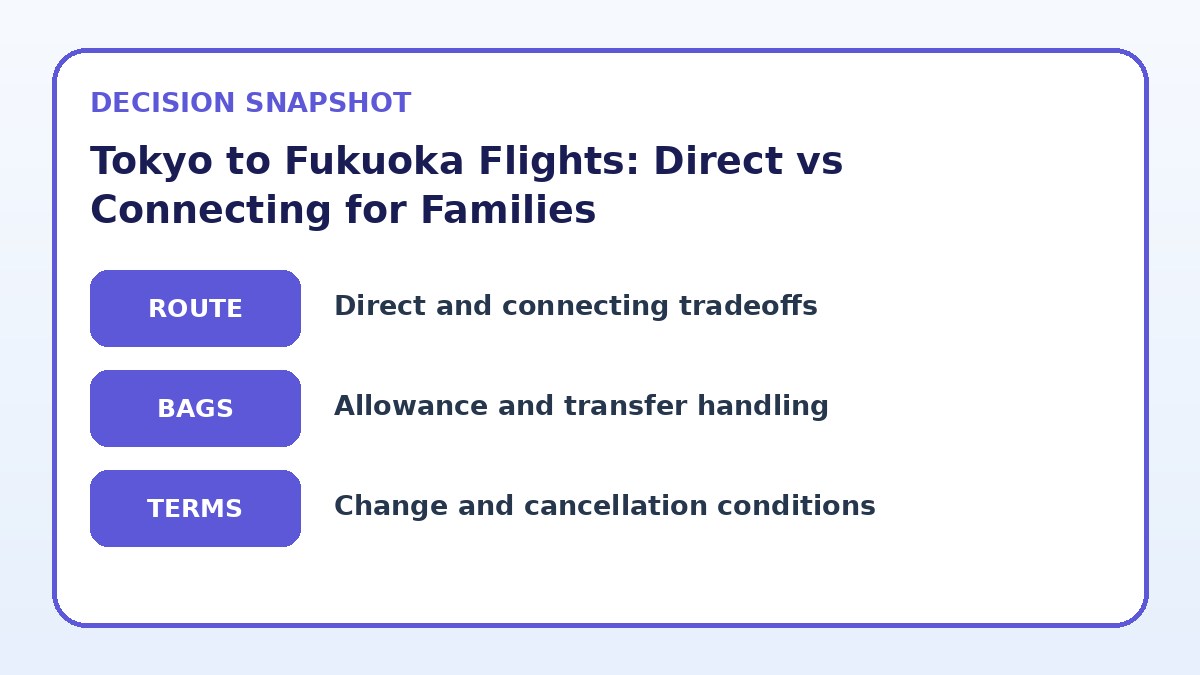
See current options before you compare the details
Availability and final conditions change. Open Trip.com now or keep reading for the practical comparison.
Deciding on direct flights: when convenience matters most
Direct flights remove one layer of logistics: a single boarding, one security departure, and no need to change planes or recheck luggage. For families traveling with infants, toddlers, or anyone who benefits from predictability—nap schedules, stroller use, or medical needs—the simpler flow usually keeps stress low. At the airport you only manage one set of boarding passes and one boarding process, which reduces the runaround that can melt patience. If transfers, language barriers, or navigating unfamiliar terminals increase your stress, a direct option often lets everyone relax earlier in the journey.
However, direct routes can come with tradeoffs you should weigh. They may depart at less convenient times for your household or be offered on aircraft with tighter seating. If the direct timetable forces a red-eye or an early-morning dash that disrupts sleep, the convenience of one hop can become a less family-friendly choice. Balance the value of fewer steps against schedule, aircraft comfort, and seat availability for your family’s preferred travel rhythm.
When connecting flights make sense for families
Connecting flights can expand your choices: more departure times, potential airline options, and sometimes better seat availability for families seeking adjacent seats. If you’re flexible about departure time and willing to accept a planned layover, connecting itineraries can let you travel at times that match children’s sleep or activity windows. For families open to a brief stop for meals, stretching legs, or sightseeing between flights, connections can even be an opportunity to break up travel in a controlled way rather than a continuous stint in airports and cabins.
That said, connections introduce points of friction—transfers between gates, possible terminal changes, and the need to manage carry-on items while keeping kids safe and entertained. Short connections raise risk of missing a subsequent flight, and international or inter-line connections can require rechecking baggage or passing through security again. Carefully check minimum connection times, whether baggage transfers automatically, and whether you must change terminals or re-clear security before booking a connecting itinerary.
| Approach | Best for | Tradeoff to check |
|---|---|---|
| Direct flights | Families with infants, lots of luggage, or low tolerance for airport transfers | Sometimes fewer departure times and potentially higher complexity if schedule doesn't match family routine |
| Short connecting flights with one easy transfer | Families needing flexible departure times or more seat choices | Adds a single transfer and slightly higher missed-connection risk if layover is tight |
| Multiple-leg connections | Travelers prioritizing budget or very specific timing not available direct | More transfers, more chance to recheck luggage or handle terminal changes—higher stress |
| Split-ticket or mixed-carrier itineraries | Experienced travelers who can manage independent connections and seek specific fares | Higher risk if delays occur—must confirm baggage transfer rules and allow extra connection time |
Ready to check the option that fits your plan?
Use your exact dates and traveler details so the provider page can show the current total and conditions.
Practical tradeoffs: baggage, seats, and airport transfers
Baggage rules and seat assignments often drive family choices. On a single-carrier direct flight, checked luggage nearly always transfers with you and seat selection can be managed together at booking. With connecting itineraries spanning carriers, you may need to pick seats separately and confirm whether your bags transfer through to Fukuoka or must be collected and rechecked. That extra handling is a common source of stress—especially when you factor strollers, child safety seats, or car seats. Before booking, verify bag policies and whether fees or size rules differ across the legs of your trip.
Airport transfers matter too: Tokyo has multiple airports and terminals, and a connection that requires moving between them or between distant gates will lengthen the total journey. When comparing options, calculate door-to-door time rather than just total airborne minutes. Include transfer time, estimated security queues, and potential waits for shuttle services if you must switch airports. For families, a slightly longer flight that avoids an inter-airport transfer can be more pleasant than a shorter airborne time with complicated ground logistics.
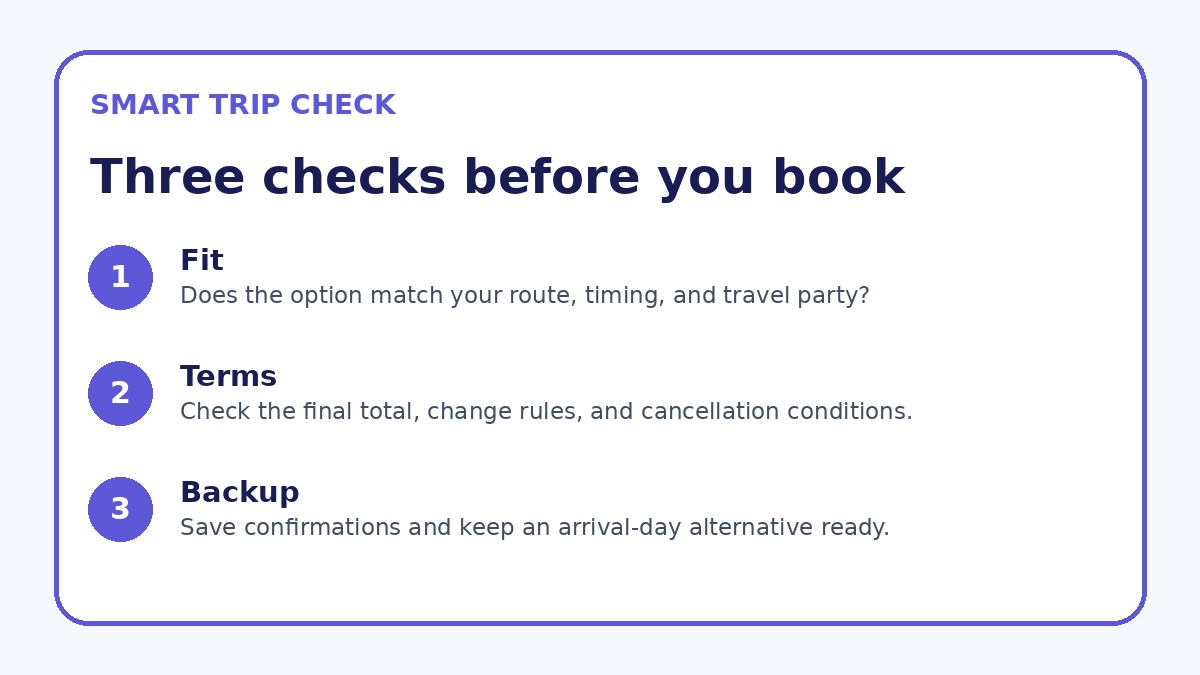
Before you book
- Compare total door-to-door time (include transfers and expected waits) rather than just flight duration.
- Confirm seat availability for the whole family and request adjacent seats or bulkhead options where needed.
- Verify baggage transfer rules and whether checked items need rechecking on connecting legs.
- Check minimum connection times and whether transfers require changing terminals or airports.
- Plan entertainment, snacks, and small comforts for the longest single stretch your children will face.
- On the airline or booking page, re-confirm final baggage fees, seat maps, and any required recheck procedures.
How to compare and pick the right itinerary
Start by listing what matters most: minimizing total travel time, avoiding transfers, or keeping costs lower. For each candidate itinerary, write down departure and arrival times, total elapsed time (including ground transfers), number of connections, and any terminal changes. Look specifically for adjacent seat availability, whether the carrier offers bassinets or bulkhead seats if needed, and the baggage transfer policy. If you have special equipment—strollers, car seats, or medical gear—confirm how each leg handles them and whether recheck is required on a connecting route.
Next, use simple rules to compare tradeoffs. If a direct flight cuts airport touchpoints and reduces total door-to-door time by 60 minutes or more, favor direct for young children and lower tolerance for disruptions. If a connecting option saves significant money or allows travel at family-friendly hours, but requires only one easy transfer, weigh that against additional stress and recheck procedures. Always verify final details—baggage allowances, seat maps, minimum connection times—on the airline’s or booking provider’s final booking page before confirming.
Frequently asked questions
Is it safer for families to always choose direct flights from Tokyo to Fukuoka?
Safety in the sense of travel risk isn’t inherently tied to direct versus connecting flights; both follow the same aviation standards. For families, "safer" often means fewer opportunities for something to go wrong with logistics—lost luggage, missed connections, or stress-related incidents. Direct flights reduce those touchpoints, so many parents feel safer choosing them for infants or children with special needs. If you consider factors like getting to the airport on time, avoiding terminal changes, and limiting unknowns, direct routes simplify planning but aren’t a safety guarantee in operational terms.
How much layover time should I plan for when traveling with children?
Aim for a layover that balances buffer time with child comfort. For domestic connections, many families find 60–90 minutes sufficient if both flights are in the same terminal and baggage transfers automatically. If you must change terminals, re-clear security, or if flights are on different carriers, plan for at least 90–120 minutes to reduce stress. Always check the airline’s published minimum connection time and add extra minutes for unexpected delays, restroom and diapering needs, and calming a restless child.
What should I verify on the booking page before confirming a connecting itinerary?
On the final booking page, confirm total elapsed time and each segment’s terminal and carrier, seat assignments for all passengers, and whether checked baggage is through-checked to your final destination. Verify minimum connection times, whether you’ll need to collect and recheck luggage, and any seat or infant equipment reservations. Also check fare change or cancellation rules that could affect rebooking if a missed connection forces itinerary changes. If you use a third-party site for comparison, double-check these details on the operating airline’s page before paying.
Final planning note
For most families traveling between Tokyo and Fukuoka, the choice comes down to balancing simplicity against flexibility. Direct flights reduce handling, simplify baggage and boarding, and are often the calmer option for very young children or groups carrying more equipment. Connecting flights can deliver better departure times, more seat choices, or cost advantages, but add transfer steps and potential recheck requirements. Start by mapping your priorities—short door-to-door time, minimizing airport changes, or matching kids’ sleep schedules—and compare itineraries on those criteria. Always verify baggage transfer rules, seat availability, and connection details on the airline or booking page (Trip.com can be used to compare live options), then choose the itinerary that aligns with your family’s tolerance for transfers and complexity.
Continue planning
Check current options and final conditions
Use the provider page to confirm live availability, the final total, cancellation terms, and every condition that matters to your trip.
This evergreen planning guide was created with AI-assisted drafting and a structured quality review. It does not display live prices, schedules, availability, visa guidance, or provider rankings. Verify current details before booking. Some links are affiliate links; we may earn a commission at no additional cost to you.