If you’re booking Seoul hotels as a solo traveler, pick the neighborhood first — it will shape safety, transport convenience, evening options, and what you’ll pay. For most solo visitors, Hongdae, Myeongdong, Itaewon, and Gangnam cover the main choices: Hongdae for youthful energy and nightlife; Myeongdong for shopping and transit links; Itaewon for international food and late-night scenes; Gangnam for business-style comforts and quieter evenings. Each area suits different priorities: budget vs. comfort, nightlife vs. early starts, or local immersion vs. international convenience. Below you’ll find quick tradeoffs, decision criteria to weigh, and practical check points to verify on booking pages. If you want a direct availability comparison, consider checking one meta-site such as Trip.com, but always confirm cancellation terms, room type, and exact location on the hotel’s official booking page before committing.
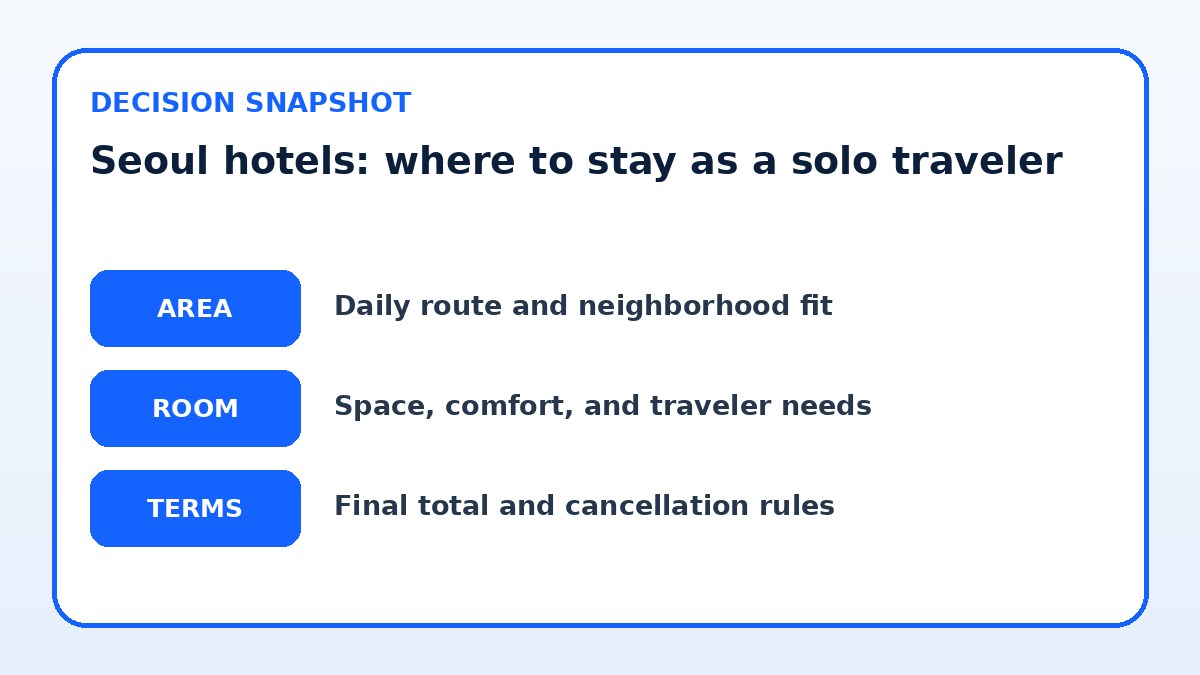
See current options before you compare the details
Availability and final conditions change. Open Trip.com now or keep reading for the practical comparison.
How to choose by priority: safety, convenience, and vibe
Start by listing what matters most for your trip: safety at night, walking distance to sights, nightlife, language accessibility, or quiet for work and sleep. Safety perceptions in Seoul are generally positive for solo travelers, but neighborhoods differ in crowd levels and late-night activity. If you value a short walk to subway lines, prioritize Myeongdong or Gangnam; if you want a neighborhood with cafés, indie shops, and a younger scene, Hongdae will fit better. For multicultural restaurants and an international atmosphere, Itaewon is the natural pick.
Weigh convenience against experience: a hotel next to a major station saves time but may be louder and more touristy. Decide how often you’ll travel across the city — extensive daily trips favor a central hub, while one-base explorations allow staying nearer to the scenes you want to immerse in. Also consider check-in and safety features like 24-hour reception, lockers, and clear access routes; verify those details on the property’s booking page before finalizing.
Nightlife and social options: meeting people and staying safe
If meeting fellow travelers or experiencing Seoul’s nightlife is a priority, Hongdae and Itaewon offer the most social scenes. Hongdae’s live music, clubs, and cafés create easy opportunities to meet others, plus many guesthouses and hostels host evening events. Itaewon’s bars and restaurants attract an international crowd where English is more commonly spoken. Both areas can be lively until late, so consider how you’ll return to your accommodation — look for 24-hour transport access or confirm that taxis are easy to hail near your hotel.
For quieter evenings while still having social options, Gangnam is more subdued after dark but still offers bars and lounges frequented by locals and business travelers. Myeongdong tends to be bustling earlier in the evening due to shopping, then calms down; it’s a practical choice if you prefer daytime activity and quieter nights. Always verify security features such as well-lit entrances, 24-hour reception, and neighborhood lighting, and keep local emergency numbers and your embassy contact saved in your phone.
| Approach | Best for | Tradeoff to check |
|---|---|---|
| Stay where nightlife and meeting people is easiest (Hongdae or Itaewon) | Solo travelers seeking social nights and vibrant street life | More noise and later crowds; may be harder to find quiet work time |
| Stay where daytime convenience rules (Myeongdong) | First-time visitors prioritizing central transport and shopping | Can be touristy and crowded; evenings are quieter than nightlife districts |
| Stay where comfort and quiet matter (Gangnam) | Business travelers or those wanting polished hotels and calm nights | Fewer budget hostel options and less late-night street life |
| Choose a hybrid approach (near a major station on a line interchange) | Travelers who want quick city access and flexible sight-seeing | Stations are convenient but hotels nearby can be louder and more commercial |
Ready to check the option that fits your plan?
Use your exact dates and traveler details so the provider page can show the current total and conditions.
Transport and getting around from each neighborhood
Seoul’s subway is extensive and reliable, but which lines and transfers matter depends on where you stay. Myeongdong is well-placed for tourist sites and several subway lines, making it a convenient base if you plan many different day trips. Gangnam sits on major lines serving the southern districts, which is useful for business locations and the COEX area. Hongdae connects you to the airport railroad (AREX) and multiple central zones, beneficial if you want fast airport access and quick trips to Hongdae’s attractions.
Itaewon is on a single line with good bus connections and easy taxi access; it’s convenient for late-night dining but can require more transfers for some destinations. When comparing hotels, check the exact station name and walking time to the nearest subway entrance on the booking page rather than relying solely on the neighborhood name. Also compare whether a hotel lists airport transfer options, shuttle services, or luggage storage if you need flexible arrival and departure logistics.
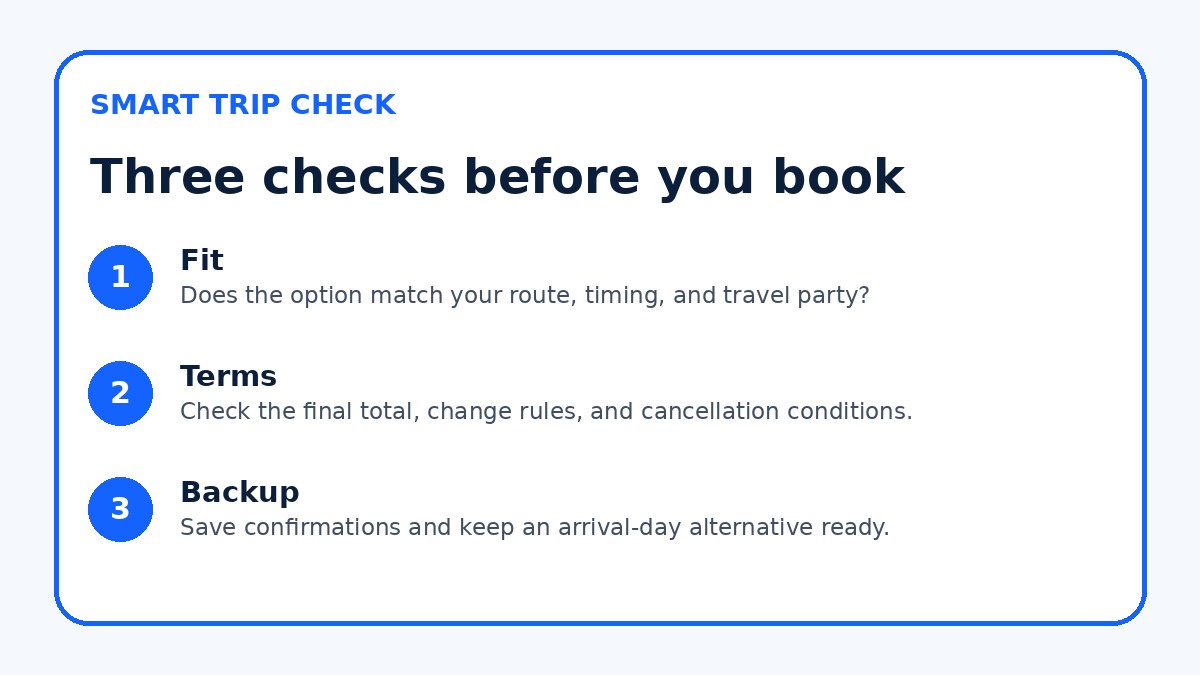
Before you book
- Confirm the exact hotel address and map pin; compare that map location to landmarks and the nearest subway entrance.
- Check the property’s cancellation and modification policy on the hotel’s official booking page before payment.
- Verify whether the room type includes private bathroom, breakfast, and free Wi‑Fi if those are priorities.
- Look for 24-hour reception or late check-in options if you arrive in the evening; confirm with the property directly.
- Read recent reviews mentioning noise, bed comfort, and cleanliness, focusing on comments from solo travelers.
- Confirm luggage storage options and whether the hotel offers airport transfer or directions for the best taxi route.
Budget, comfort, and booking checks to make before you pay
Budget lines can behave differently across neighborhoods: Hongdae and parts of Myeongdong host many guesthouses and budget hotels, while Gangnam tends toward mid-to-upper-range properties. Decide whether you need private bathroom, workspace, or laundry facilities—these features vary more by property type than by neighborhood, so inspect room details closely. If cost is a primary decision driver, compare room inclusions (breakfast, Wi‑Fi, cancellation policy) and reviews that mention noise, cleanliness, and staff helpfulness.
Before booking, verify the exact address and map pin, check the cancellation and modification policy, and confirm whether the room is refundable or non-refundable. If you plan to work or video-call, check that the hotel explicitly mentions high-speed Wi‑Fi or a business center. For comparisons of current availability and conditions you can consult a meta-search such as Trip.com, but always finalize by reading the hotel's official booking page for final terms and contact details.
Frequently asked questions
Which Seoul neighborhood is safest for a solo traveler at night?
Seoul is generally a safe city for solo travelers, but safety also depends on crowd levels and time of night. Neighborhoods like Myeongdong and Gangnam tend to have well-lit streets and steady foot traffic after dark, which many solo travelers find reassuring. Hongdae and Itaewon are lively and sociable but can be noisy and crowded late at night; standard precautions — staying aware of your surroundings, avoiding poorly lit side streets, and keeping valuables secure — are sensible everywhere. For property-specific safety features, check the hotel’s listing for 24-hour reception, CCTV, and entrance security, and confirm details on the hotel’s official page.
Is it better to stay near a subway interchange or a quieter neighborhood?
Choosing between a subway interchange and a quieter neighborhood depends on your itinerary and tolerance for noise. If you plan to visit varied parts of Seoul each day, a hotel near an interchange will save transfer time and reduce walking with luggage. If your trip is focused on a single district or you need restful nights for work, a quieter neighborhood or a hotel set back from the main road may be better. Always check walking times to stations and whether the hotel lists noise mitigation (double-glazing, courtyard rooms) on its official booking page before deciding.
How should I compare hotels when I’m a solo traveler on a modest budget?
For modest budgets prioritize room essentials that affect comfort: private bathroom or reliable shared facilities, secure luggage storage, and a 24-hour front desk if your arrival is late. Compare guesthouses and small hotels for social opportunities and lower rates, but read recent reviews for cleanliness and noise. Use filters to compare room amenities and cancellation flexibility, and confirm the listed amenities and final charges on the hotel’s official booking page. If you want a quick overview of availability, you can check a meta-search such as Trip.com, but always verify terms directly with the property.
Final planning note
Choosing where to stay in Seoul as a solo traveler comes down to which tradeoffs you accept: Hongdae and Itaewon for social energy and nightlife, Myeongdong for central convenience, or Gangnam for polished comfort. Start by ranking your priorities — nightlife, transport access, quiet, or budget — then use the checklist items to verify the practical details on the hotel’s official booking page. Don’t rely solely on neighborhood labels; check exact addresses, station walking times, cancellation rules, and room features before you pay. With those checks done, you’ll pick a base that supports your plans and lets you enjoy Seoul on your own terms.
Continue planning
Check current options and final conditions
Use the provider page to confirm live availability, the final total, cancellation terms, and every condition that matters to your trip.
This evergreen planning guide was created with AI-assisted drafting and a structured quality review. It does not display live prices, schedules, availability, visa guidance, or provider rankings. Verify current details before booking. Some links are affiliate links; we may earn a commission at no additional cost to you.