Pick the stay area first: that single choice shapes daily convenience, how much of Tokyo you actually see, and how much time you spend moving between attractions. For first-time visitors, the most practical hotels are those a short walk from major train or subway stations, or close to an easy bus link to an airport transfer. Start by listing the places you want to visit—museums, temples, neighborhoods, or a particular event—and map them against the city’s rail lines. Aim for a base that minimizes transfers for your typical day rather than trying to be within a short taxi ride of every spot. This guide helps you translate your itinerary into one of four area strategies, evaluates tradeoffs for daily friction, outlines room and party needs, and gives the final booking checklist so you can confidently narrow to an area before opening live availability.

Check live stays in the areas that fit
Use your dates and party size to compare current rooms after you narrow the neighborhood fit.
Match neighborhood fit to your itinerary
Start by mapping what you really want to do each day. If your plan centers on museums and calm neighborhoods like Ueno and Asakusa, pick hotels near stations on the same lines to avoid long transfers. If you expect late nights and nightlife, prioritize areas with later train options or short taxi rides home. For a mixed itinerary—shopping, a temple visit, and a day trip—choose a centrally connected area that sits at an intersection of lines used for your most frequent trips. Being physically close to the station that links to your day-to-day destinations reduces the number of times you must navigate transfers or unfamiliar station layouts.
Consider also walking access to local conveniences: a station-adjacent hotel that puts convenience stores, casual restaurants, and a supermarket within easy reach will save time and decision fatigue. Neighborhood character matters: Ginza and Marunouchi feel different from Shibuya or Shimokitazawa; hotels in each area suit different tastes and rhythms. If you want to swap neighborhoods during your stay, prioritize a first base with flexible cancellation and easy luggage storage so moving between hotels is smoother. The goal is to make your chosen area work for most of your days, not every possible plan.
Choose an area-selection strategy
| Area approach | Best for | Tradeoff to check |
|---|---|---|
| Station-centric: book next to a major hub | First-time visitors aiming to minimize transfers and reach many lines quickly. | Smaller rooms and higher bustle; may feel less 'local' at night. |
| Neighborhood-living: stay in a quieter district near one line | Travelers wanting larger rooms and a calmer local feel while accepting occasional transfers. | Longer routes for trips across the city when lines don't connect directly. |
| Orbit base: pick a hotel near an interchange between ring and radial lines | Visitors planning balanced sightseeing across districts with few transfers. | Can still require walking between interconnected platforms; price and room size vary. |
| Single-purpose base: choose near an airport or event venue | Those with tight arrival/departure needs or a specific event location. | Less central for daily sightseeing; expect extra travel time into main tourist areas. |
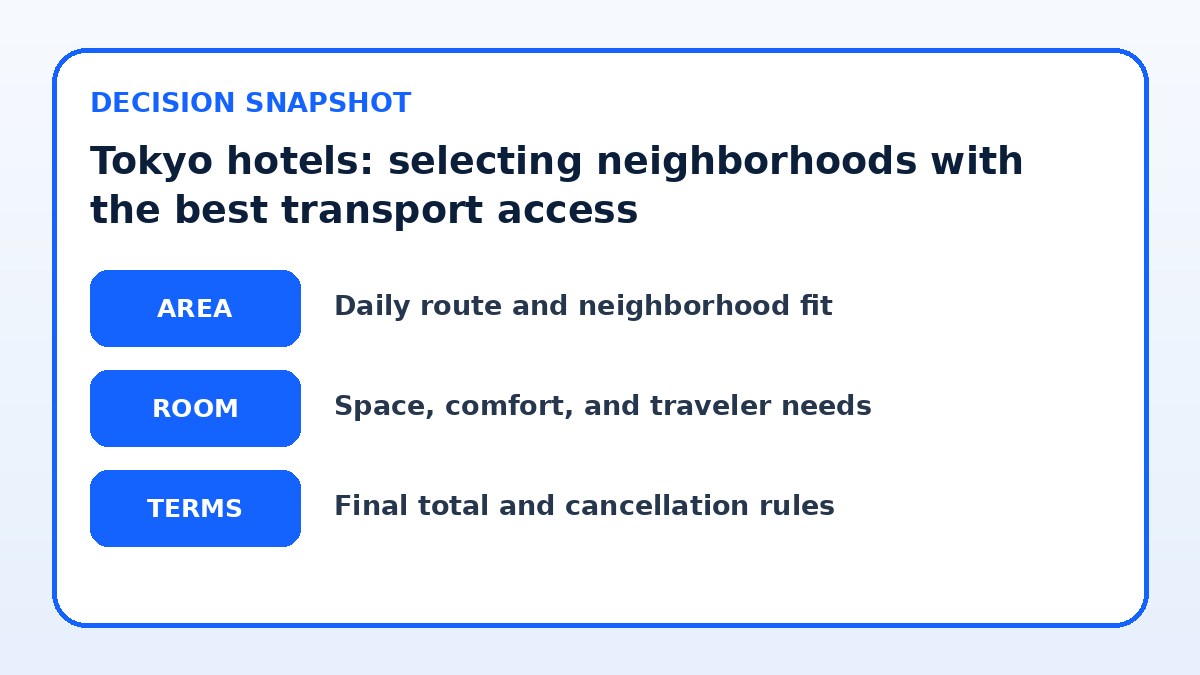
Reduce daily-route friction: transfers, walking, and luggage
Every transfer adds friction—walking between platforms, buying tickets, and keeping an eye on connections. For first-time visitors, staying near a through-station (one where multiple major lines meet) reduces the chance of complicated transfers. Check whether the station access described by the hotel is level walking with elevators or involves stairs; if you travel with heavy luggage or a stroller, a slightly larger walk with step-free access can be better than a short walk that requires stairs. Also factor in the layout of the station: some have long underground passages to exits or require additional stairs to reach street level.
If you plan day trips to nearby prefectures, pick an area with a fast link to the main intercity terminals to avoid long first legs. For late arrivals or early departures, confirm how easy the transfer is to your airport train or bus—clarify on the booking page whether the hotel offers shuttle information, luggage storage after check-out, or early check-in options where offered. Remember that walking distances advertised by hotels are sometimes measured on a map rather than accounting for crowds, ticket gates, or pedestrian crossings; leave a little extra time for those real-world factors.
Now compare like with like
Keep the same dates, guests, room needs, and cancellation preferences while you compare the final choices.
Room and party needs: pick a layout that matches transport choices
Room size and configuration are often the tradeoff for proximity to transport hubs. Central stations attract higher real estate costs, which commonly translates into smaller rooms. If you travel as a couple or family, prioritise hotel room types with flexible bedding or reserve two-room options in quieter neighborhoods further from the busiest stations. Consider whether you want a hotel with a small kitchenette or a larger common area if you plan to cook or work from your room; these needs can justify staying a short distance from the busiest hubs.
Also weigh services that affect your transport experience: luggage storage after check-out, the availability of a porter, or late check-in desks can make early morning departures and late returns smoother. If your party includes older travelers or people with mobility needs, select hotels that explicitly list step-free access from street to room and verify elevator access on the provider’s booking page. For families, look for hotels with adjoining rooms or suites to avoid frequent corridor trips with small children during transit times.

Hotel booking check before payment
- List your top five daily destinations and plot them on a Tokyo rail map to see which lines appear most often.
- Choose three candidate neighborhoods within a 5–15 minute walk of stations on those most-used lines.
- Filter hotels by room types that fit your party—confirm bed configuration and any extra-bed options on the booking page.
- Confirm step-free access and elevator availability if you have heavy luggage or mobility needs by contacting the hotel directly.
- Verify cancellation terms, check-in/check-out times, and luggage storage options before you finalize the booking.
- Cross-check the hotel's listed nearest station and exit with the official station map and local wayfinding to ensure realistic walking routes.
Final booking terms to confirm before you commit
Before clicking reserve, verify four key items on the hotel’s booking page: clear address and nearest station exit, cancellation and modification rules, check-in and check-out times, and luggage policies. When transport convenience is your priority, confirm the station name and exit number the hotel references and cross-check that with local station maps. If the hotel mentions close proximity to a particular line or shuttle, verify whether that service is seasonal or requires a reservation. For any provider-specific detail that could change—like shuttle schedules or airport transfer procedures—check the final booking page or contact the hotel directly.
Also confirm payment methods, any deposit requirements, and whether the rate you see includes taxes and mandatory fees. If your travel dates are flexible and your stay depends on easy transfers, look for rooms with flexible cancellation windows to allow an area switch if transportation service changes or you revise your route. If you use third-party booking sites to compare availability, remember to verify the same details on the hotel’s official listing; Trip.com is one place to compare current availability and conditions, but always confirm the specific terms shown before booking.
Hotel Guide questions travelers ask
Which Tokyo neighborhoods are best if I want direct access to multiple sightseeing areas?
Neighborhoods near major interchange stations are typically best for reaching many sightseeing areas with fewer transfers. Look for hotels by stations where multiple lines cross—these give you more route options without backtracking. Keep in mind that interchange stations can be busy and complex, so choose a hotel entrance aligned with the line you’ll use most. Always confirm on the hotel’s booking page which exit or street the listing refers to, and compare that exit to station maps so you don’t end up on the opposite side of a large complex.
Is it better to stay close to Shinjuku or a quieter area when visiting Tokyo for the first time?
Shinjuku offers extensive rail links and active nightlife, making it convenient for varied itineraries—but central locations often mean smaller rooms and more noise. A quieter area a single line away can offer more spacious accommodations and a calmer base, though you may accept one or two extra transfers each day. Decide whether you value being in the transport thick of things for shorter in-city travel times or prefer a restful base with a little extra commuting.
How should I weigh proximity to the airport versus central transit when choosing a hotel?
If your arrival or departure times are very early or late, proximity to an airport link or dedicated shuttle can reduce stress. For most sightseeing days, central transit access to multiple lines is more valuable. Compare how often you’ll need the airport link versus daily sight-seeing connections: if you have only one overnight near the airport, consider a short airport hotel stay and base the rest of your trip in a central neighborhood. Always verify airport transfer details and station links on the hotel’s booking page to avoid surprises.
Final decision note
For first-time visitors, the practical starting point is choosing the right area rather than a specific hotel. Translate your daily itinerary into rail lines and pick an area that minimizes the transfers you’ll make most days. Factor in room size and party needs against the convenience of station proximity, and confirm step-free access or luggage services if they matter to you. Before finalizing a booking, cross-check station exits, cancellation rules, and transport references on the hotel’s actual listing. With an area shortlisted, you’ll be ready to open live inventory and compare specific rooms with confidence.
Continue planning
Check current options and final conditions
Use the provider page to confirm live availability, the final total, cancellation terms, and every condition that matters to your trip.
This evergreen planning guide was created with AI-assisted drafting and a structured quality review. It does not display live prices, schedules, availability, visa guidance, or provider rankings. Verify current details before booking. Some links are affiliate links; we may earn a commission at no additional cost to you.