Practical answer up front: when booking Seoul travel deals as a solo traveler, prioritize how and when you can cancel, what portion of each package is refundable, and whether flexibility applies to the whole bundle or only parts (flights, hotel, activities). Many bundles look convenient but lock nonrefundable components into the package; conversely, fully flexible bookings often cost more but reduce the stress of last-minute plan changes. Before you commit, line up the same dates, traveler count (one), and the exact inclusions across the options you’re comparing. Check provider cancellation rules and the final booking page for the refund timeline, any processing fees, change fees, and whether third-party bookings (airlines, hotels, tour operators) are covered by a central vendor’s policy.

Test package value fairly
| Booking approach | Best for | Tradeoff to check |
|---|---|---|
| All-in-one bundle (flight + hotel + activities) | Travelers valuing convenience who want one point of contact for changes. | Can lock nonrefundable components into the whole package; check whether the seller can process full refunds or only manage credits. |
| Flight and hotel bundle, separate activities | Solo travelers wanting partial flexibility for local plans. | Activity suppliers may still be strict; separate booking of activities allows selective refunds but adds administrative overhead. |
| Separate bookings for flight, hotel, and activities | Travelers who prioritize maximum control and targeted refundable options. | Requires managing multiple suppliers and could be slower to coordinate changes or recover refunds after disruptions. |
| Prepaid nonrefundable package with add-on insurance | Price-sensitive solo travelers willing to accept risk if insurance covers common cancellation reasons. | Insurance often has exclusions and claim processes; it may not fully compensate for locked-in nonrefundable fares. |
Check current package and separate options
Use identical dates, travelers, room needs, baggage, and flexibility so the comparison stays meaningful.
What to compare before judging a package useful
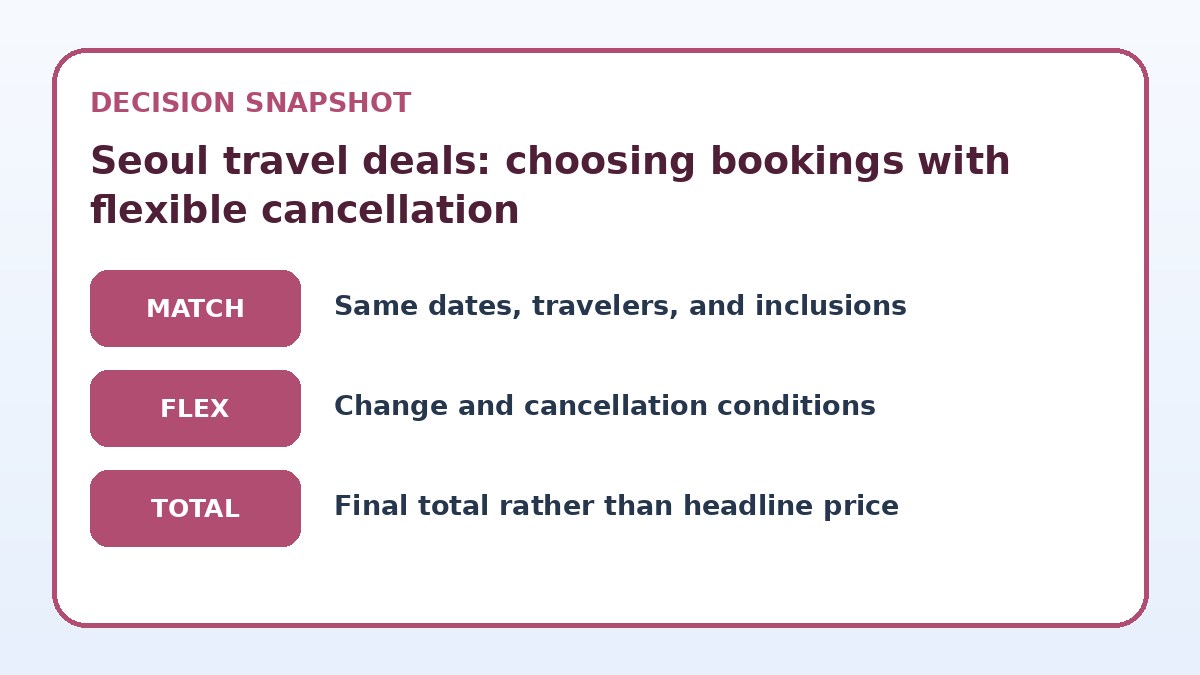
Start by lining up apples-to-apples: same travel dates, one traveler, same hotel room type and nights, same carrier and class if possible, and identical activities or transfers. Only by matching those elements can you meaningfully judge whether a package is financially or logistically better than booking components separately. Pay attention to whether bundled prices assume nonrefundable fares or prepaid attraction tickets; these can create apparent savings that evaporate if plans change. Also note whether the bundle lists an overall cancellation policy or directs you to multiple suppliers’ separate terms — that affects how simple it will be to make a single change.
Next, compare change fees, refund timelines, and the thresholds for partial refunds. Some providers promise free date changes within a window but retain higher fees for cancellations; others refund full amounts only within 24–48 hours. For solo travelers who may need to shift plans on short notice, this difference matters more than headline savings. Finally, inspect exclusions like ‘no refunds on promotional fares’ or ‘activity vouchers nonrefundable’ and clarify them on the provider’s final booking page. If you see ambiguous language, contact the supplier directly before booking to avoid surprises.
Inclusions: which elements usually limit flexibility
Flight and hotel bookings are the most visible inclusions, but they don’t behave the same way. Airlines often have tiered fare rules; a bundled flight could be a low-fare class with strict nonrefundable terms. Hotels may offer refundable or nonrefundable rates for the same room type. Activities, guided tours, and private transfers are common culprits for inflexible terms — many local operators require prepayment and apply strict no-refund policies within a set period. When a package mixes refundable accommodation with prepaid attractions, the net flexibility may be much lower than it appears.
Also consider third-party vouchers and combined tickets for popular Seoul sites or performances. These items often have their own cancellation windows independent of your flight or hotel rules. If the package includes a local SIM card, transport card, or meet-and-greet service, check whether those tiny items are removable or refundable; sometimes removing a nonrefundable add-on changes the package status. Ask whether the seller acts as a reseller that can manage cancellations centrally, or whether you must contact multiple suppliers separately to change different parts of your trip.
Look past the headline total
Compare inclusions and change conditions before deciding whether a package is genuinely useful for this trip.
Deal comparison checklist
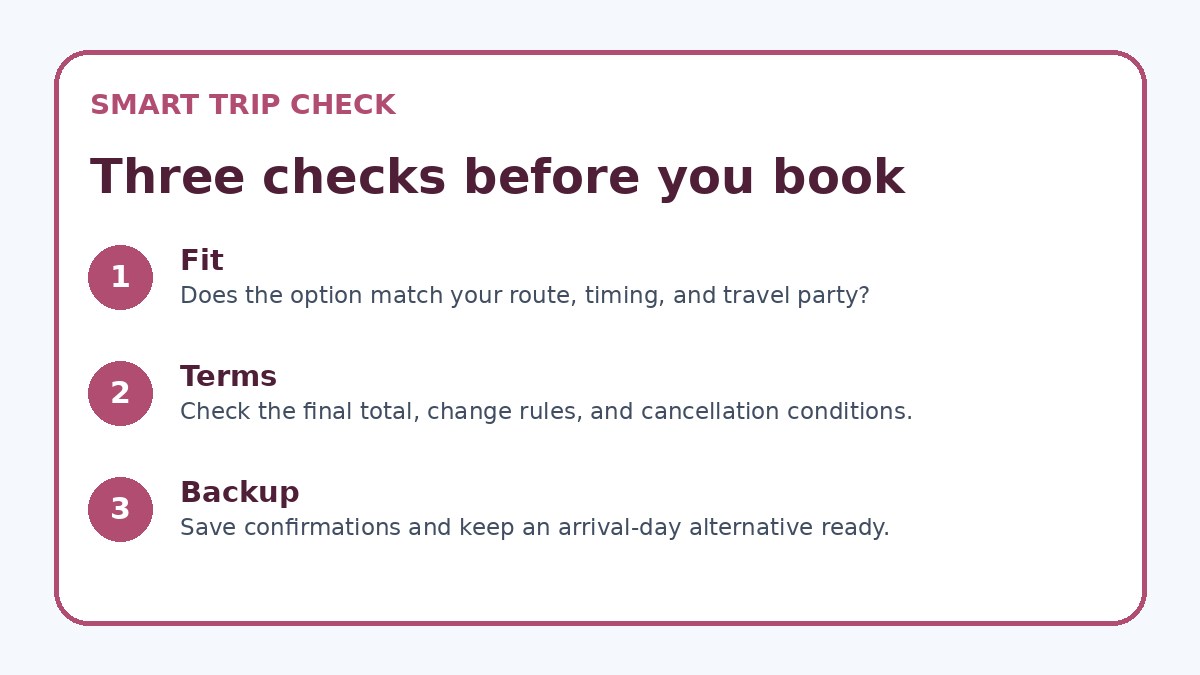
- Match the same dates, number of travelers (one), room type, and activity slots across every option you compare to avoid false savings.
- Open and read the supplier’s final checkout terms for refund timelines, who issues refunds, and any administrative or processing fees.
- Confirm whether the bundle seller can change or cancel all supplier reservations centrally or whether you must contact individual suppliers.
- Verify whether refunds are returned to your original payment method or issued as travel credit and note any expiration dates.
- Ask for written confirmation of any verbal promises about flexibility before you pay, and save that email with your booking documents.
- Consider refundable rates for flights and hotels when you expect a moderate chance of date changes; weigh extra cost against potential change fees.
Traveler-specific value: why solo travelers may prefer certain terms
Solo travelers usually face different cost and risk dynamics than those traveling in groups. You can’t spread a change fee among multiple people, so absolute fees matter more. Flexibility that allows free date changes or credit toward future travel tends to be more valuable to solo travelers who might need to reschedule due to work commitments, personal emergencies, or flight disruptions. Also evaluate how single-supplement charges are handled in packages; some bundles lock single occupancy into higher rates without allowing refundable upgrades or downgrades.
On the other hand, solo travelers often benefit from simpler logistics: a single confirmation for a bundle can be less paperwork than managing separate supplier contacts. If the package vendor provides a centralized customer service channel that can modify all components at once, that operational convenience can outweigh slightly higher costs. But verify whether the vendor actually has authority to change bookings on suppliers’ systems, and whether they pass through supplier fees rather than absorbing them; the final booking page should state who holds authority and the process for refunds or credits.
Final terms: what to verify on the booking page
Before you click pay, check the final booking page for five specifics: exact refundability (full, partial, or none), explicit processing or administrative fees, the timeframe for refunds to appear, the name of the supplier who issues refunds, and whether changes can be made online or require phone support. If the page lists multiple suppliers, make note of each supplier’s separate terms. Don’t accept vague phrases like ‘subject to supplier terms’ without drilling into those terms. If anything is unclear, ask the seller for written confirmation sent by email before completing the purchase.
Also confirm the method of refunds (original payment method, credit voucher, or travel credit) and any deadlines for filing a cancellation request. Some sellers allow free cancellation up to a date but only provide a travel credit rather than a cash refund; others refund but charge an administrative fee. Finally, check for travel insurance options that explicitly cover cancellation for covered reasons and read the insurer’s list of covered events. Trip.com can be used as a comparison site to surface current availability and full policies, but always verify rules on the supplier’s official checkout page.
Travel Deals & Booking Strategy questions travelers ask
If a Seoul package lists ‘free cancellation’, what exactly should I verify?
Get specifics: the final booking page should say which elements are free to cancel and the cancellation deadline. Confirm whether ‘free’ means a full cash refund or a voucher/credit, and whether processing fees apply. Ask whether the seller can cancel supplier reservations on your behalf or if you must contact each supplier. If the package contains third-party tickets or promotional fares, clarify that those items are included in the free cancellation or can be removed without penalty.
Is it safer for solo travelers to book refundable hotel rates and nonrefundable flights, or vice versa?
It depends on your risk profile. Flights often have higher change fees and limited refundability, so securing a more flexible flight can be valuable if date changes are likely. Hotels are typically easier to change or obtain vouchers from, but some discounted refundable rates cost more. For solo travelers, the key is to prioritize flexibility on the component that’s hardest or most expensive to replace. Compare the incremental cost of refundable versus nonrefundable options and decide whether the peace of mind outweighs that cost.
How can I avoid ‘false savings’ when comparing bundled Seoul travel deals?
Always compare total out-the-door costs for the same itinerary and cancellation scenarios. Price a bundle and then reconstruct an equivalent separate booking with the same flight times, room type, and activities to see if the bundle’s savings persist. Factor in potential change or cancellation fees for each approach and include possible insurance costs. Beware of bundles that optimize savings only if you never change plans; for solo travelers who may need flexibility, lower upfront cost can mean much higher net expense if changes are needed.
Final decision note
Choosing between bundled Seoul travel deals and separate bookings comes down to two practical questions: how likely are you to change plans, and who you want handling those changes. If you need operational simplicity and a single contact, a reputable all-in-one bundle with explicit, easily reachable cancellation terms may suit you. If you expect schedule changes or want tight control over refunds, construct your trip from individually refundable components and keep receipts and supplier terms handy. In every case, check the exact language on the final booking page — refund timelines, processing fees, and the identity of the refunding supplier determine real flexibility. Save confirmation emails and, when in doubt, ask the seller to put any exception or promise in writing before you pay.
Continue planning
Check current options and final conditions
Use the provider page to confirm live availability, the final total, cancellation terms, and every condition that matters to your trip.
This evergreen planning guide was created with AI-assisted drafting and a structured quality review. It does not display live prices, schedules, availability, visa guidance, or provider rankings. Verify current details before booking. Some links are affiliate links; we may earn a commission at no additional cost to you.