For families deciding how to travel from Toronto to Montreal, start by asking which combination of convenience, cost, and simplicity matters most: a roomy train with space to spread out, a budget coach for direct routing, a scenic ferry-leg plus ground transfers, or driving and short hops for flexibility. The practical answer: choose the mode that minimizes painful transfers and luggage juggling for your specific household—young children, strollers, car seats, and bulky bags change the balance. This article compares terminal fit, luggage and transfer friction, timing flexibility, and what to do if plans go wrong. It focuses on end-to-end door-to-door practicality, not just the ride, so you can match family needs to an approach and know exactly what to check before you book.

Terminal fit: which stations and stops make family life easier
Terminal fit is about more than proximity: consider elevator availability, stroller-friendly ramps, family washrooms, and easy passenger pick-up/drop-off. For any chosen mode, check whether arrival and departure points are central or on city edges; a central terminal often means a shorter, simpler transfer to a hotel, but edge terminals sometimes have quick highway access that benefits families with a car. Confirm walking distances between platforms and any shuttle services, and plan for luggage carts or porter services if you’ll be hauling suitcases and a stroller.
If the family includes very young children or wheelchair users, call the operator or station office to ask about accessibility features and preboarding assistance. Look up where taxi stands or ride-hailing pickup spots are located relative to the main entrance—some terminals require a short walk that’s harder with a car seat or multiple bags. Finally, assess whether you’ll need to change transport modes inside a city: one long seamless trip into a central terminal is usually easier than multiple short hops ending at dispersed stops.
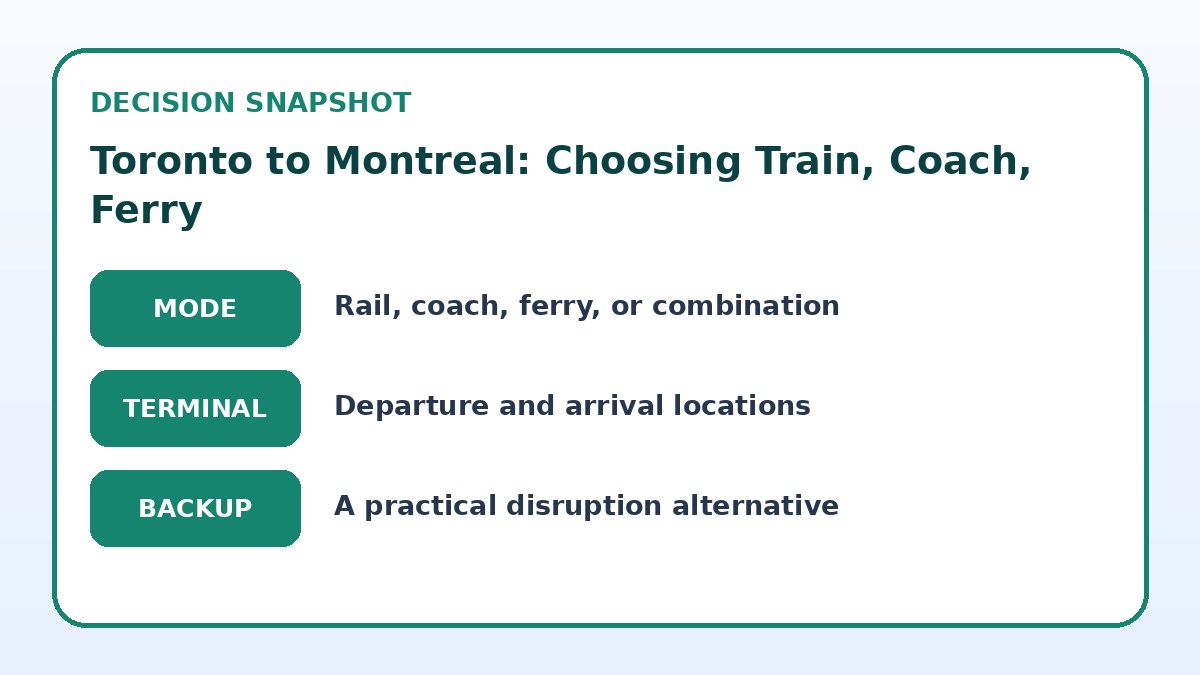
Choose the end-to-end journey plan
| Journey approach | Best for | Friction to check |
|---|---|---|
| All-train itinerary (single or connecting rail services) | Families who value onboard space, smoother movement, and central station arrival. | May require station transfers to final door and you must verify baggage and accessibility specifics before booking. |
| Direct coach or express bus | Households prioritizing simple point-to-point routing with fewer onboard transfers. | Boarding logistics and luggage stowage vary; road traffic can add unpredictable delays, affecting routines. |
| Ferry plus ground connections (multimodal) | Families wanting a scenic route or combining destinations where water crossings reduce driving time. | Adds transfers and schedule reliance across operators—treat as multimodal travel and build large time buffers. |
| Drive or mixed drive-and-rail | Families needing door-to-door control, flexible departure times, and easy access to off-route stops. | Parking, tolls, and child-restraint logistics add complexity; driving may be tiring and urban parking can be costly. |
Check live intercity options
Look beyond the ride itself and compare terminals, transfers, luggage, and arrival fit.
Luggage and transfer friction: packing, car seats, and hands-on time
Families should plan for the hands-on time needed to load and unload gear. Trains often allow more onboard luggage space and freer movement, helpful for soothing kids during the trip; still, verify whether overhead racks, dedicated luggage areas, or checked-luggage options exist. Coaches can have underfloor bays for big bags but require lifting heavy items into compartments. If you bring a car seat, check whether it can travel as carry-on, needs booking as checked equipment, or must be used in a car; this influences whether driving or a mixed itinerary is preferable.
Transfers are where trips become stressful: estimate door-to-door minutes, not just ride time. If a ferry or bus leg requires a long shuttle between terminals, add buffer time for rest, snacks, and restroom breaks. Bring simple packing solutions—a wheeled suitcase per adult plus a small backpack with essentials—to reduce juggling. Label bags clearly and keep important items like medications, snacks, and entertainment within reach during transfers.
Timing flexibility: schedules, family routines, and buffer planning
Families need schedules that match sleep and meal routines. Trains and coaches run on published timetables; choose departures that align with naps and dinner to reduce meltdowns. When comparing options, look not only at departure frequency but also at how delays affect connections. If a chosen plan requires tight transfers, consider an earlier service or a direct option to build breathing room. Seasonal variations and weekend traffic can alter typical travel times, so interpret published timetables as a baseline and plan buffers accordingly.
For parents of infants or children who need frequent stops, factor in where you can pause en route: stations with family rooms, rest areas, or accessible bathrooms are valuable. If you must make a late arrival into your destination, check whether transfers and public transit options still run or whether a taxi or pre-booked ride will be necessary. A little extra time on either end of the main journey reduces stress and gives you room to handle the unpredictability of family travel.
Compare the practical alternatives
Use the final page to confirm what is actually offered on your dates and save a workable fallback.
Intercity travel checklist
- Verify terminal addresses and nearest pickup/drop-off points, including elevator and stroller access at each station.
- Confirm luggage allowances, checked-luggage options, and whether car seats count as carry-on or require booking.
- Compare door-to-door travel time including transfers, not only the advertised ride duration.
- Build at least 60–90 minutes buffer for critical connections when traveling with young children or lots of baggage.
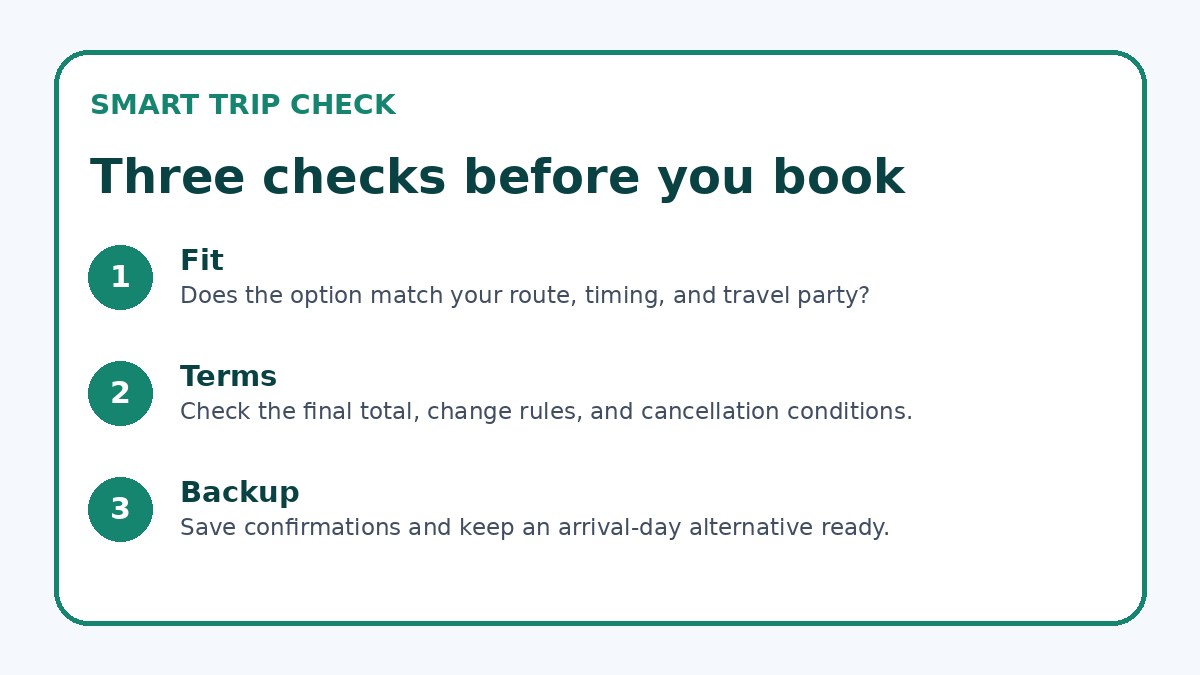
- Save screenshots of booking confirmations and local contact numbers in case cellular access or emails fail.
- Identify at least two alternative routes (train, coach, or drive) you could switch to if your primary option is delayed.
Disruption backup: realistic fallbacks for delays and missed connections
Plan a clear backup for common disruptions: delays, cancellations, and missed transfers. For trains, know the next few departures and the operator’s policy for rebooking families; for coaches, identify nearby alternative routes or terminal pickup points. If your journey mixes modes, map at least two fallback routes back to a major hub so you can regroup without scrambling. Keep digital screenshots of purchase confirmations and local emergency contact numbers in case electronic access fails.
Consider practical fixes: carry a compact car seat or an easily installed travel harness for quick taxi rides; keep spare snacks and a small first-aid kit; and store critical documents and prescriptions in a waterproof pouch. When delays look likely, proactively contact accommodation providers to adjust arrival instructions. If you rely on ride-hailing for final mile service, verify surge and service availability in the destination’s neighborhoods. Finally, check live options on the provider’s booking page or a comparison site like Trip.com before rebooking to confirm current schedules and refund rules.
Rail & Intercity Transport questions travelers ask
Is the train the easiest option for families traveling between Toronto and Montreal?
Trains often offer more room to move, onboard restrooms, and a calmer environment than buses, which helps with children. However, ‘easiest’ depends on door-to-door logistics: how close the stations are to your start and end points, accessibility at each station, and whether you must make additional transfers. Before booking, check station facilities, luggage policies, and last-mile transfer options. Also confirm rebooking and assistance policies for families with small children through the carrier’s official booking page.
Can I combine a ferry with other modes to make the trip more fun for kids?
A ferry can add a memorable element, but it usually turns the journey into a true multimodal trip with extra transfers and timetable dependencies. When considering a ferry, map the entire route and measure transfer times, waiting areas, and shelter on both ends. Make sure you can store or carry car seats and stroller gear between legs, and have backup plans if one leg is delayed. Check the ferry operator’s boarding rules and any connecting service schedules on the provider’s booking pages.
How should I handle car seats and child restraints on non-driving legs?
Policies vary: some operators allow car seats on board, others require they be checked or used only in cars. Decide whether you’ll bring a portable travel seat, use public-transport-compatible harnesses, or rent a seat at your destination. Measure and test any seat for ease of installation if you plan to change vehicles. Before you travel, verify the specific operator’s rules for child restraints, any charges, and whether advanced notice is required by consulting the carrier’s official booking or support pages.
Final decision note
Choosing between train, coach, ferry, or driving from Toronto to Montreal comes down to matching family priorities: onboard space and movement, simple boarding and baggage handling, or door-to-door control. Focus on terminal fit, transfer friction, timing flexibility, and a realistic disruption backup when comparing options. Build generous buffers, confirm operator rules about luggage and child restraints on their booking pages, and pick the approach that minimizes hands-on time and stress for your household. If you want to compare current schedules and availability as you book, Trip.com can be used to view live options, but always verify details on the provider’s final booking page.
Continue planning
Check current options and final conditions
Use the provider page to confirm live availability, the final total, cancellation terms, and every condition that matters to your trip.
This evergreen planning guide was created with AI-assisted drafting and a structured quality review. It does not display live prices, schedules, availability, visa guidance, or provider rankings. Verify current details before booking. Some links are affiliate links; we may earn a commission at no additional cost to you.