If you’re carrying extra bags to Sydney, the practical first move is simple: add every single likely fee to a single total and compare that number across package and separate booking options. Many fare comparisons look only at headline prices and miss baggage surcharges, seat selection, airport transfers, or compulsory hotel resort fees. Those add-ons change which option truly costs less and which gives better value for your needs. This guide walks you through the exact line items to check, how to compare apples-to-apples across bundles and separate bookings, and which contract terms to verify on the provider’s final booking page. Use the checklist and comparison rows to test the same dates, travelers, and baggage allowances so you avoid false savings and choose the booking approach that fits your luggage, flexibility needs, and tolerance for risk.

Test package value fairly
| Booking approach | Best for | Tradeoff to check |
|---|---|---|
| All-in-one package (flight + hotel + transfer) | Travelers wanting reduced coordination and predictable logistics with extra luggage. | May lock you into specific flight times and baggage rules that are hard to change; compare total fees closely. |
| Flight-only then hotel separately | People who want control over flight choice and baggage allowances while choosing hotels by budget or location. | Requires more time to compare and may miss bundled transfer savings; ensure baggage fees are totaled correctly. |
| Book flight and hotel with different providers | Travelers seeking targeted perks, loyalty benefits, or better baggage terms on a specific airline. | Coordination risk increases—missed connections or differing cancellation rules can be costly with extra luggage. |
| Fully separate bookings (flight, hotel, independent transfers) | Packers wanting maximum price control and flexibility to mix low-cost carriers and budget hotels. | The lowest headline price can become expensive after baggage fees and private transfer costs; tally everything. |
Check current package and separate options
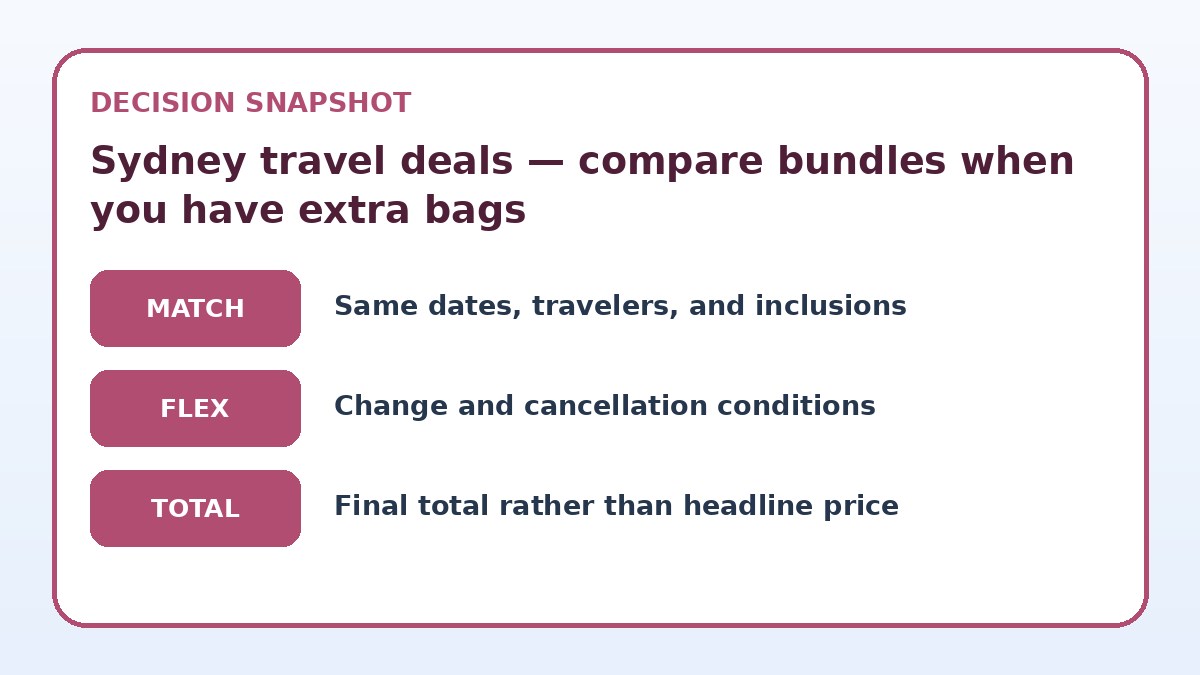
Use identical dates, travelers, room needs, baggage, and flexibility so the comparison stays meaningful.
What to include when comparing a package versus separate bookings
Before you judge a package deal for Sydney, list every potential cash and noncash item the travel experience requires. That means the base airfare and its baggage allowance, checked-bag and overweight fees, carry-on entitlement, seat selection charges, airport transfer or taxi costs, hotel compulsory taxes or resort fees, breakfast inclusion, and any mandatory local fees. Don’t forget extras you’ll likely buy, such as public transport cards, attraction booking fees, or luggage storage if you have late departures. When you tally those items for both the package and the separate components, you’ll see which option truly lowers your out-of-pocket total.
Also include non-monetary factors that have a real cost: time spent making separate bookings, the risk of missed connections, and coordination overhead. A package that bundles flight and transfer may remove stress and potential taxi costs but could lock you into tight schedules. Conversely, separate bookings can let you choose a low-cost carrier with cheaper piece-baggage fees or a hotel with flexible check-out, which may suit heavy packers. The key is to compare the same travel dates, number of travelers, and exact baggage allowances so the total reflects your real needs.
Inclusions and fine print to verify on the provider’s final page
Summary pages and marketing blurbs often state ‘baggage included’ without specifying whether that means a checked 23 kg piece, a 30 kg allowance, or only a carry-on. On the provider’s final booking page check the precise baggage definition: number of pieces allowed, per-piece weight, linear dimension rules, and overweight/oversize fee tables. For transfers, confirm pick-up locations, luggage capacity limits for shuttle services, and whether large suitcases incur extra charges. If you plan to bring sports equipment or musical instruments, verify specific rules and whether you must reserve space in advance.
Also read cancellation, change, and refund policies carefully. Some package suppliers charge lower fees to change travel dates but still treat checked baggage as non-refundable if unused. Flight-only bookings might refund part of the fare but not ancillary baggage fees. When terms could alter your total cost—change fees, refund thresholds, or supplier-arranged transfers—note the exact wording and take screenshots or save PDFs of the final booking terms. If you compare availability on search sites such as Trip.com, use the provider’s final checkout page to confirm the exact fees and conditions before committing.
Look past the headline total
Compare inclusions and change conditions before deciding whether a package is genuinely useful for this trip.
Deal comparison checklist
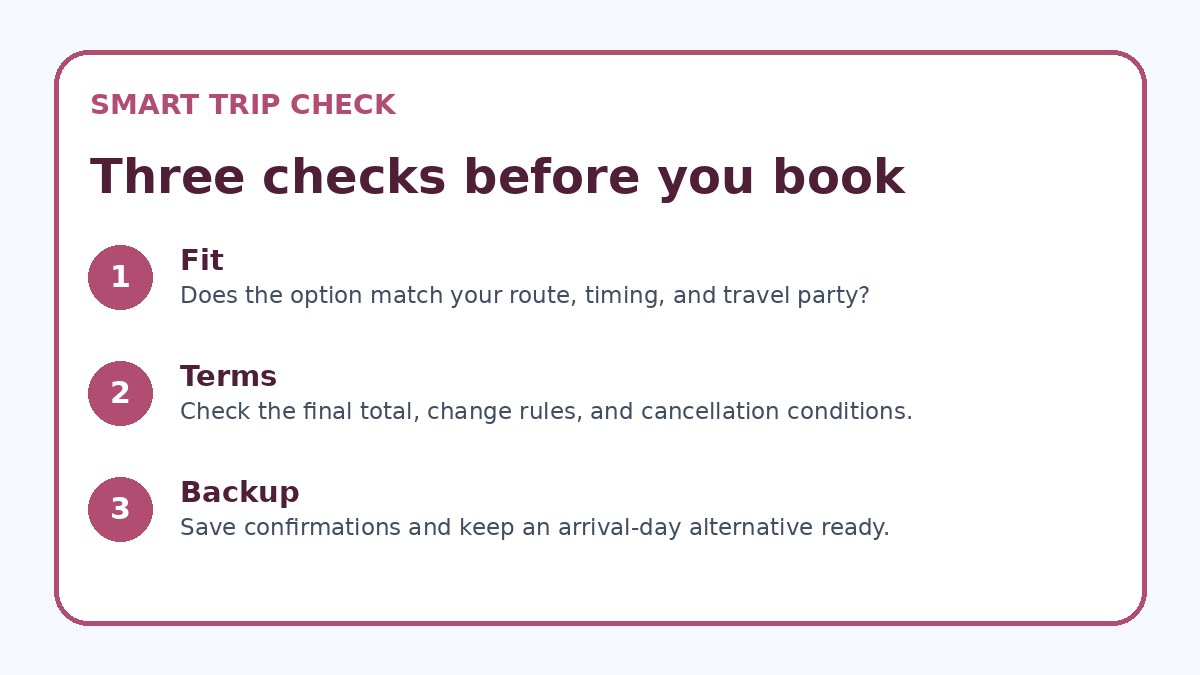
- List every expected fee (checked bags, overweight, seat selection, transfers, hotel taxes) and add them to the headline price.
- Confirm exact baggage rules on the provider’s final checkout page: pieces, per-piece weight, dimensions, and overweight fees.
- Compare the same travel dates, number of travelers, and baggage profile across package and separate booking quotes.
- Verify transfer pickup/drop location, luggage capacity, and whether oversized or extra suitcases need advance notice or incur fees.
- Read cancellation and change terms for both fare and ancillaries and save screenshots of the final contract language.
- If using a search site, cross-check the provider’s booking page for the definitive fees and confirm before completing payment.
How traveler-specific value shifts the right booking approach
Your luggage profile changes which elements are valuable. Travelers with a single heavy checked bag may benefit from an airfare that includes a generous piece allowance, or from low-cost carriers with reasonable overweight fees. Those carrying multiple pieces, bulky gear, or items requiring special handling often gain value from packages that include private transfers or larger-van options, avoiding last-minute taxi surcharges. Families traveling together should compare per-person baggage rules versus family-friendly package terms—sometimes paying a bit more for a package that bundles baggage simplifies logistics and reduces the chance of surcharges at the airport.
Conversely, minimalists with only carry-on bags may extract more value by booking flights and hotels separately to cherry-pick cheaper room-only rates or loyalty benefits. If your trip schedule is uncertain, prioritize flexible fare classes or refundable hotels; paying slightly more for amendable terms can save far more than the cost of rebooking or added baggage fees. The deciding factors should be your number of bags, gear type, travel companions, and how much time you want to spend managing bookings.
Final terms and the practical comparison exercise to avoid false savings
Do this practical exercise before booking: choose your travel dates and create two identical traveler profiles (same ages, number of travelers, and exact bags). Request quotes for (A) a bundled package, (B) flight-only plus hotel, (C) flight with hotel booked separately via another provider, and (D) booking everything separately and adding independent transfers. For each quote, record base prices, baggage allowances and extra fees, transfer costs, taxes, and cancellation/change rules. Only compare totals that include all these costs; a lower headline price can hide higher ancillary charges that leave you with a worse deal once you pack your suitcases.
When you’re ready to book, confirm the provider’s live charges on the checkout screen and review the contract language about refunds and changes. Save confirmation emails that display baggage entitlements and transfer arrangements. If any line is unclear, contact customer service and request written clarification before payment. These steps prevent surprises such as unexpected overweight charges at the airport, transfer capacity limits, or hotels imposing mandatory incidental deposits that weren’t visible in a package summary.
Travel Deals & Booking Strategy questions travelers ask
How do I compare baggage allowances across airlines and packages for a Sydney trip?
Start by defining your exact baggage needs: number of pieces, likely weight per piece, and any oversized items. For each airline or package, record the included allowance precisely—piece count, weight limit per piece, and carry-on rules—from the provider’s final booking page. Then note the per-kilogram or per-piece overweight and oversize charges. If a package includes transfer services, check whether those transfers accept large items without surcharge. Only after summing base price plus expected baggage charges should you compare options to determine which is actually least costly for your luggage plan.
Are transfers usually included in Sydney travel packages, and why does that matter for extra luggage?
Some packages include airport transfers and others do not; inclusion varies by supplier and promotion. Transfers matter because shuttle vans or shared rides may have luggage limits or charge per extra piece, while private car transfers usually handle bulky luggage more easily but cost more. When a package lists transfers as included, verify on the final booking page whether the service supports oversized suitcases, whether multiple pieces are allowed per traveler, and the exact pickup point. Confirming these details prevents surprises like needing a taxi at the airport or paying on-the-spot upgrade fees.
If a package looks cheaper but has stricter change policies, how should I weigh flexibility versus savings?
Weigh the probability and potential cost of needing changes against the upfront savings. If your plans are firm, a package with stricter terms can be acceptable; however, if there’s a reasonable chance you’ll change flights or dates, the cost of change fees plus losing prepaid baggage allowances can exceed any initial savings. Calculate a worst-case scenario: apply the package’s change and cancellation fees plus the cost of rebooking flights or paying new baggage charges. Compare that total to a more flexible option’s price to determine which offers better net value given your risk tolerance.
Final decision note
When you travel to Sydney with extra luggage, don’t let a low headline fare determine your choice. The practical step is to assemble a complete cost comparison that includes baggage fees, transfers, hotel compulsory charges, and the real terms for changes and refunds. Test package and separate booking scenarios using identical dates and traveler profiles, then verify exact baggage rules and transfer conditions on the provider’s final booking page before you pay. That disciplined approach exposes hidden costs and helps you select the option that balances price, convenience, and flexibility for your luggage needs. If you want a quick availability check, you can compare offers on a meta-search like Trip.com, but always confirm terms with the supplier.
Continue planning
Check current options and final conditions
Use the provider page to confirm live availability, the final total, cancellation terms, and every condition that matters to your trip.
This evergreen planning guide was created with AI-assisted drafting and a structured quality review. It does not display live prices, schedules, availability, visa guidance, or provider rankings. Verify current details before booking. Some links are affiliate links; we may earn a commission at no additional cost to you.