If you need to get from Sydney to Melbourne and want to visit places along the way, start by choosing the transport mode that matches your priorities: fastest surface travel, most scenic route, lowest driving hassle, or easiest luggage handling. Decide whether you want a single end-to-end booking or a chain of shorter segments so you can add stops in Wollongong, Canberra, or the coastal towns between. Consider departures, luggage limits, and where you’ll sleep between segments. Use public-transport hubs (major stations or interchanges) as anchor points for transfers and overnight stays, and compare tickets on provider websites and platforms like Trip.com to confirm current schedules and terms before you commit. Below is a practical framework to build a multi-city ground-transport plan suited to a first-time visitor.
See current options before you compare the details
Availability and final conditions change. Open Trip.com now or keep reading for the practical comparison.
Pick a transport mode that matches your priorities
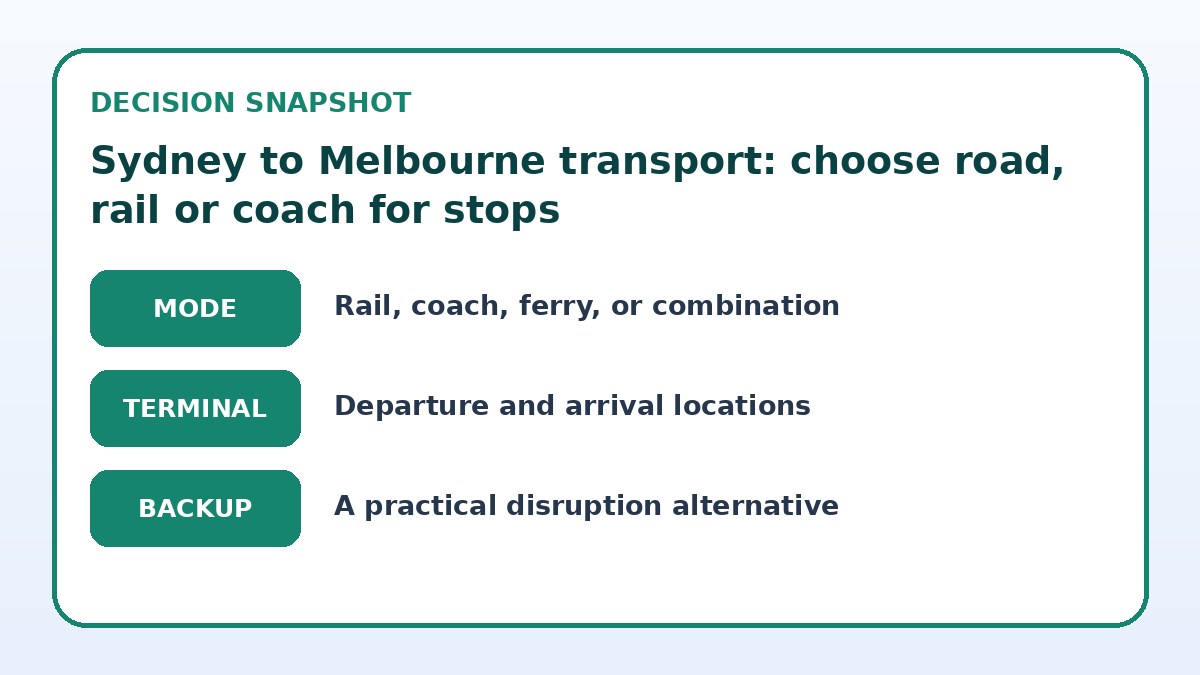
Start by naming what matters most: speed, scenery, cost control, or ease of logistics. Self-driving offers unmatched flexibility for roadside stops and rural detours but requires comfort with Australian road rules and arranging vehicle drop-off options. Trains and coaches hand off driving and navigation to the operator, freeing you to relax or sightsee from your seat; they also concentrate departures and arrivals at major terminals, which helps with transfers and luggage safety.
When comparing modes, think about how many city or regional stops you want. If you plan two or three overnight stops, driving or a mix of coach and local trains usually gives the best stop density. If you want fewer stops and fewer moving parts, an express coach or longer intercity train leg with a single overnight city may simplify logistics. Always check on the provider’s booking page for luggage allowances, transfer policies, and real-time cancellations or changes.
Design segment lengths and overnight hubs
For a first-timer, break the journey into segments that match typical daylight driving or travel windows — roughly 3–6 hours per day for comfortable sightseeing. Choose overnight hubs with easy station or terminal access so you can arrive, check into accommodation, and explore nearby attractions without long transfers. Smaller coastal or inland towns make attractive day stops, but confirm there’s a reliable service connecting them to the next hub before you lock in reservations.
Use hub cities to anchor transport bookings: book the longer intercity leg that aligns with major terminals first, then add shorter local legs or day trips. If your preferred provider lists changing trains or buses at intermediate hubs, compare total door-to-door times and the number of required transfers. Where provider details might change, verify transfer times and platform or terminal changes on the operator’s final booking page to avoid surprises.
| Approach | Best for | Tradeoff to check |
|---|---|---|
| Self-drive with planned stops | Travelers who want maximum control over where and when they stop | Requires navigation, parking, and potentially one-way drop-off logistics to verify |
| Intercity train with local day trips | Travelers preferring comfortable travel and easy station transfers | Limited flexibility for remote detours and depends on station-to-attraction connections |
| Express coach with segmented bookings | Budget-minded travelers who accept fixed routes and scheduled stops | Fewer seating comforts and longer on-the-road time compared with trains or driving |
| Hybrid: long rail/coach leg plus car hire for locals | Those who want a relaxed main transfer with short-area flexibility | Requires careful coordination of pick-up/drop-off times and separate bookings |
Ready to check the option that fits your plan?
Use your exact dates and traveler details so the provider page can show the current total and conditions.
Manage luggage, transfers, and intermodal connections
Luggage is often the overlooked constraint when chaining multiple ground segments. Trains and coaches may have generous or restrictive rules depending on service class and vehicle type; self-drive lets you carry what fits in the car but requires secure overnight parking. Plan to pack for easy movement between stations and hotels — a single checked bag per person plus a daypack reduces transfer stress and keeps short hop segments manageable.
When mixing modes, allow buffer time between scheduled arrivals and departures to accommodate delays and station transfers. Use major transit hubs for interchanges whenever possible, since they usually have better signage, luggage facilities, and taxi or rideshare access. Before final booking, check the provider pages for specific baggage limits, whether you must reserve a transfer or seat in advance, and whether platforms or terminal names differ between schedules and booking confirmations.
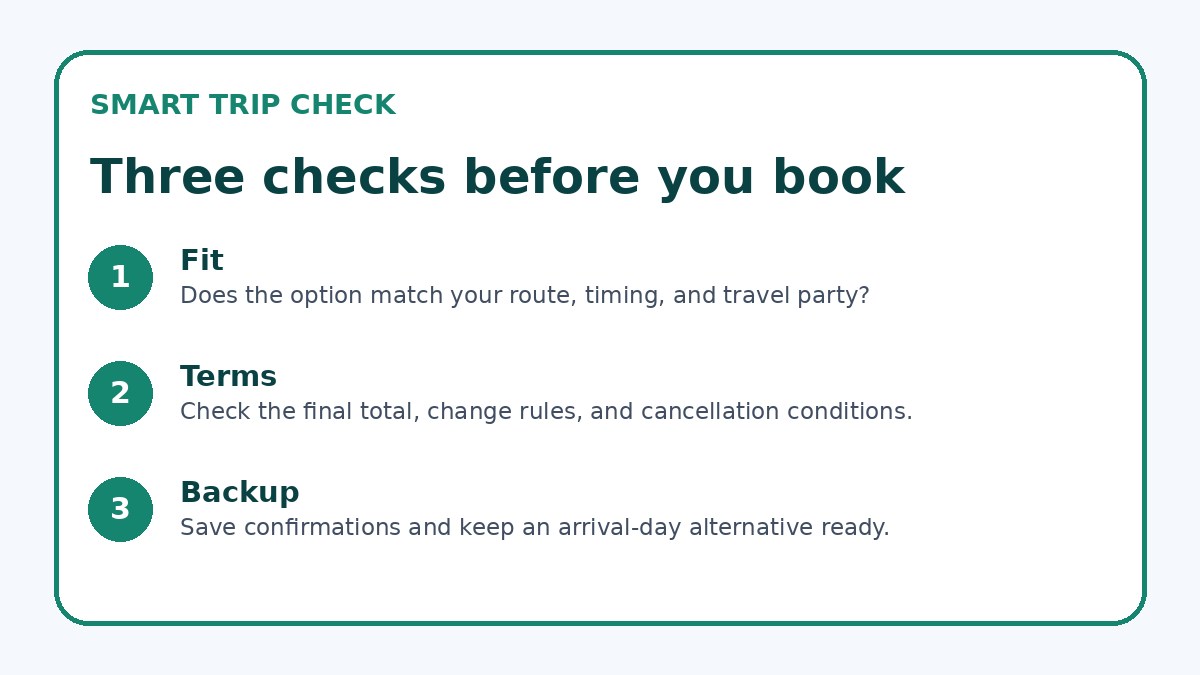
Before you book
- Map your intended stops and identify the nearest major stations or coach terminals for each overnight hub.
- Decide whether to book the whole route as one ticket or multiple segments, then compare change and cancellation policies on provider pages.
- Confirm baggage allowances and whether reservation systems require seat assignments or separate transfer bookings for each leg.
- Allow at least 60–120 minutes buffer between scheduled connections at major hubs to handle delays and transfers comfortably.
- Reserve accommodation within a short taxi or transit ride of your arrival terminal to reduce luggage transfers after arrival.
- Save screenshots or PDFs of tickets, proof of reservation, and the provider’s contact details in case you need to show or reschedule on the road.
Book smart: compare, confirm, and build contingency
Run parallel searches for the whole chain and for shorter legs. Sometimes booking two separate tickets—say, Sydney to an overnight hub and then that hub to Melbourne—gives more flexibility when you want to linger. Other times a single through-ticket simplifies baggage handling and protection during disruptions. Compare cancellation, change, and refund rules on booking pages, and prioritize options that allow free changes if your plans are likely to shift.
Build simple contingencies: identify the next available daily service, note local taxi or rideshare options at each hub, and choose accommodation with flexible check-in when possible. Keep digital copies of each booking and the provider’s contact info. If using platforms like Trip.com to compare options, double-check the provider’s site or booking confirmation to confirm final terms, luggage allowances, and exact departure/arrival points before you travel.
Frequently asked questions
Is taking the train between Sydney and Melbourne the easiest way to include multiple stops?
Trains can be easy for multi-stop travel if the intermediate towns you want to visit are well served by rail. They reduce driving stress and usually have straightforward station pick-ups and drop-offs. However, many small coastal or rural destinations are not on major rail lines, so you may need to add local buses or car hires for those segments. Before booking, check the exact stations, local connections, and whether reservations are required for the specific train services you plan to use.
Can I rent a car in Sydney and drop it off in Melbourne to save time?
One-way car hires are commonly offered but come with logistical considerations: availability of drop-off locations, potential one-way fees, and differing vehicle return rules. If you plan to drive, verify the hire company’s policy on interstate returns and the pickup/drop-off addresses, and confirm whether your chosen rate includes unlimited kilometres or has usage limits. Also plan for secure overnight parking and understand local driving rules; check the hire company’s final booking page for exact terms before committing.
How do I decide between daytime stops and overnight stops on this route?
Daytime stops let you see scenery en route but can make for long travel days, especially if you want to walk local trails or visit museums. Overnight stops turn travel into a multi-day itinerary and let you explore without pressure, but they require booking accommodations and potentially moving luggage twice. Consider how much energy you have for consecutive travel days: if you prefer relaxed sightseeing, choose shorter daytime segments with at least one overnight in a hub that offers direct onward connections.
Final planning note
Planning multi-city Sydney to Melbourne transport is about making clear choices early: pick the transport mode that suits your sightseeing and comfort priorities, split the route into manageable segments, and verify the operational details on provider booking pages. Use hubs near major stations to minimize transfer friction and keep luggage light to ease multiple movements. Compare single through-tickets against separate segment bookings based on flexibility and baggage handling, and always build small buffers into connections. With those decisions in hand and contingency options listed, you’ll have a sensible, first-time–friendly ground-transport plan that balances exploration with reliable travel logistics.
Continue planning
Check current options and final conditions
Use the provider page to confirm live availability, the final total, cancellation terms, and every condition that matters to your trip.
This evergreen planning guide was created with AI-assisted drafting and a structured quality review. It does not display live prices, schedules, availability, visa guidance, or provider rankings. Verify current details before booking. Some links are affiliate links; we may earn a commission at no additional cost to you.