The practical answer: pick the travel mode that minimizes hand-carrying and transfer steps, schedule extra time for check-in and transfers, pack so bulky items can be moved easily, and have a disruption fallback ready. For most travellers with extra luggage between Sydney and Canberra, the priority should be end-to-end convenience: how many times you must lift, check, or move bags, and whether your chosen operators and stations provide straightforward drop-off and pickup. Start by comparing rail, coach and private-car/transfer options by terminal fit — how close the pickup/drop-off points are to your home or accommodation — and the amount of luggage friction at each step. This article walks you through choosing the best approach, managing the travel day, handling transfers and timing flexibility, and setting up a backup plan if something changes.
How to choose between rail, coach, and private transfer
Start by mapping door-to-door practicality. Rail often runs between central stations and can be convenient if both station entry and exit points are close to your pick-up and drop-off locations, and if stations have accessible luggage routes (ramps, lifts, short walking distances). Coaches may have more flexible pickup points and sometimes simpler luggage handling through baggage bays, but they can involve transfers or longer walking distances at terminals. A private transfer or rideshare offers the fewest handoffs: one vehicle from your lodging to your destination, which is often the least strenuous option when you have oversized or multiple bags.
Compare the total number of times you will need to lift or move your bags rather than focusing only on in‑vehicle comfort. If a rail journey requires a taxi to reach a suburban station, that taxi leg and platform stairs add friction. If a coach drops you five minutes’ walk from your final spot, consider whether you can manage the walk or if arranging a short taxi would still be quicker. If door-to-door time matters most, a private transfer may cost more but saves effort; if you prioritize a mid-range balance between cost and convenience, a coach with simple baggage loading could be the right compromise.
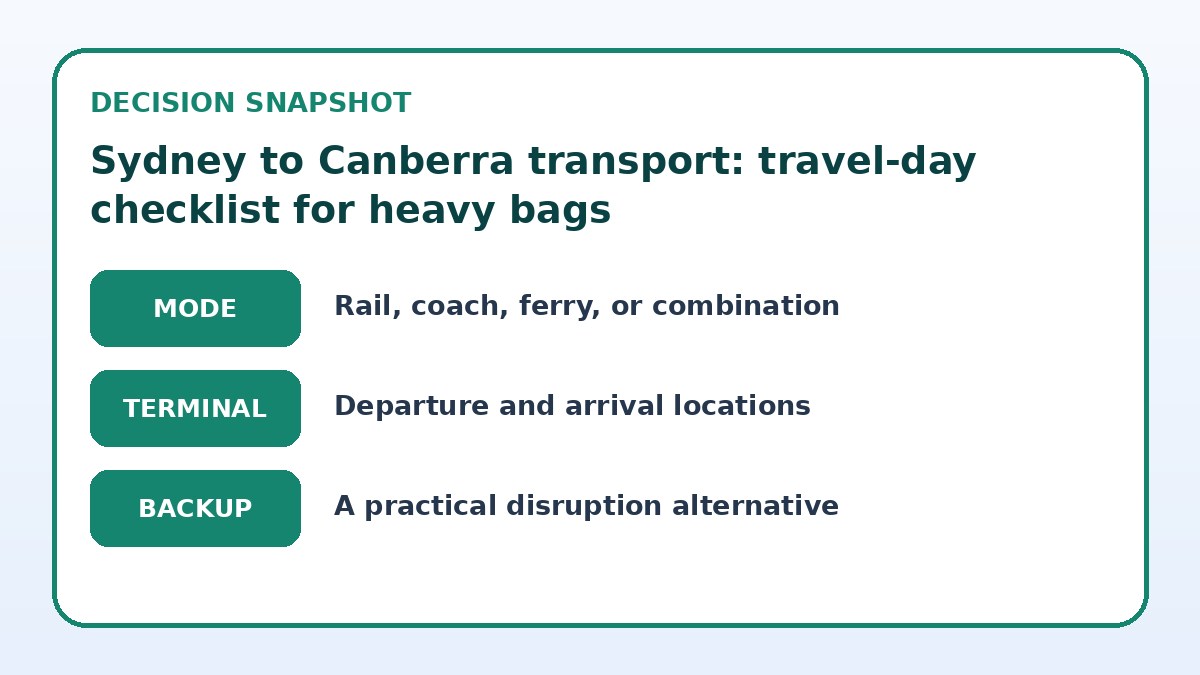
Choose the end-to-end journey plan
| Journey approach | Best for | Friction to check |
|---|---|---|
| Single private transfer (door-to-door) | Travelers prioritizing minimal lifts and direct pickup from accommodation | Higher cost but lowest transfer friction and simplest end-to-end logistics |
| Direct intercity coach with luggage bay | Those wanting fewer handoffs and simple loading/unloading at terminals | May require short walks at terminals; less flexible pickup locations than private transfer |
| Intercity rail with short taxi legs | Travelers balancing comfort and cost who can manage platform transfers | Adds transfer steps and possible stairs or lifts; check station accessibility details |
| Hybrid: coach or train plus local taxi at each end | People seeking cost savings while limiting walking distance with luggage | More moving parts to coordinate; timing buffers and taxi availability matter |
Check live intercity options
Look beyond the ride itself and compare terminals, transfers, luggage, and arrival fit.
Terminal fit and luggage/transfer friction
Assess practical terminal details before booking. Look up arrival and departure locations and confirm where luggage is loaded and unloaded — some intercity coaches use on-site baggage bays, while trains often require carrying bags up stairs or between platforms. Check for ramps, lifts, ticket barriers that could slow you down, and whether staff assist with heavy items. Also confirm how close curbside pickup is to station exits; a short, level walk is significantly easier than multiple flights of stairs or a long, paved ramp.
Think about packing to reduce friction during transfers: use wheeled bags you can manage solo, consolidate small items into a single larger case if feasible, and have a small backpack for essentials so you can keep hands free for lifting. If you expect airport-like baggage handling needs, pre-measure your bags and ensure they meet any size or weight guidance shown by carriers. For oversized items that won’t fit standard storage, plan a private transfer or courier service to avoid repeated lifts and potential refusal at loading bays.
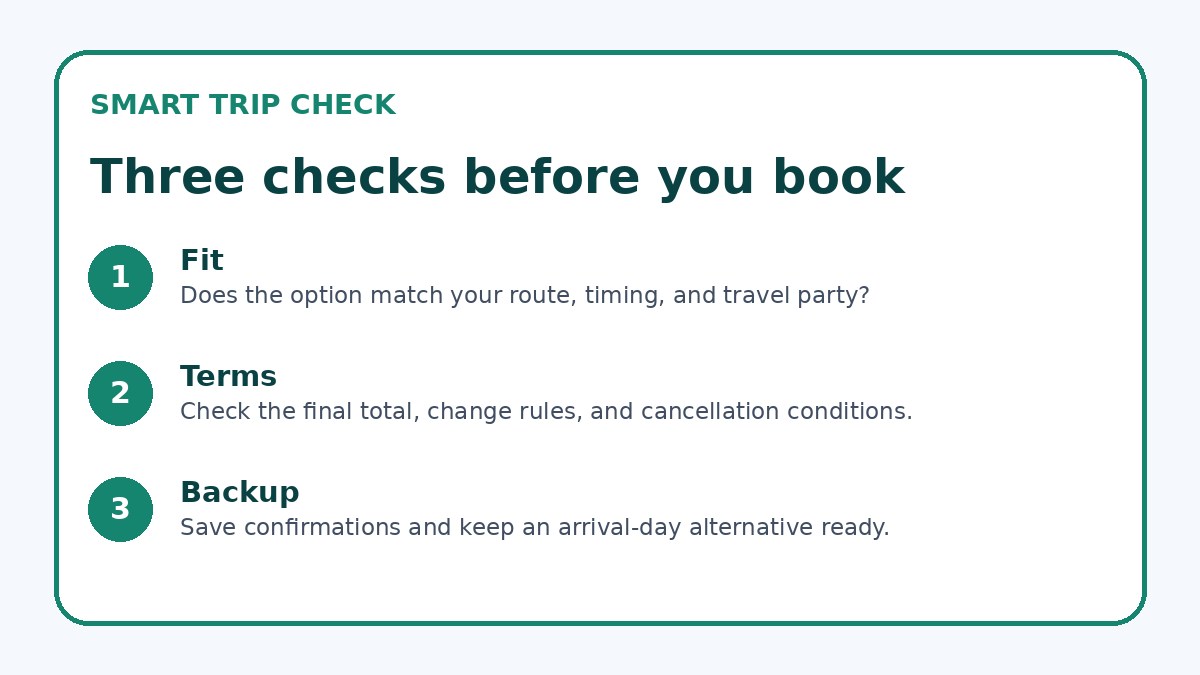
Timing flexibility and travel-day flow
Build generous time buffers into the travel day when you have extra luggage. Allow extra minutes for check-in or loading, longer waits at terminals, and slower boarding. If you have narrow windows — for example, a fixed check-in time at a hotel on arrival — choose a departure that leaves more slack rather than the tightest possible connection. When comparing options, prefer slightly earlier services with known reliability over last-minute departures that could become stressful with heavy bags.
Consider how missed connections would affect your luggage. If a missed train would strand you at a large station with luggage in tow, a coach or a private transfer that can be rescheduled quickly may be preferable. If you must travel at peak times, book services that offer flexible change policies or choose options with frequent departures so you can recover from small delays without hauling bags for hours between terminals. Finally, coordinate arrival timing with local pickup arrangements, so someone meeting you doesn’t wait in an inconvenient place while you wrestle with suitcases.
Compare the practical alternatives
Use the final page to confirm what is actually offered on your dates and save a workable fallback.
Intercity travel checklist
- Measure and weigh your luggage; confirm dimensions and weight against the chosen carrier’s baggage guidance on their booking page.
- Photograph and label every bag; keep a small bag with essentials and documents that stays with you at all times.
- Reserve a door-to-door or curbside pickup if possible, and confirm pickup/drop-off points and driver contact details the day before travel.
- Map transfer routes at both ends, noting stairs, lifts, distance to curbside, and any timed barriers or gates you may encounter.
- Book flexible tickets or select services with easy change policies, and note alternate departure options in case of delays.
- Identify a local luggage storage or courier service near your arrival point and save their contact and opening hours to your phone.
Disruption backup: practical alternatives and verification steps
Have at least two realistic backups before you leave the house. One should be an alternative mode (for example, switching from rail to coach or arranging a private transfer) and the other a contingency at your destination (a short-term luggage storage or a local courier). If you rely on public transport as primary, identify the nearest coach or rideshare pickup points and note how to reach them with luggage. If your primary plan is a private transfer, save contact details and keep a backup taxi app installed and funded.
Exactly verify any provider-specific details on the final booking page before you commit. Confirm baggage allowances, pickup/drop-off points, assistance availability, and any extra fees for oversized items. Check whether a chosen operator permits advance notifications of oversized luggage and whether they provide loading help. Trip.com can be a place to compare current availability and conditions, but always confirm baggage policies and terminal instructions on the operator’s official booking page to avoid surprises on the travel day.
Rail & Intercity Transport questions travelers ask
Can I bring oversized or multiple suitcases on intercity coaches and trains between Sydney and Canberra?
Policies vary by operator. Before booking, check the carrier’s official baggage rules on their final booking page: confirm maximum dimensions, weight limits, and whether oversized items require advance notice or incur extra charges. If the operator provides a baggage bay or checked luggage service, verify where and when you drop bags and whether staff assist with loading. For bulky items not suitable for normal storage, arrange a private transfer or courier to avoid refusals or repeated heavy lifting at terminals.
How early should I arrive at the station or coach terminal when traveling with extra luggage?
Give yourself significantly more time than a typical traveler: arrive early enough to check or load luggage without rushing, factor in lines and possible lifts or escalators, and allow time to move between platform and curbside. Exact recommended arrival windows depend on the operator and terminal layout, so check the provider’s guidance on their booking page for suggested arrival times. If you need assistance loading heavy bags, contact the operator in advance to confirm staff help is available or to arrange a private transfer instead.
What’s the simplest way to handle last-mile delivery if my accommodation is hard to access with heavy bags?
If your accommodation is on a narrow street, up stairs, or a long walk from the drop-off point, consider a short local taxi or courier for the last leg. Another option is to arrange short-term luggage storage near the arrival station and make a lighter trip to the property to check in, then retrieve bags when convenient. Verify drop-off and storage locations in advance, confirm opening hours, and check any size restrictions on storage services. For guaranteed door delivery, a private transfer remains the least physically demanding option.
Final decision note
When travelling from Sydney to Canberra with extra luggage, the right choice balances how many times you will lift and move bags with practical timing and terminal access. Prioritise options that reduce handoffs: a private transfer or direct coach typically lowers transfer friction, while trains can work well if both stations are accessible and close to your start and end points. Always verify baggage rules, pickup points, and assistance options on the operator’s booking page before you commit. Finally, build time buffers, pack to reduce transfer strain, and prepare a clear disruption backup so your travel day stays under control even if plans change.
Continue planning
Check current options and final conditions
Use the provider page to confirm live availability, the final total, cancellation terms, and every condition that matters to your trip.
This evergreen planning guide was created with AI-assisted drafting and a structured quality review. It does not display live prices, schedules, availability, visa guidance, or provider rankings. Verify current details before booking. Some links are affiliate links; we may earn a commission at no additional cost to you.