
If you need to travel from Sydney to Canberra for work, the right preparation turns transit time into productive, low-stress hours. Start by choosing whether you need door-to-door speed, flexible ticketing, or a quiet workspace en route — then plan the travel day around that priority. This article gives the quick decision you need up front, followed by the tradeoffs that help you compare train, coach, rental car or air options, plus a practical checklist for the night before and the morning of departure. Business travelers often juggle meetings, presentations and tight arrival windows; focus your planning on punctuality, power and backup plans so a delay or schedule change doesn’t derail the day.

See current options before you compare the details
Availability and final conditions change. Open Trip.com now or keep reading for the practical comparison.
Choose the right transport for your priorities
For the travel day, pick the mode that matches your primary business priority: reliability, onboard workspace, or door-to-door flexibility. Trains and coaches can offer uninterrupted work time without the hassle of security lines, while cars give you schedule control and direct access to meeting venues. Air travel shortens trip distance but introduces check-in and security steps that require extra time. Consider how much of the journey you need to spend actively working versus resting, and select the option that aligns with that need.
When comparing options on your booking page, check the provider’s stated punctuality policies, luggage allowances and any onboard amenities relevant to business use—power outlets, Wi-Fi, and mobile coverage. Don’t assume direct services: read the itinerary for transfers or stops and assess the risk of each connection. If your meeting time is fixed and non-negotiable, favour options with the simplest, fewest transfer points and verify the provider’s cancellation or change rules so you can adapt if your meeting schedule shifts.
Plan the travel day schedule and buffer times
Create a timeline that begins at your home or office, not at the station or terminal. Work backwards from the time you need to be in Canberra, allowing time for local transfer, unloading, and a short buffer for settling before the meeting. For the day-of, schedule a personal check-in window in your phone calendar to confirm pickup, boarding or the rental car handover. If you rely on a driver or rideshare at either end, block extra time for traffic and local delays that typical journey calculators may not show.
Build redundancy into arrival plans: identify an alternate meeting room, a coworking space near your destination, or a nearby café with reliable Wi-Fi in case you arrive early or late. Communicate your arrival range to meeting hosts so they can plan. Also, avoid back-to-back commitments around travel—leave at least one relaxed slot after arrival for tech setup, a short brief with a colleague, or to rehearse a presentation if needed.
| Approach | Best for | Tradeoff to check |
|---|---|---|
| Train or coach | Uninterrupted onboard work and simpler boarding | May have longer journey time and dependence on fixed schedules |
| Car (rental or driver) | Flexible departure times and direct door-to-door access | You must manage driving time or arrange a reliable driver; traffic is variable |
| Air travel | Shortest distance in the air and quickest point-to-point travel if timings align | Add time for check-in and security; connections increase risk of disruption |
| Hybrid (drive + train/air) | Combines flexibility with faster long-distance segments | Requires coordination across providers and buffer time for transfers |
Ready to check the option that fits your plan?
Use your exact dates and traveler details so the provider page can show the current total and conditions.
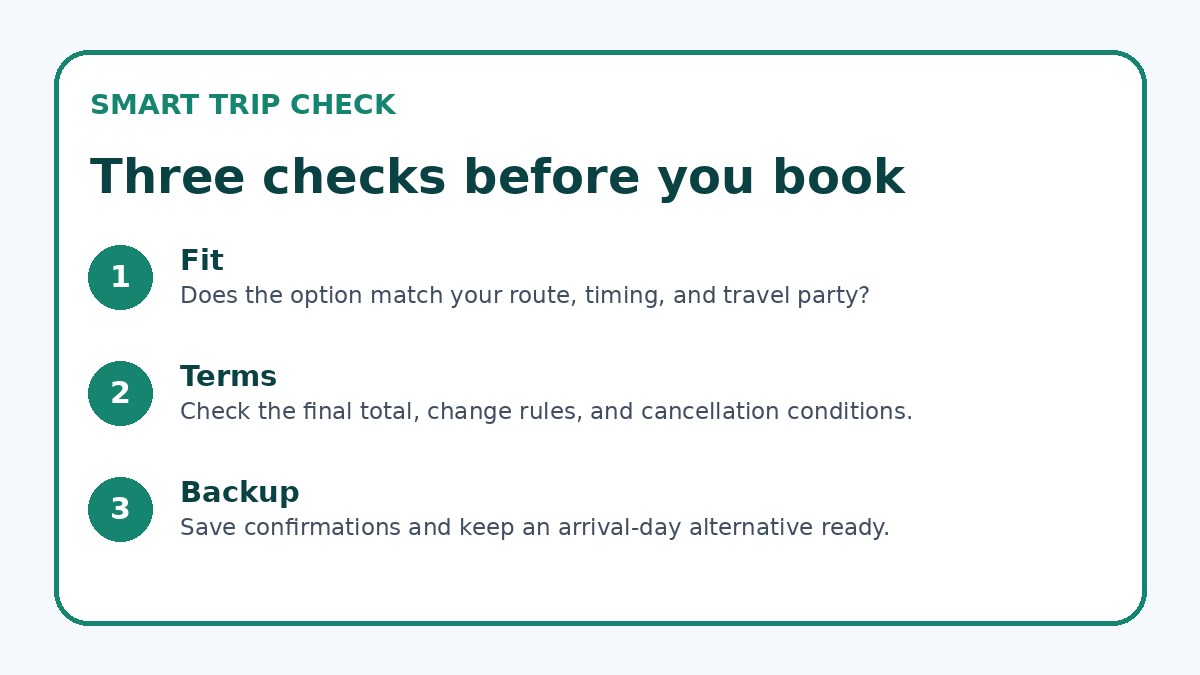
Prepare gear, documents and on-board productivity
Pack a compact, work-focused carry-on that keeps essentials accessible: laptop with charger, portable battery pack, wired headphones, a printed copy of any critical documents, and a small toiletry kit for a quick freshen-up. Use a slim travel folder for hard copies and a single password manager or a downloaded offline copy of any sensitive files you may need. If confidentiality is essential, bring a privacy screen for your laptop and work in locations with minimal background noise to avoid exposing information.
Download offline versions of presentation slips, boarding passes and itineraries, and store key contact phone numbers in your phone as backups. If you expect to work en route, test your apps and PDFs before departure to ensure compatibility without a strong internet connection. Consider a modest ‘presentation kit’—laser pointer, HDMI adapter and a compact adaptors pack—if you’ll be presenting at a venue that may not have compatible gear.
Before you book
- Confirm exact departure location and any transfer points on the provider’s final booking page.
- Pack a work-focused carry-on with chargers, power bank, privacy screen, and printed critical documents.
- Block buffer time in your calendar for check-in, local transfer, and a short setup before the meeting.
- Arrange or book last-mile transport at the Canberra end and save contact details for the driver or office.
- Download offline copies of presentations, boarding passes and contact numbers in case of poor connectivity.
- Share an arrival time range with meeting hosts and set a clear plan for notifying them of delays.
Verify bookings, last-mile logistics and contingency plans
Before you leave, confirm the final details on the provider’s booking page: departure location, any transfer points, luggage rules, permitted arrival windows, and the provider’s change or cancellation policy. Schedules and conditions can change; checking the operator’s page or customer service number ensures you won’t be surprised by a revised departure point or a required arrival earlier than you expected. Trip.com can be used once to compare current availability and conditions but always cross‑check with the operator’s official page for the booking terms.
Arrange last-mile transport in advance if punctual arrival matters: book a driver, confirm a pickup at arrival, or reserve a local rental in time for your meeting. Identify one or two alternate ways to reach your final venue and leave clear contact instructions for colleagues. Finally, set a communication plan — who you will notify in the event of a delay — and include expected arrival windows on calendar invites so everyone affected can adjust smoothly.
Frequently asked questions
How early should I leave Sydney to ensure punctual arrival in Canberra for a morning meeting?
Plan your departure so you arrive at least 45–90 minutes before the meeting to allow for transfer from the station or airport, a quick setup, and any last-minute prep. The exact lead time depends on whether you’ll need to clear security (for flights), collect luggage, or transfer by car. Build an extra buffer if your meeting location is unfamiliar or the final-mile transport could be affected by traffic. Verify departure times, transfers and provider check-in recommendations on the operator’s booking page before finalising.
Can I reliably work during the journey between Sydney and Canberra?
Yes, but reliability depends on the mode and the specific service. Trains and some coaches typically provide a quieter, seated environment suitable for laptop work, while cars allow calls but can’t support detailed laptop work if you’re driving. Air travel can be productive but includes airport processes that fragment your time. Always carry offline copies of files, a charged battery pack, and noise-isolating headphones. Check the provider’s listed onboard amenities—Wi-Fi, power outlets—on the booking page and plan for limited connectivity as a precaution.
What should I verify on a booking page before I finalize travel?
Look for departure and arrival locations, transfer or connection details, luggage allowances, ticket change and cancellation rules, and any stated punctuality or boarding requirements. Confirm whether the service is direct or requires stops; connections add risk and need extra buffer time. If you rely on onboard amenities like Wi-Fi or power, verify they are listed rather than assumed. Use Trip.com once to compare options if you like, but always confirm the definitive terms and any recent notices on the operator’s official booking page.
Final planning note
Preparing the travel day for a Sydney to Canberra business trip is mostly about matching your priorities—punctuality, productivity or flexibility—with the right transport choice and then eliminating avoidable friction. Make your decision early, verify booking details on the provider’s page, build sensible buffers into your schedule, and pack a compact, work-ready kit. Advance planning for last-mile logistics and a clear communication plan for delays keep the day professional and low-stress. With these steps you’ll reduce surprises and make transit a predictable part of your business day.
Continue planning
Check current options and final conditions
Use the provider page to confirm live availability, the final total, cancellation terms, and every condition that matters to your trip.
This evergreen planning guide was created with AI-assisted drafting and a structured quality review. It does not display live prices, schedules, availability, visa guidance, or provider rankings. Verify current details before booking. Some links are affiliate links; we may earn a commission at no additional cost to you.