
If you and your partner are deciding between direct and connecting Sydney to Auckland flights, start with the basics: direct flights save time and reduce stress, while connecting itineraries can offer lower fares, more schedule choices, or better frequent-flier connections. For most couples on short trips or with limited vacation days, a direct option—if available—keeps the itinerary simple and lets you maximize time in Auckland. But for couples prioritizing a cheaper ticket, a preferred alliance, or a stopover en route as part of the holiday, a one-stop option can make sense.
Decide by listing what matters most to both of you: total door-to-door time, layover risk tolerance, seat and cabin comfort, and the chance to turn travel into part of the trip itself. Below are clear tradeoffs and decision criteria, practical check steps for booking, and a checklist to use at the point of purchase so you can pick the option that fits your relationship priorities and trip goals.
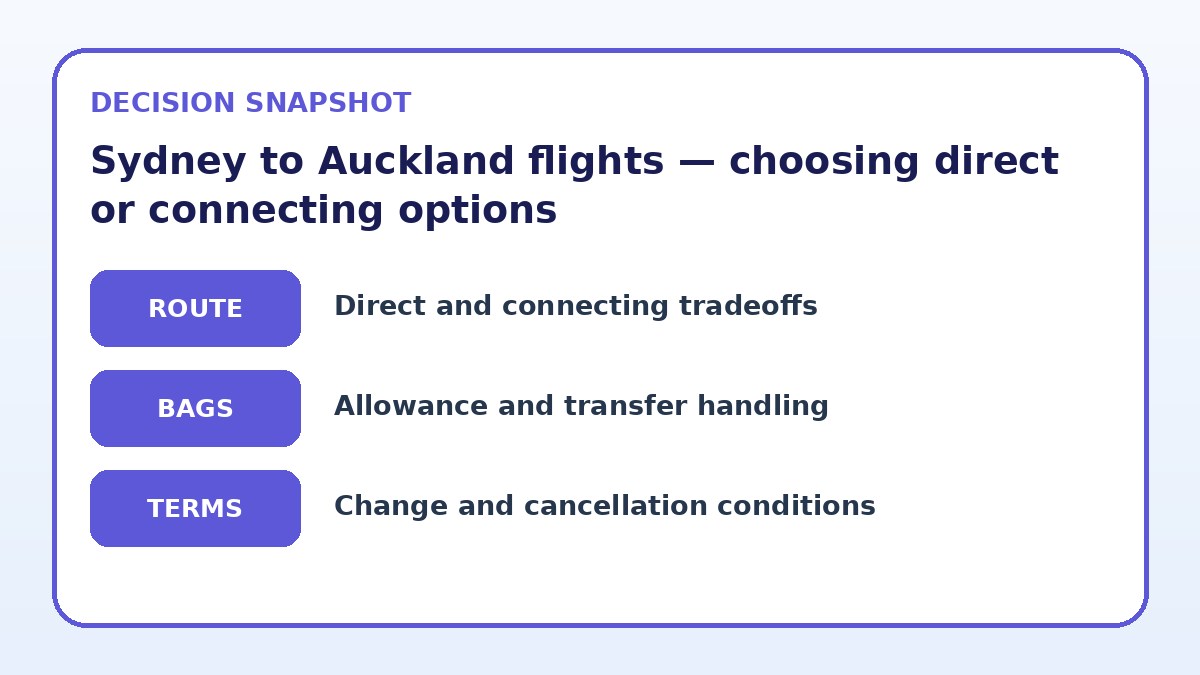
See current options before you compare the details
Availability and final conditions change. Open Trip.com now or keep reading for the practical comparison.
How to compare travel time and convenience
When you compare direct and connecting Sydney to Auckland flights, focus on door-to-door time rather than just airborne hours. That includes travel to the departure airport, recommended arrival time, potential transfer walking and security for connections, and travel from Auckland Airport to your accommodation. For couples wanting more time together on arrival—sightseeing, dining, or a scheduled check-in—subtract total travel overhead from your trip length to judge which option actually gives you more usable time in destination.
Consider how each partner handles travel stress and schedules. A direct flight reduces the number of stressful moments—takeoff, landing, security checks and the need to coordinate gates—whereas a connecting itinerary introduces more of those points. If one partner sleeps poorly on planes or you’re traveling for a special occasion, prioritize convenience. If you both value a lower fare or plan to redeem points, study the layover: a single, long but comfortable connection can feel like a brief stopover; several short hops increase fatigue and missed-connection risk.
Comfort, seating and cabin choices for couples
Cabin class, seat selection, and whether you can sit together often matter more to couples than a small difference in price. Direct flights commonly have a straightforward seating map and clearer upgrade availability—you can usually select adjacent seats or buy a premium option for the whole flight. If one partner wants to sleep and the other plans to work or watch a movie, compare seat pitch, recline, and whether a premium economy or business upgrade is available on the specific nonstop service.
For connecting flights, check whether both legs have the same cabin standards and whether seat assignments transfer across carriers. A cheaper connecting fare may place you on a short regional turboprop or a different onboard product on one leg, which can affect comfort and the ability to sit together. Verify seat maps during booking, and when mixing carriers in one ticket, confirm whether you can select seats for all segments at purchase or only closer to departure—this can determine whether you’ll be assigned separate seats.
| Approach | Best for | Tradeoff to check |
|---|---|---|
| Direct flights | Couples who want shorter door-to-door time and fewer stress points | Often less flexible on price or schedule choices; sometimes fewer departure time options |
| One-stop connections | Couples looking to save money or combine loyalty benefits across alliances | Introduces extra security and boarding events, increasing travel fatigue and disruption risk |
| Long layover stopovers | Couples who want to split the trip and add extra sightseeing en route | Adds travel days and possible overnight costs; requires more logistical planning |
| Multiple short hops | Couples prioritizing the lowest possible fare or specific routing needs | Highest risk of missed connections and fragmented onboard comfort between legs |
Ready to check the option that fits your plan?
Use your exact dates and traveler details so the provider page can show the current total and conditions.
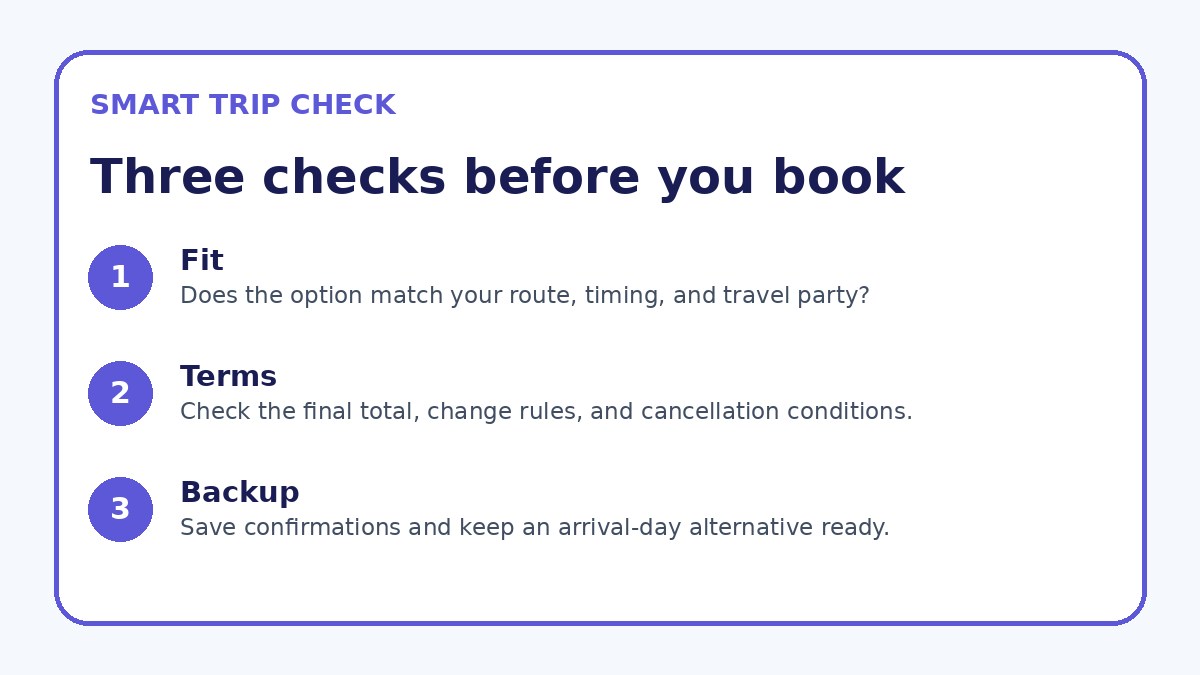
Cost tradeoffs and what to verify before booking
Price is often the deciding factor, but the cheapest ticket may hide costs that affect couples disproportionately. Add up baggage fees, seat selection charges, transfer transport between terminals, and the potential cost of an overnight stay during a tight connection. When comparing options, calculate the total cost for two passengers across the likely extras so you know the true price difference between a direct flight and a connecting itinerary.
On any fare you consider, verify four things on the final booking page before purchase: baggage allowance for each passenger and each leg; whether seats are reserved and what fee applies if not; the refund and change terms including partner carrier rules; and how connections are handled if one segment is delayed. If you see options on a travel site, cross-check the airline’s official booking page for precise bag rules and seat fees—airlines display the binding fare terms, and those can vary between codeshare partners and third-party tickets.
Before you book
- Confirm total door-to-door travel time for each itinerary, including recommended airport arrival and transit between terminals.
- Check baggage allowances and fees for every segment and for each passenger before comparing ticket prices.
- Verify seat availability and ability to reserve seats together for both legs if booking a connecting journey.
- Ensure your ticket is issued on a single itinerary number if you want protected connections under the carrier’s responsibility.
- Compare change and cancellation rules on the airline’s final booking page, not just the aggregator summary.
- Decide on an acceptable minimum connection time and avoid itineraries with tight or unspecified layover buffers.
Risk management and planning for couples
Connecting itineraries bring more disruption risk: a delayed inbound could trigger a missed connection and a long rebooking process. Couples should consider tolerance for that uncertainty. If you’re on a honeymoon, milestone trip, or have a fixed event on arrival, prioritize direct options or choose connections with long minimum connection times and reliable airlines. If you both travel frequently and have flexibility, a connecting flight with a well-timed layover can be an acceptable tradeoff for savings or better loyalty benefits.
Also plan contingencies together: decide in advance how you’ll handle a missed connection so you’re not arguing under stress. Check whether your itinerary is on one ticket (which typically offers re-protection by the airline) or two separate tickets (which can leave you responsible if a delay causes a missed flight). Consider travel insurance for missed connections or trip interruption, and know how to contact customer service for both carriers if you’re on a codeshare or mixed-carrier routing.
Frequently asked questions
Are direct Sydney to Auckland flights always the faster choice for couples?
Direct flights are usually the fastest in airborne time and reduce the number of security and boarding cycles, which often makes them the quicker door-to-door choice. However, actual travel time depends on schedules and airport transfer times at both ends. A poorly timed direct that departs at an awkward hour or requires long transfers to reach central Auckland could feel less convenient than a well-timed connecting itinerary. Always check departure and arrival times, total travel door-to-door, and transport options to and from both airports before deciding.
If one of us has travel anxiety, which option should we pick?
For travel anxiety or motion sensitivity, a direct flight usually reduces stress because it eliminates the uncertainty of a connection, gate changes, and rushing between terminals. Choose a carrier and cabin that let you select comfortable seats together and consider an earlier boarding or priority boarding add-on to settle in. If avoiding long flights is preferred, you might opt for a single comfortable connection with a generous layover time rather than multiple short hops—discuss tolerance for in-air time versus airport time with your partner.
How do we handle luggage and possible recheck on connecting itineraries?
Whether luggage is checked through to Auckland depends on the ticketing arrangement and carriers involved. On a single-ticket journey with interline agreements, airlines usually transfer baggage for you, but if you book separate tickets, you may need to collect and recheck bags during the layover. Before booking, confirm the baggage transfer policy on the final airline booking pages and factor in time for recheck if required. If you need peace of mind, choose itineraries issued on one ticket or allow extra layover time to manage baggage steps.
Final planning note
Choosing between direct and connecting Sydney to Auckland flights as a couple comes down to a few clear tradeoffs: time versus flexibility, convenience versus potential savings, and the level of travel stress you’re willing to accept. Start by agreeing on priorities—maximizing time in Auckland, minimizing disruption, or saving money—and then use the checklist above to compare real itineraries side by side. Before you hit purchase, verify baggage rules, seat assignments, and change conditions on the carrier’s booking page, and consider whether a single-ticket itinerary or added protections make sense for your relationship’s travel style. With those checks finished, you’ll have the practical, couple-focused answer that fits your trip.
Continue planning
Check current options and final conditions
Use the provider page to confirm live availability, the final total, cancellation terms, and every condition that matters to your trip.
This evergreen planning guide was created with AI-assisted drafting and a structured quality review. It does not display live prices, schedules, availability, visa guidance, or provider rankings. Verify current details before booking. Some links are affiliate links; we may earn a commission at no additional cost to you.