If you’re visiting Sydney for the first time with children, the practical choice is to pick a hotel close to public transport, an easy attraction like the harbour or botanical gardens, and with family rooms or interconnecting options. Prioritise a short walk to a ferry wharf, light-rail stop, or major train station so daily sightseeing doesn’t become a logistics headache. Balance quieter residential streets for sleep against staying near Harbour attractions if you want to minimise transfers. Check if the property offers family conveniences—kitchenette, laundry, cot availability, and flexible check-in—and verify those details on the hotel’s booking page before you finalise. Below you’ll find how to evaluate locations, room types, transport links and facilities with clear tradeoffs to help you make a confident booking decision.
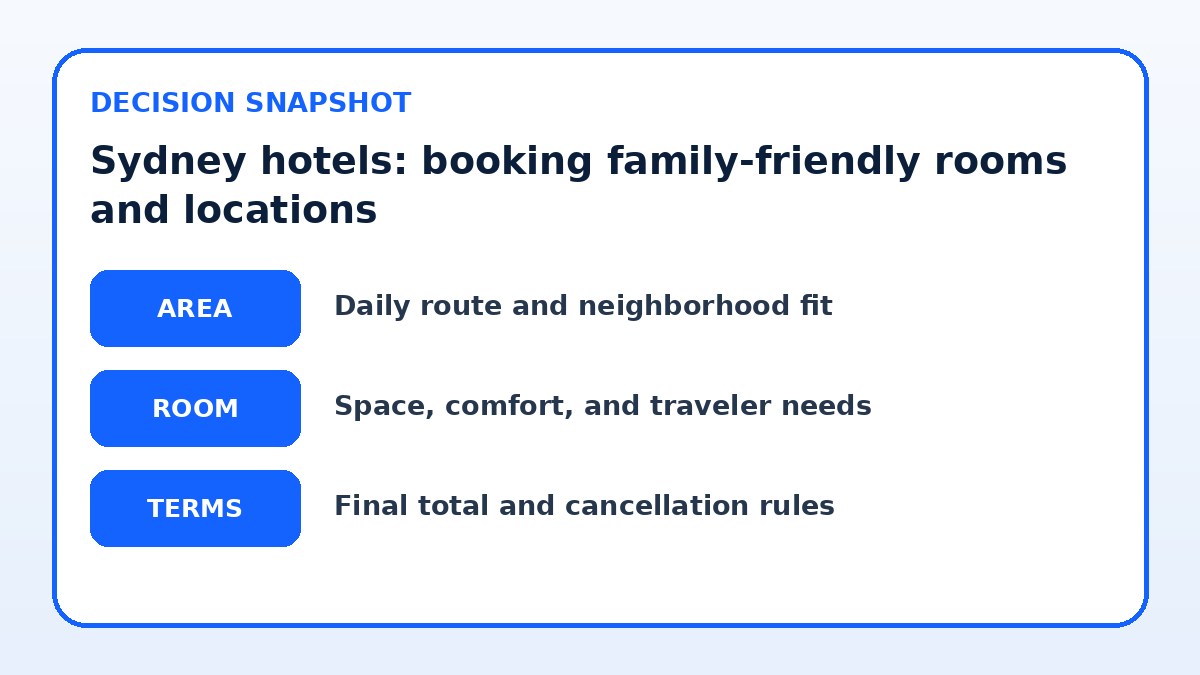
See current options before you compare the details
Availability and final conditions change. Open Trip.com now or keep reading for the practical comparison.
Which neighbourhood suits a family first-timer?
Deciding where to base your family will shape every day of your trip. Circular Quay and The Rocks put you steps from the Opera House, ferries and harbour walks—great when you want iconic sights without long transfers. Darling Harbour concentrates child-friendly attractions like an aquarium and playgrounds within easy walking distance, which works well for short days and young kids who tire quickly. For quieter evenings and a more residential feel, consider suburbs just across the harbour or near the Botanic Gardens where evening noise is reduced and parks are plentiful for free play.
Think about evening routines and meal times: staying in busier tourist hubs means more dining options but also more crowds; suburban family hotels often give you roomier suites and calmer nights. Also factor transport needs: Central or Town Hall connect you to trains and long-distance routes if you plan outside-day trips, while ferry-access hotels reduce transfer time to waterfront attractions. Map out where you expect to spend the most daytime hours and pick the hotel neighbourhood that shortens walks and keeps naps and bedtimes predictable.
Room types and facilities to prioritise
Room configuration affects comfort and convenience more than star ratings. For families, look for interconnecting rooms or suites with separate living areas so parents can keep flexible schedules while children sleep. Kitchenettes or small kitchens remove pressure around meal times—breakfast cereal, simple dinners and reheating leftovers are straightforward when you have basic appliances. Also confirm bed layouts: a queen plus sofa bed differs from two double beds when it comes to sleep space and privacy.
Beyond beds, focus on practical facilities: in-room laundry or an on-site laundromat saves you packing space and stress, while complimentary or low-cost breakfasts reduce morning juggling. Ask whether the hotel supplies cots, blackout curtains, bottle warmers or high chairs; if the hotel doesn’t list these features clearly, verify the availability and any extra charges on the property’s booking page before you complete your reservation. Elevator access, stroller-friendly corridors and safe outdoor spaces or playgrounds are helpful extras to check.
| Approach | Best for | Tradeoff to check |
|---|---|---|
| Stay central near Circular Quay or Darling Harbour | First-time visitors prioritising iconic sights and short daily transfers | Smaller rooms, more noise and higher nightly rates compared with suburbs |
| Choose a suburban family suite or apartment | Families needing more space, kitchen facilities and quieter evenings | Longer commutes to major attractions and potentially more transport costs |
| Book an interconnecting room or suite | Families requiring privacy, separate sleep spaces and flexible schedules | Fewer rooms available and often higher per-night rates than standard doubles |
| Select a budget hotel with basic family amenities | Price-conscious families who plan to spend most time sightseeing | Limited on-site facilities; may need to rely on laundries and outside dining |
Ready to check the option that fits your plan?
Use your exact dates and traveler details so the provider page can show the current total and conditions.

Transport and daily logistics with kids
Sydney’s transport mix—ferries, trains, light rail and buses—works well for families when you match hotel location to your planned highlights. If ferry rides and harbour views are priorities, stay near Circular Quay or Barangaroo to cut walk times and create easy return journeys to a midday nap. If you plan multiple inner-city museum visits or day trips to Bondi, a base near Town Hall or Central gives faster access to trains and buses. Always visualise a typical day with a stroller and toddler: factor in elevator locations, platform gaps and transfer distances between services.
When comparing options, check proximity in minutes rather than kilometres and account for walking with children and luggage. Confirm whether the hotel offers airport shuttles, easy taxi access or safe spots for ride-share pick-ups. If you will rely on public transport, download timetables ahead and compare how many transfers each itinerary requires—fewer transfers and shorter walking segments usually make sightseeing days smoother for small kids.
Before you book
- Map the attractions you want to visit and choose the hotel neighbourhood that minimises daily walking and transfers.
- Confirm the exact room layout, bedding configuration and whether interconnecting rooms are available and refundable on the booking page.
- Verify cot, rollaway and high-chair policies and any associated fees directly on the provider’s final booking page.
- Check for on-site laundry or nearby laundromat options if you’ll be travelling with young children for more than a few days.
- Confirm transport links — nearest ferry wharf, train station or light-rail stop — and check walking time with a stroller.
- Ask the hotel about early check-in, luggage storage and quiet rooms; get any promised arrangements in writing on the booking confirmation.
Tradeoffs: convenience, cost and family comfort
Choosing a central hotel usually means you trade space for convenience: closer to attractions and dining but with smaller rooms and higher noise potential. Suburban family hotels often offer larger suites and calmer evenings but increase daily travel time and may add taxi or transit costs. Decide whether saving daily transfer time is worth paying more for a central location, or if a larger room and kitchenette is more valuable for your family’s routine and budget.
Another common tradeoff involves facilities versus flexibility. Hotels with many family amenities might charge extra for cots, breakfast or early check-in; budget or boutique properties may not list family services at all. Always check provider pages for current policies and fees for extras like rollaway beds or baby equipment, and compare whether these add-ons make a pricier room better value. Weigh the convenience of on-site services against the possibility of arranging alternatives—local laundromats, nearby playgrounds, or cafes—that could reduce your overall cost without losing comfort.
Frequently asked questions
Which Sydney neighbourhood is best for families with young children?
For young children, Darling Harbour and Circular Quay are strong options because they concentrate attractions, playgrounds and short walks that reduce transfer time and keep days flexible. Darling Harbour has family-oriented venues and open spaces that work well for toddlers, while Circular Quay gives immediate access to ferries and harbour walks. If you prefer quieter evenings and larger rooms, neighbourhoods near the Botanic Gardens or across the harbour provide calmer streets and family-friendly parks. Match the neighbourhood to your typical day plan—minimising walking distances and transfers usually leads to smoother days with small children.
Should I book a hotel with a kitchenette or an apartment for a family trip?
A kitchenette or apartment is useful if your children have specific dietary needs, irregular meal times, or you prefer to prepare simple meals to save time and control ingredients. Kitchen facilities let you handle breakfasts, snacks and reheating leftovers, which can stabilise routines and reduce restaurant stress. However, apartments may be farther from central sights and public transport, increasing commute time. Compare the convenience of cooking against extra travel: if you value space and self-catering to manage young kids’ schedules, a kitchenette often pays off despite longer daily travel.
What transport should I prioritise when booking a family-friendly hotel in Sydney?
Prioritise hotels that reduce transfers and walking distances: proximity to a ferry wharf helps with harbour sightseeing, while closeness to a train station or light rail is better for museums, Bondi or day trips. For families, count walking minutes with a stroller, not kilometres, and check for elevator access at stations and the hotel. If you expect to return to the hotel for naps, favour locations that let you cut travel time mid-day. Before booking, verify current transport stops, accessibility features and any seasonal service changes on official transport or the hotel’s booking page.
Final planning note
Planning a family-friendly stay in Sydney means deciding which convenience matters most: immediate access to harbour sights, larger rooms and kitchen facilities, or quieter neighbourhoods with more space. Start by mapping your must-see attractions and daily rhythms, then prioritise hotel location to reduce transfers and walking with children. Confirm room layouts, cot availability and on-site facilities on the hotel’s booking page before you commit. If you want a convenient place to compare up-to-date availability and conditions, you can check Trip.com among other booking platforms—but always rely on the hotel’s confirmation for final policies. With a clear set of priorities, you’ll find a practical balance between comfort, convenience and cost for your first family visit to Sydney.
Continue planning
Check current options and final conditions
Use the provider page to confirm live availability, the final total, cancellation terms, and every condition that matters to your trip.
This evergreen planning guide was created with AI-assisted drafting and a structured quality review. It does not display live prices, schedules, availability, visa guidance, or provider rankings. Verify current details before booking. Some links are affiliate links; we may earn a commission at no additional cost to you.