If you want the most practical short answer: take the train if you value speed and predictability and you’re staying near a city centre station; choose a taxi, rideshare or private transfer if you have lots of luggage, arrive late at night, or need door-to-door service. Each option has tradeoffs between cost, convenience, luggage handling, and how close your accommodation is to a rail stop. Before you commit, check the provider’s live schedules, vehicle size and baggage policies on their booking page — those details change more often than route maps. This guide explains how to compare the main airport transfer choices for Sydney, what to check before you book, and simple tips to make your first arrival smooth.
Compare the main transfer types and when each makes sense
Start by matching your priorities: speed, luggage handling, cost, and convenience. Trains typically offer a predictable journey to central stations and avoid road congestion, which helps if you’re staying in the central business district or near a major station. Airport buses and shared shuttles work well for outer suburbs or hotels not serviced by rail, but they may stop at multiple locations. Taxis and rideshares provide door-to-door service and flexibility for late arrivals, group travel, or when you have bulky gear. Private transfers are the simplest if you want a meet-and-greet and a guaranteed vehicle size, especially useful for families or travelers with mobility needs.
When comparing options, write down your hotel’s exact address and the arrival time of your flight. Map the walk from likely train stations to your accommodation and measure whether carrying luggage over that distance is realistic. For buses and shuttles, check whether they require pre-booking or allow same-day reservations, and whether they collect multiple passengers en route. For taxis and rideshares, check pickup locations, luggage caps, and where drivers are allowed to wait at the terminal. For private transfers, read the provider’s instructions on meeting points and what happens if your flight is delayed.
How to plan around luggage, mobility, and group size
Luggage and mobility needs should heavily influence your choice. If you travel light, a train followed by a short taxi or ride may be effortless. If you have multiple large suitcases, sports equipment, or mobility aids, a taxi, rideshare or pre-booked private car will reduce physical strain and transfer time. Look for services that list vehicle options or offer minibuses for groups. Some public transport options have limited space for large items and steps at stations, so confirm platform access and elevator availability on the rail operator’s page if that matters to you.
Group size changes the value proposition: two to three people might find trains cost-effective; groups of four or more often save time and logistics by splitting into a single larger vehicle. For families with small children, check car-seat rules and whether providers can supply child restraints on request. If you require wheelchair access, ask providers to confirm vehicle accessibility and whether there are step-free routes from the terminal to the vehicle; rely on the provider’s booking confirmation for accessibility details rather than general summaries.
| Approach | Best for | Tradeoff to check |
|---|---|---|
| Train to central station | Travelers staying near downtown stations who value speed and avoiding traffic | May require walking or an additional short taxi if your hotel isn’t near a station |
| Shared shuttle or airport bus | Passengers heading to suburban hotels or who prefer a seat without transfers | Often slower because of multiple stops and potential waiting for other passengers |
| Taxi or rideshare | Arrivals with heavy luggage, late-night flights, or door-to-door convenience needs | Subject to road traffic and variable fares during peak times |
| Pre-booked private transfer | Families, accessibility needs, or groups wanting a guaranteed vehicle and meet-and-greet | Higher cost and rely on the provider’s punctuality and clear meeting instructions |
Timing, flight disruptions, and what to verify before booking
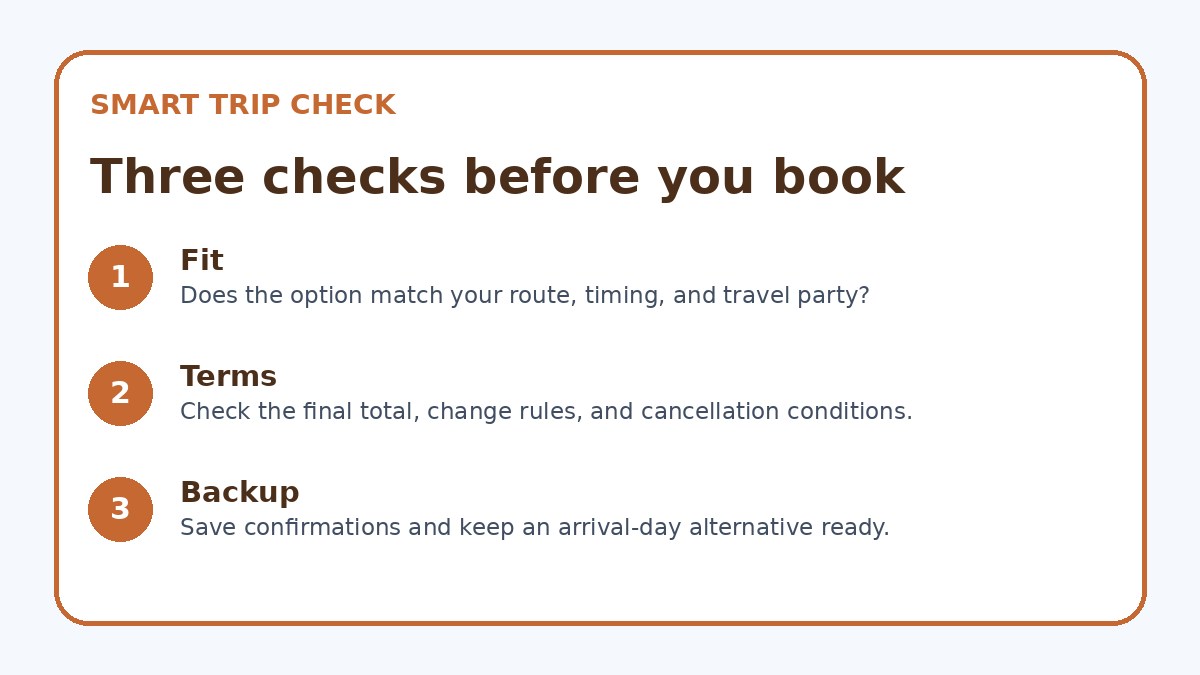
Arrival times and potential delays change which option is best. Late-night or very early flights reduce public transport frequency and may make taxis or pre-booked transfers safer choices. For daytime arrivals, trains can be the fastest option to central locations. Before booking anything non-refundable, verify the provider’s policy for delayed flights or missed pickups. Confirm whether your booking allows changes, what happens if your flight lands early or late, and how the driver will contact you on arrival — the provider’s final booking page will state these precisely.
Also check terminal pickup procedures: which terminal your flight arrives to; where taxis, rideshares and pre-booked shuttles are permitted to collect passengers; and whether you must call the driver on arrival or meet at a designated point. If using a rideshare app, make sure the app is set up and linked to a payment method before you land. For trains and public services, confirm the nearest station name and any walking directions; for private transfers, note the driver’s expected identification and how they will monitor flight status.
Before you book
- Confirm your arrival terminal and note the official pickup points for taxis, rideshares and transfers.
- Map the walking distance from potential train stations to your accommodation and assess luggage feasibility.
- Check the chosen provider’s booking page for baggage policies, vehicle size options and accessibility details.
- Save the driver or provider contact details and your booking reference in case of flight delays.
- Have a backup option (taxi rank or airport hotel) if your preferred transfer isn’t available on arrival.
- Set up any necessary rideshare apps and link a payment method before you land to avoid delays.
Cost considerations and practical booking tips
Cost is important, but avoid focusing solely on headline fares. Include added expenses like extra luggage fees, tolls, surge pricing for rideshares during peak times, and potential waiting charges. If budget is the top factor and you’re near a train stop, public transport tends to be the most economical mode per traveler. If convenience and predictability top your list, a private transfer or taxi might be worth the extra expense. Use comparison sites, official operator pages, or apps to get up-to-date fare structures and to compare door-to-door journey time estimates.
When you’re ready to book, compare current availability and conditions on the provider’s final booking page — that page will show exact vehicle types, pickup instructions, and cancellation rules. Trip.com can be used as one place to compare options and see current availability but verify provider policies directly on their site. Save contact numbers, booking references and allow extra time for customs and baggage claim. Finally, keep a backup plan in mind: know the nearest taxi rank and the name of a reliable shuttle operator in case your first choice becomes unavailable.
Frequently asked questions
Is taking the train from Sydney Airport to the city always the fastest option?
The train is often one of the quicker ways to reach central stations because it avoids road congestion, but “fastest” depends on your exact destination and arrival time. If your hotel is a long walk from the train station or you arrive during off-peak hours with fewer connections, door-to-door options such as taxis or private transfers might be faster. Always check the rail operator’s station locations, platform access and the walk from the station to your accommodation. Compare expected door-to-door travel times for both rail and road options before deciding.
Should I pre-book a private transfer or wait to hire a taxi on arrival?
Pre-booking a private transfer gives you a confirmed vehicle size and a meet-and-greet, which reduces uncertainty for families, large groups, or travelers needing accessibility accommodations. If you prefer flexibility and potentially lower immediate cost for small parties, metered taxis or rideshares booked on arrival can work well. Before pre-booking, read the provider’s flight-delay policies and meeting instructions on their booking page. If you choose to wait for a taxi, locate the official taxi rank to avoid unauthorized operators.
How do I manage arrivals late at night or very early in the morning?
For late-night or early-morning arrivals, public transport frequency can be reduced, so taxis, rideshares or pre-booked transfers often become more practical because they operate around the clock. Check the terminal pickup rules for after-hours collections and confirm whether your chosen provider offers 24-hour service. If using a rideshare app, ensure it functions at your arrival time and that pickup locations are permitted. Pre-booked services should state how they handle flight delays and after-hours pickups on their final confirmation page.
Final planning note
Choosing the right Sydney airport transfer comes down to a short list of priorities: where exactly you’re staying, how much luggage you have, who you’re traveling with, and whether door-to-door convenience matters more than cost. Trains are efficient for central locations; taxis and rideshares offer flexible door-to-door service; shared shuttles serve outer suburbs; and private transfers give predictability for groups and accessibility needs. Before booking, verify pickup procedures, vehicle sizing, baggage rules and delay policies on the provider’s booking page. Have a backup option and saved contact details so you can adapt if plans change on arrival.
Continue planning
Check current options and final conditions
Use the provider page to confirm live availability, the final total, cancellation terms, and every condition that matters to your trip.
This evergreen planning guide was created with AI-assisted drafting and a structured quality review. It does not display live prices, schedules, availability, visa guidance, or provider rankings. Verify current details before booking. Some links are affiliate links; we may earn a commission at no additional cost to you.