Practical answer: if you’re traveling to or from Sydney with more than one large suitcase, a private transfer is usually the least stressful option—it reduces transfers, door-to-door handling, and the chance of extra walking. Public transport can save money and avoid traffic if your luggage is manageable (a single checked bag plus a carry-on) and you can handle stairs, platform gaps, and short walks between services. Which to choose depends on how much luggage you have, how many people are in your party, your mobility, time of day, and your tolerance for carrying bags over short distances. This guide compares the two approaches, explains what to check before you book, and gives a practical checklist so you can make a confident choice for your Sydney airport transfer.
See current options before you compare the details
Availability and final conditions change. Open Trip.com now or keep reading for the practical comparison.
Assess your luggage and party
Start by making a realistic inventory: count suitcases, carry-ons, and any bulky items (strollers, surfboards, golf bags). Consider weight and whether you can lift each piece into a train carriage or bus luggage rack. Think about how many people are traveling with you—two adults sharing three large suitcases is different from a solo traveler with one oversized trunk. Also note mobility needs: anyone with reduced strength or balance will make private door-to-door service much more appealing.
Next, factor in arrival or departure timing. Late-night or early-morning flights reduce public transport options and increase the inconvenience of waiting with heavy bags, while peak-hour trains can be crowded and harder to board with luggage. If you’re traveling with children, pets, or equipment that needs special handling, that usually tips the balance toward a private transfer. Use these practical details to eliminate clearly unsuitable choices before comparing cost, convenience, and travel time.
How public transport works with luggage
Sydney’s public network offers trains, buses, and light rail that reach many central and suburban areas. Trains have luggage space at carriage ends and wide doors, but platforms may require stairs or elevators, and some stations are more accessible than others. Buses can be convenient for shorter trips but typically have limited onboard luggage areas and may require folding strollers or placing suitcases upright in the passenger area. Expect to carry or wheel bags short distances between station entrances, platforms, and your final destination.
When evaluating public transport, consider total walking distance, number of transfers, and how many times you must lift bags on and off vehicles. If you can time your trip outside peak windows or choose direct train runs, public transport becomes more feasible. Also check station accessibility information and elevator availability for the specific stations you’ll use. For up-to-date schedules and accessibility details, verify operator pages or Trip.com for current routes and service conditions before departure.
| Approach | Best for | Tradeoff to check |
|---|---|---|
| Public transport (train, bus, light rail) | Travelers with one or two manageable bags, short distances, and a tolerance for stairs/short walks. | Lower cost and possible faster travel in traffic-free windows versus more handling and potential crowding. |
| Private transfer (door-to-door vehicle) | Groups, oversized or numerous bags, mobility needs, or arrivals at odd hours. | Greater convenience and less handling versus typically higher per-trip cost and potential traffic delays. |
| Hybrid: public one way, private the other | Travelers wanting to balance cost and comfort across arrival and departure. | Saves money on one leg but requires planning two different logistics and possibly extra coordination. |
| Shared shuttle or ride-share with luggage options | Solo travelers or small groups with moderate luggage who accept short waits and shared stops. | Cheaper than private door-to-door and less handling than public transport, but may include detours and space limits. |
Ready to check the option that fits your plan?
Use your exact dates and traveler details so the provider page can show the current total and conditions.
What private transfers offer and what to check
Private transfers provide door-to-door pickup and drop-off, usually with dedicated space for multiple or oversized suitcases. Vehicles range from sedans to vans; choose the size that matches your luggage and group. Private options reduce handling—drivers load and unload bags, and you avoid platform gaps, stairs, and public waiting areas. That convenience is particularly useful after long flights, during poor weather, or when arriving late at night.
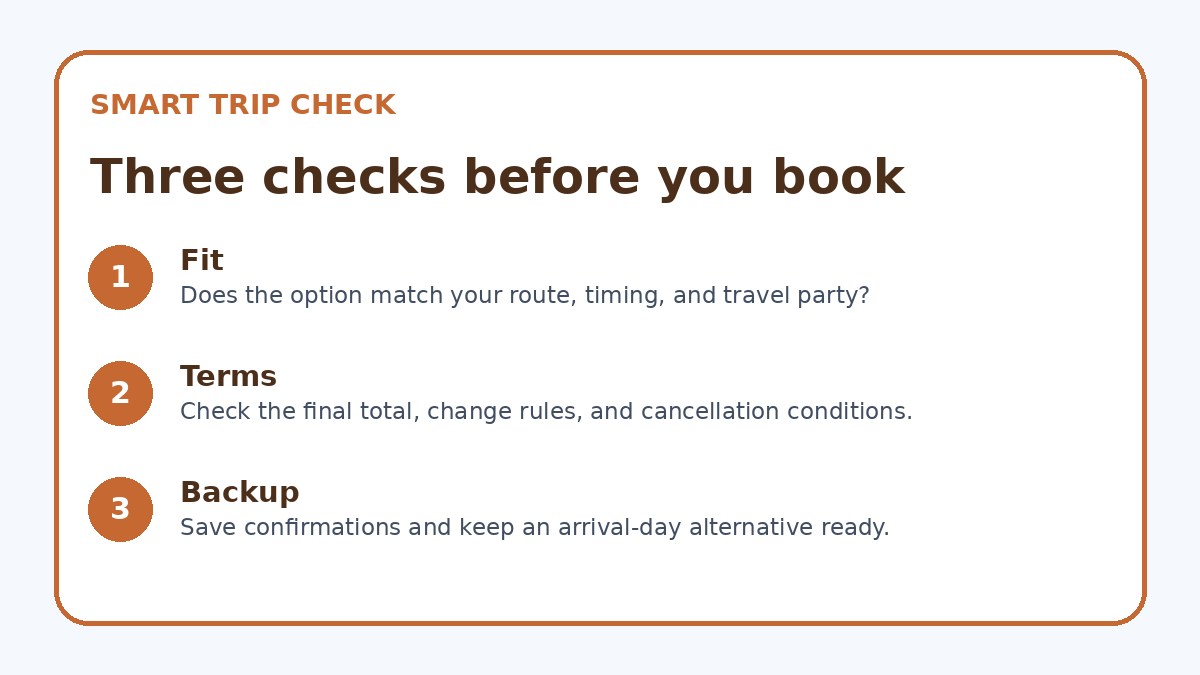
Before booking a private transfer, verify vehicle size, baggage allowance, and pickup procedure on the booking page. Confirm whether the quote includes waiting time, meet-and-greet service, and any charges for extra stops or heavy items. If you require a child seat or have very long items like surfboards, check whether the provider can accommodate them and whether additional fees apply. Always confirm the driver’s pickup point and contact method to avoid confusion at busy airport terminals.
Before you book
- Count and measure every bag; note any oversized or fragile items that require special handling.
- Decide your tolerance for lifts and short walks—map the station entrances and potential walking routes to your accommodation.
- If choosing private transfer, confirm vehicle size and baggage allowance on the supplier’s booking page before paying.
- If choosing public transport, check station accessibility (elevators/ramps) and number of transfers required for your route.
- Prepare contingency plans: a backup taxi app, local taxi numbers, or a contact at your hotel if plans change.
- Pack a small, accessible bag with essentials (documents, medications, chargers) to avoid opening main luggage during transfers.
Making the final decision and saving friction
Weigh comfort, complexity, and cost against each other. If time sensitivity, physical effort, and multiple baggage pieces matter more than money, private transfer usually wins. If you’re budget-minded, traveling light, and willing to manage bags across short walks and transfers, public transport can be perfectly practical. For mixed scenarios—for example, a long stay outbound but light bags inbound—consider using different modes for arrival and departure.
Reduce friction by planning specific logistics: map the exact station-to-door route, measure suitcase dimensions against vehicle space if using private transfer, and allow buffer time for luggage handling and traffic. Book or reserve the chosen method in advance if possible, and keep provider contact details handy. Lastly, if you want up-to-date availability or an easy way to compare options, you can check Trip.com as one of several comparison tools, but always rely on the provider’s official booking page for final terms and confirmation.
Frequently asked questions
Can I take large suitcases on Sydney trains and buses?
Yes: many trains and buses accommodate standard checked luggage, but you’ll often need to carry bags between station entrances and platforms and handle them on board. Trains usually have more space at carriage ends, but platform layouts and elevator availability vary by station. Buses and light rail can be tighter and may require upright placement in the passenger area; some bus routes get crowded during peak times. Always check specific station accessibility and service notices on the operator’s site or a live service aggregator before relying on public transport with large suitcases.
How do I know what private transfer vehicle to book for my luggage?
Start by totaling the number and size of suitcases plus any bulky items. When booking, choose a vehicle category that explicitly lists passenger and luggage capacity—sedan, estate, SUV, or van options typically indicate how many large suitcases they can carry. On the provider’s booking page, verify baggage allowances and ask about roof racks or trailer options for oversized gear. If the booking page is unclear, contact the provider directly and describe each item so they can confirm an appropriate vehicle.
Are shared shuttles a middle ground for heavy luggage?
Shared shuttles can balance cost and convenience: drivers load and unload luggage, reducing handling, and they often run to common hotels and neighborhoods. However, shared services make multiple stops, which adds time, and vehicle space for large items can be limited. If you’re on a tight schedule or have unusually large equipment, a dedicated private transfer may be better. Check the shuttle operator’s baggage rules and estimated number of stops on their booking page before committing.
Final planning note
Choosing between public and private transfer in Sydney when you have extra luggage comes down to one question: how much effort and risk of handling are you willing to accept to save time or money? Private transfers offer the simplest, lowest-effort door-to-door option, while public transport can work well if you travel light, are comfortable with short walks and transfers, and prefer lower cost. Use the checklist to quantify your luggage and mobility needs, confirm vehicle and baggage details on any provider’s booking page, and pick the option that minimizes stress for your arrival and departure. With a bit of planning you can make your Sydney airport transfer straightforward, even with extra bags.
Continue planning
Check current options and final conditions
Use the provider page to confirm live availability, the final total, cancellation terms, and every condition that matters to your trip.
This evergreen planning guide was created with AI-assisted drafting and a structured quality review. It does not display live prices, schedules, availability, visa guidance, or provider rankings. Verify current details before booking. Some links are affiliate links; we may earn a commission at no additional cost to you.