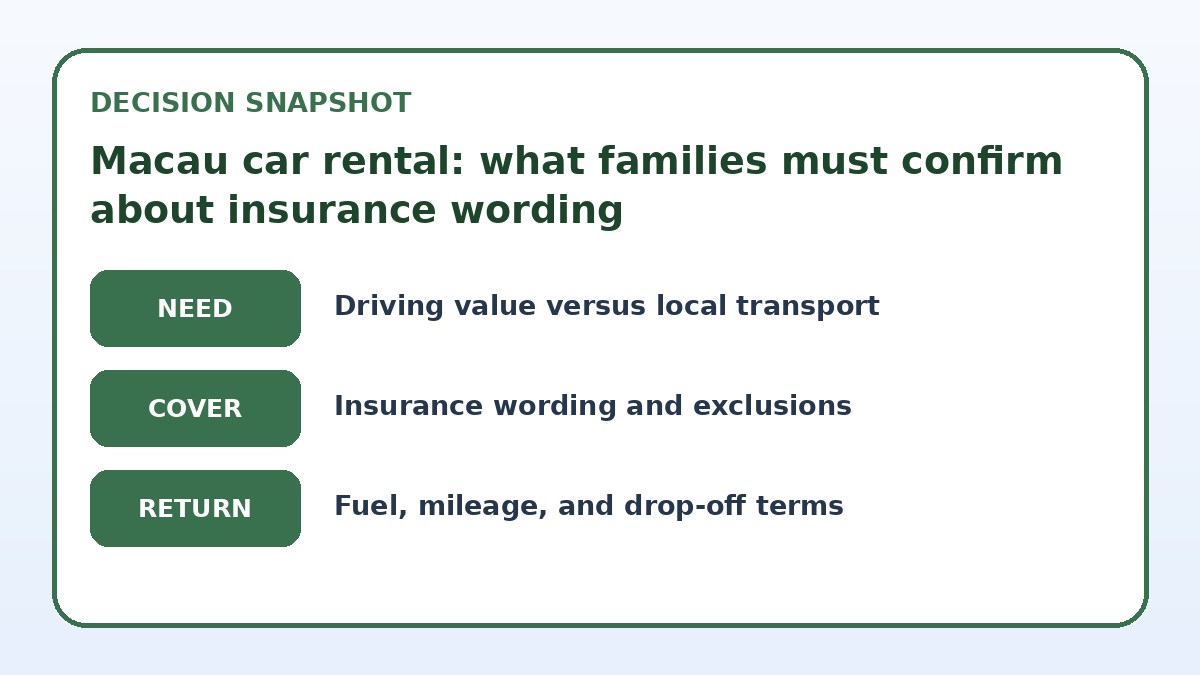
If you’re planning a family trip to Macau and considering a rental car, read the insurance wording before you click confirm. The practical answer: prioritize policies that clearly cover third-party liability, collision damage, theft, and passenger injury, and confirm who counts as an authorized driver and whether child seats and cross-border driving are covered. Don’t assume standard terms; local agents, airport kiosks, and aggregator pages can use different language for the same coverage. Focus on exclusions, excess/deductible amounts, and whether the policy is offered by the rental company or a separate insurer. Ask for written confirmation of any verbal promise and compare the final terms on the provider’s booking page—this is the document that governs your hire, not marketing blurbs.
See current options before you compare the details
Availability and final conditions change. Open Trip.com now or keep reading for the practical comparison.
What the main insurance words mean for families
When scanning a Macau car rental policy, you’ll see recurring terms: Collision Damage Waiver (CDW), Loss Damage Waiver (LDW), Third-Party Liability, Personal Accident Insurance (PAI), and Theft Protection. CDW or LDW typically limits your financial responsibility for damage to the rental vehicle but rarely removes it entirely; watch for exclusions such as damage to tyres, undercarriage, windscreen, or interior. Third-party liability covers damage or injury you cause to other people or their property—this is vital in dense urban driving and when negotiating narrow roads.
Personal Accident Insurance pays for medical costs for you or passengers after a crash, but cover limits and whether it is primary vary widely. Theft Protection reduces your liability if the car is stolen, but policies often require reasonable precautions—locking doors, not leaving valuables visible, and securing keys. For families, the key is to match the wording to how you plan to use the car: short daytime hops across the peninsula have different risks than overnight drives or cross-border trips to Zhuhai or Guangdong.
How to evaluate excess, waivers, and third-party cover
Excess (or deductible) is the amount you pay toward a claim before insurance covers the rest. A high excess can be manageable if your driving style and parking plans minimize risk, but with children and luggage on board the chance of minor scrapes rises. Many agents offer an Excess Reduction or Super Collision Damage Waiver for an additional daily fee that lowers or removes the excess. Before buying a waiver, confirm whether it is administered by the rental company or a separate insurer and whether it still leaves exclusions in place.
Third-party liability limits can be the most consequential for families if an incident injures other people or damages property. Some local policies may offer minimal statutory coverage, expecting you to purchase top-up protection. Compare the stated liability limits to your comfort level: higher limits reduce the risk of personal exposure. If you plan cross-border driving, verify whether third-party cover extends beyond Macau and what paperwork the company requires for any cross-jurisdiction claims.
| Approach | Best for | Tradeoff to check |
|---|---|---|
| Base insurance included with rental | Travelers seeking minimal mandatory coverage and low upfront cost | May have high excess, limited third-party limits, and many exclusions that increase risk for families |
| Rental company excess reduction (waiver) | Families wanting lower excess and simpler onsite claims handling | Adds daily cost and may still exclude tyres, windscreen, or underbody damage |
| Third-party top-up from a separate insurer | Those wanting higher liability limits and broader jurisdictional coverage | Requires checking coordination of cover and proof in case of claims; may need to claim through insurer later |
| Standalone travel insurance with car rental cover | Families seeking integrated trip protection including medical and cancellation cover | Policy wording may be complex; rental-specific exclusions can still apply and coordination with the rental company is necessary |
Ready to check the option that fits your plan?
Use your exact dates and traveler details so the provider page can show the current total and conditions.
Common wording pitfalls families miss
Two common surprises are driver eligibility clauses and child restraint language. Driver eligibility may exclude drivers under a certain age, those with recent convictions, or those without a specific license type. If family members under the policy’s age threshold will drive, you must add them as authorized drivers or risk policy voiding. Child seat coverage is rarely included automatically; some companies provide seats free, others charge per day, and some require you to request seats in advance with explicit mention in the rental contract.
Another trap is ambiguous language about ‘reasonable precautions’ or ‘unattended vehicle’ exclusions—policies can deny a theft claim if keys are left in reach or if valuables were visible. Similarly, damage to the underside, roof, and tyres can be excluded unless you buy specific cover. Read the definitions section: words like ‘accident’, ‘damage’, and ‘theft’ should be precisely defined so you know when a claim is likely to be accepted or rejected.
Before you book
- Download or screenshot the full insurance wording from the booking page and save it with your reservation confirmation.
- Confirm excess amounts and whether you purchased an excess reduction or waiver that must appear on the final contract.
- Add every driver you expect to use the car to the rental agreement and confirm their eligibility in writing.
- Request written confirmation of child seat availability and whether installation or damage to seats is covered.
- Photograph the vehicle’s exterior, interior, and fuel level at pickup and email the images to the rental company if possible.
- Ask the agent to point out exclusions on the contract and get any agreed changes printed on the final rental agreement.
What to verify on the booking page and at pickup
Before you confirm, screenshot or download the insurer’s policy document linked on the booking page; if a link is missing, request it in writing. Check the named insured parties, specified excess, a clear list of exclusions, and whether additional drivers are covered free or at cost. If the booking includes an insurer’s phone number and policy code, note them. When a rental agent quotes a verbal change, ask for it to be appended to the contract or emailed before pickup.
At the rental counter, walk the vehicle with the agent and take time-stamped photos or video of any pre-existing marks, interior condition, and installed child seats. Confirm that the vehicle class matches what you booked and that any waivers you paid for are printed on the final agreement. If the counter agent attempts to change coverage, insist on seeing the written amendment. Trip.com can be a place to compare availability, but always verify final insurance wording on the provider’s booking page and the rental contract you sign.
Frequently asked questions
Does Macau require specific car insurance limits for rentals?
Macau’s legal requirements for minimum liability can vary and rental companies normally include the mandatory minimum in the base price. However, the contractual limit offered by a rental firm may only meet the statutory minimum and not the level many families would consider adequate. Before you book, check the policy’s stated third-party liability limits on the provider’s booking page and ask whether you can purchase a higher limit or a separate top-up policy. If you plan cross-border driving, verify whether the same limits apply outside Macau.
If I buy a waiver at pickup, does it immediately cover us?
Waivers sold at pickup typically take effect when noted on the signed rental contract, but coverage scope depends on the exact wording. Ask the counter agent to show the waiver clause in the contract and confirm which damages remain excluded even after the waiver. If the agent offers a verbal assurance, request that it be added in writing to the contract before signing. Keep copies of receipts and the rental agreement to avoid disputes later.
Can my home or credit card insurance replace rental company coverage in Macau?
Some home or credit card policies provide secondary or primary rental car cover, but wording and territorial limits differ. Do not assume coverage: check whether your card covers collision, theft, or third-party liability specifically in Macau and whether it requires you to decline the rental company’s waivers. Important: many card policies exclude certain vehicle categories, drivers under an age limit, or commercial hires. Verify exact terms with your insurer or card issuer and keep proof of coverage to present to the rental company if needed.
Final planning note
Families renting a car in Macau should treat insurance wording as a planning priority, not an afterthought. Start by downloading and reading the provider’s full policy, confirm excess levels and who is listed as an authorized driver, and insist any verbal promises appear on the final contract. Weigh whether the convenience of an onsite waiver outweighs the extra daily cost and whether a separate top-up policy or travel insurance better suits your liability needs. Document the car’s condition at pickup, store policy numbers and receipts, and verify coverage language for child seats and cross-border travel. Taking these steps reduces surprises and helps keep your family trip on track.
Continue planning
Check current options and final conditions
Use the provider page to confirm live availability, the final total, cancellation terms, and every condition that matters to your trip.
This evergreen planning guide was created with AI-assisted drafting and a structured quality review. It does not display live prices, schedules, availability, visa guidance, or provider rankings. Verify current details before booking. Some links are affiliate links; we may earn a commission at no additional cost to you.