If you’re traveling solo in Bali the practical question is simple: do you want to prioritize being steps from cafés, beaches and nightlife, or having a quieter, more comfortable room to recharge? The good news is you can often get a mix of both—but that mix depends on how you plan to spend most days. Pick a central location if you expect to explore on foot, join daily tours, or rely on evening dining and nightlife. Choose a quieter neighborhood, better room amenities, and reliable on-site services if you need daytime rest, long work sessions, or a private retreat between excursions. This guide gives a decision-first answer, then walks through the tradeoffs, criteria to compare on booking pages, and a checklist so you can pick a Bali hotel that fits solo travel needs without sifting through dozens of listings.
See current options before you compare the details
Availability and final conditions change. Open Trip.com now or keep reading for the practical comparison.
Decide what your days will actually look like
Start by listing how you will spend typical days in Bali—morning surf or temple visits, afternoon co-working, evening dining or nightlife. If most activities are clustered in one town (Seminyak for restaurants and nightlife, Ubud for rice terraces and wellness, Canggu for coworking and surf culture), staying inside or very near that town cuts commuting time and taxi costs. For short stays of three to four nights, staying central lets you maximize exploration without living out of a suitcase in transit. For longer stays, a quieter base with good transport options may be preferable.
Also consider daily rhythms unique to solo travel: evenings when you want to feel secure returning to your room, mid-day naps after long travel, and times when you may want to work or video-call. If you expect heavy daytime downtime or client calls, prioritize room comfort and reliable Wi‑Fi over street-level convenience. Conversely, if your day is outdoors and social, prioritize a compact room in a lively neighborhood so you can be part of the action without long rides back and forth.
Neighborhood choices: what each area gives you
Kuta and Seminyak give nightlife, restaurants, and beaches within walking distance; they’re practical if you value being steps away from cafes and evening options. Canggu has a more relaxed café and coworking scene with surf access, but parts can be spread out so check proximity to the strip you want. Ubud is inland, best for culture, yoga, and slower days—expect more tranquility and fewer beaches. Sanur and Nusa Dua lean quieter with family-friendly beaches and calmer evenings, which can be better for solo travelers who prefer low-key nights.
When evaluating neighborhoods, balance proximity against noise, crowds, and travel time. Busy strips mean earlier nights are harder and soundproofing becomes a priority. Busy tourist hubs may have more dining and transport options but also more touts and traffic. Assess how much time you’ll spend in a single neighborhood versus day-tripping: if most days include island-hopping or remote tours, a quieter, better-appointed room might be worth slightly longer rides to the pier.
| Approach | Best for | Tradeoff to check |
|---|---|---|
| Central location, modest room | Solo explorers who value walking access to dining and nightlife | Smaller room, potential street noise, less privacy for daytime rest |
| Quiet neighborhood, upgraded room | Travelers prioritizing sleep, work, and private downtime | Longer trips to nightlife and attractions, added transport cost |
| Mid-location with good communal spaces | Solo travelers who want social contact without staying in party hubs | May not be closest to either beaches or cultural sites; compromise on commute |
| Budget guesthouse near transit links | Short-stay travelers focused on affordability and flexible day trips | Fewer amenities, variable comfort and security compared with hotels |
Ready to check the option that fits your plan?
Use your exact dates and traveler details so the provider page can show the current total and conditions.

Room comfort and services to prioritize for solo stays
For a solo traveler, certain room features matter more than they might on a couple’s trip: key-card access, 24-hour reception, safe for valuables, blackout curtains, and good airflow or air conditioning. If you work remotely, a firm desk, dependable high-speed Wi‑Fi (verify speed and any data caps), and quiet hours are essential. If rest matters most, look for soundproofing notes in reviews and avoid street-facing rooms. Small extras—like luggage storage, laundry service, or a hotel-arranged taxi—add convenience and reduce friction when traveling alone.
Think about communal spaces too: a calm lobby, terrace or pool where you can meet other travelers or work outside your room can make solo travel more social without sacrificing privacy. On-site dining reduces evening searching for eateries after late arrivals. Confirm which services are included, and check the provider’s final booking page for explicit statements about service hours, breakfast options, and whether a shuttle or airport transfer is available—these details change frequently and are critical to solo-trip planning.
Before you book
- Use map mode to confirm walking or scooter distances from the hotel to the places you'll visit most.
- Message the property to confirm noise levels for the specific room type and whether photos match the actual layout.
- Verify Wi‑Fi speed and any data limits if you need to work or make frequent video calls.
- Confirm safety features: 24-hour reception or secure key access, plus an in-room safe or secure storage.
- Check the provider’s cancellation and check-in policies on the final booking page before committing.
- Ask the hotel about airport transfer options, pickup points, and approximate fares or shuttle schedules.
How to compare listings and what to verify before booking
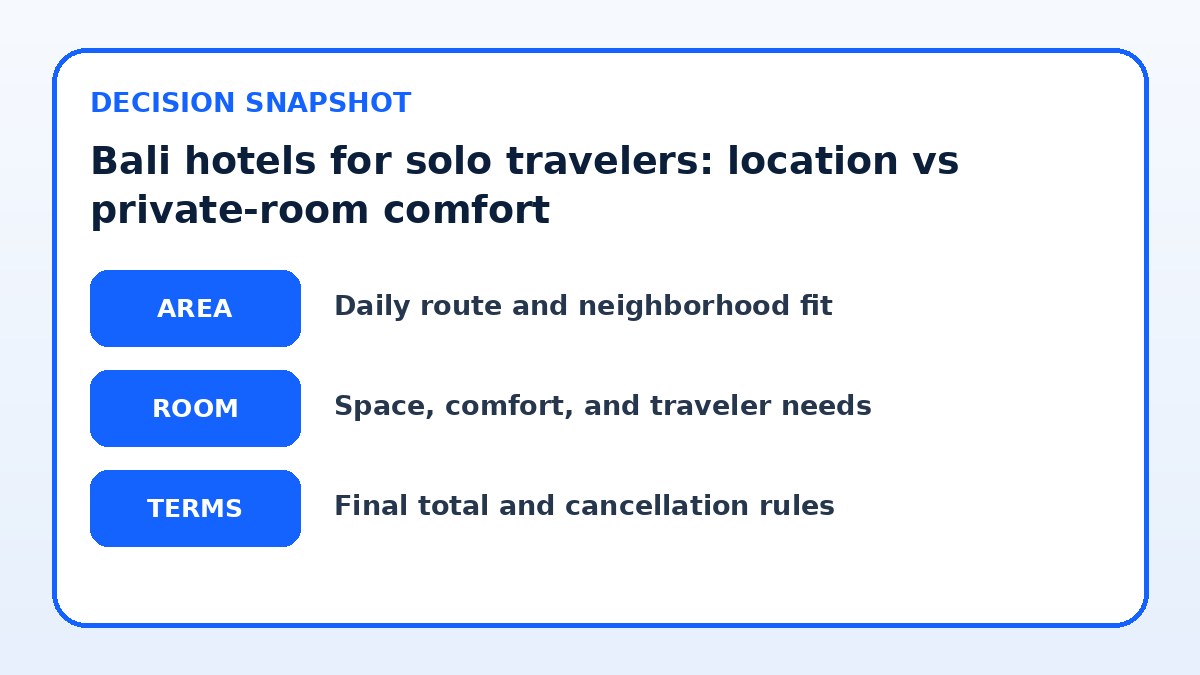
When comparing Bali hotels, create a short checklist—location to main interests, room size and layout, noise risk, safety features, and cancellation terms. Use map view to measure walking distances and the likely taxi/scooter rides to places you’ll visit most. Read recent reviews from other solo travelers to gauge safety and staff helpfulness. Photos can be staged; prioritize listings that include multiple room-angle photos and recent guest images. If a listing lacks clarity on noise or Wi‑Fi, message the property directly before you book.
On the booking page, verify the exact room type, bed size, included amenities, and whether the price shown includes taxes and any service fees. Confirm check-in and check-out flexibility if your flight schedule is irregular. If transfers or shuttles are important, ask the provider to confirm pickup points and hours. Trip.com can be used to compare availability across platforms, but always verify policy wording and final total on the provider’s own confirmation before trusting the details.
Frequently asked questions
Is it safer for a solo traveler to stay in busy Bali areas or quieter neighborhoods?
Both can be safe, but safety depends on hotel quality and the specific street rather than the whole area. Busy areas have more people around at night, which can feel safer but also attract petty theft or aggressive vendors. Quieter neighborhoods reduce noise and offer calmer evenings but require planning for transport back at night. For either option, choose properties with 24-hour staff, secure entry, and solid solo-traveler reviews. Always verify on the booking page who handles late arrivals and what security measures are listed.
How much should I prioritize Wi‑Fi and workspace when booking a Bali hotel?
If you plan to work or need reliable video calls, prioritize Wi‑Fi speed and a comfortable desk—these are as important as bed comfort. Look for explicit speed figures or recent guest comments about connectivity, and ask the property about peak-hour performance and backup options. If the listing lacks detail, request a short speed test screenshot from the hotel before you book. Remember that many public cafes offer decent connectivity, but relying on them compromises privacy and can eat into your daily schedule.
Should I book transport or tours through my hotel as a solo traveler?
Booking through the hotel can simplify logistics and reduce uncertainty upon arrival, especially late at night. Hotels often arrange trusted drivers and can coordinate pick-ups, which reduces the chance of scams. However, confirm the price breakdown and meet-up details on the provider’s final booking page—pricing and cancellation terms vary. If you prefer independent options, use well-reviewed local apps or recommended agencies and insist on vehicle condition and fixed pricing before departure.
Final planning note
For solo travel in Bali, the right hotel balances where you want to spend your days with how much private rest and reliable services you need. Short, activity-packed trips benefit from staying central to reduce commute time and stay social; longer or work-focused trips usually merit quieter rooms with better amenities. Use maps, recent solo-traveler reviews, and direct questions to the property to verify noise, Wi‑Fi, and services before you book. Keep a flexible checklist—safety features, cancellation policy, and transfer options—and compare a few listings on platforms like Trip.com or the property’s own site to confirm details before finalizing your reservation.
Continue planning
Check current options and final conditions
Use the provider page to confirm live availability, the final total, cancellation terms, and every condition that matters to your trip.
This evergreen planning guide was created with AI-assisted drafting and a structured quality review. It does not display live prices, schedules, availability, visa guidance, or provider rankings. Verify current details before booking. Some links are affiliate links; we may earn a commission at no additional cost to you.