
If you want the simplest practical answer: book flights and accommodations for Seoul as soon as your travel dates are firm enough that changing them would be a real pain, and consider holding flexible or refundable options when your schedule is uncertain. For solo travelers, that usually means locking in major reservations 6–10 weeks before departure if you want a balance of choice and potential savings, and earlier if you need specific accommodation types or dates like weekends. The rest of this guide explains tradeoffs—flexibility versus price risk, how to use refundable fares, when to wait for deals, and which items to book early (secure bed and arrival) versus later (experiences, day trips). I’ll also explain concrete decision criteria you can apply to your own calendar and tolerance for change, and what to verify on provider pages before finalizing any booking.
See current options before you compare the details
Availability and final conditions change. Open Trip.com now or keep reading for the practical comparison.
What to book first and why
For a solo traveler, prioritize the reservations that carry the most risk for your trip: inbound transportation and the first night or two of lodging. Flights or long-distance trains define your arrival day and often have the fewest last-minute options that match your schedule without a price jump or awkward layovers. Securing a downtown or well-connected accommodation for your first nights reduces stress on arrival, particularly when you’re managing luggage and navigating a new city alone. Booking these early gives you a stable anchor while leaving lower-stakes items open to search for deals later.
Next, consider essentials that are hard to replace on short notice—airport transfers, key cultural events you must attend, or a guided day trip that fits a narrow window. Reservations for restaurants or entertainment are less critical unless they are high-demand experiences tied to specific times. For everything you purchase later, know the cancellation policy and whether you can transfer or reschedule without cost. Before checkout, always verify exact check-in rules, baggage allowances, and change fees on the provider’s final booking page so you aren’t surprised by restrictions that matter to a solo traveler.
Timing strategy by trip length and flexibility
Short weekend trips demand a different approach than a three-week exploration. For a weekend in Seoul, you’ll likely want to book sooner because fewer dates mean less inventory and less room to wait for a drop in fares. If your dates are locked, aim to secure transport and core lodging earlier; if you’re flexible by a few days, monitoring midweek departures or arrivals can yield better availability and more single-room options. For longer trips, you have more leeway to stagger bookings—secure arrival logistics first, then shop around for weekly rentals or hostels as you refine your route.
Your personal flexibility matters more than general rules. If changing dates is easy for you, waiting for sales or fare dips can be worthwhile; if you have fixed commitments at home or work, treat your single-trip dates like fixed inventory and book earlier. Solo travelers who prefer social accommodation like hostels should book earlier for popular neighborhoods and nights with local events. Regardless of trip length, build a simple timeline for decisions: lock transportation and arrival nights once comfortable, hold other bookings until closer when you can compare options and confirm final plans.
| Approach | Best for | Tradeoff to check |
|---|---|---|
| Book early (2+ months) | Travelers with fixed dates or visiting during local peak periods. | Better selection but less opportunity to wait for short-term price drops or last-minute deals. |
| Book medium window (6–10 weeks) | Solo travelers seeking balance between choice and potential savings. | Some optimal options may already be gone; flexibility still limited compared with last-minute choices. |
| Wait for deals (under 6 weeks) | Flexible travelers who can shift dates or accept different accommodation types. | Higher risk of limited choice, especially for single rooms and weekend dates; prices can spike unpredictably. |
| Use refundable/hold options | Travelers who may need to change or cancel plans with low stress. | Higher upfront cost or administrative steps when switching bookings; savings from nonrefundable rates may be lost. |
Ready to check the option that fits your plan?
Use your exact dates and traveler details so the provider page can show the current total and conditions.
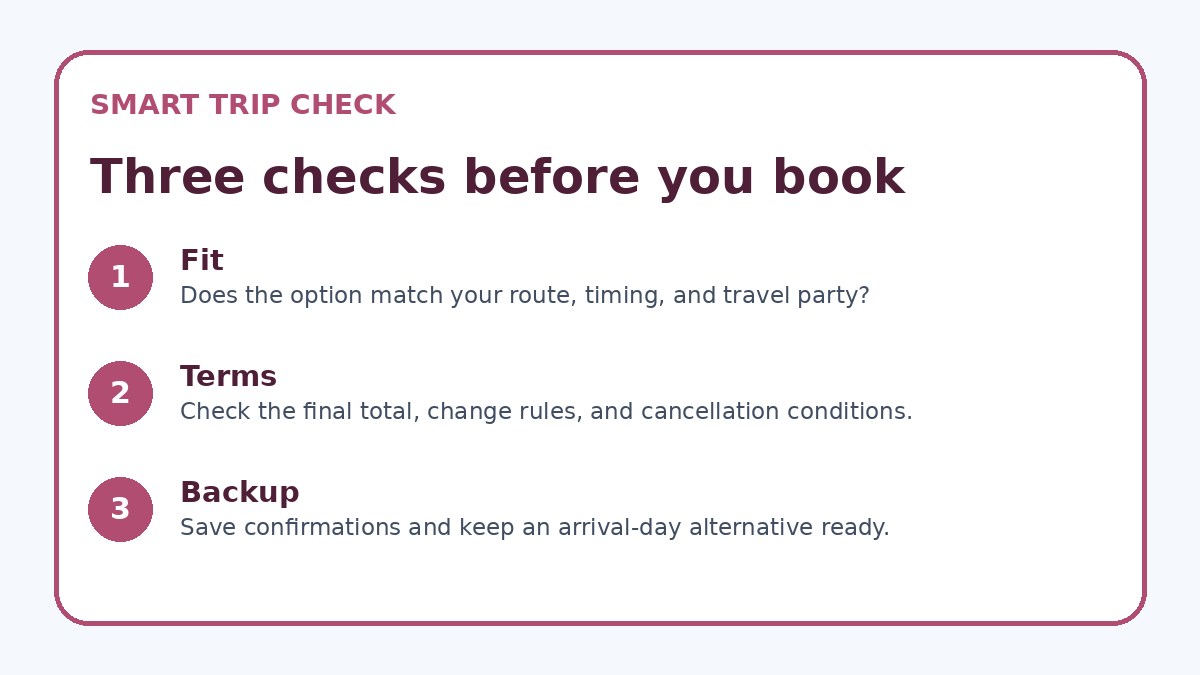
Balancing refundable options and cost savings
Refundable fares and flexible hotel rates give solo travelers insurance against sudden plan changes, but they usually cost more. Decide how much flexibility you value: if a schedule change would be merely inconvenient, a nonrefundable option with a solid backup might be fine; if a change would be disruptive or expensive, pay a bit more for flexibility. Another tactic is to book a lower-cost nonrefundable rate and simultaneously monitor for better refundable deals; if a refundable option appears within your tolerance window, switch before the nonrefundable penalty kicks in. Always read the final booking page for specific change or cancellation fees and processing times.
Use credit card protections and third-party cancellation policies to reduce risk, but don’t assume they cover every scenario—verify their terms. For solo travelers, the psychological benefit of a refundable ticket can outweigh the extra expense when traveling internationally or during an unpredictable window. If you expect to stay in Seoul during peak travel periods, weigh the value of securing a room now versus the chance that refundable options disappear. When in doubt, lean toward partial flexibility: refundable arrival night and locked later nights, or vice versa, depending on where your risk tolerance lies.
Before you book
- Confirm your firm travel dates and mark any hard constraints (work, events, holidays) before searching for fares.
- Set fare alerts for flights and compare at least three booking sources, then verify rules on the provider’s final page.
- Book inbound transport and the first one or two nights of accommodation once your dates are fixed enough to avoid major changes.
- Choose refundable or flexible rates when your schedule is uncertain and you cannot absorb change fees.
- Check exact check-in times, baggage rules, and cancellation deadlines on the booking page before payment.
- Reserve popular guided activities or transfers early if they require a minimum group size or are tied to specific times.
Practical tools and checks before you book
Set fare and availability alerts for both flights and accommodations so you can observe price trends without committing immediately. Compare at least three sources—airline sites, accommodation platforms, and an aggregator—then confirm fares and rules on the provider’s checkout page before finalizing. For transfers and day trips, check cancellation windows and minimum passenger rules; for accommodations, verify bed type, shared versus private facilities, and exact check-in hours. If using Trip.com or another comparator, remember it’s useful for snapshots of availability but verify all provider-specific terms on the host or operator’s final page.
Make a personal booking checklist: your passport expiration, visa needs (if any), travel insurance that covers cancellations, and how you’ll get local currency or connectivity on arrival. Note the logistics of getting from the station or airport to your first stay and whether a public-transport option exists at your arrival hour. Before clicking pay, read the fine print about refunds, date changes, and rebooking fees—these are the clauses that determine how costly a last-minute pivot will be for a solo traveler.
Frequently asked questions
How far in advance should I book flights to Seoul as a solo traveler?
For most solo travelers with moderately fixed dates, targeting a booking window of about 6–10 weeks before departure balances selection and the chance of finding a competitive fare. If you have strict date constraints or travel over holidays and major events, book earlier to secure routings and preferred times. If your dates are flexible, monitor fares and use alerts; last-minute fares sometimes fall, but relying on that is risky for single travelers who need specific arrival days. Always verify baggage and change rules on the airline’s checkout page before purchase.
Should I book hostels, guesthouses, or private rooms early in Seoul?
If you prefer social hostels or a private single room in a popular neighborhood, it’s safer to book earlier—especially for weekend nights and event-heavy periods—because single-occupancy options and mixed dorm spaces can sell out. For longer stays or lower-demand times, you can stagger bookings and improve your choice by comparing mid-length stay rates. When booking, confirm bed type, shared facilities, and quiet hours on the property’s final page so you know what to expect on arrival; also check the cancellation policy to avoid penalties if plans change.
Can I rely on last-minute deals in Seoul to save money?
Last-minute deals can appear, particularly outside peak seasons, but they are unpredictable and may not match your exact needs for dates or room types. If you can be flexible with travel days, neighborhoods, and accommodation types, waiting can sometimes yield savings. For solo travelers with strict schedules or who need specific amenities, the risk of limited availability often outweighs potential savings. Use alerts and have a fallback plan—such as a refundable booking or clear cost threshold—so you can act quickly when a genuine opportunity surfaces; always confirm terms on the booking provider’s final page.
Final planning note
Choosing a realistic booking window for Seoul travel deals as a solo traveler comes down to your date flexibility, tolerance for change, and which parts of the trip matter most to secure. Lock in transport and the first nights when dates are reasonably firm; consider refundable options if plans might shift. Use alerts, compare multiple sources, and always verify cancellation and change policies on the provider’s final booking page before paying. By matching your booking cadence to your personal constraints—earlier for fixed dates and peak times, later if you can be flexible—you reduce stress and keep options open without gambling unnecessarily on price movements.
Continue planning
Check current options and final conditions
Use the provider page to confirm live availability, the final total, cancellation terms, and every condition that matters to your trip.
This evergreen planning guide was created with AI-assisted drafting and a structured quality review. It does not display live prices, schedules, availability, visa guidance, or provider rankings. Verify current details before booking. Some links are affiliate links; we may earn a commission at no additional cost to you.