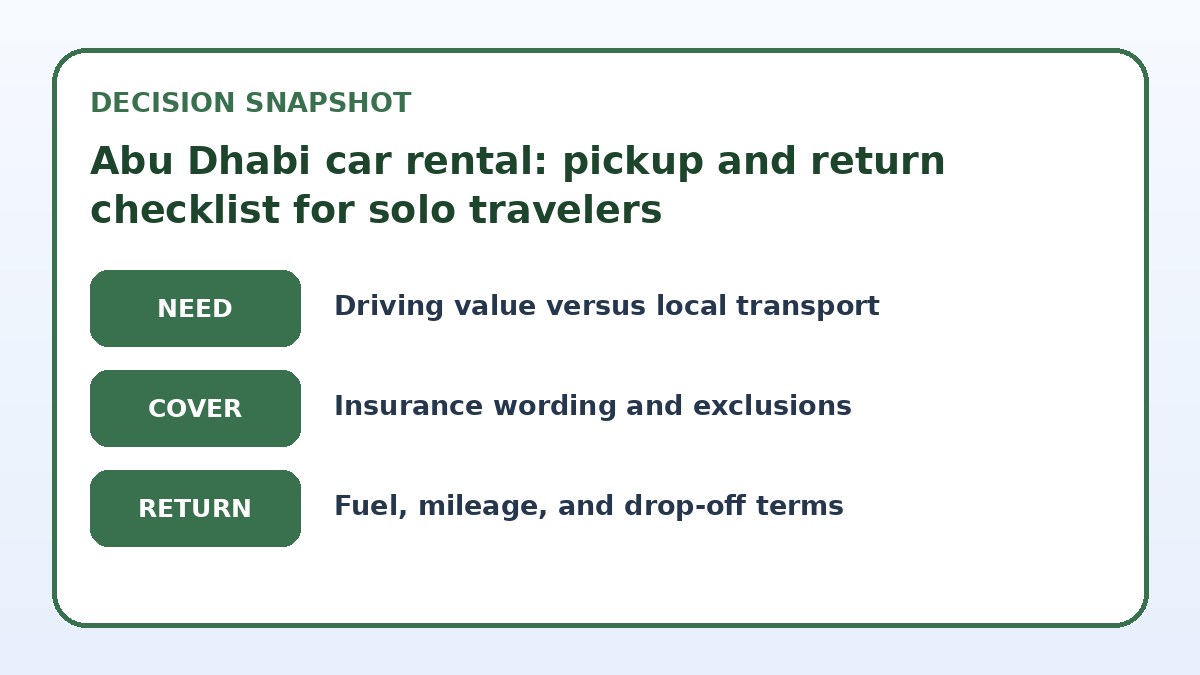
If you'll be driving alone in Abu Dhabi, the practical decisions are mostly about how and where you pick up and return the car — not the make or color. Pickups at the airport, city offices, or hotels each change your arrival timing, luggage handling, and safety margin for first-time drivers. Return rules influence when you must refuel, where to leave keys, and whether an after-hours drop-off fee or inspection hold could complicate a late-night flight. Read these guidelines to quickly identify the pickup and return choices that fit your arrival time, comfort with local roads, and tolerance for inspection hassles. I’ll also explain the tradeoffs so you can compare offers on booking pages and verify the final terms before completing a reservation.
See current options before you compare the details
Availability and final conditions change. Open Trip.com now or keep reading for the practical comparison.
Where to pick up the car: airport, city, or hotel?
Airport pickups are convenient for many solo travelers because you step off the plane and follow signs to a consolidated car rental area. Convenience brings tradeoffs: airport counters can be busy, shuttle buses or walking routes to off-airport lots add time, and arrival-hour congestion can stretch a quick handover into a half-hour or more. If you have early-morning or late-night flights, check whether the office’s opening hours align with your arrival and whether they accept after-hours pickups; when in doubt, plan for extra time to avoid stress.
City or hotel pickups let you move the handover to a quieter time and place, often with more one-on-one attention from staff and a calmer inspection of the vehicle. These pickups can be better when you want to confirm optional extras (GPS, child seats) or ask safety questions about local driving patterns. But they usually require a short transfer from the airport or a first-night stay in town before you drive; weigh that against the extra comfort and the ability to do a daylight inspection before heading onto longer roads.
Inspection and documentation at pickup
A careful inspection with photos or video is the most important solo-renter habit. Walk around the vehicle with the agent and document dents, scratches, and interior wear clearly, recording timestamps if possible on your phone. Confirm which documents you must present — passport, driving license, international driving permit (if required), credit card in the renter’s name — and ask whether the provider places a security hold on your card. Ask the staff to annotate any damage on the rental agreement before you sign and keep a copy of the signed contract.
Ask how damage claims are handled and how long a hold against your card could persist. Providers sometimes place temporary holds for the estimated excess amount that can affect your available credit; if you’re traveling solo on a limited card, confirm the maximum hold and when it will be released. Also verify who is covered to drive the car and whether adding a second driver (even temporarily) is allowed and how much it costs — this is useful if plans change and someone else needs to return the car.
| Approach | Best for | Tradeoff to check |
|---|---|---|
| Airport pickup with on-site inspection | Travelers prioritizing immediate access to a car after landing | Busier counters and potential shuttle time; may be rushed when staff are busy |
| Downtown or hotel pickup by appointment | Those who prefer a calm handover and thorough walkthrough | Requires an extra transfer or first-night stay before driving off |
| After-hours pickup and return | Arrivals or departures outside standard office hours | Often relies on drop-box keys and photo evidence; higher risk of disputes |
| Full-to-full fuel policy | Drivers who want a simple, fair fuel arrangement | Requires time to refill before return; forgetfulness may incur refueling fees |
Ready to check the option that fits your plan?
Use your exact dates and traveler details so the provider page can show the current total and conditions.
Return rules solo travelers should verify
Closely compare fuel-return policies: full-to-full is the most straightforward — you refill and avoid refueling service charges — but some rentals sell you a full tank up front and don’t refund unused fuel. Confirm where the final inspection takes place (at a dedicated desk, in the lot, or by drop-box), what constitutes an after-hours return, and whether staff will accept photo/video evidence in lieu of an in-person check. If you expect to return late, ask for a clear written process so you know whether you should leave keys in a drop box, park in a specific area, or wait for staff to inspect the car.
Also verify parking and inspection logistics for airport returns: some lots require you to return to a specific terminal lot and then take a shuttle, while others allow you to leave the car and walk to the terminal. Ask whether the company logs time-of-return in a way that could trigger overtime charges and how they record minor scratches found after you leave. For solo travelers on tight schedules, prioritize providers with transparent, documented after-hours procedures and explicit timelines for releasing damage holds on your card.
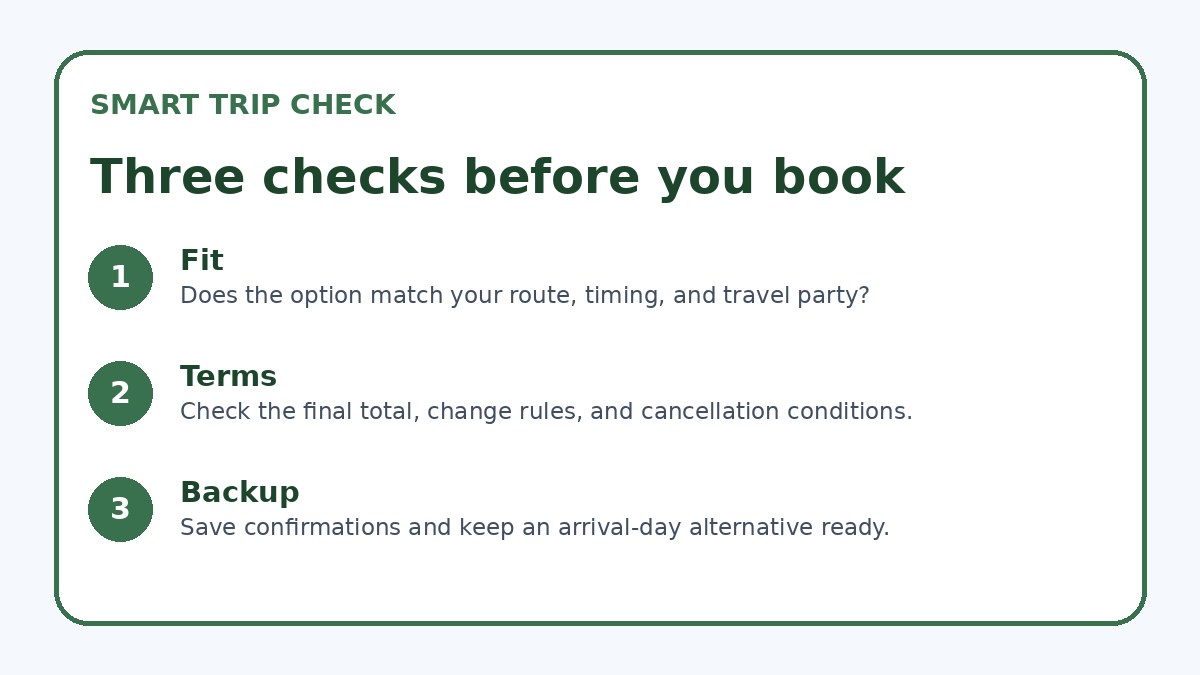
Before you book
- Confirm pickup address and terminal (if airport) and save a screenshot of the provider’s directions and contact number.
- Photograph the car from multiple angles with timestamps before you drive away and keep the photos with your rental agreement.
- Ask and write down the specific after-hours return procedure and where to leave keys or how staff will check the vehicle.
- Verify the fuel policy on the booking page and plan to refill accordingly if the contract is full-to-full.
- Check the amount and timing of any security hold on your card and compare it with your available credit.
- Confirm who is insured to drive, whether adding another driver is allowed, and the cost or documentation required.
How to compare pickup/return terms before booking
When comparing bookings, don’t rely on brief summary lines. Open the full rental terms and search for pickup location details, office hours, fuel policy, after-hours returns, damage-hold amounts, and required documents. Make a quick matrix for the few offers you’re considering: where is the pickup, what exact steps are required for after-hours returns, and how is the final inspection carried out? If information is missing or unclear, contact the provider or the booking platform to get confirmation in writing and save that message until after the trip.
Remember that booking platforms sometimes show different pickup addresses or hours than the rental company’s site. Verify the final details on the provider’s booking page and, if possible, print or screenshot the confirmation with the pickup instructions, exact address, and phone number. Trip.com is one example of a place you can compare current availability and conditions, but always use the rental company’s official confirmation for final pickup and return procedures.
Frequently asked questions
Do I need an International Driving Permit to rent and drive in Abu Dhabi?
Entry and driving document requirements can vary by nationality and rental company, so check both your home country rules and the rental provider’s conditions. On the booking page, verify whether the company requests an International Driving Permit (IDP) in addition to your national license, and ask whether they accept a digital copy or require physical documents. If the provider’s confirmation mentions an IDP, obtain one before travel. Keep your passport and license with you while driving and present them at pickup when requested.
What should I do if I find new damage after I’ve returned the car?
If a damage claim appears after return, ask the rental company for dated photos and a detailed incident report showing when and where the alleged damage was recorded. Request a copy of the third-party repair estimate or bill and the vehicle’s inspection log from the return. If you used a credit card that offers rental protection, contact your card provider promptly with the rental agreement, photos you took at pickup, and the company’s claim to initiate a dispute. Always keep written confirmation of the car’s return time and condition where possible.
How can I reduce my risk of disputes as a solo traveler?
Reduce dispute risk by documenting everything: photos and video of the car at pickup with a visible timestamp, a signed rental agreement that lists pre-existing damage, and written after-hours return instructions if applicable. Choose pickups with staffed desks during daylight when possible so you can do a joint inspection. Keep copies of all emails and confirmations, and use a credit card with strong consumer protection. Finally, verify fuel, mileage, and damage-hold terms on the provider’s final booking page before you complete payment.
Final planning note
Pickup and return terms shape the practical experience of renting a car solo in Abu Dhabi more than the vehicle model itself. Decide first whether you need airport convenience or a calmer hotel/office handover, then verify inspection, after-hours return, fuel policy, and damage-hold details on the provider’s booking page. Document the car carefully at pickup, save written instructions for returns, and pick a policy that matches your arrival time and credit-card limits. With those checks done, you reduce the chance of late surprises and can focus on driving with confidence around Abu Dhabi.
Continue planning
Check current options and final conditions
Use the provider page to confirm live availability, the final total, cancellation terms, and every condition that matters to your trip.
This evergreen planning guide was created with AI-assisted drafting and a structured quality review. It does not display live prices, schedules, availability, visa guidance, or provider rankings. Verify current details before booking. Some links are affiliate links; we may earn a commission at no additional cost to you.