If you need a single practical directive: pick the fare class or add-on that explicitly matches how likely you are to change plans, then verify the airline’s rebooking and refund steps on the carrier’s final booking page before you pay. For solo travelers on the Seoul to Singapore route, small choices at booking—flexible fares, refundable tickets, or paid change protection—determine whether changing a date, name correction, or canceling is simple or costly. Start by deciding your tolerance for change fees versus extra up-front cost. After that, compare direct and connecting options (if both are available) because each itinerary can carry different change rules and cancellation windows. This guide shows how to read the fine print, weigh tradeoffs, and create a booking decision that protects your time, budget, and peace of mind.
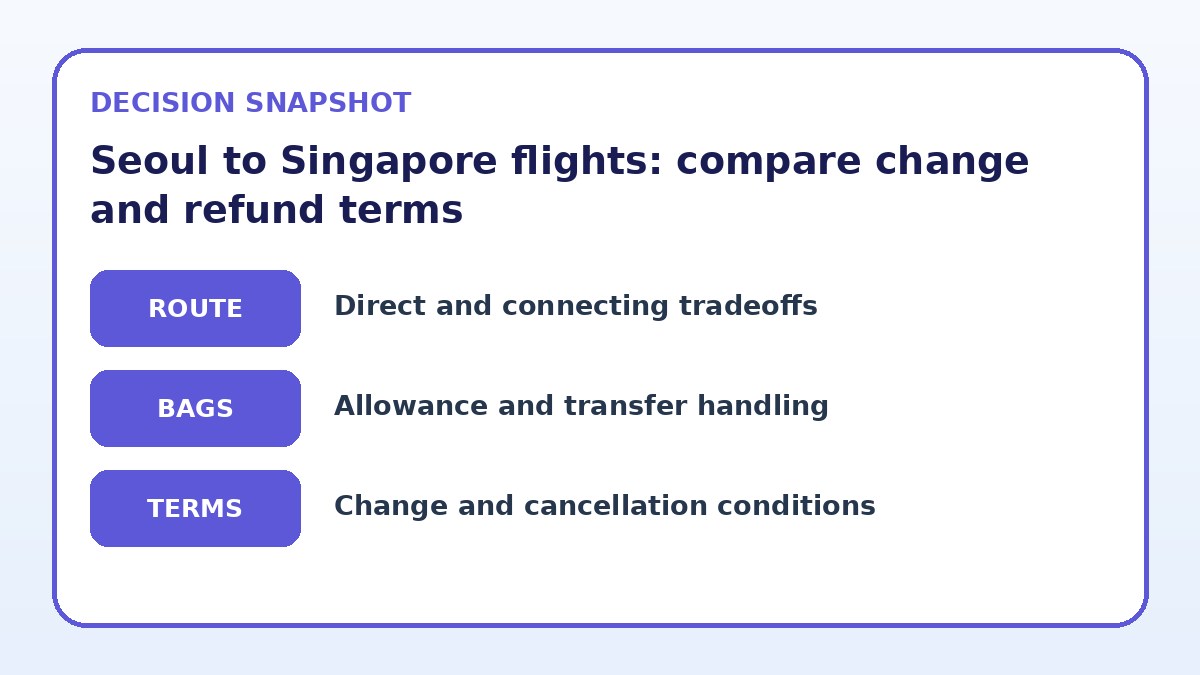
See current options before you compare the details
Availability and final conditions change. Open Trip.com now or keep reading for the practical comparison.
Understand fare categories and what they actually cover
Airlines usually sell multiple fare categories for the Seoul to Singapore route: basic/eco-lite, standard economy, and flexible or refundable fares. Basic fares often carry strict restrictions—no refunds, change fees, and limited or no seat selection—while flexible fares allow free changes or low-cost rebooking. The names and exact rules vary by carrier, so don’t rely on the label alone. When you see “flexible” or “refundable,” read the terms to know whether that means free date changes, a full monetary refund, or only a credit for future travel.
When comparing fares, look beyond ticket price and check the permitted changes: what is the required notice period, is there a change fee plus fare difference, and are refunds given as cash or travel credit? Also verify whether name corrections (common for solo travelers who may rebook for family) are permitted and whether transfers between flights in a single booking are handled automatically. On provider pages, find the section titled “change policy,” “refund policy,” or “fare rules” and copy the key terms into notes before you book.
Compare direct versus connecting itineraries for flexibility
If both direct and connecting flights are offered for Seoul to Singapore, weigh their change and cancellation implications separately. A single-ticket connecting itinerary operated by one alliance or one airline normally means one set of fare rules and a single reissue process. By contrast, travel built from separate tickets (for instance, booking two different carriers) may force you to manage two separate change policies; a cancelled outbound leg can invalidate onward segments and complicate refunds. For solo travelers, simplicity often reduces stress when plans shift—so factor administrative ease into your decision.
Also consider how minimum connection times and transits affect change options: switching to a different connection or carrier may require paying the fare difference plus penalty fees, and some low-cost carriers don’t allow reissue across alliances. Before booking, simulate a change on the airline’s site to see how the rebooking flow works, and check whether the booking includes transfer protection. If the booking platform lists change costs upfront (some do), use those numbers to compare itinerary flexibility rather than guessing.
| Approach | Best for | Tradeoff to check |
|---|---|---|
| Buy flexible/refundable fare at booking | Travelers who need easy free changes or guaranteed refunds | Higher upfront cost that may not be necessary if plans stay fixed |
| Choose a low-cost basic fare and risk fees | Solo travelers with firm dates who prioritize lower ticket price | Potentially high fees or no refund if plans change |
| Buy standard economy plus change protection add-on | Those wanting moderate flexibility without full refundable fare | Add-on costs might approach flexible fare price in some cases |
| Book separate tickets for segments to save money | Experienced travelers comfortable handling multi-provider changes | Managing refunds and changes across carriers increases complexity and risk |
Ready to check the option that fits your plan?
Use your exact dates and traveler details so the provider page can show the current total and conditions.
Fees, timing, and how refunds are processed
Change fees might be a flat amount, a percentage of the fare, or waived entirely for certain fare classes. Timing matters: many carriers charge lower or no fees when you change long before departure, while last-minute changes can be costlier. Refunds are also processed differently—some airlines issue monetary refunds to your original payment method, others only provide travel credit or voucher valid for future travel. When precise cash refunds are important, verify the refund method and any processing time on the airline page because voucher-only refunds might not suit every traveler’s needs.
If you booked through an online travel agency (OTA) or aggregators like Trip.com, remember their change and refund process can add steps: some OTAs require you to contact them first, then they coordinate with the airline. That can add time and sometimes fees. Whatever the path, document the name of the policy you relied on, the quoted fees, and the contact route for changes (airline phone, chat, or OTA portal). Keep screenshots or PDF receipts showing the fare rules at booking to use if disputes arise later.
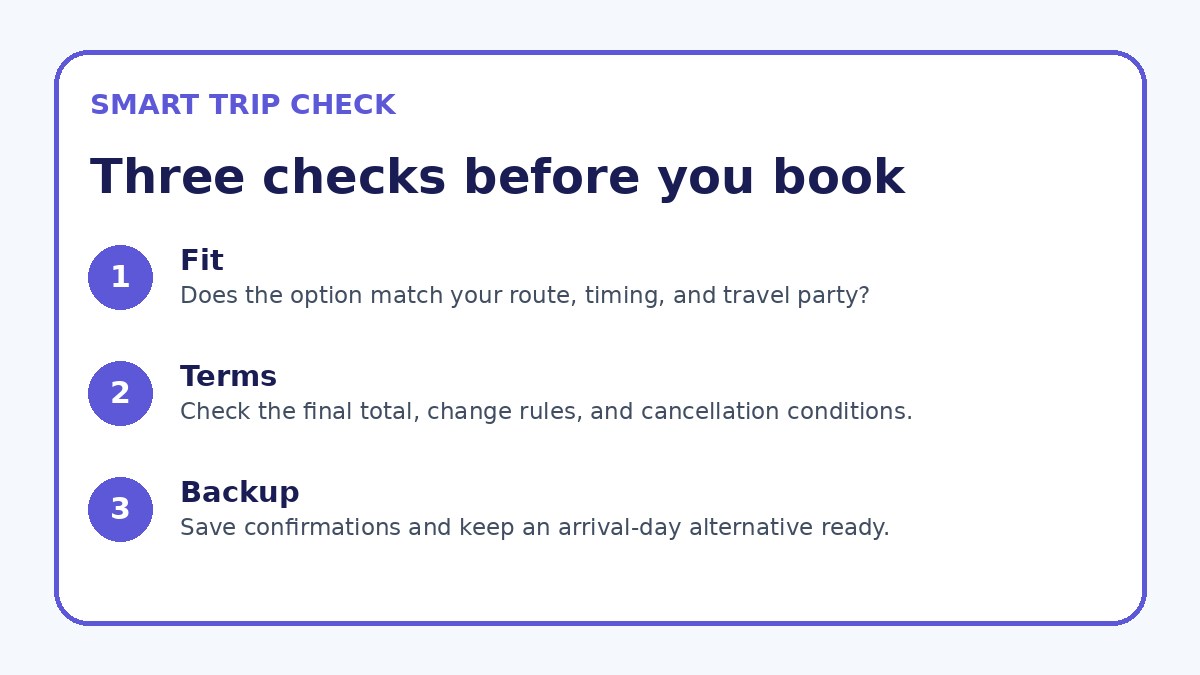
Before you book
- Before booking, open the airline’s official fare rules page and copy the change fee, deadline, and refund type into your notes.
- Compare direct and connecting itineraries’ fare rules—ensure you know whether all segments share one ticket and one policy.
- If booking via an OTA, confirm whether changes must go through the OTA or the airline and note any additional OTA fees.
- Simulate a date change on the airline’s website to see the rebooking flow and get an estimated change fee and fare difference.
- Save screenshots or PDFs of the booking screen showing fare class and rules, and keep the booking reference in multiple places.
- Budget for the worst-case cost: add the maximum likely change fee plus any fare difference to your travel contingency fund.
Practical decision rules for solo travelers
Start by mapping your personal risk tolerance: are your dates firm, likely to shift, or completely open? If dates are firm, a basic fare might be appropriate. If there’s moderate risk of change—work flexibility, possible extension of stay, or dependent plans—buy a standard economy fare or add a change-protection product if the airline offers one. If you require maximum flexibility, opt for refundable or fully flexible fares despite the higher cost. This decision framework helps balance the up-front cost against the worst-case change expense.
Also factor in your travel habits: if you prefer minimal booking paperwork, choose a single-carrier itinerary with clear rebooking channels. If you’re cost-sensitive and willing to manage more complexity, choose a lower fare and accept that you’ll pay for changes if needed. Always plan for contingencies: know how to reach customer service from overseas, collect refund timelines, and budget for an unexpected fare difference. Following these practical rules will reduce stress and give you a reliable path when adjustments are necessary.
Frequently asked questions
Can I change my Seoul to Singapore flight without a fee?
Possibly, but it depends on the fare class and timing. Flexible or refundable fares commonly allow fee-free changes within the airline’s stated window, while basic fares usually incur a fee plus any fare difference. Some carriers waive change fees as a temporary policy or for specific ticket categories, but that can change without notice. Always confirm on the airline’s final booking page whether the fare you’re buying includes fee-free changes, and note any deadlines or limits to the number of permitted changes.
If I cancel, will I get my money back or only a travel voucher?
Refund method depends on the fare rules and the airline’s refund policy. Refundable tickets typically return money to the original payment method, but non-refundable tickets often offer travel credit or vouchers instead. Some carriers may allow partial refunds for taxes and fees even on non-refundable fares. Check the airline’s refund section for your fare and, if you booked through an OTA, confirm whether refunds are processed by the OTA or the airline. Screenshotting the refund terms at purchase helps if you need to dispute the outcome.
How do connecting flights affect change and cancellation handling?
If your itinerary is on a single ticket across connecting flights, the airline handling the booking usually applies one set of rules and can rebook your entire journey. When connections involve separate bookings with different carriers, each ticket follows its own change and refund policy—resolving a disruption can mean separate claims and more expense. Before you book, check whether the carrier sells the connection as a single ticket and whether the booking includes minimum connection protections or through-check baggage. That knowledge tells you how many policies you must manage if plans shift.
Final planning note
For solo travelers on the Seoul to Singapore route, the most practical approach is to match the fare flexibility to how likely you are to change plans, then verify the carrier’s exact rebooking and refund procedures on the airline’s final booking page. Direct itineraries and single-ticket connections streamline changes, while separate tickets and basic fares increase complexity and potential cost. Use the checklist to record fees, refund types, and contact routes before paying. If you want a quick way to compare current availability and published rules, you can view options on platforms like Trip.com, but always confirm the definitive policy with the airline before completing your purchase. That process keeps surprises small and decisions defensible.
Continue planning
Check current options and final conditions
Use the provider page to confirm live availability, the final total, cancellation terms, and every condition that matters to your trip.
This evergreen planning guide was created with AI-assisted drafting and a structured quality review. It does not display live prices, schedules, availability, visa guidance, or provider rankings. Verify current details before booking. Some links are affiliate links; we may earn a commission at no additional cost to you.