If you regularly travel between Seoul and Singapore for work, a short, focused pre-booking checklist saves time and avoids costly mistakes. Start by deciding whether you need the fastest routing, the lowest risk of missed connections, or the most flexible fare for last-minute changes. Then check passport validity, visa or immigration requirements, and any employer travel policies that affect seat class, layovers, or preferred airlines. Confirm airport choices in Seoul (you may have options) and which Singapore airport a flight uses, since transfers, ground time, and onward transport can differ. Finally, verify the fare rules, baggage allowance, and change/cancellation conditions on the airline or booking engine's final page to avoid surprises at check-in.
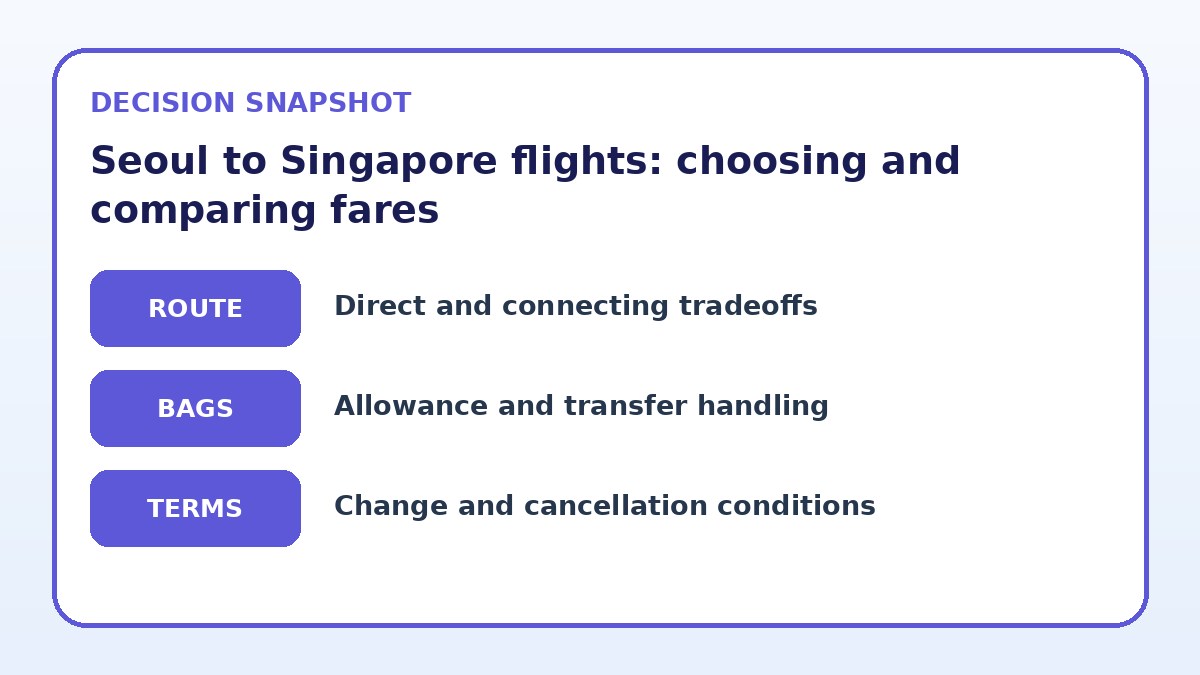
See current options before you compare the details
Availability and final conditions change. Open Trip.com now or keep reading for the practical comparison.
Choose the right flight window and routing
Business travelers should match flight times to meeting schedules and local work hours. Early-morning departures from Seoul may get you to Singapore mid-afternoon the same day, while red-eye or late-evening flights can reduce time away from the office but affect sleep. If you need to arrive refreshed for meetings, look for daytime arrivals and factor in typical airport transit and immigration queues. Also take into account Seoul’s multiple airport options and whether a flight labels itself as nonstop or includes one or more connections; each adds risk and potential delay.
When comparing routes, look beyond advertised flight duration. A one-stop itinerary with a short connection can sometimes beat a longer nonstop because it matches your preferred departure or arrival time, but it increases exposure to missed-connection risk and requires more time for transfers. For connecting options, check minimum connection times at the transit airport and the likelihood of through-checked baggage. If an airline sells a single-ticket connection, responsibility for missed connections typically rests with the carrier — verify this on the final booking page when it matters.
Fare classes, flexibility and corporate policy
Fare class dictates baggage, seat selection, upgrade eligibility, and change/cancellation rules. For business travel, a slightly higher fare class that allows free or low-cost changes often outweighs a cheaper, restrictive ticket when plans shift. Confirm the exact refund and change terms shown on the airline or travel agency final booking screen before paying — those details vary by fare code and can change without notice. If your employer has a negotiated corporate rate or preferred carrier, include that in your search early so you compare only allowable options.
If you plan to use miles or elite status benefits, verify seat availability and upgrade policies before booking. Note that some discounted fares do not earn full frequent-flier credit or are excluded from upgrades. Also check whether your company’s travel policy requires specific airlines, fare buckets, or advance-purchase windows; following those rules may be necessary for reimbursement or approval. Keep a screenshot or PDF of the fare rules and any corporate authorization before you finalize payment.
| Approach | Best for | Tradeoff to check |
|---|---|---|
| Direct nonstop flights | Minimizing travel time and connection risk | May cost more or offer fewer flexible fare options; limited schedule windows. |
| One-stop connections on a single ticket | Balancing price with carrier-provided protection for missed connections | Longer total travel time and more time in transit; depends on reliable transfer airports. |
| Separate tickets (booked independently) | Potentially lower cost or combining preferred carriers | Higher risk: you are responsible for missed connections and baggage recheck. |
| Higher-fare flexible tickets | Frequent schedule changes, last-minute cancellations, or corporate approvals | Higher upfront cost but reduced disruption risk and easier changes. |
Ready to check the option that fits your plan?
Use your exact dates and traveler details so the provider page can show the current total and conditions.
Passport, visa and entry checklist for Singapore
Before booking, make sure your passport meets the minimum validity Singapore requires for arrival — check official government sources because rules change. Some business travelers transit without a separate visa, while others must apply in advance depending on nationality and trip purpose. When in doubt, consult the Singapore immigration website or your company’s travel manager. Also verify any required supporting documents such as invitation letters, proof of accommodation, or vaccination records if relevant to your nationality or business activity.
If you anticipate short-notice changes, ensure you can obtain any necessary visas on short timelines and that your passport has enough empty pages for entry stamps if required. For longer business stays or work-related activities beyond meetings, check whether a specific work pass or permit is required and what lead time the application needs. Always confirm the latest entry requirements on the official government or embassy website and save the confirmation page or contact details for your travel approver.
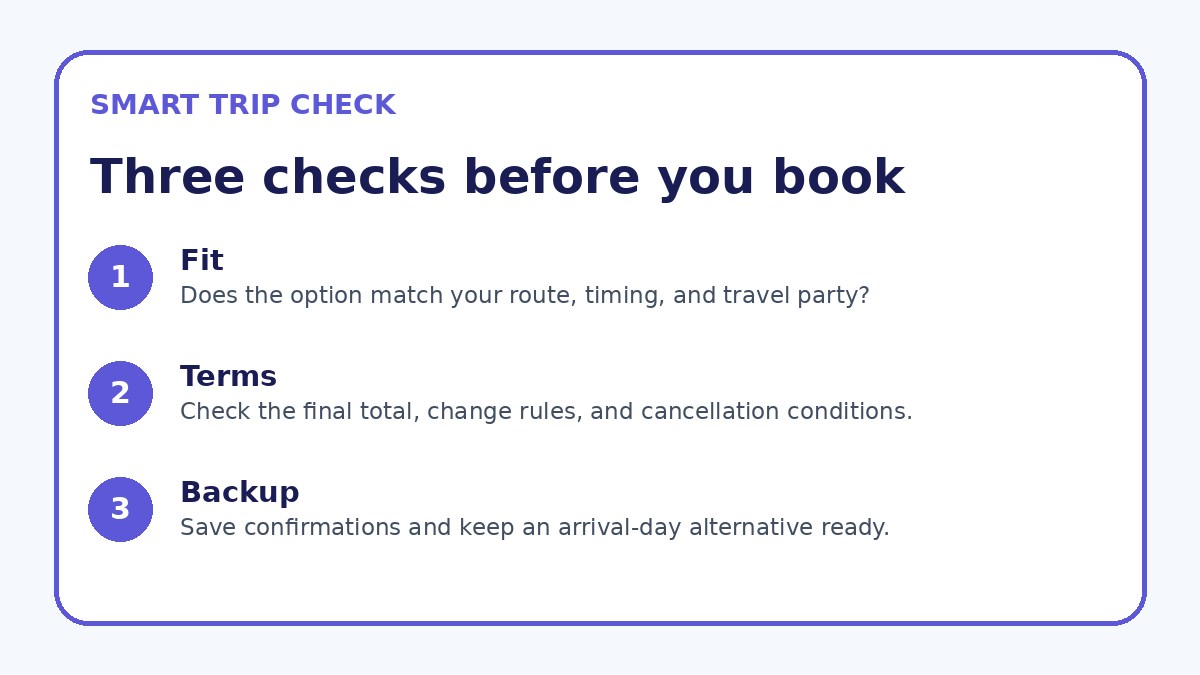
Before you book
- Confirm passport validity for arrival in Singapore and any required visas or travel authorizations using official government sources.
- Decide your booking priority (speed, flexibility, or cost) and filter search results by that priority before comparing fares.
- Compare total door-to-door travel time, including airport transfers, typical traffic, immigration wait times, and likely baggage pickup.
- Open the airline or booking engine final fare rules page and record change, cancellation, and baggage allowances before payment.
- Check seat availability, in-flight amenities (Wi-Fi, power), and aircraft type to match work or rest needs on the chosen flights.
- If using company rates or travel policy, confirm approval steps and retain screenshots or booking codes required for reimbursement.
Seat selection, baggage, and airport logistics
Choose seats with your in-flight productivity or rest in mind: window for uninterrupted sleeps, aisle for quick lavatory access, or bulkhead for more workspace. If you need to work on arrival, prioritize arriving at a reasonable local hour and check onboard Wi-Fi availability and power outlets on the aircraft type — verify the amenities on the carrier’s aircraft information page before booking. Also confirm carry-on and checked-baggage allowances for your fare; business travelers with presentations or equipment may need a larger allowance or priority handling.
Factor in airport transfers at both ends: estimate travel time from your office in Seoul to the departure airport and from Singapore’s arrival airport to your meeting location or hotel. Decide whether to add priority boarding or expedited security access if your schedule is tight. For longer layovers, check if the transit airport offers efficient transfer routes or lounge options that support work and rest. Always verify the exact baggage policy, seat map and airport terminal details on the airline or booking provider’s final confirmation page.
Frequently asked questions
Should I prefer direct or connecting Seoul to Singapore flights for business travel?
Prioritize direct flights if minimizing travel time and reducing connection risk matters most. Direct flights reduce the chance of missed connections and simplify logistics, which is valuable when meetings are time-sensitive. However, if direct schedules don't fit your meetings or are significantly more expensive, a single-ticket one-stop connection can offer protection from the airline if delays occur. Always check the connection airport's transfer times and the booking's through-check baggage policy on the final booking page to confirm responsibility for missed connections.
What fare rules should business travelers verify before booking?
Look specifically for change and cancellation fees, refundability, reissue window, and how fare differences are handled. Also confirm baggage allowance, advance seat selection costs, and upgrade eligibility. If you expect schedule changes, ensure the fare allows fee-free or low-cost changes within your timeframe. These details appear on the airline or booking provider’s final fare rules page — save or screenshot that page as proof of the conditions you booked under.
How far in advance should I book Seoul to Singapore flights for corporate travel?
Booking lead time depends on corporate policy, travel seasonality, and flexibility needs. For predictable meeting schedules, earlier bookings give more seat and fare options and increase chances of preferred seating or corporate fares. If your plans often change, leave room for flexible fares or choose tickets that allow inexpensive changes. Check company rules for required advance-purchase windows for reimbursement, and always cross-check availability and specific terms on the airline’s booking page before confirming.
Final planning note
A repeatable pre-booking checklist simplifies Seoul to Singapore business travel: pick your primary priority (speed, flexibility, cost), verify passport and visa needs, compare total travel time and routing risk, and read fare rules on the booking page before paying. Use seat, baggage, and amenity information to ensure you can work en route, and follow your company’s travel policy for approvals and reimbursement. When in doubt about rapidly changing details such as entry requirements, connection rules, or aircraft amenities, confirm directly with the airline or official government pages. For quick availability comparisons you may check Trip.com, but always finalize and verify critical fare rules on the provider’s final booking confirmation.
Continue planning
Check current options and final conditions
Use the provider page to confirm live availability, the final total, cancellation terms, and every condition that matters to your trip.
This evergreen planning guide was created with AI-assisted drafting and a structured quality review. It does not display live prices, schedules, availability, visa guidance, or provider rankings. Verify current details before booking. Some links are affiliate links; we may earn a commission at no additional cost to you.